Creatine Benefits for Brain and Energy: What the 2026 Evidence Shows
Creatine helps brain cells recycle energy, and trials show small gains in memory and processing speed, mostly during sleep loss, mental fatigue, older age, and low-meat diets. Most people should take 3–5 g/day of third-party-tested creatine monohydrate powder; it is safe for healthy kidneys, does not cause hair loss, and gummies are the least reliable format.
Creatine Benefits for Brain and Energy: What the 2026 Evidence Shows
By the HealthPerk Editorial Team · Last updated: October 2026
Quick Answer
What are the creatine benefits for brain health?
Creatine helps brain cells recycle energy. Trials suggest small improvements in memory and processing speed, with the clearest effects during sleep loss, mental fatigue, older age, and low-meat diets. In rested, healthy young adults the effects are small or absent. Most people use 3–5 g of creatine monohydrate a day.
| Your situation | First step |
|---|---|
| You want a general brain and energy supplement | Take 3–5 g of creatine monohydrate daily with any meal; give it at least 4 weeks |
| You are vegetarian or vegan | Same 3–5 g dose; low-meat eaters showed some of the clearest memory responses in trials |
| You are in perimenopause or menopause | Creatine is reasonable to try, but brain data are early; pair it with strength training |
| You are over 60 and worried about memory | Discuss it with your doctor first, and get a check-up for memory changes rather than self-treating |
| You have kidney disease or take kidney-affecting drugs | Do not start creatine without your nephrologist's approval |
| You were going to buy creatine gummies | Choose a third-party-tested powder or capsule instead; several gummy tests found little or no creatine |
 Creatine monohydrate is a plain white powder that dissolves in water, coffee, or a smoothie.
Creatine has been a gym staple for three decades. Now the research question has moved upstairs: your brain uses creatine too, and 2026 brought a wave of new trials and reviews asking whether a supplement built for muscle also supports memory, focus, and mental energy. The interest in creatine benefits for brain function is real. The evidence, though, is more mixed than social media suggests.
This guide explains how creatine works in the brain, which groups seem to benefit most, what doses were actually tested, and why 2026 also brought sharper criticism of the strongest claims. It also covers safety (kidneys, hair, water weight) and why creatine gummies are one of the riskiest ways to buy it.
Table of Contents
- What Is New in 2026
- How Creatine Works in the Brain
- Creatine Benefits for Brain Function: What the Research Shows
- How Much Creatine for Brain Health
- Creatine Forms Compared: Powder, Capsules, HCl, and Gummies
- Which Approach Is Right for You
- How to Start Creatine for Brain and Energy: Step by Step
- Creatine Side Effects and Myths Corrected
- When to See a Doctor
- Related Articles on Health Perk
- Frequently Asked Questions
- References
What Is New in 2026
Five publications from this year shape the current picture.
1. A major review asks if the field got ahead of itself (January 2026). Nine creatine researchers, led by Darren Candow, published "Creatine Supplementation and the Brain: Have We Put the Cart Before the Horse?" in the Journal of Dietary Supplements [1]. Their conclusion is careful. Supplements do appear to raise brain creatine, but the response may depend on dose and duration. Benefits are most consistent during acute stress such as sleep deprivation, mental fatigue, and low oxygen. Signals in Alzheimer's disease, depression, and mild brain injury remain "preliminary and inconsistent."
2. A lower single dose still helped during a sleepless night (April 2026). A German team gave 29 healthy adults a single dose of 0.2 g/kg creatine monohydrate (about 14 g for a 70 kg person) or placebo during 21 hours without sleep [2]. Creatine reduced the decline in logic, number tasks, language processing speed, and a reaction-time vigilance test, by up to 12%. Women benefited more than men on several tasks.
3. A 12-week trial in midlife adults (August 2026). Texas A&M researchers randomized sedentary adults to 10 g/day of creatine monohydrate or placebo; participants chose whether to also join an exercise and diet program, and 64 adults aged 45 to 65 completed the study [3]. Creatine increased lean mass and strength and improved "selected markers of cognitive function and memory." The authors say the individual cognitive findings should be read as exploratory.
4. A systematic review in older adults (February 2026). A review in Nutrition Reviews found six studies with 1,542 older participants [4]. Five of six reported a positive link between creatine and cognition, mainly memory and attention. But only two were supplement trials, and three studies were rated "poor" quality.
5. A statistical challenge to a popular meta-analysis (April 2026). A commentary in Frontiers in Nutrition argued that a widely cited 2024 meta-analysis counted several correlated outcomes from the same participants as if they were independent, which overstates certainty [5][6]. That matters, because the 2024 paper is the source of many "creatine improves memory" headlines.
Put together, 2026 made the case for creatine benefits for brain function in stressed or aging brains a bit stronger, and the case for a broad "brain booster" a bit weaker.
How Creatine Works in the Brain
Your brain is a small organ with a large energy bill. Neurons run on ATP, and they can burn through it quickly during demanding thinking. Creatine works as an energy buffer. Bound to phosphate, it forms phosphocreatine, which can hand that phosphate back to ADP and rebuild ATP within seconds [7].
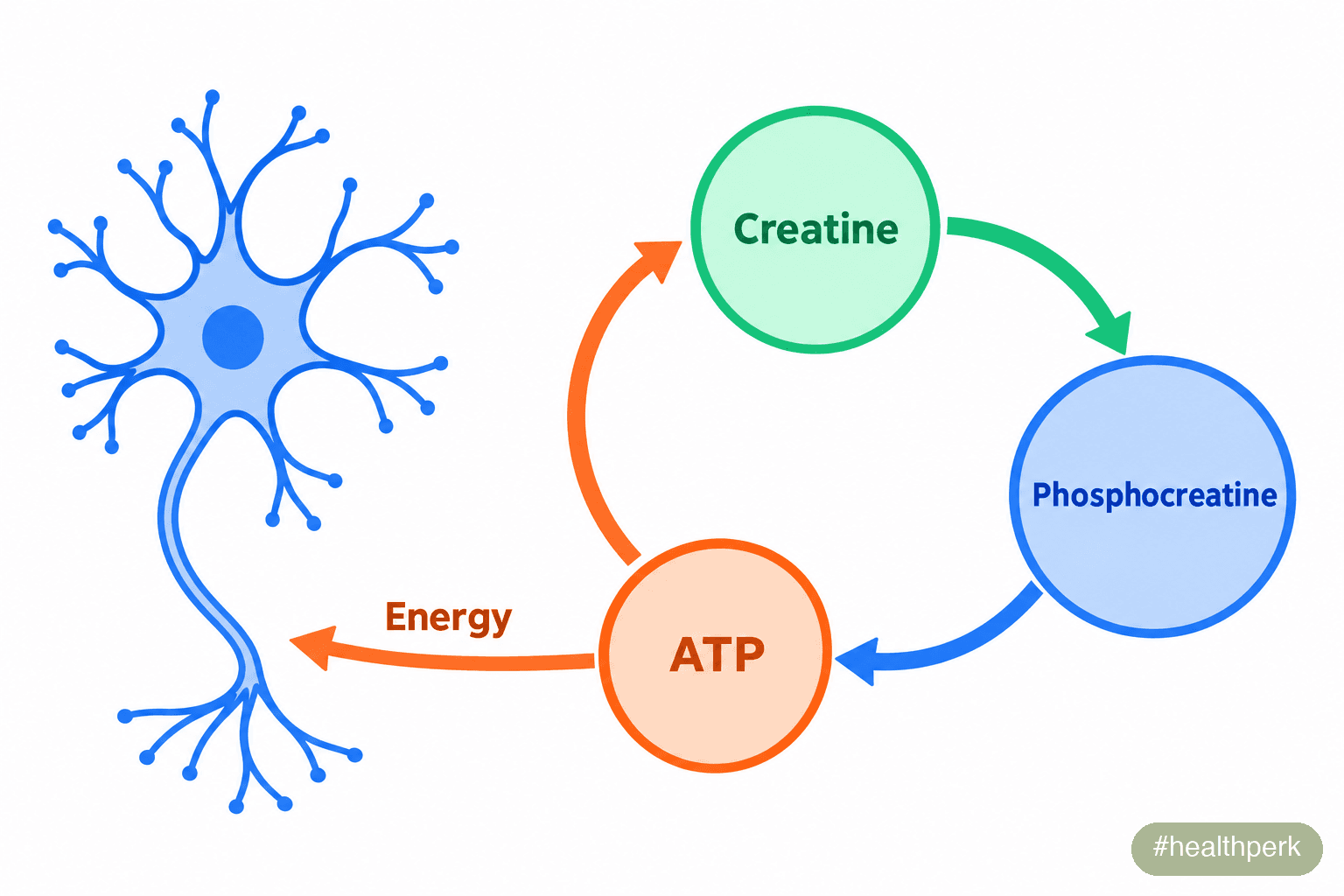 Schematic only: phosphocreatine donates phosphate to rebuild ATP when brain cells are working hard. Not drawn to scale.
Three details explain why results differ so much between studies.
The brain is harder to "fill" than muscle. Creatine has to cross the blood-brain barrier through a transporter, and the brain also makes some of its own. In a classic study, 20 g/day for four weeks raised average brain creatine by 8.7%, with wide individual variation from 3.5% to 13.3% [8]. Muscle levels rise faster and more at lower doses.
The benefit shows up when energy is short. Sleep deprivation, long mental tasks, and low oxygen all strain brain energy supply. Imaging studies show that a high single dose of creatine changed phosphocreatine, ATP, and pH markers during sleep deprivation, alongside better cognitive scores [9]. In a well-rested brain, there may be little to fix.
Measurement is noisy. Brain creatine is measured with magnetic resonance spectroscopy, and the Candow review notes that results depend on where the scan is placed, signal quality, and analysis methods [1]. Some "no effect" findings may reflect measurement limits rather than biology.
Your body needs to replace about 1–3 g of creatine a day. Roughly half comes from food, mainly meat and fish (a pound of raw beef or salmon holds about 1–2 g), and your liver and kidneys make the rest [7]. That is why people who eat little or no meat are a group of special interest.
Creatine Benefits for Brain Function: What the Research Shows
Sleep deprivation and mental fatigue
This is the strongest area. Three separate lines of evidence point the same way:
- After 24 hours awake, adults who took 20 g/day for 7 days beforehand kept up better on reaction time, balance, and mood than those on placebo [10].
- A single high dose (0.35 g/kg) improved processing speed during a sleepless night and partly reversed brain energy changes on imaging [9].
- The 2026 lower-dose follow-up (0.2 g/kg) still reduced the cognitive decline, though less than the higher dose [2].
For ordinary mental fatigue, an older trial found 8 g/day for five days reduced fatigue during repeated mental arithmetic [11]. The caveat: these effective single doses are far above the 3–5 g people take daily, and nobody should take 14–25 g at once without medical advice.
Memory and thinking in healthy adults
Results here are modest and inconsistent. A 2023 meta-analysis found creatine improved memory overall, with a much larger effect in adults aged 66 to 76 and essentially no effect in people aged 11 to 31 [12]. A 2024 meta-analysis of 16 trials (492 people) reported small gains in memory, attention time, and processing speed, but no effect on overall cognition or executive function [6]. Both analyses have been criticized for double-counting outcomes [5][13].
The largest single trial, with 123 participants taking 5 g/day for six weeks, found only a small possible benefit that did not reach conventional significance [14]. Another trial in young adults found no cognitive effect at 10 or 20 g/day for six weeks [15]. If you are young, rested, and eat meat, expect little.
Vegetarians and vegans
People who eat no meat take in very little creatine from food. In a 2003 crossover trial, 45 young vegetarians who took 5 g/day for six weeks scored higher on working memory and a reasoning test [16]. A 2011 trial in 128 young women found that creatine improved memory in vegetarians but not in meat-eaters [17]. A 2018 systematic review reached the same conclusion: vegetarians responded better on memory tasks [18]. The 2023 trial of 123 people was less positive, so treat this as likely, not certain [14].
Women, perimenopause, and menopause
Interest in creatine benefits for women has grown fast, partly because hormonal shifts across the menstrual cycle, pregnancy, and menopause change how the body makes and handles creatine [22]. The most direct brain trial so far is CONCRET-MENOPA, an 8-week study in 36 perimenopausal and menopausal women aged about 40 to 60 [19]. The 1,500 mg/day creatine hydrochloride group improved reaction time and raised frontal brain creatine compared with placebo, with a borderline trend toward fewer mood swings (p = 0.06).
Note what this trial was: small, short, and based on creatine HCl, not the better-studied monohydrate. The 2026 sleep-deprivation study found women benefited more than men on several tasks [2], and the 2024 meta-analysis reported a larger effect in women in subgroup analysis [6]. For mood, one older trial found that adding 5 g/day creatine to an antidepressant helped women with major depression respond faster [20]. That was a treatment add-on under medical care, not a reason to self-treat depression.
Older adults and memory concerns
Older adults show some of the largest memory responses in pooled data [12], and the 2026 review in older adults was mostly positive but low in quality [4]. In a 2025 single-arm pilot, 20 people with Alzheimer's disease took 20 g/day for eight weeks. Brain creatine rose 11% and several cognitive scores improved [21]. With no placebo group, this is a feasibility signal only, and larger trials are underway.
Creatine also helps older adults hold on to muscle when combined with resistance training [7][3], which is useful in its own right. For the bigger picture on aging, see our guide to evidence-based anti-aging supplements.
How Much Creatine for Brain Health
There is no officially established brain dose. Here is what was actually tested:
- 3–5 g/day (or about 0.1 g/kg/day): the standard daily dose with a long safety record [22]. Brain trials at 5 g/day showed effects in vegetarians [16] and, in one trial, in women with depression [20].
- Loading, 20–25 g/day for 5–7 days: fills muscle faster. It is optional. In a classic comparison, 3 g/day for 28 days raised muscle creatine as much as 20 g/day for 6 days [22].
- 10 g/day: used in the 2026 midlife trial, split into two 5 g doses [3].
- 20 g/day for weeks: used to raise brain creatine in imaging studies and in the Alzheimer's pilot [8][21]. Not tested long term for brain outcomes.
- 0.2–0.35 g/kg as a single dose: only studied in a lab during sleep deprivation [2][9]. These are not everyday doses.
Our editorial take: 3–5 g/day of creatine monohydrate is the sensible default. Doses of 10 g/day are reasonable to discuss with your doctor if you have a specific goal. Very high or single "brain loading" doses belong in research settings for now.
Creatine Forms Compared: Powder, Capsules, HCl, and Gummies
 A level 5 g scoop of monohydrate powder is the format used in most creatine research.
| Criterion | Monohydrate powder | Monohydrate capsules | Creatine HCl | Creatine gummies |
|---|---|---|---|---|
| Research base | Hundreds of trials, nearly all brain studies [6][22] | Same compound as powder | Small trials, including CONCRET-MENOPA [19] | Very little; same claims borrowed from powder |
| Pills or scoops for 5 g | One level scoop | Often 5–7 capsules (check label) | Labels often suggest lower doses | Often several gummies (check label) |
| Label accuracy in testing | All 5 powders passed in a 2025 test [24] | Depends on brand | Disputed results in one gummy test [23] | 6 of 12 failed in 2024; 4 of 6 failed in 2025 [23][24] |
| Added sugar and extras | None in plain versions | None | None in plain versions | Usually sugar or sweeteners, gelling agents |
| Cost per 5 g dose | Lowest | Moderate | Usually higher | Usually highest |
| Best for | Almost everyone | People who dislike powders | People wanting smaller doses; evidence thinner | Not recommended unless third-party tested |
Verdict: plain creatine monohydrate powder with an independent certification is the best-supported, most reliable, and cheapest choice. Gummies are the weakest option. In 2024 testing by supplement maker NOW, 6 of 12 creatine gummy brands did not meet their label claims, and some contained creatinine, a breakdown product [23]. In 2025, SuppCo's testing found 4 of 6 gummies failed, two with no detectable creatine, while all 5 powders passed [24]. Both were company-run tests, not peer-reviewed studies, but they agree with the FDA's broader concern that gummies are hard to make and test. Read more in our guide to whether gummy vitamins are worth it.
How to check third-party testing: look for a seal from NSF (for example, NSF Certified for Sport), USP Verified, or Informed Sport. NSF/ANSI 173 certification checks that the label matches the contents and screens for contaminants [25]. Our guide to choosing supplements safely explains how to verify a seal.
Which Approach Is Right for You
The tired knowledge worker. If you sleep poorly or face long, draining workdays, creatine may soften the hit to focus. Use 3–5 g/day, but fix sleep first; no supplement replaces it. Pair this with our guide to the best supplements for focus.
The vegetarian or vegan. You may have the most to gain. Most creatine monohydrate is made synthetically rather than from animal sources, but check the capsule shell if you buy capsules. Use 3–5 g/day.
The woman in perimenopause or menopause. Creatine pairs well with strength training for muscle and bone, and early data hint at reaction-time and mood benefits. Start at 3–5 g/day of monohydrate. Talk to your clinician about menopause symptoms in parallel.
The older adult. Creatine plus resistance training has good evidence for muscle. Brain effects are promising but unproven. Ask your doctor, especially if you take several medications or have reduced kidney function.
The young, healthy meat-eater. Expect small or no cognitive effects if you are well rested. Creatine may still help your training, but do not count on a mental edge.
The person with brain fog. Brain fog has many causes, including thyroid problems, low iron, B12 deficiency, poor sleep, and depression. Read our brain fog causes and solutions guide and get checked before adding supplements.
How to Start Creatine for Brain and Energy: Step by Step
- Check whether creatine is safe for you. Skip it, or ask your doctor first, if you have kidney disease, diabetes with kidney involvement, are pregnant or breastfeeding, or are under 18.
- Buy plain creatine monohydrate powder with an NSF, USP, or Informed Sport seal. Avoid proprietary blends that hide the dose.
- Take 3–5 g once a day. Timing matters little. Mix it with water, coffee, juice, or a meal for consistency.
- Skip loading unless you want faster results. If you load, use 20 g/day split into four 5 g doses for 5–7 days, then drop to 3–5 g/day.
- Drink normally. Creatine does not require huge amounts of water. Use our water intake calculator for a sensible daily target.
- Give it at least 4 weeks. Brain creatine rises more slowly than muscle creatine.
- Track one or two things you care about, such as afternoon focus, mental fatigue, or sleep. Stop after 8–12 weeks if you notice nothing and creatine was meant only for cognition.
- Tell your doctor before blood tests. Creatine can raise serum creatinine, which may be mistaken for a kidney problem.
Creatine Side Effects and Myths Corrected
Myth: Creatine damages your kidneys. In healthy people, studies of up to 30 g/day for five years found creatine safe and well tolerated [7]. A 2026 meta-analysis of 20 randomized trials found creatine raised serum creatinine by 0.13 mg/dL, but did not change urea or estimated kidney function (eGFR) [26]. Creatinine rises because creatine breaks down into it, not necessarily because the kidneys are struggling. The authors still call for trials longer than a year, and people with kidney disease should not self-supplement.
Myth: Creatine causes hair loss. This idea comes almost entirely from a single 2009 study in 20 college rugby players that found a rise in DHT, a hormone linked to male-pattern baldness, but never measured hair [28][22]. In 2025, the first trial to measure hair directly gave 5 g/day or placebo to resistance-trained men for 12 weeks. It found no differences in DHT, hair density, or hair thickness [27].
Myth: Creatine makes you puffy and bloated. Creatine draws water into muscle, so the scale may tick up in the first days, especially with loading. Expert reviews find this short-term rise is mostly water inside muscle cells, and longer studies do not show lasting water retention [22].
Myth: Creatine is a steroid. It is not. Creatine is an amino acid derivative your body makes every day and that you eat in meat and fish [22].
Myth: Creatine is only for men. Women respond to creatine too, and several brain findings are as strong or stronger in women [2][6][19][22].
Real side effects: stomach upset or diarrhea, mostly with large single doses. Splitting doses or taking creatine with food usually helps. One large trial found side effects were reported more often on creatine than on placebo [14]. For the broader picture, see our supplement side effects guide.
A note on who funds this research. Many leading creatine researchers disclose advisory roles with creatine manufacturers or creatine donations for trials, and the 2017 ISSN position stand was funded by a supplement trade association [7][15][22]. That does not make their findings wrong, but it is one more reason to weigh independent trials and critiques, like the 2026 commentary [5].
When to See a Doctor
See a doctor before or soon after starting creatine if any of these apply:
- You have kidney disease, a kidney transplant, or take drugs that affect the kidneys (for example, regular NSAIDs, lithium, or some diuretics).
- New memory problems, getting lost in familiar places, repeating questions, or personality changes. These need medical evaluation, not a supplement.
- Persistent low mood, hopelessness, or thoughts of self-harm. Creatine is not a depression treatment on its own. In the U.S., call or text 988 for crisis support; in the EU and UK, call 112 (or 999 in the UK) in an emergency.
- Swelling of the legs or face, foamy urine, or much less urine while taking creatine.
- Severe or ongoing diarrhea, vomiting, or muscle cramps.
- You are pregnant, breastfeeding, or under 18.
- Ongoing exhaustion despite good sleep. Read why you might always feel tired and ask about iron, thyroid, and B12 tests.
Related Articles on Health Perk
- Best supplements for energy and fatigue
- Best nootropics for beginners
- How much protein you need per day
- Omega-3 benefits for brain health
- How to adjust your sleep to daylight saving time
- Supplement routine for beginners
Frequently Asked Questions
Does creatine actually help the brain?
Yes, modestly and mostly under stress. Creatine helps brain cells recycle ATP, the energy molecule. Trials show small benefits for memory and processing speed, with the clearest effects during sleep deprivation, mental fatigue, in older adults, and in vegetarians. In well-rested young adults who eat meat, most trials find small or no benefits.
How much creatine should I take for brain health?
Most people should take 3–5 g of creatine monohydrate a day. Studies that raised brain creatine levels often used 20 g a day for several weeks, and a 2026 midlife trial used 10 g a day. No brain-specific dose is established. Discuss doses above 5 g with your doctor, especially if you have any kidney concerns.
What are the benefits of creatine for women?
Creatine helps women build and keep muscle and strength, especially with resistance training. Early brain studies are encouraging. An 8-week trial in perimenopausal and menopausal women found faster reaction times and higher frontal brain creatine, and a 2026 sleep-deprivation study found women benefited more than men on several tasks. These studies were small, so more research is needed.
Is creatine good for menopause brain fog?
It may help a little, but the evidence is early. The only direct trial, CONCRET-MENOPA, included 36 women for 8 weeks and found better reaction time, plus a borderline trend for fewer mood swings. It used creatine HCl, not monohydrate. Creatine is reasonable to try alongside strength training, but discuss menopause symptoms with your clinician too.
How long does creatine take to work on the brain?
There is no established timeline for cognitive benefits at 3–5 g a day, and trial results are mixed. Brain creatine rises more slowly than muscle creatine, and higher brain creatine does not guarantee better cognition. In one imaging study, 20 g a day for four weeks raised brain creatine by about 9% on average. Very high single doses acted within hours in lab sleep-deprivation studies, but those doses are not recommended for routine use.
Does creatine cause hair loss?
No good evidence shows that it does. The concern came from a 2009 study that measured a rise in DHT but never looked at hair. A 2025 randomized trial of 5 g a day for 12 weeks measured hair density and thickness directly and found no difference from placebo, and no change in DHT.
Is creatine bad for your kidneys?
Not in healthy people at normal doses, based on current trials. A 2026 meta-analysis found creatine raised blood creatinine slightly but did not change estimated kidney function. That creatinine rise can be misread on lab tests, so tell your doctor you take it. People with kidney disease should not take creatine without medical approval.
Are creatine gummies as good as powder?
Usually not. In 2024 testing, 6 of 12 creatine gummy brands failed to meet their label claims, and a 2025 test found 4 of 6 gummies failed while all 5 powders passed. Gummies also add sugar and cost more per dose. If you buy gummies, choose one with independent third-party testing.
Medical Disclaimer: This article is for informational purposes only and is not a substitute for professional medical advice, diagnosis, or treatment. Always consult your physician or another qualified health provider before starting creatine or any supplement, especially if you have kidney disease, are pregnant or breastfeeding, are under 18, or take prescription medication. If you have thoughts of self-harm, call or text 988 in the U.S. or contact local emergency services. Read more about how we review.
References
- Candow, D. G., Pratt, J., Fabiano, N., Gordji-Nejad, A., Smith, A., Rawson, E. S., Moriarty, T., Forbes, S. C., & Kerksick, C. M. (2026). Creatine Supplementation and the Brain: Have We Put the Cart Before the Horse? Journal of Dietary Supplements, 23(2), 175–204. https://doi.org/10.1080/19390211.2026.2616440
Supports: Supplements may raise brain creatine depending on dose and duration; benefits during sleep deprivation, mental fatigue, and hypoxia; clinical signals preliminary; MRS measurement limitations.
- Gordji-Nejad, A., Matusch, A., Hengstler, L., Beer, S., Kroll, T., Klein, S., Elmenhorst, D., Bauer, A., & Drzezga, A. (2026). Single-Dose Creatine Reduces Sleep Deprivation-Induced Deterioration in Cognitive Performance. Nutrients, 18(8), 1192. https://doi.org/10.3390/nu18081192
Supports: 29 adults, 0.2 g/kg single dose during 21 h sleep deprivation reduced cognitive decline by up to 12%; women benefited more on several tasks.
- Chun, J., Liu, Y., Kibler, G. L., Lee, H., Babakhani, K., Rhoades, N., et al., & Kreider, R. B. (2026). Effects of creatine supplementation with and without exercise and diet intervention on body composition, cognitive function, and markers of health in middle-aged and older adults. Journal of the International Society of Sports Nutrition, 23(sup1), 2716273. https://doi.org/10.1080/15502783.2026.2716273
Supports: 64 completers aged 45–65, 10 g/day for 12 weeks increased lean mass and strength and improved selected cognitive and memory markers (exploratory).
- Marshall, S., Kitzan, A., Wright, J., Bocicariu, L., & Nagamatsu, L. S. (2026). Creatine and Cognition in Aging: A Systematic Review of Evidence in Older Adults. Nutrition Reviews, 84(2), 333–344. https://doi.org/10.1093/nutrit/nuaf135
Supports: Six studies, 1,542 older adults; five of six positive for memory and attention; three rated poor quality.
- Citherlet, T. (2026). Commentary: The effects of creatine supplementation on cognitive function in adults: a systematic review and meta-analysis. Frontiers in Nutrition, 13, 1716285. https://doi.org/10.3389/fnut.2026.1716285
Supports: Argument that the 2024 meta-analysis contains a unit-of-analysis error from treating correlated outcomes as independent.
- Xu, C., Bi, S., Zhang, W., & Luo, L. (2024). The effects of creatine supplementation on cognitive function in adults: a systematic review and meta-analysis. Frontiers in Nutrition, 11, 1424972. https://doi.org/10.3389/fnut.2024.1424972
Supports: 16 RCTs, 492 participants; small improvements in memory, attention time, and processing speed; no effect on overall cognition or executive function; larger benefit in females in subgroup analysis.
- Kreider, R. B., Kalman, D. S., Antonio, J., Ziegenfuss, T. N., Wildman, R., Collins, R., Candow, D. G., Kleiner, S. M., Almada, A. L., & Lopez, H. L. (2017). International Society of Sports Nutrition position stand: safety and efficacy of creatine supplementation in exercise, sport, and medicine. Journal of the International Society of Sports Nutrition, 14, 18. https://doi.org/10.1186/s12970-017-0173-z
Supports: Phosphocreatine role in ATP resynthesis; about half of daily creatine needs synthesized endogenously and the rest from diet; benefits in aging muscle.
- Dechent, P., Pouwels, P. J., Wilken, B., Hanefeld, F., & Frahm, J. (1999). Increase of total creatine in human brain after oral supplementation of creatine-monohydrate. American Journal of Physiology, 277(3), R698–R704. https://doi.org/10.1152/ajpregu.1999.277.3.R698
Supports: 20 g/day for 4 weeks increased mean brain total creatine by 8.7%, with individual increases of 3.5–13.3%.
- Gordji-Nejad, A., Matusch, A., Kleedörfer, S., Jayeshkumar Patel, H., Drzezga, A., Elmenhorst, D., Binkofski, F., & Bauer, A. (2024). Single dose creatine improves cognitive performance and induces changes in cerebral high energy phosphates during sleep deprivation. Scientific Reports, 14(1), 4937. https://doi.org/10.1038/s41598-024-54249-9
Supports: Single 0.35 g/kg dose changed PCr/Pi, ATP, and pH markers and improved processing speed during 21 h sleep deprivation.
- McMorris, T., Harris, R. C., Swain, J., Corbett, J., Collard, K., Dyson, R. J., Dye, L., Hodgson, C., & Draper, N. (2006). Effect of creatine supplementation and sleep deprivation, with mild exercise, on cognitive and psychomotor performance, mood state, and plasma concentrations of catecholamines and cortisol. Psychopharmacology, 185(1), 93–103. https://doi.org/10.1007/s00213-005-0269-z
Supports: 5 g four times daily for 7 days lessened declines in reaction time, balance, and mood after 24 h of sleep deprivation.
- Watanabe, A., Kato, N., & Kato, T. (2002). Effects of creatine on mental fatigue and cerebral hemoglobin oxygenation. Neuroscience Research, 42(4), 279–285. https://doi.org/10.1016/s0168-0102(02)00007-x
Supports: 8 g/day for 5 days reduced mental fatigue during repeated mental arithmetic.
- Prokopidis, K., Giannos, P., Triantafyllidis, K. K., Kechagias, K. S., Forbes, S. C., & Candow, D. G. (2023). Effects of creatine supplementation on memory in healthy individuals: a systematic review and meta-analysis of randomized controlled trials. Nutrition Reviews, 81(4), 416–427. https://doi.org/10.1093/nutrit/nuac064
Supports: Memory improved overall (SMD 0.29), with a larger effect in adults aged 66–76 (SMD 0.88) and no effect in ages 11–31.
- Eckert, I., & Pascher, E. (2023). Letter to the Editor: Double-counting due to inadequate statistics leads to false-positive findings in "Effects of creatine supplementation on memory in healthy individuals: a systematic review and meta-analysis of randomized controlled trials". Nutrition Reviews, 81(11), 1495–1496. https://doi.org/10.1093/nutrit/nuac108
Supports: Methodological criticism of double-counting in the 2023 memory meta-analysis.
- Sandkühler, J. F., Kersting, X., Faust, A., Königs, E. K., Altman, G., Ettinger, U., Lux, S., Philipsen, A., Müller, H., & Brauner, J. (2023). The effects of creatine supplementation on cognitive performance—a randomised controlled study. BMC Medicine, 21(1), 440. https://doi.org/10.1186/s12916-023-03146-5
Supports: 123 participants, 5 g/day for 6 weeks; small possible benefit not reaching significance; side effects reported more often on creatine.
- Moriarty, T., Bourbeau, K., Dorman, K., Runyon, L., Glaser, N., Brandt, J., Hoodjer, M., Forbes, S. C., & Candow, D. G. (2023). Dose-Response of Creatine Supplementation on Cognitive Function in Healthy Young Adults. Brain Sciences, 13(9), 1276. https://doi.org/10.3390/brainsci13091276
Supports: 10 or 20 g/day for 6 weeks did not improve cognitive performance in young adults.
- Rae, C., Digney, A. L., McEwan, S. R., & Bates, T. C. (2003). Oral creatine monohydrate supplementation improves brain performance: a double-blind, placebo-controlled, cross-over trial. Proceedings of the Royal Society B, 270(1529), 2147–2150. https://doi.org/10.1098/rspb.2003.2492
Supports: 5 g/day for 6 weeks improved working memory and reasoning in 45 young vegetarians.
- Benton, D., & Donohoe, R. (2011). The influence of creatine supplementation on the cognitive functioning of vegetarians and omnivores. British Journal of Nutrition, 105(7), 1100–1105. https://doi.org/10.1017/S0007114510004733
Supports: In 128 young women, 20 g/day for 5 days improved memory in vegetarians but not omnivores.
- Avgerinos, K. I., Spyrou, N., Bougioukas, K. I., & Kapogiannis, D. (2018). Effects of creatine supplementation on cognitive function of healthy individuals: A systematic review of randomized controlled trials. Experimental Gerontology, 108, 166–173. https://doi.org/10.1016/j.exger.2018.04.013
Supports: Six RCTs (281 people); possible short-term memory and reasoning benefits; vegetarians responded better on memory tasks.
- Korovljev, D., Ostojic, J., Panic, J., Ranisavljev, M., Todorovic, N., Nedeljkovic, D., Kuzmanovic, J., Vranes, M., Stajer, V., & Ostojic, S. M. (2026). The Effects of 8-Week Creatine Hydrochloride and Creatine Ethyl Ester Supplementation on Cognition, Clinical Outcomes, and Brain Creatine Levels in Perimenopausal and Menopausal Women (CONCRET-MENOPA): A Randomized Controlled Trial. Journal of the American Nutrition Association, 45(3), 199–210. https://doi.org/10.1080/27697061.2025.2551184
Supports: 36 women; 1,500 mg/day creatine HCl improved reaction time and frontal brain creatine vs placebo; mood-swing trend p = 0.06.
- Lyoo, I. K., Yoon, S., Kim, T. S., Hwang, J., Kim, J. E., Won, W., Bae, S., & Renshaw, P. F. (2012). A randomized, double-blind placebo-controlled trial of oral creatine monohydrate augmentation for enhanced response to a selective serotonin reuptake inhibitor in women with major depressive disorder. American Journal of Psychiatry, 169(9), 937–945. https://doi.org/10.1176/appi.ajp.2012.12010009
Supports: 5 g/day creatine added to escitalopram produced faster and greater improvement in women with major depression.
- Smith, A. N., Choi, I. Y., Lee, P., Sullivan, D. K., Burns, J. M., Swerdlow, R. H., Kelly, E., & Taylor, M. K. (2025). Creatine monohydrate pilot in Alzheimer's: Feasibility, brain creatine, and cognition. Alzheimer's & Dementia: Translational Research & Clinical Interventions, 11(2), e70101. https://doi.org/10.1002/trc2.70101
Supports: Single-arm pilot, 20 people with Alzheimer's, 20 g/day for 8 weeks; brain creatine up 11%; several cognitive scores improved.
- Antonio, J., Candow, D. G., Forbes, S. C., Gualano, B., Jagim, A. R., Kreider, R. B., Rawson, E. S., Smith-Ryan, A. E., VanDusseldorp, T. A., Willoughby, D. S., & Ziegenfuss, T. N. (2021). Common questions and misconceptions about creatine supplementation: what does the scientific evidence really show? Journal of the International Society of Sports Nutrition, 18(1), 13. https://doi.org/10.1186/s12970-021-00412-w
Supports: Recommended dose 3–5 g/day or 0.1 g/kg/day; loading optional; addresses water retention, steroid, kidney, hair, and sex-difference questions; safety at up to 30 g/day for 5 years (citing ISSN).
- NutraIngredients (2024). NOW raises red flags after creatine gummy testing. NutraIngredients, March 1, 2024. https://www.nutraingredients.com/Article/2024/03/01/NOW-raises-red-flags-after-creatine-gummy-testing
Supports: NOW's HPLC testing found 6 of 12 creatine gummy brands did not meet label claims; some contained creatinine; one manufacturer disputed the method.
- SuppCo (2025). SuppCo Tested: Creatine Report. June 12, 2025. https://supp.co/articles/suppco-tested-creatine-testing-results-gummies-failed-lab-analysis
Supports: ISO 17025-accredited lab testing found 4 of 6 creatine gummies failed (two with no detectable creatine) and all 5 powders passed.
- NSF (2026). The Importance of NSF/ANSI 173 Certification for Dietary Supplement Products. https://www.nsf.org/gb/en/knowledge-library/importance-nsf-ansi-173-certification-dietary-supplement-products
Supports: NSF/ANSI 173 certification verifies label claims and screens for contaminants.
- Tsiaras, A., Loufopoulos, G., Theodoridis, X., Liakopoulos, V., Poulia, K. A., & Chourdakis, M. (2026). The Effect of Creatine Supplementation on Kidney Function: A Systematic Review and Meta-Analysis of Randomized Controlled Trials. Journal of Renal Nutrition. https://doi.org/10.1053/j.jrn.2026.04.010
Supports: 20 randomized studies; serum creatinine up 0.13 mg/dL; no significant change in urea or eGFR; longer trials needed.
- Lak, M., Forbes, S. C., Ashtary-Larky, D., Dadkhahfar, S., Robati, R. M., Nezakati, F., et al., & Tinsley, G. M. (2025). Does creatine cause hair loss? A 12-week randomized controlled trial. Journal of the International Society of Sports Nutrition, 22(sup1), 2495229. https://doi.org/10.1080/15502783.2025.2495229
Supports: 5 g/day for 12 weeks produced no differences in DHT, DHT-to-testosterone ratio, hair density, or hair thickness vs placebo.
- van der Merwe, J., Brooks, N. E., & Myburgh, K. H. (2009). Three weeks of creatine monohydrate supplementation affects dihydrotestosterone to testosterone ratio in college-aged rugby players. Clinical Journal of Sport Medicine, 19(5), 399–404. https://doi.org/10.1097/JSM.0b013e3181b8b52f
Supports: The original study reporting a DHT rise with creatine loading in rugby players, without measuring hair loss.
Frequently Asked Questions
Does creatine actually help the brain?
Yes, modestly and mostly under stress. Creatine helps brain cells recycle ATP, the energy molecule. Trials show small benefits for memory and processing speed, with the clearest effects during sleep deprivation, mental fatigue, in older adults, and in vegetarians. In well-rested young adults who eat meat, most trials find small or no benefits.
How much creatine should I take for brain health?
Most people should take 3–5 g of creatine monohydrate a day. Studies that raised brain creatine levels often used 20 g a day for several weeks, and a 2026 midlife trial used 10 g a day. No brain-specific dose is established. Discuss doses above 5 g with your doctor, especially if you have any kidney concerns.
What are the benefits of creatine for women?
Creatine helps women build and keep muscle and strength, especially with resistance training. Early brain studies are encouraging. An 8-week trial in perimenopausal and menopausal women found faster reaction times and higher frontal brain creatine, and a 2026 sleep-deprivation study found women benefited more than men on several tasks. These studies were small, so more research is needed.
Is creatine good for menopause brain fog?
It may help a little, but the evidence is early. The only direct trial, CONCRET-MENOPA, included 36 women for 8 weeks and found better reaction time, plus a borderline trend for fewer mood swings. It used creatine HCl, not monohydrate. Creatine is reasonable to try alongside strength training, but discuss menopause symptoms with your clinician too.
How long does creatine take to work on the brain?
There is no established timeline for cognitive benefits at 3–5 g a day, and trial results are mixed. Brain creatine rises more slowly than muscle creatine, and higher brain creatine does not guarantee better cognition. In one imaging study, 20 g a day for four weeks raised brain creatine by about 9% on average. Very high single doses acted within hours in lab sleep-deprivation studies, but those doses are not recommended for routine use.
Does creatine cause hair loss?
No good evidence shows that it does. The concern came from a 2009 study that measured a rise in DHT but never looked at hair. A 2025 randomized trial of 5 g a day for 12 weeks measured hair density and thickness directly and found no difference from placebo, and no change in DHT.
Is creatine bad for your kidneys?
Not in healthy people at normal doses, based on current trials. A 2026 meta-analysis found creatine raised blood creatinine slightly but did not change estimated kidney function. That creatinine rise can be misread on lab tests, so tell your doctor you take it. People with kidney disease should not take creatine without medical approval.
Are creatine gummies as good as powder?
Usually not. In 2024 testing, 6 of 12 creatine gummy brands failed to meet their label claims, and a 2025 test found 4 of 6 gummies failed while all 5 powders passed. Gummies also add sugar and cost more per dose. If you buy gummies, choose one with independent third-party testing.