How Much Protein Per Day Do You Need? A 2026 Evidence-Based Guide
The 0.8 g/kg RDA prevents deficiency, but the 2025–2030 Dietary Guidelines now set 1.2–1.6 g/kg per day, which suits older adults, people losing weight and GLP-1 users; athletes may need 1.4–2.0 g/kg. Spread about 0.4 g/kg across 3–4 meals, rely mostly on whole foods, and check with a doctor first if you have kidney disease.
How Much Protein Per Day Do You Need? A 2026 Evidence-Based Guide
By the HealthPerk Editorial Team · Last updated: October 2026
Quick Answer
How much protein per day do I need?
Most healthy adults need at least 0.8 g of protein per kg of body weight daily, the long-standing RDA. The 2025–2030 Dietary Guidelines now set a goal of 1.2–1.6 g/kg. Older adults, people losing weight, and GLP-1 users usually do best near that range, and athletes may need 1.4–2.0 g/kg.
| Your situation | Daily target (g per kg body weight) | First step |
|---|---|---|
| Healthy, mostly sedentary adult | 0.8 minimum; 1.2–1.6 is the 2026 US guideline goal | Add one protein food to the meal where you eat the least (often breakfast) |
| Adult over 65 | 1.0–1.2; 1.2–1.5 if ill or recovering | Aim for 25–30 g at each of three meals |
| Losing weight (diet alone) | 1.2–1.6 | Keep protein steady while you cut calories from other foods |
| Taking a GLP-1 medication | 1.2–1.6, or about 80–120 g/day | Eat protein first at each meal and start strength training |
| Strength or endurance athlete | 1.4–2.0 | Split intake into about 0.4 g/kg across 4 meals |
| Chronic kidney disease (not on dialysis) | Usually 0.8; no higher than 1.3 if at risk of progression | Ask your nephrologist; dialysis usually needs more protein |
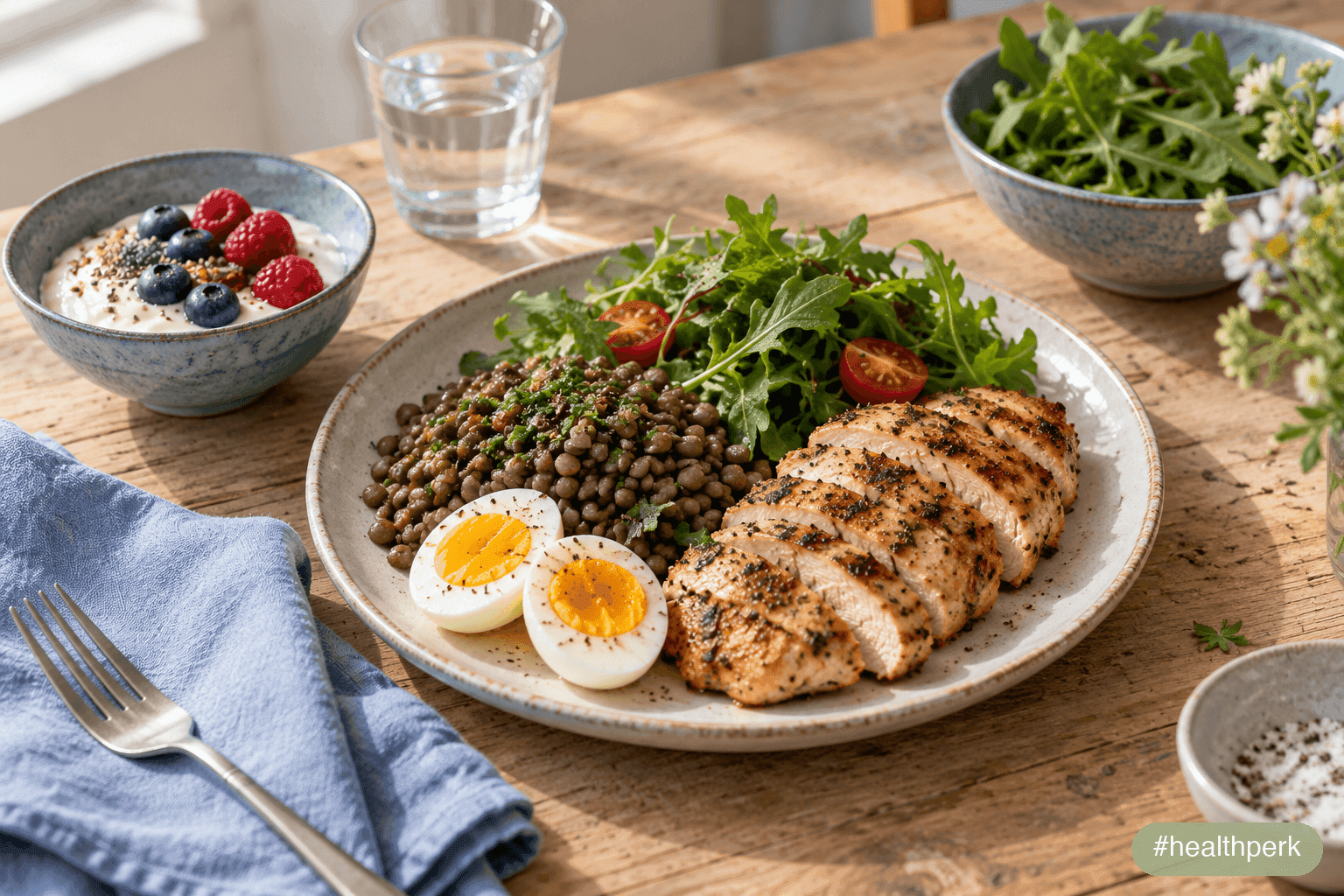
 Hitting a daily protein target is mostly about spreading everyday protein foods across your meals.
The answer you get to "how much protein per day" depends on whom you ask. Your doctor may quote the 0.8 g/kg Recommended Dietary Allowance (RDA), set in 2005. A trainer may tell you one gram per pound. The new US Dietary Guidelines, released in January 2026, put the target at 1.2–1.6 g/kg. That is 50–100% higher than the RDA.
This guide explains why those numbers differ and which one fits you. It also shows how to turn a g/kg figure into grams on your plate. We cover older adults, weight loss, GLP-1 medications, athletes, plant-based eaters, and people with kidney disease. You will find a body-weight table in kg and lb, plus a per-meal plan you can start tomorrow.
Table of Contents
- Why the RDA Is a Floor, Not a Target
- How Much Protein Per Day by Goal: What the Evidence Says
- Protein Per Kg of Body Weight: Daily Protein Calculator Table
- How Much Protein Can Your Body Use at Once?
- Food vs Protein Powder: Comparison
- Which Protein Target Is Right for You?
- How to Hit Your Daily Protein Target: Step-by-Step Plan
- Common Protein Myths Corrected
- When to See a Doctor
- Related Articles on Health Perk
- Frequently Asked Questions
- References
Why the RDA Is a Floor, Not a Target
The RDA of 0.8 g/kg comes from the Institute of Medicine's 2005 Dietary Reference Intakes [1]. It is based mostly on nitrogen balance studies. These measure the smallest intake at which healthy adults stop losing body protein. The RDA is set to cover about 97.5% of healthy people, so for most it is a generous minimum.
What the RDA does not measure is the intake that best preserves muscle, strength, and function over decades. In a 2016 review, Phillips, Chevalier, and Leidy argued that the RDA is not a target for good health. They proposed 1.2–1.6 g/kg/day for older adults and for people losing weight [3]. Those groups lose muscle more easily, and muscle protects mobility, blood sugar control, and independence.
What changed in 2026
The Dietary Guidelines for Americans, 2025–2030 were released by the USDA and HHS on January 7, 2026. They set "protein serving goals" of 1.2–1.6 grams of protein per kilogram of body weight per day, adjusted to individual calorie needs. They also say to prioritize protein foods at every meal [2].
The guidelines are a food-policy document, not a new RDA. The National Academies' RDA for protein has not been revised. The new range has also drawn debate among nutrition scientists, because the evidence is strongest for specific groups rather than the whole population. In practice, 0.8 g/kg is the floor that prevents deficiency, and 1.2–1.6 g/kg is a reasonable goal for many adults.
The counter-argument: protein restriction and aging
Not every researcher thinks more is better. In August 2026, Knopf and Lamming reviewed more than 350 studies in Cell Press Blue. They found that restricting protein or specific amino acids improves metabolic health and lifespan in animal models [14]. They proposed this as a basis for further research, mostly in sedentary adults.
The authors themselves note that older adults, pregnant women, and highly active people may need more protein, not less. Most of the evidence comes from mice and short human studies. It does not override the muscle-preservation data for the groups covered below. It is a reasonable caution against eating far beyond your needs, such as well over 2 g/kg every day, without a reason.
How Much Protein Per Day by Goal: What the Evidence Says
Healthy adults
For a healthy adult who is not trying to change body composition, 0.8 g/kg prevents deficiency [1]. Most US adults already eat more than that. Moving toward the 2026 guideline range of 1.2–1.6 g/kg is reasonable if it replaces refined carbohydrates rather than adding extra calories [2].
Older adults (65+)
Muscle becomes less responsive to protein with age, a process called anabolic resistance. The PROT-AGE Study Group recommends 1.0–1.2 g/kg/day for healthy adults over 65. It recommends 1.2–1.5 g/kg/day for those with acute or chronic illness [4]. It also suggests 25–30 g of protein per meal, containing about 2.5–2.8 g of leucine.
The ESPEN Expert Group reached similar numbers: at least 1.0–1.2 g/kg for healthy older adults and 1.2–1.5 g/kg for those with illness [5]. Both groups list severe kidney disease as the main exception. Both also stress that resistance exercise and protein work together.
Weight loss
When you eat fewer calories, part of the weight you lose comes from lean tissue. Higher-protein diets help limit that loss. Leidy and colleagues reviewed the evidence in 2015. They concluded that 1.2–1.6 g/kg/day, with about 25–30 g per meal, improves appetite control, body-weight management, and cardiometabolic risk factors [10]. Protein is also the most filling macronutrient per calorie.
If you are unsure where your calories are going, our macro calculator for protein, carbs, and fat turns a calorie target into grams of each macronutrient.
GLP-1 medication users
Drugs such as semaglutide and tirzepatide reduce appetite so much that protein intake can fall without people noticing. In the STEP 1 trial, semaglutide 2.4 mg produced a mean weight loss of 14.9% at 68 weeks [12]. In its body-composition substudy, lean mass made up a meaningful share of that loss.
A 2025 joint advisory came from the American College of Lifestyle Medicine, the American Society for Nutrition, the Obesity Medicine Association, and The Obesity Society. It notes that 1.2–1.6 g/kg/day has been proposed during active weight reduction [11]. Because body-weight formulas can overshoot in people with obesity, the advisory offers two alternatives: 1.5 g per kg of lean (fat-free) mass, or a simple absolute target of 80–120 g/day. It also advises against intakes below 0.4–0.5 g/kg and against prolonged intakes of 2 g/kg or more.
Protein matters even more when the medication stops. Our plan for keeping weight off after stopping a GLP-1 drug covers how protein, strength training, and tracking fit together in that phase.
Athletes and people who lift
The International Society of Sports Nutrition (ISSN) recommends 1.4–2.0 g/kg/day for most exercising people [6]. It suggests doses of about 0.25 g/kg (roughly 20–40 g) every 3–4 hours. Each dose should contain about 700–3,000 mg of leucine. The ISSN adds that intakes above 3.0 g/kg may help resistance-trained people lose fat, though this is not needed for most.
A 2018 meta-analysis of 49 trials by Morton and colleagues gives a useful ceiling. Gains in lean mass from added protein leveled off at about 1.62 g/kg/day (95% CI 1.03–2.20) [7]. Above that, most people get little extra muscle benefit.
Pregnancy
The RDA rises to 1.1 g/kg/day during pregnancy [1]. Pregnant people should set targets with their obstetric care team, especially with nausea, gestational diabetes, or a restrictive diet.
Protein Per Kg of Body Weight: Daily Protein Calculator Table
To calculate your own target, multiply your weight in kilograms by the g/kg figure for your goal. If you know your weight in pounds, divide by 2.2 first. For example, 165 lb ÷ 2.2 = 75 kg. Then 75 × 1.2 = 90 g of protein per day.
| Body weight | RDA (0.8 g/kg) | 1.2 g/kg | 1.6 g/kg | 2.0 g/kg | Per meal (0.4 g/kg) |
|---|---|---|---|---|---|
| 50 kg / 110 lb | 40 g | 60 g | 80 g | 100 g | 20 g |
| 60 kg / 132 lb | 48 g | 72 g | 96 g | 120 g | 24 g |
| 70 kg / 154 lb | 56 g | 84 g | 112 g | 140 g | 28 g |
| 80 kg / 176 lb | 64 g | 96 g | 128 g | 160 g | 32 g |
| 90 kg / 198 lb | 72 g | 108 g | 144 g | 180 g | 36 g |
| 100 kg / 220 lb | 80 g | 120 g | 160 g | 200 g | 40 g |
| 110 kg / 243 lb | 88 g | 132 g | 176 g | 220 g | 44 g |
| 120 kg / 265 lb | 96 g | 144 g | 192 g | 240 g | 48 g |
If you have obesity, do not multiply by total body weight. Fat tissue needs very little protein, so the right-hand columns overshoot quickly. Instead, use one of the GLP-1 advisory's approaches: 1.5 g per kg of lean mass, or an absolute 80–120 g/day [11]. A body-composition scale can estimate lean mass. Our smart scales comparison explains how accurate those estimates are.
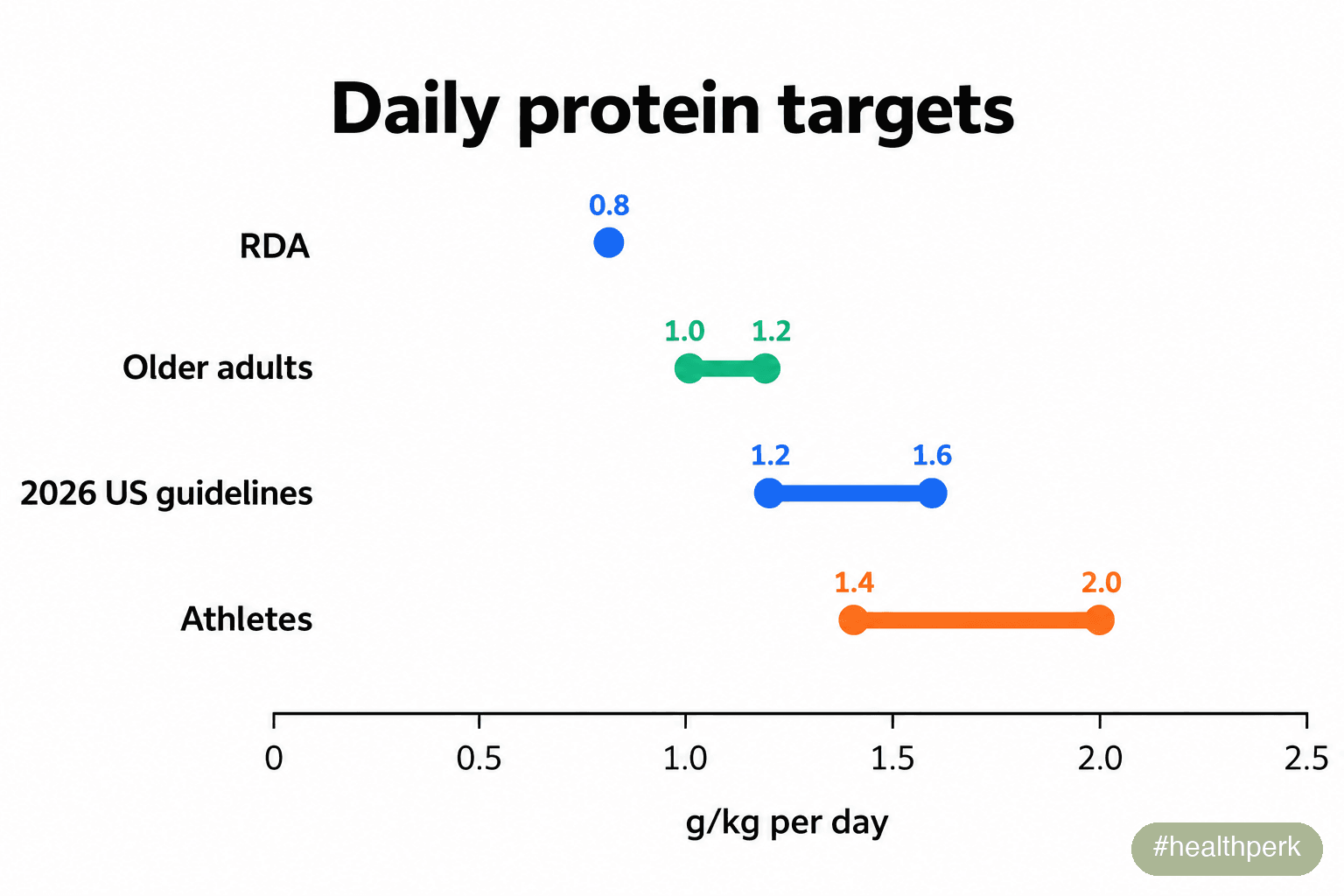 Daily protein targets by group, in grams per kilogram of body weight, from the RDA, PROT-AGE, the 2025–2030 Dietary Guidelines, and the ISSN.
How Much Protein Can Your Body Use at Once?
The old idea that your body can only "absorb" 20–30 g of protein per meal is a misreading of the research. You absorb nearly all the protein you eat. The real question is how much of a single dose goes toward building muscle versus being used for energy or other tissues.
Schoenfeld and Aragon reviewed this in 2018. They suggested about 0.4 g/kg per meal across at least four meals to reach 1.6 g/kg/day [8]. For higher targets, they suggested up to 0.55 g/kg per meal, reaching up to 2.2 g/kg/day. A 2023 study by Trommelen and colleagues found that 100 g of protein after exercise produced a larger and longer muscle-building response than 25 g, lasting more than 12 hours [9].
Practical takeaway: Spreading protein over 3–4 meals is a sensible default, especially for older adults. But a large protein meal is not "wasted." If you eat within a short window, your total for the day still matters most.
Food vs Protein Powder: Comparison
Whole foods should cover most of your protein. They also provide fiber, iron, zinc, calcium, vitamin B12, and omega-3 fats. Powders are a convenience tool for days when food falls short. Values below are approximate, based on USDA FoodData Central entries for typical portions.
| Option | Protein per typical serving | Leucine / quality | Other nutrients | Satiety | Convenience | Cost per 25 g protein |
|---|---|---|---|---|---|---|
| Chicken breast, cooked (100 g / 3.5 oz) | ~31 g | High, complete | B vitamins, selenium | High | Needs cooking | Moderate |
| Eggs (3 large) | ~19 g | High, complete | Choline, vitamin B12 | High | Quick | Low |
| Plain nonfat Greek yogurt (170 g / 6 oz) | ~16–17 g | High, complete | Calcium | Moderate | Ready to eat | Low to moderate |
| Lentils, cooked (1 cup) | ~18 g | Lower leucine; combine sources | Fiber, folate, iron | High | Batch-cook | Very low |
| Firm tofu (100 g) | ~17 g (varies by brand) | Complete | Calcium (if calcium-set) | Moderate | Quick | Low |
| Whey protein powder (1 scoop) | ~20–25 g (check label) | Highest leucine per gram | Few, unless fortified | Low as a drink | Highest | Moderate |
| Pea or soy protein powder (1 scoop) | ~20–25 g (check label) | Good; slightly less leucine than whey | Few | Low as a drink | Highest | Moderate |
Editorial verdict: Build your day around whole foods, using a mix of animal and plant sources if you eat both. Add a powder only when it fills a real gap, such as low appetite on a GLP-1 medication, a busy morning, or post-workout needs. Morton's meta-analysis found that supplements helped mainly when total protein was otherwise too low [7]. If you buy a powder, use our guide to choosing supplements safely with third-party testing. Certification lowers the risk of contamination and mislabeling.
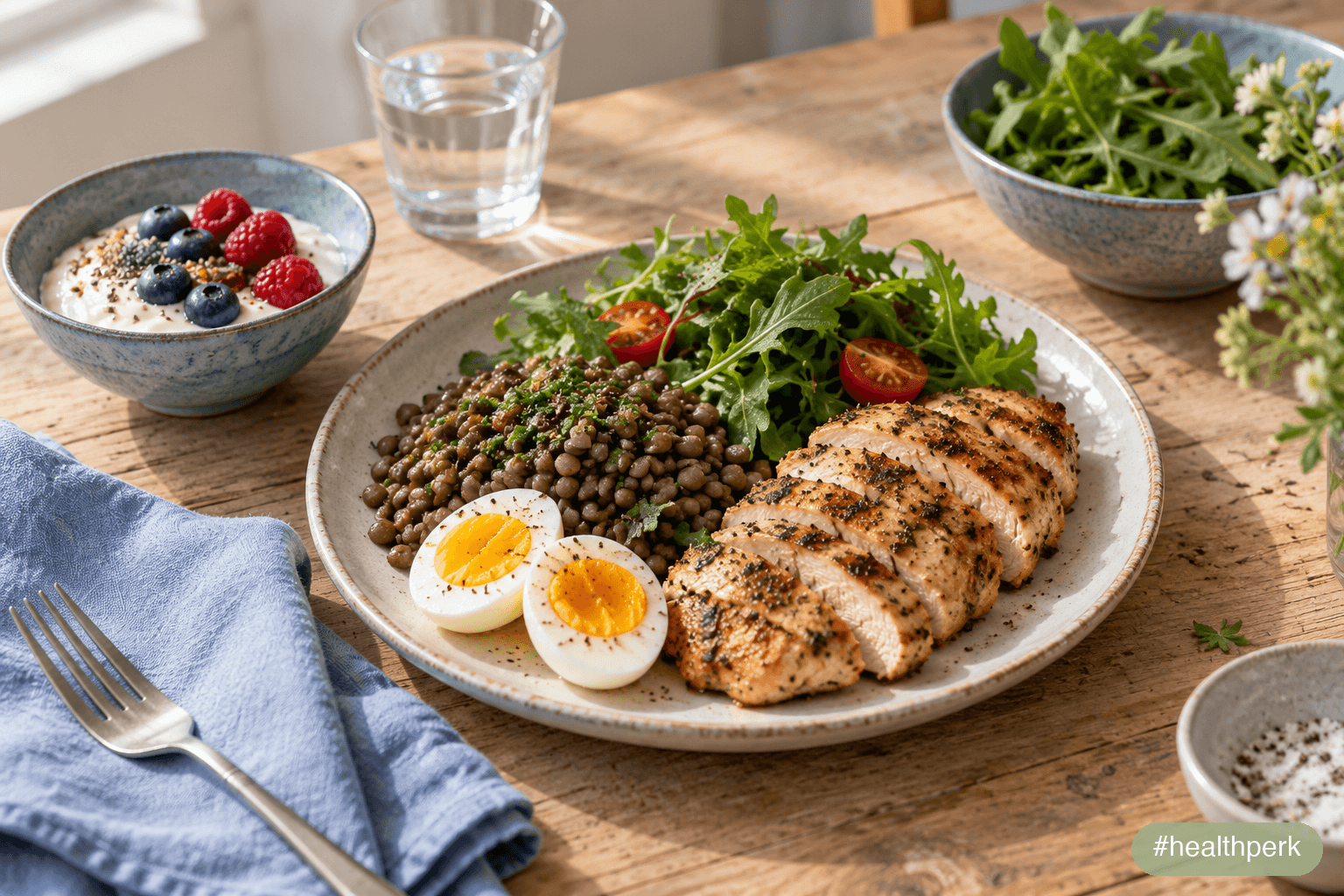
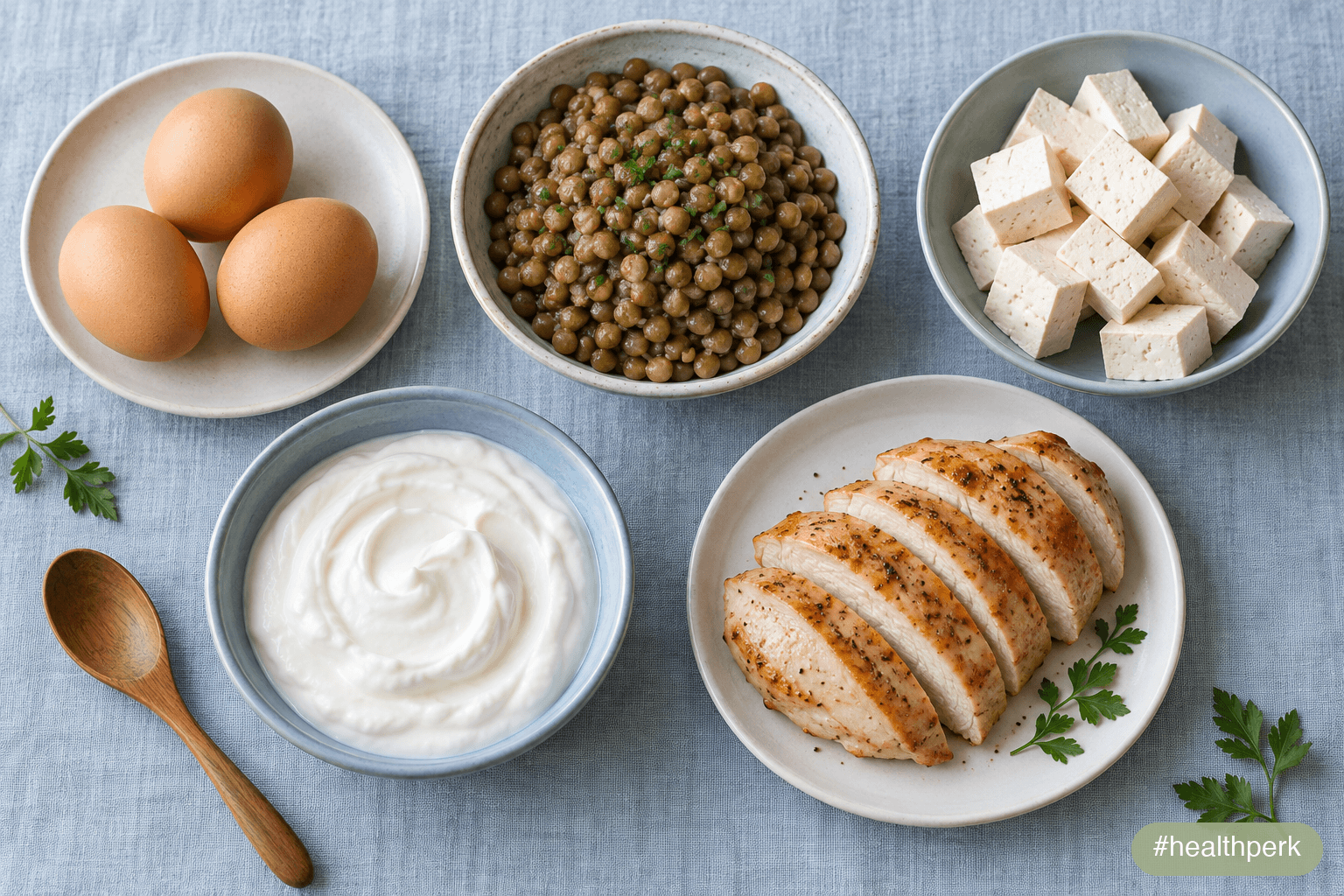 Three to four portions like these, spread across the day, cover most adults' protein needs without powders.
Which Protein Target Is Right for You?
The busy desk worker (35, 80 kg, no specific goal). The RDA gives 64 g, and the guideline range gives 96–128 g. Aiming for about 100 g is reasonable. That could be two eggs and yogurt at breakfast, a chicken or lentil lunch, and fish or tofu at dinner.
The retiree (70, 65 kg, walks daily). Use 1.0–1.2 g/kg, or 65–78 g per day. Put at least 25 g at each meal, because many older adults eat little protein at breakfast. Adding two or three resistance sessions per week makes the protein far more effective [4][5].
The dieter (45, 95 kg, BMI 32). Using 1.6 g/kg of total weight gives 152 g, which may be more than needed. An absolute target of about 100–120 g, or 1.5 g per kg of estimated lean mass, is more realistic [11]. Combine it with a modest calorie deficit and daily movement. Our guide to how many steps a day you need to lose weight covers the activity side.
The GLP-1 user (52, 105 kg, eating very little). Start with a floor of 80 g per day and work toward 100–120 g. Eat protein first at each meal, and use a shake when appetite is very low. Strength training two or more times per week helps protect muscle [11].
The lifter (28, 75 kg, trains 4–5 days a week). Use 1.6 g/kg, or about 120 g per day, eaten as four doses of about 30 g. Going beyond 2.0 g/kg (150 g) is unlikely to add much muscle [6][7]. If you lift, creatine for strength, brain, and energy has stronger evidence than most other supplements.
The person with chronic kidney disease. Do not use the higher targets in this article without medical advice. KDIGO's 2024 guideline suggests 0.8 g/kg/day for adults with CKD stages G3–G5 who are not on dialysis; dialysis generally raises protein needs. It advises avoiding more than 1.3 g/kg/day in adults with CKD at risk of progression [13].
How to Hit Your Daily Protein Target: Step-by-Step Plan
- Pick your g/kg number. Use the goal sections above: 0.8 as a minimum, 1.0–1.2 for older adults, 1.2–1.6 for weight loss or general health, and 1.4–2.0 for athletes.
- Calculate your daily grams. Multiply by your body weight in kg (lb ÷ 2.2). If you have obesity, use lean mass or an absolute 80–120 g target instead.
- Divide by your meals. Aim for 3–4 meals of about 0.4 g/kg each, or 25–40 g for most adults.
- Fix your weakest meal first. For most people that is breakfast. Greek yogurt, eggs, cottage cheese, or tofu scramble each add 15–25 g.
- Anchor each meal with one palm-size protein food. Then add vegetables, whole grains, or fruit around it.
- Track for one week. Log food for 5–7 days in a nutrition app to see your real intake. Our best apps for weight loss tracking review compares the options. Then adjust.
- Add strength training. Two or more sessions a week tell your body to use the protein to build or keep muscle.
- Use powder only to close gaps. One scoop of a third-party-tested powder is enough for most people.
- Drink enough water and keep fiber up. High-protein diets can crowd out plants. Keep beans, lentils, and vegetables on the plate.
- Recheck every few months. Update your target as your weight, activity level, or health changes.
Common Protein Myths Corrected
Myth: "The RDA is the amount everyone should aim for." The RDA prevents deficiency in healthy adults [1]. Higher intakes benefit older adults, people losing weight, and athletes [3][4][6]. The 2026 Dietary Guidelines now reflect that view [2].
Myth: "You can only absorb 30 g of protein per meal." Absorption is nearly complete. Larger doses still contribute to muscle building, just less efficiently per gram [8][9].
Myth: "High protein damages healthy kidneys." Kidney guidelines restrict protein only in people with chronic kidney disease [13]. Healthy adults eating 1.2–1.6 g/kg are well within studied ranges. If you have diabetes, high blood pressure, or a family history of kidney disease, ask for a kidney function test before going high.
Myth: "More protein always means more muscle." In Morton's meta-analysis, added muscle leveled off at about 1.6 g/kg [7]. Training, sleep, and total calories matter more beyond that point.
Myth: "Plant-based eaters can't get enough protein." They can. Soy foods, lentils, beans, seitan, and pea protein can meet 1.2–1.6 g/kg with planning. Larger portions or combining sources makes up for slightly lower leucine content.
Myth: "Protein makes you bulky." Building noticeable muscle takes progressive resistance training and enough calories over months. Protein alone does not.
When to See a Doctor
Talk to a doctor or registered dietitian before raising protein if any of these apply:
- Chronic kidney disease, a reduced eGFR, or protein in your urine. The safe intake can be well below the targets in this article [13].
- Liver disease, especially cirrhosis, where protein needs are individualized.
- Diabetes with kidney involvement or uncontrolled blood pressure.
- A history of gout or kidney stones, which may call for limits on certain protein sources.
- Pregnancy, breastfeeding, or an eating disorder history.
- You are on a GLP-1 medication and losing weight quickly. Ask about body-composition tracking and a dietitian referral.
Seek prompt care if you notice unintended weight loss, swelling in your legs or around your eyes, foamy urine, or a sharp drop in strength or walking speed. Ongoing fatigue with very low food intake is another warning sign. These can signal malnutrition, kidney problems, or muscle loss that needs medical attention.
Related Articles on Health Perk
- How to keep weight off after stopping GLP-1 drugs
- Creatine for brain and energy: what the evidence shows
- Supplements that help weight loss naturally
- How to boost metabolism naturally
- Why can't I lose weight even when dieting?
- Calculate your daily calorie needs with the TDEE calculator
Frequently Asked Questions
How much protein do I need a day to lose weight?
Most people losing weight do well on 1.2–1.6 g of protein per kg of body weight per day, with about 25–30 g at each meal [10]. That helps preserve muscle and control appetite during a calorie deficit. If you have obesity, use an absolute target of about 80–120 g/day, or base it on lean mass rather than total weight [11].
How much protein per day do I need to build muscle?
Aim for 1.4–2.0 g/kg per day, split into doses of about 0.25–0.4 g/kg every 3–4 hours [6][8]. A meta-analysis of 49 trials found muscle gains from added protein leveled off around 1.6 g/kg [7]. Consistent resistance training matters more than going beyond that number.
Is 100 grams of protein a day too much?
No, not for most healthy adults. 100 g equals 1.25 g/kg for an 80 kg (176 lb) person, which is within the 2025–2030 Dietary Guidelines range of 1.2–1.6 g/kg [2]. It may be too much for someone with chronic kidney disease not on dialysis, where about 0.8 g/kg is usually advised; people on dialysis generally need more protein and should follow their renal dietitian. Check with your doctor if you have kidney problems [13].
How much protein should I eat on Ozempic or another GLP-1 drug?
A 2025 joint advisory from four US nutrition and obesity societies notes that 1.2–1.6 g/kg/day has been proposed during active weight loss [11]. It also offers a practical absolute target of 80–120 g/day. Eat protein first at meals, and pair it with strength training to limit muscle loss.
How much protein can your body absorb at once?
Your body absorbs nearly all the protein you eat in a meal. A 2023 study found 100 g after exercise produced a larger and longer muscle-building response than 25 g [9]. Spreading about 0.4 g/kg across 3–4 meals is still a sensible default for most people [8].
How much protein do older adults need per day?
Expert groups recommend 1.0–1.2 g/kg per day for healthy adults over 65. They recommend 1.2–1.5 g/kg for those with acute or chronic illness [4][5]. Aim for 25–30 g at each meal and combine it with resistance exercise. People with severe kidney disease are the main exception.
Is protein powder as good as food?
Protein powder provides high-quality protein, and whey is especially rich in leucine. But it lacks the fiber, vitamins, and minerals of whole foods. Use it to fill gaps, such as low appetite or a missed meal. Choose third-party-tested products. Supplements mainly help when total daily protein is otherwise too low [7].
Can eating too much protein be harmful?
For healthy adults, intakes up to about 2 g/kg are widely studied and appear safe. Very high intakes can crowd out fiber-rich plant foods. People with chronic kidney disease should avoid more than 1.3 g/kg if at risk of progression [13]. A 2026 review also cautions against protein excess in sedentary people [14].
Medical Disclaimer: This article is for informational purposes only and does not constitute medical advice. Protein needs vary with age, health status, medications, and kidney function. Consult a qualified healthcare provider or registered dietitian before making significant changes to your diet, especially if you have kidney or liver disease, diabetes, are pregnant or breastfeeding, or take a GLP-1 medication. See how we review health content for our editorial standards.
References
- Institute of Medicine (2005). Dietary Reference Intakes for Energy, Carbohydrate, Fiber, Fat, Fatty Acids, Cholesterol, Protein, and Amino Acids. The National Academies Press. https://doi.org/10.17226/10490
Supports: RDA for protein is 0.8 g/kg/day for adults and 1.1 g/kg/day in pregnancy
- U.S. Department of Agriculture & U.S. Department of Health and Human Services (2026). Dietary Guidelines for Americans, 2025–2030. https://cdn.realfood.gov/DGA.pdf
Supports: Protein serving goals of 1.2–1.6 g per kg of body weight per day; prioritize protein foods at every meal
- Phillips, S. M., Chevalier, S., & Leidy, H. J. (2016). Protein "requirements" beyond the RDA: implications for optimizing health. Applied Physiology, Nutrition, and Metabolism, 41(5), 565–572. https://doi.org/10.1139/apnm-2015-0550
Supports: RDA is a minimum; 1.2–1.6 g/kg/day proposed for older adults and during weight loss
- Bauer, J., Biolo, G., Cederholm, T., et al. (2013). Evidence-Based Recommendations for Optimal Dietary Protein Intake in Older People: A Position Paper From the PROT-AGE Study Group. Journal of the American Medical Directors Association, 14(8), 542–559. https://doi.org/10.1016/j.jamda.2013.05.021
Supports: 1.0–1.2 g/kg/day for healthy older adults, 1.2–1.5 g/kg/day with illness, 25–30 g protein per meal with 2.5–2.8 g leucine
- Deutz, N. E., Bauer, J. M., Barazzoni, R., et al. (2014). Protein intake and exercise for optimal muscle function with aging: Recommendations from the ESPEN Expert Group. Clinical Nutrition, 33(6), 929–936. https://doi.org/10.1016/j.clnu.2014.04.007
Supports: At least 1.0–1.2 g/kg/day for healthy older adults and 1.2–1.5 g/kg/day for those with illness, combined with exercise
- Jäger, R., Kerksick, C. M., Campbell, B. I., et al. (2017). International Society of Sports Nutrition Position Stand: protein and exercise. Journal of the International Society of Sports Nutrition, 14, 20. https://doi.org/10.1186/s12970-017-0177-8
Supports: 1.4–2.0 g/kg/day for exercising individuals; 0.25 g/kg or 20–40 g doses every 3–4 hours with 700–3,000 mg leucine
- Morton, R. W., Murphy, K. T., McKellar, S. R., et al. (2018). A systematic review, meta-analysis and meta-regression of the effect of protein supplementation on resistance training-induced gains in muscle mass and strength in healthy adults. British Journal of Sports Medicine, 52(6), 376–384. https://doi.org/10.1136/bjsports-2017-097608
Supports: Gains in lean mass plateau at about 1.62 g/kg/day (95% CI 1.03–2.20) across 49 trials
- Schoenfeld, B. J., & Aragon, A. A. (2018). How much protein can the body use in a single meal for muscle-building? Implications for daily protein distribution. Journal of the International Society of Sports Nutrition, 15, 10. https://doi.org/10.1186/s12970-018-0215-1
Supports: About 0.4 g/kg per meal across at least four meals (up to 0.55 g/kg/meal for 2.2 g/kg/day)
- Trommelen, J., van Lieshout, G. A. A., Nyakayiru, J., et al. (2023). The anabolic response to protein ingestion during recovery from exercise has no upper limit in magnitude and duration in vivo in humans. Cell Reports Medicine, 4(12), 101324. https://doi.org/10.1016/j.xcrm.2023.101324
Supports: 100 g protein produced a larger and more prolonged anabolic response than 25 g
- Leidy, H. J., Clifton, P. M., Astrup, A., et al. (2015). The role of protein in weight loss and maintenance. The American Journal of Clinical Nutrition, 101(6), 1320S–1329S. https://doi.org/10.3945/ajcn.114.084038
Supports: 1.2–1.6 g/kg/day with about 25–30 g protein per meal improves appetite, weight management, and cardiometabolic risk factors
- Mozaffarian, D., Agarwal, M., Aggarwal, M., et al. (2025). Nutritional priorities to support GLP-1 therapy for obesity: A joint Advisory from the American College of Lifestyle Medicine, the American Society for Nutrition, the Obesity Medicine Association, and The Obesity Society. Obesity, 33(8), 1475–1503. https://doi.org/10.1002/oby.24336
Supports: 1.2–1.6 g/kg/day proposed during active weight reduction; 1.5 g/kg lean mass or 80–120 g/day absolute target; avoid <0.4–0.5 g/kg and prolonged ≥2 g/kg
- Wilding, J. P. H., Batterham, R. L., Calanna, S., et al. (2021). Once-Weekly Semaglutide in Adults with Overweight or Obesity. New England Journal of Medicine, 384(11), 989–1002. https://doi.org/10.1056/NEJMoa2032183
Supports: Semaglutide 2.4 mg produced 14.9% mean weight loss at 68 weeks, with lean mass loss in the body-composition substudy
- Stevens, P. E., Ahmed, S. B., Carrero, J. J., et al. (2024). KDIGO 2024 Clinical Practice Guideline for the Evaluation and Management of Chronic Kidney Disease. Kidney International, 105(4S), S117–S314. https://doi.org/10.1016/j.kint.2023.10.018
Supports: 0.8 g/kg/day protein for adults with CKD G3–G5; avoid >1.3 g/kg/day in adults with CKD at risk of progression
- Knopf, B. A., & Lamming, D. W. (2026). The hallmarks of protein and amino acid restriction in aging and longevity. Cell Press Blue, 1(5), 100079. https://doi.org/10.1016/j.cpblue.2026.100079
Supports: Protein restriction improves metabolic health and lifespan in animal models; authors note higher needs for older adults, pregnant women, and active people
Frequently Asked Questions
How much protein do I need a day to lose weight?
Most people losing weight do well on 1.2–1.6 g of protein per kg of body weight per day, with about 25–30 g at each meal. That helps preserve muscle and control appetite during a calorie deficit. If you have obesity, use an absolute target of about 80–120 g/day, or base it on lean mass rather than total weight.
How much protein per day do I need to build muscle?
Aim for 1.4–2.0 g/kg per day, split into doses of about 0.25–0.4 g/kg every 3–4 hours. A meta-analysis of 49 trials found muscle gains from added protein leveled off around 1.6 g/kg. Consistent resistance training matters more than going beyond that number.
Is 100 grams of protein a day too much?
No, not for most healthy adults. 100 g equals 1.25 g/kg for an 80 kg (176 lb) person, which is within the 2025–2030 Dietary Guidelines range of 1.2–1.6 g/kg. It may be too much for someone with chronic kidney disease not on dialysis, where about 0.8 g/kg is usually advised; people on dialysis generally need more protein and should follow their renal dietitian. Check with your doctor if you have kidney problems.
How much protein should I eat on Ozempic or another GLP-1 drug?
A 2025 joint advisory from four US nutrition and obesity societies notes that 1.2–1.6 g/kg/day has been proposed during active weight loss. It also offers a practical absolute target of 80–120 g/day. Eat protein first at meals, and pair it with strength training to limit muscle loss.
How much protein can your body absorb at once?
Your body absorbs nearly all the protein you eat in a meal. A 2023 study found 100 g after exercise produced a larger and longer muscle-building response than 25 g. Spreading about 0.4 g/kg across 3–4 meals is still a sensible default for most people.
How much protein do older adults need per day?
Expert groups recommend 1.0–1.2 g/kg per day for healthy adults over 65. They recommend 1.2–1.5 g/kg for those with acute or chronic illness. Aim for 25–30 g at each meal and combine it with resistance exercise. People with severe kidney disease are the main exception.
Is protein powder as good as food?
Protein powder provides high-quality protein, and whey is especially rich in leucine. But it lacks the fiber, vitamins, and minerals of whole foods. Use it to fill gaps, such as low appetite or a missed meal. Choose third-party-tested products. Supplements mainly help when total daily protein is otherwise too low.
Can eating too much protein be harmful?
For healthy adults, intakes up to about 2 g/kg are widely studied and appear safe. Very high intakes can crowd out fiber-rich plant foods. People with chronic kidney disease should avoid more than 1.3 g/kg if at risk of progression. A 2026 review also cautions against protein excess in sedentary people.