Supplement Side Effects List: A 2026 Evidence-Based Safety Guide
Supplement Side Effects List: A 2026 Evidence-Based Safety Guide
By the HealthPerk Editorial Team · Last updated: May 2026
Quick Answer
What belongs on a defensible supplement side effects list in 2026?
The honest 2026 supplement side effects list is shorter than the marketing scare stories and longer than the "natural means safe" reassurances. The reproducible harms cluster in five categories: hypervitaminosis from fat-soluble vitamins (A, D, E, K) taken above tolerable upper intake levels for months, mineral toxicity from iron and copper accumulation, hepatotoxicity from a small set of botanical ingredients (green tea catechin extracts, kava, comfrey, certain weight-loss and bodybuilding products), drug-nutrient interactions that change how prescription medicines work (St John's wort with most metabolized drugs, vitamin K with warfarin, calcium and iron with thyroid hormone and quinolones, grapefruit-equivalent inhibitors of CYP3A4), and contamination of poorly manufactured products with undeclared pharmaceuticals or heavy metals. Most water-soluble vitamins and most single-ingredient mineral supplements taken at or below the tolerable upper intake level (UL) are well tolerated; problems concentrate in megadosing, multi-product stacking, niche botanicals, and the failure to disclose supplement use to a prescribing clinician.
A short orientation table:
| Category | Where the real risk sits | What to watch |
|---|---|---|
| Fat-soluble vitamins (A, D, E, K) | Stored in body; cumulative toxicity above the UL over weeks-to-months | Vitamin A >3,000 mcg RAE/day, Vitamin D >4,000 IU/day chronic, Vitamin E >1,000 mg/day, Vitamin K interaction with warfarin |
| Minerals | Iron and copper accumulate; calcium competes with absorption of others | Iron without confirmed deficiency, calcium >2,000 mg/day, zinc >40 mg/day chronic |
| Botanicals | Hepatotoxicity, sympathomimetic effects, drug interactions | Green tea extract (EGCG), kava, comfrey, yohimbe, ephedra-class, ashwagandha in liver disease |
| Drug interactions | Most under-reported supplement harm in 2026 | St John's wort, vitamin K, calcium/iron with thyroid, grapefruit-equivalent CYP inhibitors |
| Quality and contamination | Adulteration with undeclared pharmaceuticals, heavy metals, wrong species | Weight-loss, sexual-performance, bodybuilding categories highest risk |
| Niacin | Flushing at low doses; hepatotoxicity at high (sustained-release) doses | Slow-release niacin >1,500 mg/day |
| Iron | GI upset routinely; overload in hemochromatosis carriers | Iron without confirmed deficiency |
| Vitamin B6 | Sensory peripheral neuropathy at chronic high doses | Pyridoxine >100 mg/day chronic |
The phrase supplement side effects list is among the most-searched supplement queries in 2026, and the consumer information environment around it is bimodal. One side claims supplements are essentially benign because they are "natural" or available without prescription. The other side claims supplements are essentially dangerous and discourages all use. Neither framing matches the evidence. The 2026 picture is that most single-ingredient supplements taken within published tolerable upper intake levels (ULs) by a healthy adult are well tolerated, and most documented harms cluster in identifiable patterns: fat-soluble vitamin accumulation above the UL over months, iron loading in adults without confirmed deficiency, a short list of hepatotoxic botanicals, drug-nutrient interactions that the prescribing clinician was never told about, and adulteration of products in the weight-loss, sexual-performance, and bodybuilding categories.
This guide walks through where the real risks sit, what daily and long-term use actually does, what "vitamin overdose" means in concrete numbers, the medication interactions that matter most often, and how to test for the specific deficiencies that justify supplementation in the first place — so the side-effect calculus runs against a real clinical need rather than a vague hope.
Table of Contents
- Can Supplements Be Harmful: Where the Real Risks Sit in 2026
- Risks of Taking Supplements Daily: Cumulative Exposure and Habituation
- Long Term Supplement Risks: What Multi-Year Use Actually Does
- Can You Overdose on Vitamins: Tolerable Upper Intake Levels in 2026
- Supplement Interactions with Medications: The Combinations That Matter
- How to Test for Vitamin Deficiencies Before You Supplement
- Frequently Asked Questions
- References
Can Supplements Be Harmful: Where the Real Risks Sit in 2026
Can supplements be harmful is best answered by looking at where injuries are actually documented in 2026 emergency-department data, drug-induced liver injury registries, and pharmacovigilance reports rather than at theoretical concern lists.
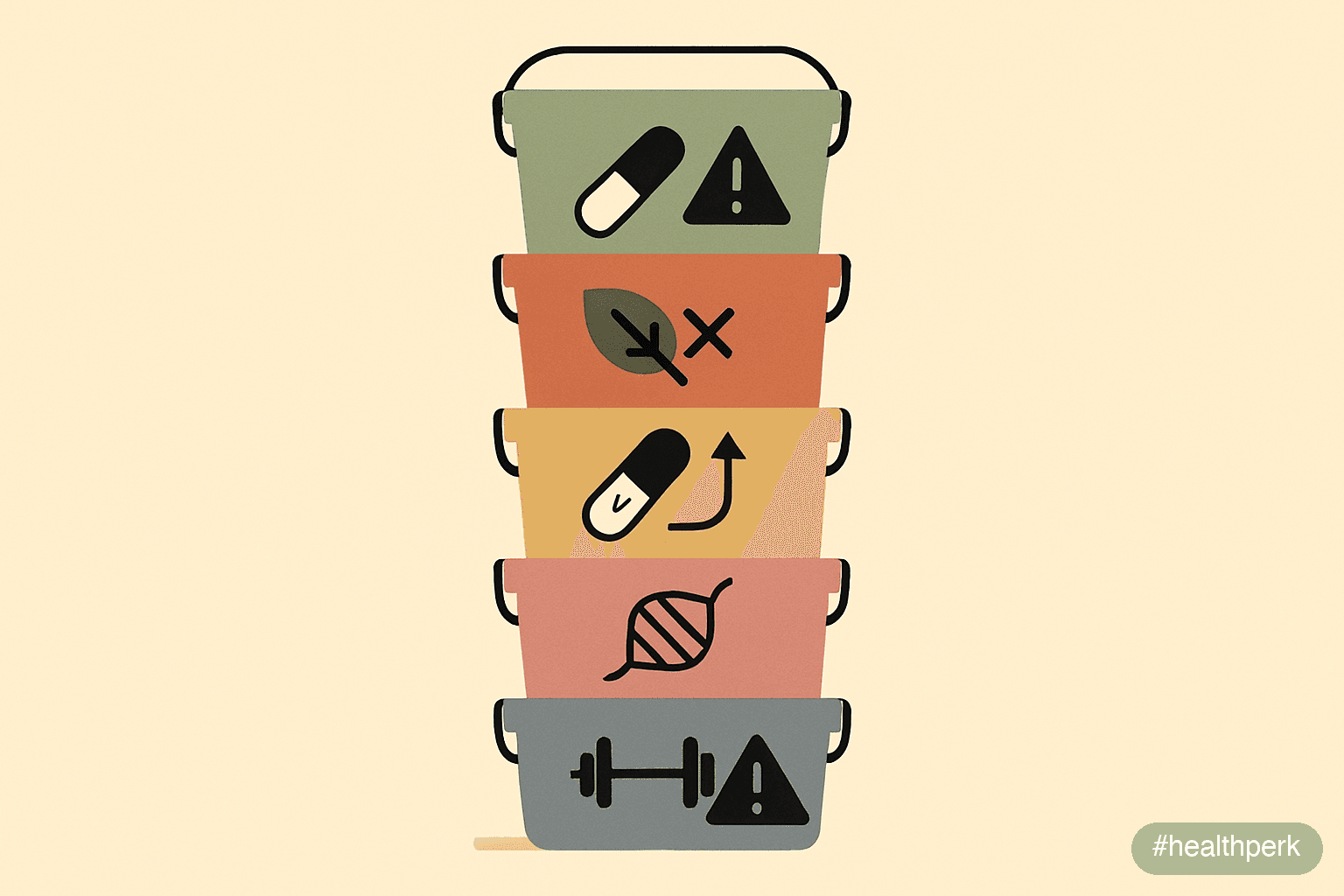
The five categories that account for most documented harm:
- Drug-nutrient interactions. This is the largest under-reported category. The 2015 New England Journal of Medicine analysis of US emergency-department visits attributed roughly 23,000 adult ED visits per year to dietary supplements, and a substantial fraction of older-adult cases involved interactions with prescription medication. The most consequential interactions in 2026 remain St John's wort with most CYP3A4-metabolized drugs (oral contraceptives, immunosuppressants, certain antidepressants, certain anticoagulants), vitamin K with warfarin, calcium and iron with levothyroxine and fluoroquinolone antibiotics, potassium-containing supplements with ACE inhibitors and ARBs, and grapefruit-equivalent CYP3A4 inhibitors with statins.
- Hepatotoxic botanicals. The Drug-Induced Liver Injury Network (DILIN) has consistently identified herbal and dietary supplements as a leading cause of drug-induced liver injury in the United States, with the supplement share of DILIN cases increasing from roughly 7% in 2004–2005 to over 20% by the late 2010s and remaining elevated through the 2026 update. The repeat offenders are green tea extract (high-dose EGCG), kava, comfrey (pyrrolizidine alkaloids), and a long tail of multi-ingredient bodybuilding and weight-loss products.
- Fat-soluble vitamin accumulation. Vitamins A, D, E, and K are stored in body tissues and accumulate with chronic dosing above the UL. Vitamin A toxicity (>10,000 IU/day chronically) causes liver injury, raised intracranial pressure, and skeletal effects. Vitamin D toxicity (typically with serum 25-hydroxyvitamin D >150 ng/mL after months of >10,000 IU/day) causes hypercalcemia, kidney stones, and renal injury. Vitamin E above ~1,000 mg/day chronically modestly raises hemorrhagic stroke risk and interacts with anticoagulants.
- Iron and copper accumulation. Iron supplements taken without documented deficiency can unmask hereditary hemochromatosis (HFE gene variants are present in roughly 1 in 200 adults of Northern European ancestry). Copper accumulation occurs with chronic high-dose supplementation and is particularly relevant for adults with Wilson disease or biliary disease.
- Adulteration and contamination. FDA tainted-product databases continue to flag undeclared pharmaceuticals (sibutramine in weight-loss products, sildenafil analogues in sexual-performance products, anabolic steroids in bodybuilding products) and, less commonly, heavy metals in poorly sourced botanicals. Third-party verification (USP Verified, NSF Certified for Sport, Informed Sport) substantially reduces this risk.
Several smaller-but-real risk pockets:
- Niacin in sustained-release form above ~1,500 mg/day is hepatotoxic; immediate-release flushing is uncomfortable but not toxic at the same dose level
- Vitamin B6 (pyridoxine) above ~100 mg/day chronically causes a sensory peripheral neuropathy that may not fully reverse
- Selenium above the 400 mcg/day UL causes selenosis (hair and nail loss, GI upset); whole Brazil nuts can deliver this dose
- Yohimbe causes hypertension, anxiety, and arrhythmia at higher doses
- Ashwagandha has been linked to a small but real signal of drug-induced liver injury in 2020s case series
The framing that matches the data: most single-ingredient supplements at ≤UL doses, in healthy adults not taking interacting medications, from third-party-verified manufacturers, are well tolerated. Risks scale with megadosing, multi-product stacking, niche botanicals, undisclosed use alongside prescriptions, and unverified product quality.
Risks of Taking Supplements Daily: Cumulative Exposure and Habituation
Risks of taking supplements daily are mostly about cumulative exposure, not single-dose toxicity. A 5,000 IU vitamin D capsule taken once is harmless; the same dose taken every day for two years in a healthy adult who does not also need it is a different exposure profile.
The 2026 daily-use risk patterns:
- Stacking inadvertently exceeds the UL. A multivitamin (1,000 IU vitamin D, 7.5 mg zinc, 60 mg vitamin C), a separate vitamin D capsule (2,000 IU), and a "bone support" formula (another 1,000 IU vitamin D) deliver 4,000 IU/day before any sun exposure or fortified foods. Reading every label and adding the totals is the single highest-yield protective habit.
- Daily use without an indication. Supplements are not free; they are physiologic interventions with dose-response effects. A daily intake of a nutrient already adequate from diet does not improve outcomes and shifts the side-effect calculus toward cost and risk without offsetting benefit.
- Drug-interaction load increases with each added product. Each new daily supplement adds a row to the interaction matrix with prescription medications. Older adults on five or more prescription medications and three or more supplements are the highest-risk group in the 2026 pharmacovigilance data.
- Habituation and lab-test masking. Chronic high-dose biotin (commonly 5,000–10,000 mcg/day in hair/skin/nail products) interferes with biotin-streptavidin-based immunoassays and has caused clinically significant misreads of cardiac troponin and thyroid panels; the FDA issued and reaffirmed warnings on this through the 2020s and the issue persists in 2026 as a daily-use risk for adults presenting to emergency care.
- Tolerance and rebound expectations. A subset of supplement users escalate dose when initial perceived effects plateau — a pattern that pushes intake above the UL without an underlying deficit to justify it.
- Cost displacement. Daily supplement spending in adults with limited budgets sometimes displaces produce, fish, or prescription medication adherence — an indirect but real harm pathway.
A practical 2026 daily-use rule of thumb: every supplement on the daily list should answer three questions — what indication does this address, at what dose with what evidence, and for how long. A supplement that cannot answer all three should be re-examined.
Long Term Supplement Risks: What Multi-Year Use Actually Does
Long term supplement risks are the slowest-moving but most consequential part of the side-effect picture. The 2026 multi-year evidence base now spans several large RCTs and prospective cohorts that have followed adults for 5–20 years.
What multi-year use does, by category:
- Beta-carotene at high doses increased lung cancer incidence in current and former smokers in the ATBC and CARET trials at doses of 20–30 mg/day over 4–8 years. The signal has been reproduced and is the most cautionary long-term supplement finding in modern nutrition. Beta-carotene at high doses should not be supplemented in current or former smokers.
- Vitamin E at high doses (≥400 IU/day) modestly increased all-cause mortality in pooled meta-analysis of long-term trials (Miller 2005), and high-dose vitamin E with selenium showed a non-significant increase in prostate cancer incidence in SELECT (later updated to a significant increase in vitamin-E-only arm follow-up). Long-term high-dose vitamin E is not recommended outside specific clinical indications.
- High-dose calcium supplementation (>1,000 mg/day from supplements specifically, beyond dietary intake) showed a modest increase in cardiovascular events in some meta-analyses, particularly when not paired with adequate vitamin D, and a modest increase in kidney stones in the Women's Health Initiative. Total intake (food plus supplements) within 1,000–1,200 mg/day is the safer target.
- Iron supplementation without confirmed deficiency over years can drive ferritin into the iron-overload range and contribute to oxidative stress. Iron is not a "general energy" supplement; it should follow a confirmed deficiency.
- Long-term selenium above the 400 mcg/day UL causes selenosis with reversible nail and hair loss, and chronic intake at the high end of the normal range has been associated with a small increase in type 2 diabetes risk in selenium-replete populations.
- Chronic vitamin B6 (pyridoxine) >100 mg/day causes sensory peripheral neuropathy that may not fully reverse on cessation.
- Multivitamins. Long-term randomized trial data (PHS II in male physicians, COSMOS in older adults) show small or null effects on cardiovascular events and cancer overall, with a modest signal for cognitive benefit in COSMOS. Long-term harm signals are absent. A daily multivitamin is not a high-risk long-term exposure but is also not a high-yield one.
- Fish oil at standard doses has a clean long-term safety profile through the 2025 update of major cardiovascular trials, with the main caveat being a small atrial-fibrillation signal at very high doses (≥4 g/day EPA+DHA).
- Vitamin D within the 600–4,000 IU/day range has a clean long-term safety profile in the VITAL and D2d follow-up cohorts when serum 25-hydroxyvitamin D remains <100 ng/mL.
The pattern across multi-year evidence is that megadosing of antioxidant vitamins (A as beta-carotene, E, sometimes selenium) produces small but real long-term harm signals, while moderate-dose use of vitamin D, omega-3, and a daily multivitamin within published limits does not. "More is better" is the assumption that fails in the long-term data.
Can You Overdose on Vitamins: Tolerable Upper Intake Levels in 2026
Can you overdose on vitamins is a yes-with-specifics question. The Institute of Medicine (now the National Academies of Sciences, Engineering, and Medicine) published Tolerable Upper Intake Levels (ULs) that define the maximum daily intake from all sources unlikely to cause adverse effects in nearly all healthy adults. The ULs in force through 2026:
- Vitamin A: 3,000 mcg RAE/day (~10,000 IU/day) for adults. Toxicity above this includes liver injury, raised intracranial pressure, dry skin, and skeletal effects; teratogenic above this dose in pregnancy.
- Vitamin D: 4,000 IU/day for adults; the Endocrine Society allows higher doses in supervised treatment of deficiency. Frank toxicity (hypercalcemia, kidney stones, renal injury) typically requires sustained intake of 10,000+ IU/day with serum 25-hydroxyvitamin D >150 ng/mL.
- Vitamin E: 1,000 mg/day (1,500 IU/day natural / 1,100 IU/day synthetic) for adults. Higher chronic intake interacts with anticoagulants and modestly raises hemorrhagic stroke risk.
- Vitamin K: No UL set, but pharmacologic interaction with warfarin requires consistent intake rather than dose-restriction.
- Vitamin C: 2,000 mg/day for adults. Above this, GI distress and a possible increase in oxalate kidney stone risk in susceptible adults.
- Niacin (B3): 35 mg/day for adults from supplements (food forms are not limited). Higher doses cause flushing (immediate-release) and hepatotoxicity (sustained-release >1,500 mg/day).
- Vitamin B6 (pyridoxine): 100 mg/day for adults. Sensory peripheral neuropathy above this, particularly at chronic 200+ mg/day.
- Folate (folic acid): 1,000 mcg/day for adults from supplements. Higher intake can mask vitamin B12 deficiency and may have other concerns under continued investigation in 2026.
- Vitamin B12: No UL set; very low toxicity in healthy adults.
- Iron: 45 mg/day for adults. GI side effects routinely; iron overload over years in adults supplementing without confirmed deficiency.
- Zinc: 40 mg/day for adults. Above this, chronic intake suppresses copper absorption and impairs immune function.
- Calcium: 2,500 mg/day for adults 19–50; 2,000 mg/day for adults ≥51.
- Magnesium (from supplements): 350 mg/day. Diarrhea is the dose-limiting effect; food magnesium is not restricted.
- Selenium: 400 mcg/day for adults. Selenosis above this.
- Iodine: 1,100 mcg/day for adults.
Three nuances that matter:
- The UL is not the toxic dose. The UL is the level below which no adverse effects are expected for nearly all healthy adults. Frank toxicity usually requires intake well above the UL for weeks to months.
- Stacking matters. Total daily intake from food, fortified products, and all supplements added together must stay under the UL.
- Therapeutic dosing under medical supervision can exceed the UL. Vitamin D 50,000 IU once weekly for 8 weeks for documented deficiency is a common clinical regimen and is appropriate when clinician-monitored.
Acute single-dose vitamin overdose is rare in adults and almost always involves either a deliberate or pediatric ingestion of a fat-soluble vitamin or iron product. The much more common pattern is chronic intake above the UL from layered supplement use.
Supplement Interactions with Medications: The Combinations That Matter
Supplement interactions with medications are the most under-reported supplement harm in 2026. The repeat-offender list is short, well-characterized, and worth memorizing for any adult on a daily prescription medication.
The interactions that matter most in 2026 clinical practice:
- St John's wort + CYP3A4-metabolized drugs. St John's wort is a potent inducer of CYP3A4, P-glycoprotein, and other transport proteins. It reduces serum levels of oral contraceptives (contraceptive failure), immunosuppressants (transplant rejection), HIV protease inhibitors, certain anticoagulants, certain antineoplastics, certain statins, and the SSRI/SNRI class (with risk of serotonin syndrome via additional pharmacodynamic effect). Adults on any chronic prescription should not take St John's wort without an interaction check.
- Vitamin K + warfarin. Vitamin K reverses warfarin's anticoagulant effect. Consistent daily vitamin K intake is the goal; the issue is change (starting, stopping, or fluctuating dose), which destabilizes the INR. Vitamin K supplements (including K2 and K1) and high-K foods (kale, spinach, collards) should be kept consistent week-to-week in adults on warfarin.
- Calcium and iron + levothyroxine. Calcium and iron supplements bind levothyroxine in the GI tract and reduce absorption by up to 30–50%. Separation by at least 4 hours from the morning thyroid dose is the standard adjustment.
- Calcium, iron, magnesium, zinc + fluoroquinolone and tetracycline antibiotics. Same chelation issue. Separate by 2–6 hours depending on the antibiotic; check the package insert.
- Potassium-containing supplements + ACE inhibitors, ARBs, potassium-sparing diuretics. Risk of hyperkalemia, particularly in older adults and those with chronic kidney disease.
- Vitamin E and fish oil at high doses + anticoagulants/antiplatelets. Additive bleeding risk. Standard 1,000 mg/day combined EPA+DHA fish oil does not meaningfully change bleeding risk in most patients on anticoagulants per recent reviews, but high-dose fish oil (≥4 g/day) and high-dose vitamin E (≥400 IU/day) deserve clinician review in adults on warfarin, DOACs, or dual antiplatelet therapy.
- Grapefruit-equivalent CYP3A4 inhibitors + statins. Some botanicals (red yeast rice, certain bitter orange products) interact with simvastatin, lovastatin, and atorvastatin in ways analogous to grapefruit juice.
- Yohimbe + antihypertensives, MAOIs. Hypertensive episodes and serious cardiovascular events.
- Niacin (high dose) + statins. Increased risk of myopathy at niacin doses ≥1,500 mg/day; the AIM-HIGH and HPS2-THRIVE trials also showed increased adverse events with limited cardiovascular benefit.
- 5-HTP, SAMe, St John's wort + serotonergic prescriptions. Risk of serotonin syndrome.
- Ashwagandha and kava + sedatives, alcohol. Additive CNS depression.
- Ginkgo biloba + anticoagulants/antiplatelets. Additive bleeding risk.
- Biotin (high dose) + immunoassay-based lab tests. Not a pharmacologic interaction but a clinically critical test interaction; high-dose biotin causes false readings of cardiac troponin, thyroid panels, and certain hormone assays. Stop biotin 48–72 hours before lab testing and tell the ordering clinician.
The single most consequential 2026 behavioral change is full disclosure: every prescription clinician and pharmacist should be told every supplement, including dose and frequency, at every visit. Most supplement-medication interaction harm originates in undisclosed combinations rather than in pharmacology no one understood.
How to Test for Vitamin Deficiencies Before You Supplement

How to test for vitamin deficiencies matters because targeted supplementation following a confirmed deficiency has a defensible benefit-risk profile, while empirical supplementation in the absence of a deficit has an unfavorable one. The 2026 testing landscape has matured; the relevant assays are inexpensive, validated, and ordered through standard primary care.
The targeted panel that covers most clinically relevant deficiencies in adults:
- Vitamin D: serum 25-hydroxyvitamin D (25-OH-D). The single best marker. Adequate is generally ≥30 ng/mL (≥75 nmol/L); deficiency is <20 ng/mL (<50 nmol/L); insufficiency is 20–30 ng/mL. Test before starting routine vitamin D supplementation in adults at higher risk (limited sun exposure, darker skin, obesity, malabsorption, older age). Avoid 1,25-dihydroxyvitamin D as a screening test; it does not reflect storage status.
- Iron status: ferritin + transferrin saturation, with CBC. Ferritin <30 ng/mL indicates iron deficiency (lower in adults with concurrent inflammation; some guidelines use <100 ng/mL when CRP is elevated). Transferrin saturation >45% raises concern for iron overload. Serum iron alone is too volatile to use as a screening test.
- Vitamin B12: serum B12 with reflex methylmalonic acid (MMA) or holotranscobalamin. Serum B12 <200 pg/mL is deficient; 200–300 pg/mL is the "indeterminate" range where MMA (>0.4 µmol/L) or homocysteine help confirm a true deficit. Older adults, vegans, adults on metformin or chronic proton pump inhibitor therapy, and adults with prior gastric or ileal surgery are highest yield to test.
- Folate: RBC folate (preferred) or serum folate. RBC folate reflects 3–4 month status; serum folate reflects recent intake.
- Magnesium: serum magnesium and, where available, RBC magnesium. Serum magnesium misses many deficits because most magnesium is intracellular; symptomatic adults with normal serum magnesium may benefit from RBC magnesium or a clinician trial of supplementation.
- Zinc: serum zinc + ceruloplasmin if assessing copper-zinc balance; serum zinc alone has limitations and should be paired with clinical context.
- Thyroid: TSH + free T4 (not a vitamin, but routinely confused with B12/iron deficiency in fatigue presentations and worth ordering on the same draw).
- Common adjuncts in fatigue/cognitive evaluation: CBC, comprehensive metabolic panel, HbA1c, ferritin, 25-OH-D, B12 ± MMA, TSH. This panel, ordered for a clinical reason, identifies most reversible nutritional contributors.
What not to spend money on in 2026:
- Hair mineral analysis for nutritional status: not validated; results are not reproducible across labs and do not correlate with tissue stores.
- "Micronutrient panels" marketed direct-to-consumer with 30+ vitamins and minerals: the assays for many components (especially water-soluble vitamins below the level of clinical deficiency) do not have validated cutoffs and do not change clinical management.
- Routine 1,25-dihydroxyvitamin D for vitamin D status assessment: it is the wrong test; 25-OH-D is the storage marker.
When testing is appropriate:
- Symptoms suggesting deficiency (fatigue, neurologic symptoms, hair changes, mood changes, dyspnea) — order the targeted panel
- Risk groups for specific deficiencies (vegans for B12 and iron; older adults for B12 and vitamin D; menstruating adults with heavy bleeding for iron; adults with malabsorption or bariatric surgery for fat-soluble vitamins, B12, iron, and zinc)
- Before starting long-term high-dose supplementation of any nutrient with a UL, particularly fat-soluble vitamins and iron
- Monitoring during treatment of confirmed deficiency to confirm normalization and guide cessation
The principle: lab confirmation transforms supplementation from an aspirational gesture into a closed-loop intervention with a defined endpoint. This is the single biggest reduction in long-term supplement risk an adult can make.
Related Articles on HealthPerk
Explore more on this topic:
- How to Choose Supplements Safely
- Supplement Routine for Beginners
- Can You Take Multiple Supplements Together?
- Magnesium Benefits for Sleep and Anxiety
- Vitamin D Deficiency Symptoms
- Omega 3 Benefits for Brain Health
- Zinc Benefits for Immunity
- Probiotics Benefits Gut Health
Frequently Asked Questions
What belongs on a defensible supplement side effects list?
The reproducible 2026 supplement side effects list groups into five categories. First, hypervitaminosis from chronic intake of fat-soluble vitamins (A, D, E, K) above the tolerable upper intake level. Second, mineral toxicity from iron and copper accumulation, plus zinc-induced copper deficiency above 40 mg/day chronic. Third, hepatotoxicity from a short list of botanicals — green tea catechin extracts, kava, comfrey, certain weight-loss and bodybuilding products, and a 2020s signal for ashwagandha. Fourth, drug-nutrient interactions: St John's wort with most metabolized prescriptions, vitamin K with warfarin, calcium and iron with thyroid hormone and quinolones. Fifth, contamination of poorly manufactured products with undeclared pharmaceuticals or heavy metals, concentrated in the weight-loss, sexual-performance, and bodybuilding categories. Most water-soluble vitamins and most single-ingredient mineral supplements at or below the UL are well tolerated; harm scales with megadosing, multi-product stacking, niche botanicals, and undisclosed use.
Can supplements be harmful even if they are sold over the counter?
Yes. Over-the-counter availability in the United States reflects the 1994 DSHEA regulatory framework, not a clinical safety conclusion. The Drug-Induced Liver Injury Network has identified herbal and dietary supplements as a leading cause of drug-induced liver injury, with the supplement share of cases rising from roughly 7% in 2004–2005 to over 20% by the late 2010s and remaining elevated through the 2026 update. The 2015 New England Journal of Medicine analysis attributed roughly 23,000 US emergency-department visits per year to dietary supplements. The risks concentrate in identifiable patterns — fat-soluble vitamin accumulation, iron loading without confirmed deficiency, hepatotoxic botanicals, drug interactions, and adulterated weight-loss/sexual-performance/bodybuilding products — rather than spreading uniformly across the supplement aisle.
What are the risks of taking supplements daily long term?
Daily-use risk is mostly cumulative-exposure risk. Stacking inadvertently exceeds the UL when a multivitamin, a separate vitamin D capsule, and a "bone support" formula each contribute vitamin D. Drug-interaction load grows with each added product, and older adults on five or more prescriptions and three or more supplements are the highest-risk pharmacovigilance group in 2026. High-dose biotin (5,000–10,000 mcg/day in hair/skin/nail products) interferes with biotin-streptavidin immunoassays and has caused clinically significant misreads of cardiac troponin and thyroid panels. Daily intake of a nutrient already adequate from diet does not improve outcomes and shifts the risk-benefit toward cost and risk. The single best protective habit is reading every label, summing total daily intake from all sources, and confirming that each supplement answers what indication, what dose with what evidence, and for how long.
What are the long term supplement risks the trials have actually documented?
The strongest long-term harm signals come from megadosing antioxidant vitamins. Beta-carotene at 20–30 mg/day over 4–8 years increased lung cancer incidence in current and former smokers in the ATBC and CARET trials; this finding has been reproduced and is the most cautionary long-term supplement result in modern nutrition. Vitamin E ≥400 IU/day modestly increased all-cause mortality in pooled meta-analysis. High-dose calcium supplementation above 1,000 mg/day from supplements specifically showed a modest increase in cardiovascular events in some meta-analyses. Iron supplementation without confirmed deficiency over years can drive ferritin into the iron-overload range. Long-term vitamin D within 600–4,000 IU/day, fish oil at standard doses, and a daily multivitamin within published limits show a clean long-term safety profile in current cohorts. The pattern is that "more is better" fails in multi-year data.
Can you overdose on vitamins, and what are the numbers?
Yes, with specifics. The Tolerable Upper Intake Levels (ULs) in force through 2026 for adults are: vitamin A 3,000 mcg RAE/day (~10,000 IU); vitamin D 4,000 IU/day; vitamin E 1,000 mg/day; vitamin C 2,000 mg/day; niacin (supplemental) 35 mg/day with hepatotoxicity above ~1,500 mg/day sustained-release; vitamin B6 (pyridoxine) 100 mg/day with sensory neuropathy above this chronic; folic acid 1,000 mcg/day; iron 45 mg/day; zinc 40 mg/day; calcium 2,500 mg/day (19–50) and 2,000 mg/day (≥51); supplemental magnesium 350 mg/day; selenium 400 mcg/day; iodine 1,100 mcg/day. Vitamins B12 and K do not have ULs. The UL is the threshold below which adverse effects are not expected for nearly all healthy adults; frank toxicity usually requires intake well above the UL for weeks to months. Therapeutic dosing under clinician supervision (e.g. vitamin D 50,000 IU weekly for 8 weeks for documented deficiency) can appropriately exceed the UL.
What are the supplement interactions with medications I should worry about?
The repeat-offender list in 2026 is short and worth memorizing. St John's wort induces CYP3A4 and reduces serum levels of oral contraceptives, immunosuppressants, certain anticoagulants, certain antineoplastics, certain statins, and many SSRIs/SNRIs. Vitamin K destabilizes warfarin INR when intake fluctuates. Calcium and iron supplements bind levothyroxine and fluoroquinolone antibiotics in the GI tract; separate by 2–6 hours. Potassium-containing supplements raise hyperkalemia risk with ACE inhibitors, ARBs, and potassium-sparing diuretics. High-dose vitamin E (≥400 IU/day) and very high-dose fish oil (≥4 g/day) add to bleeding risk on anticoagulants. Yohimbe causes hypertensive episodes with antihypertensives and MAOIs. Sustained-release niacin ≥1,500 mg/day raises myopathy risk with statins. 5-HTP, SAMe, and St John's wort can produce serotonin syndrome with serotonergic prescriptions. High-dose biotin causes false-positive and false-negative readings on biotin-streptavidin immunoassays — stop 48–72 hours before lab testing.
How to test for vitamin deficiencies before supplementing?
A small, targeted lab panel covers most clinically relevant adult deficiencies: 25-hydroxyvitamin D (not 1,25-dihydroxyvitamin D); ferritin with transferrin saturation and a CBC for iron status; serum B12 with reflex methylmalonic acid (MMA) when B12 is in the indeterminate 200–300 pg/mL range; RBC folate (preferred over serum folate); serum magnesium and, where available, RBC magnesium; serum zinc with ceruloplasmin if copper-zinc balance is in question; TSH and free T4 to rule out thyroid dysfunction in fatigue presentations. Order this panel for cause — symptoms suggesting deficiency, defined risk groups (vegans, older adults, post-bariatric, malabsorption, heavy menstrual bleeding), or before starting long-term high-dose supplementation. Avoid hair mineral analysis and direct-to-consumer 30-component "micronutrient panels" — they do not have validated cutoffs that change clinical management. Lab confirmation transforms supplementation from an aspirational gesture into a closed-loop intervention with a defined endpoint, which is the single biggest long-term risk reduction a supplement user can make.
Are natural supplements safer than synthetic ones?
No. "Natural" describes botanical origin and provides no information about safety, dose, purity, or interaction profile. The botanical category contains the largest concentration of hepatotoxic ingredients in the 2026 supplement aisle — green tea extract (EGCG), kava, comfrey, yohimbe, certain weight-loss and bodybuilding multi-ingredient blends, and a recent signal for ashwagandha. By contrast, the synthetic vitamin D in a USP-verified capsule is chemically identical to the cholecalciferol produced by skin synthesis. The variables that actually predict safety are dose relative to the UL, third-party verification of identity and potency (USP Verified, NSF, Informed Sport), avoidance of high-risk product categories (weight-loss, sexual-performance, bodybuilding), full disclosure to prescribing clinicians, and lab-confirmed indication. Origin label is not on that list.
This article is for informational purposes only and does not constitute medical advice. Adults taking prescription medications, with chronic medical conditions, with kidney, liver, or thyroid disease, who are pregnant or breastfeeding, or who are immunocompromised should not start or stop a supplement without the input of a qualified clinician and pharmacist. Tolerable Upper Intake Levels apply to nearly all healthy adults; therapeutic dosing for documented deficiency under clinician supervision can appropriately exceed the UL. Stop any supplement and seek medical evaluation for unexplained jaundice, dark urine, persistent abdominal pain, neurologic symptoms, unexplained bleeding, or hypercalcemia symptoms (excessive thirst, polyuria, confusion). Individual results may vary.
About the author The HealthPerk Editorial Team reviews nutritional and supplement research through evidence synthesis cross-referenced with peer-reviewed clinical trials, Cochrane reviews, FDA pharmacovigilance and tainted-product databases, and clinical practice guidelines. Our supplement content is reviewed for medical accuracy against current internal medicine, hepatology, and nutritional toxicology standards. How we review →
References
Geller, A. I., Shehab, N., Weidle, N. J., Lovegrove, M. C., Wolpert, B. J., Timbo, B. B., Mozersky, R. P., & Budnitz, D. S. (2015). Emergency department visits for adverse events related to dietary supplements. New England Journal of Medicine, 373(16), 1531–1540. https://doi.org/10.1056/NEJMsa1504267
Supports: roughly 23,000 US emergency-department visits per year attributable to dietary supplements, with substantial older-adult contribution from drug-supplement interactions
Navarro, V. J., Khan, I., Björnsson, E., Seeff, L. B., Serrano, J., & Hoofnagle, J. H. (2017). Liver injury from herbal and dietary supplements. Hepatology, 65(1), 363–373. https://doi.org/10.1002/hep.28813
Supports: rising share of drug-induced liver injury attributable to herbal and dietary supplements in the DILIN registry, with green tea extract, kava, and bodybuilding products as repeat offenders
Institute of Medicine (US) Standing Committee on the Scientific Evaluation of Dietary Reference Intakes. (1997–2011). Dietary Reference Intakes series including Tolerable Upper Intake Levels for vitamins and minerals. National Academies Press. https://doi.org/10.17226/5776
Supports: Tolerable Upper Intake Level (UL) values used throughout this article for vitamins A, D, E, C, niacin, B6, folate, and minerals, in force through the 2026 update
The Alpha-Tocopherol, Beta Carotene Cancer Prevention Study Group. (1994). The effect of vitamin E and beta carotene on the incidence of lung cancer and other cancers in male smokers. New England Journal of Medicine, 330(15), 1029–1035. https://doi.org/10.1056/NEJM199404143301501
Supports: increased lung cancer incidence with high-dose beta-carotene supplementation in male smokers (ATBC trial), the foundational long-term harm finding for antioxidant megadosing
Omenn, G. S., Goodman, G. E., Thornquist, M. D., Balmes, J., Cullen, M. R., Glass, A., Keogh, J. P., Meyskens, F. L., Valanis, B., Williams, J. H., Barnhart, S., & Hammar, S. (1996). Effects of a combination of beta carotene and vitamin A on lung cancer and cardiovascular disease. New England Journal of Medicine, 334(18), 1150–1155. https://doi.org/10.1056/NEJM199605023341802
Supports: replication of high-dose beta-carotene lung cancer harm signal in current and former smokers (CARET trial)
Miller, E. R., Pastor-Barriuso, R., Dalal, D., Riemersma, R. A., Appel, L. J., & Guallar, E. (2005). Meta-analysis: high-dosage vitamin E supplementation may increase all-cause mortality. Annals of Internal Medicine, 142(1), 37–46. https://doi.org/10.7326/0003-4819-142-1-200501040-00110
Supports: modest increase in all-cause mortality with vitamin E ≥400 IU/day in pooled long-term trials, basis for not routinely recommending high-dose vitamin E
Holick, M. F., Binkley, N. C., Bischoff-Ferrari, H. A., Gordon, C. M., Hanley, D. A., Heaney, R. P., Murad, M. H., & Weaver, C. M. (2011). Evaluation, treatment, and prevention of vitamin D deficiency: an Endocrine Society clinical practice guideline. Journal of Clinical Endocrinology & Metabolism, 96(7), 1911–1930. https://doi.org/10.1210/jc.2011-0385
Supports: clinical thresholds for 25-hydroxyvitamin D adequacy, deficiency, and the framework for therapeutic dosing under clinician supervision that may exceed the IOM UL
Izzo, A. A., & Ernst, E. (2009). Interactions between herbal medicines and prescribed drugs: an updated systematic review. Drugs, 69(13), 1777–1798. https://doi.org/10.2165/11317010-000000000-00000
Supports: characterized interactions of St John's wort, ginkgo, garlic, and other botanicals with prescription medications including warfarin, oral contraceptives, immunosuppressants, and antiretrovirals
U.S. Food and Drug Administration, Office of Dietary Supplement Programs. (2024). Tainted Products Marketed as Dietary Supplements. https://www.fda.gov/drugs/medication-health-fraud/tainted-products-marketed-dietary-supplements
Supports: ongoing FDA tainted-products tracking documenting undeclared pharmaceuticals (sibutramine, sildenafil analogues, anabolic steroids) in weight-loss, sexual-performance, and bodybuilding supplement categories
Avery, J. C., & Hoffmann, P. R. (2018). Selenium, selenoproteins, and immunity. Nutrients, 10(9), 1203. https://doi.org/10.3390/nu10091203
Supports: selenium dose-response including selenosis above the 400 mcg/day UL and the U-shaped relationship with health outcomes that informs the long-term use cautions in this guide
Frequently Asked Questions
What belongs on a defensible supplement side effects list?
The reproducible 2026 supplement side effects list groups into five categories: hypervitaminosis from chronic fat-soluble vitamin (A, D, E, K) intake above the tolerable upper intake level; mineral toxicity from iron and copper accumulation plus zinc-induced copper deficiency above 40 mg/day chronic; hepatotoxicity from green tea catechin extracts, kava, comfrey, certain weight-loss and bodybuilding products, and a 2020s signal for ashwagandha; drug-nutrient interactions (St John's wort with most prescriptions, vitamin K with warfarin, calcium and iron with thyroid hormone and quinolones); contamination of poorly manufactured products in weight-loss, sexual-performance, and bodybuilding categories. Most water-soluble vitamins and single-ingredient mineral supplements at or below the UL are well tolerated; harm scales with megadosing, multi-product stacking, niche botanicals, and undisclosed use.
Can supplements be harmful even if they are sold over the counter?
Yes. Over-the-counter availability in the United States reflects the 1994 DSHEA regulatory framework, not a clinical safety conclusion. The Drug-Induced Liver Injury Network has identified herbal and dietary supplements as a leading cause of drug-induced liver injury, with the supplement share rising from roughly 7% in 2004-2005 to over 20% by the late 2010s through the 2026 update. The 2015 New England Journal of Medicine analysis attributed roughly 23,000 US emergency-department visits per year to dietary supplements. Risks concentrate in identifiable patterns: fat-soluble vitamin accumulation, iron loading without confirmed deficiency, hepatotoxic botanicals, drug interactions, and adulterated weight-loss/sexual-performance/bodybuilding products.
What are the risks of taking supplements daily long term?
Daily-use risk is mostly cumulative-exposure risk. Stacking inadvertently exceeds the UL when a multivitamin, a separate vitamin D capsule, and a bone-support formula each contribute vitamin D. Drug-interaction load grows with each added product; older adults on 5+ prescriptions and 3+ supplements are the highest-risk pharmacovigilance group in 2026. High-dose biotin (5,000-10,000 mcg/day) interferes with immunoassays and has caused misreads of cardiac troponin and thyroid panels. Daily intake of a nutrient already adequate from diet does not improve outcomes and shifts risk-benefit toward cost and risk. The best protective habit is summing total daily intake from all sources and confirming each supplement answers what indication, what dose with what evidence, and for how long.
What are the long term supplement risks the trials have documented?
The strongest long-term harm signals come from megadosing antioxidant vitamins. Beta-carotene at 20-30 mg/day over 4-8 years increased lung cancer in current and former smokers in ATBC and CARET, the most cautionary long-term supplement finding in modern nutrition. Vitamin E above 400 IU/day modestly increased all-cause mortality in pooled meta-analysis. High-dose calcium above 1,000 mg/day from supplements showed a modest increase in cardiovascular events in some meta-analyses. Iron supplementation without confirmed deficiency over years can drive ferritin into the iron-overload range. Long-term vitamin D within 600-4,000 IU/day, fish oil at standard doses, and a daily multivitamin within published limits have a clean long-term safety profile.
Can you overdose on vitamins, and what are the numbers?
Yes, with specifics. Tolerable Upper Intake Levels (ULs) in force through 2026 for adults: vitamin A 3,000 mcg RAE/day (~10,000 IU); vitamin D 4,000 IU/day; vitamin E 1,000 mg/day; vitamin C 2,000 mg/day; supplemental niacin 35 mg/day with hepatotoxicity above ~1,500 mg/day sustained-release; vitamin B6 100 mg/day with sensory neuropathy above this chronic; folic acid 1,000 mcg/day; iron 45 mg/day; zinc 40 mg/day; calcium 2,500 mg/day (19-50) and 2,000 mg/day (51+); supplemental magnesium 350 mg/day; selenium 400 mcg/day; iodine 1,100 mcg/day. B12 and K have no UL. The UL is the threshold below which adverse effects are not expected for nearly all healthy adults; frank toxicity usually requires intake well above the UL for weeks to months.
What supplement interactions with medications should I worry about?
The repeat-offender list in 2026 is short. St John's wort induces CYP3A4 and reduces oral contraceptives, immunosuppressants, certain anticoagulants, certain antineoplastics, statins, and many SSRIs/SNRIs. Vitamin K destabilizes warfarin INR when intake fluctuates. Calcium and iron bind levothyroxine and fluoroquinolone antibiotics; separate by 2-6 hours. Potassium-containing supplements raise hyperkalemia risk with ACE inhibitors, ARBs, and potassium-sparing diuretics. High-dose vitamin E (>=400 IU/day) and very high-dose fish oil (>=4 g/day) add to bleeding risk on anticoagulants. Yohimbe causes hypertensive episodes with antihypertensives and MAOIs. Sustained-release niacin >=1,500 mg/day raises myopathy risk with statins. 5-HTP, SAMe, and St John's wort can produce serotonin syndrome. High-dose biotin causes false readings on immunoassays - stop 48-72 hours before lab testing.
How to test for vitamin deficiencies before supplementing?
A small targeted lab panel covers most clinically relevant adult deficiencies: 25-hydroxyvitamin D (not 1,25-dihydroxyvitamin D); ferritin with transferrin saturation and CBC for iron status; serum B12 with reflex methylmalonic acid in the indeterminate 200-300 pg/mL range; RBC folate (preferred over serum folate); serum magnesium and where available RBC magnesium; serum zinc with ceruloplasmin if copper-zinc balance is in question; TSH and free T4 to rule out thyroid dysfunction in fatigue presentations. Order this panel for cause - symptoms suggesting deficiency, defined risk groups (vegans, older adults, post-bariatric, malabsorption, heavy menstrual bleeding), or before starting long-term high-dose supplementation. Avoid hair mineral analysis and direct-to-consumer 30-component micronutrient panels - they do not have validated cutoffs that change clinical management.
Are natural supplements safer than synthetic ones?
No. 'Natural' describes botanical origin and provides no information about safety, dose, purity, or interaction profile. The botanical category contains the largest concentration of hepatotoxic ingredients in the 2026 supplement aisle: green tea extract (EGCG), kava, comfrey, yohimbe, certain weight-loss and bodybuilding multi-ingredient blends, and a recent signal for ashwagandha. By contrast, synthetic vitamin D in a USP-verified capsule is chemically identical to the cholecalciferol produced by skin synthesis. The variables that actually predict safety are dose relative to the UL, third-party verification (USP Verified, NSF, Informed Sport), avoidance of high-risk product categories, full disclosure to prescribing clinicians, and lab-confirmed indication.
More from Supplements