Ashwagandha Side Effects: Liver, Thyroid, Bans and Who Should Avoid It
Most ashwagandha side effects are mild, such as stomach upset and drowsiness, but rare liver injury (usually 2–12 weeks after starting) and thyroid overactivity are documented. Avoid it in pregnancy, breastfeeding, liver, thyroid, or autoimmune disease, and check interactions with thyroid, sedative, diabetes, blood pressure, and immune-suppressing drugs. Standardized root extracts have the most safety data, and NCCIH considers use up to 3 months possibly safe.
Ashwagandha Side Effects: Liver, Thyroid, Bans and Who Should Avoid It
By the HealthPerk Editorial Team · Last updated: October 2026
Quick Answer
Is ashwagandha safe, and what are the side effects?
The most common ashwagandha side effects are mild: upset stomach, loose stools, nausea, or drowsiness. Rare but serious risks include liver injury, usually 2–12 weeks after starting, and an overactive thyroid. Avoid it if you are pregnant, have liver, thyroid, or autoimmune disease, or take sedatives.
| Your situation | First step |
|---|---|
| Healthy adult, stomach upset or daytime drowsiness | Take it with food, move it to the evening, or lower the dose; stop if it persists |
| Yellow skin or eyes, dark urine, itching, or pale stools | Stop ashwagandha today and get a liver blood test |
| Taking levothyroxine or have a thyroid condition | Talk to your doctor first and recheck thyroid levels if you start |
| Pregnant, trying to conceive, or breastfeeding | Do not take it |
| Liver disease, cirrhosis, or autoimmune disease | Do not take it without your specialist's approval |
| Taking sedatives, diabetes, blood pressure, or immune-suppressing drugs | Ask your pharmacist to check for interactions before you start |
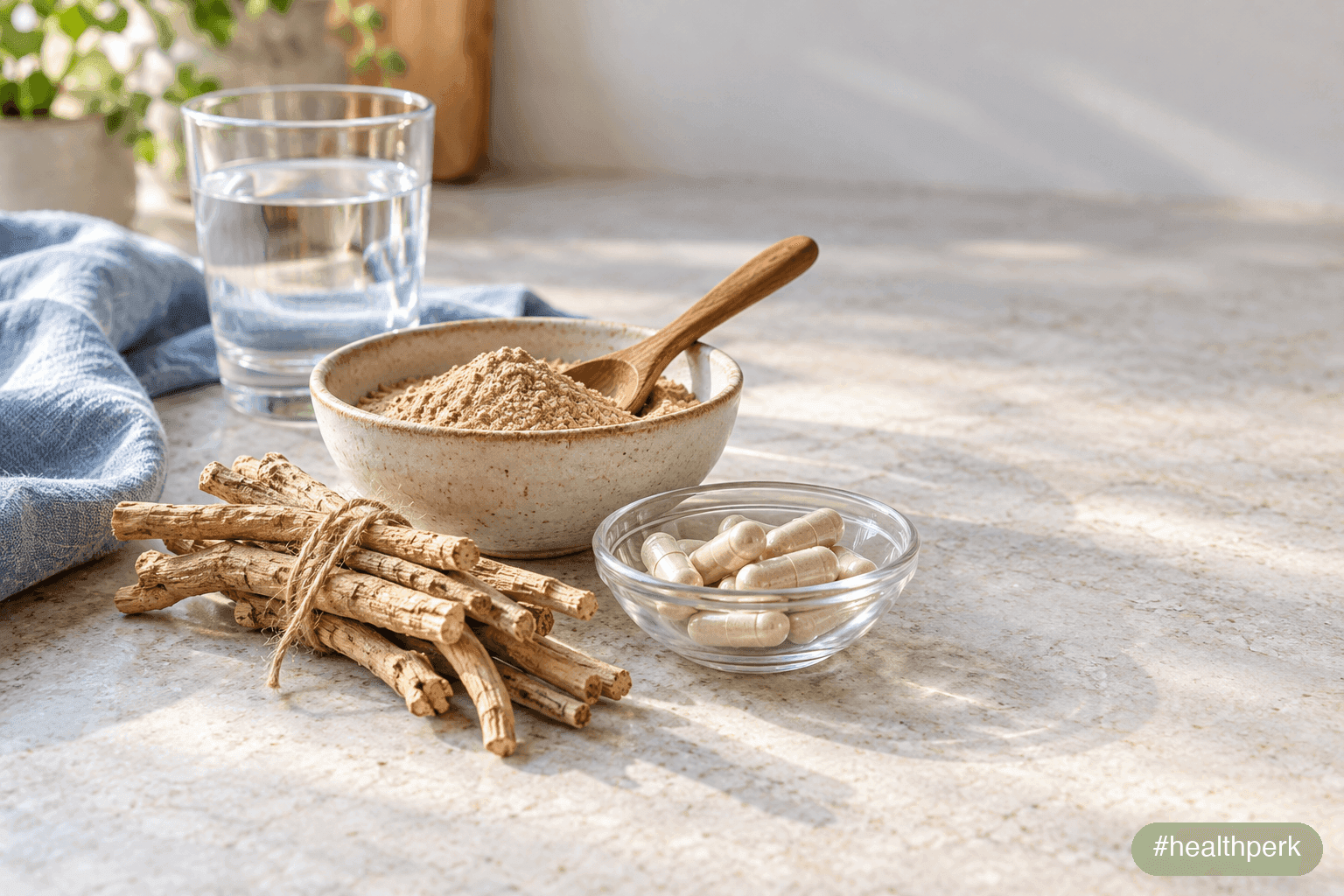
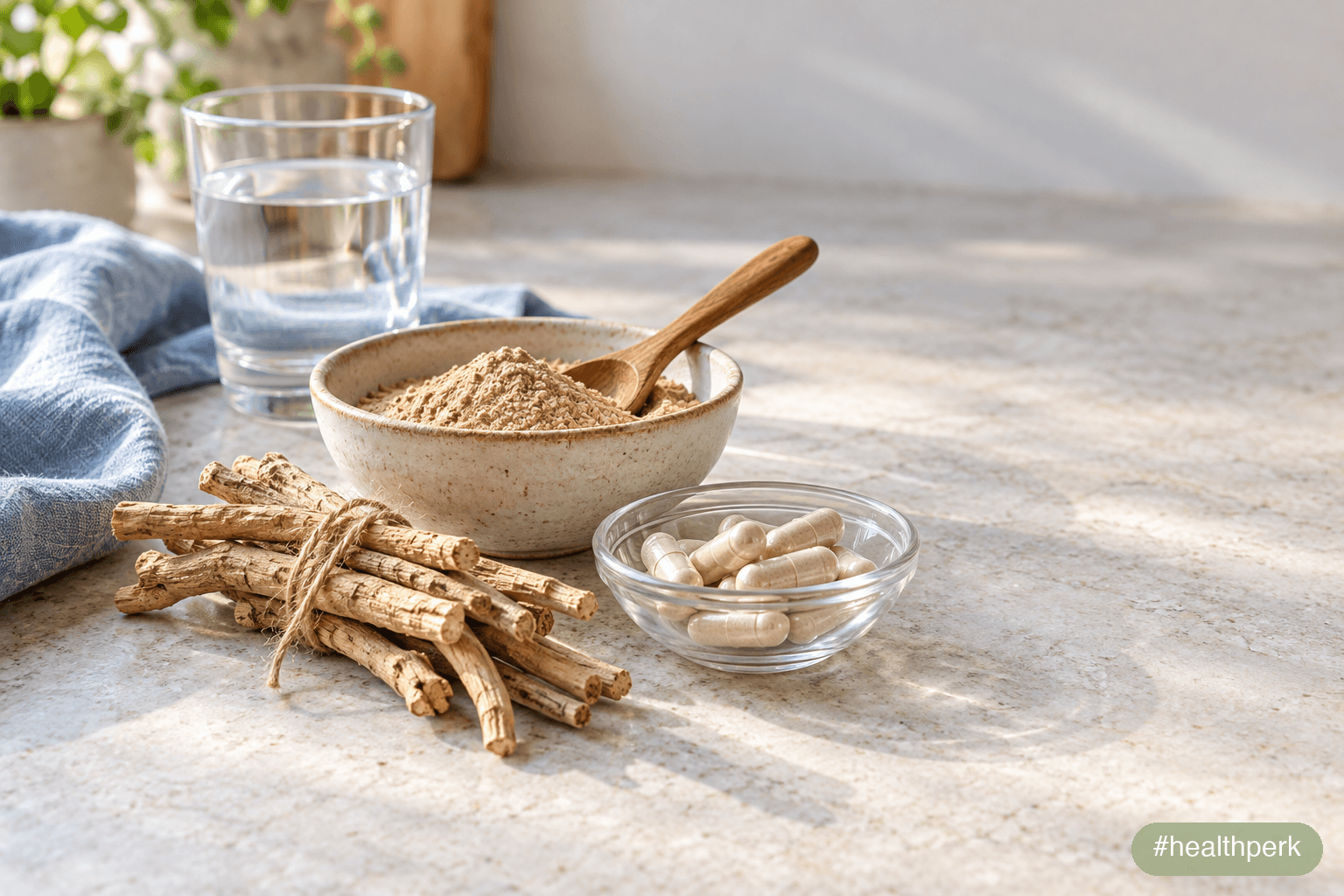 Ashwagandha is sold as dried root, powder, and standardized extracts, and these forms do not carry the same risks.
Ashwagandha (Withania somnifera) has become one of the most popular supplements for stress and sleep. Trials of standardized root extracts mostly report few problems. At the same time, liver injury case series, thyroid case reports, and national bans in Europe have raised fair questions about ashwagandha side effects that a supplement label rarely answers. [1][6][24]
This guide sorts the common, mild effects from the rare, serious ones. It explains the biology behind each risk, compares the extracts used in trials, and lists who should not take ashwagandha at all. It also covers what regulators in Denmark, the Netherlands, India, the UK, and Australia have done, up to October 2026, and how long the evidence says you can safely take it.
Table of Contents
- Common Ashwagandha Side Effects
- Why Ashwagandha Causes Side Effects: The Mechanisms
- Ashwagandha Liver Damage: What the Case Series Show
- Ashwagandha and Thyroid, Hormones, and Withdrawal
- Drug Interactions to Know About
- Root vs Leaf and Standardized Extracts: Doses Used in Trials
- Ashwagandha Extracts Compared
- Why Is Ashwagandha Banned in Denmark? Regulation in 2026
- How Long Can You Take Ashwagandha?
- Who Should Not Take Ashwagandha?
- How to Take Ashwagandha More Safely: Step by Step
- Common Myths About Ashwagandha Safety
- When to See a Doctor
- Related Articles on Health Perk
- Frequently Asked Questions
- References
Common Ashwagandha Side Effects
In controlled trials, the most common ashwagandha side effects are minor. A 2026 systematic review narratively summarized 23 studies of standardized root extracts in 2,317 healthy adults, mostly randomized controlled trials. Doses ran from 125 to 600 mg a day for up to 180 days. Mild stomach discomfort, headache, and short-lived drowsiness were reported only occasionally, and they also appeared in the placebo groups. [6]
The US National Center for Complementary and Integrative Health (NCCIH) lists the same pattern: drowsiness, stomach upset, diarrhea, and vomiting. [5] LiverTox, the NIH liver injury database, adds that large doses can irritate the gut and cause nausea, vomiting, and diarrhea. [4]
The usual mild effects are:
- Digestive upset: nausea, loose stools, cramps, or diarrhea, more likely on an empty stomach or at high doses.
- Drowsiness or grogginess: often the reason people move their dose to the evening.
- Headache: occasional, and similar in rate to placebo in pooled trials. [6]
Australia's Therapeutic Goods Administration (TGA) has also flagged a different pattern: sudden, severe vomiting or diarrhea after only one or two doses. The TGA describes this as an acute reaction that should settle once the product is stopped, not as a sign of liver damage. [28]
Why Ashwagandha Causes Side Effects: The Mechanisms
Ashwagandha contains more than 100 compounds. The main suspects for both its benefits and its harms are withanolides, a family of steroid-like lactones. [4] Understanding what they do helps explain why the side effects cluster in the liver, thyroid, and hormone systems.
Stress hormones. Several trials show ashwagandha lowers morning cortisol. One 60-day trial of 600 mg a day found a substantial drop compared with placebo. [14][17] That is the intended effect for stress. A 2026 case report suggests that a year of daily use near 950 mg may push this too far, suppressing the body's own cortisol system. [12]
Thyroid. In a small trial in people with subclinical hypothyroidism, 600 mg a day for eight weeks raised T3 and T4 and lowered TSH. [9] That effect is helpful for some and risky for others. People with normal or overactive thyroids, and people already on thyroid hormone, could be pushed into excess.
Calming effects. Ashwagandha is thought to act on GABA signaling, the same system that sleep medicines and benzodiazepines target. This is the proposed reason for drowsiness, for added sedation with sleep drugs, and possibly for rebound symptoms after stopping. [13]
Liver. The cause of liver injury is not known. Withanolides are the leading suspect, and reviews describe reactive metabolites formed by liver enzymes (the cytochrome P450 system) as one possible route. [4][22] Because injury is rare and unpredictable, it is considered idiosyncratic: it depends on the person more than on the dose.
Plant part matters. Root extracts are dominated by withanolide A and related compounds. Leaves are richer in withaferin A, a more reactive withanolide studied mainly for anticancer effects. [21] That chemical difference is why regulators are now treating root and leaf differently.
Ashwagandha Liver Damage: What the Case Series Show
Liver injury is the most serious documented risk. It is rare, but it is real. LiverTox rates ashwagandha as a "likely cause" (likelihood score B) of clinically apparent liver injury, its second-highest category. [4]
The first US/European series. In 2020, doctors from Iceland and the US Drug-Induced Liver Injury Network (DILIN) described five patients. All developed jaundice, with nausea, fatigue, itching, or abdominal discomfort, 2 to 12 weeks after starting. The injury was cholestatic or mixed, meaning bile flow was blocked. No one developed liver failure, and liver tests returned to normal within 1 to 5 months in the four patients who were followed. Lab testing confirmed ashwagandha in the products, with no other toxins found. [1]
The Indian series. A 2023 report from several Indian centers described 8 patients with liver injury from single-ingredient ashwagandha products. Five had underlying chronic liver disease. Three of them developed acute-on-chronic liver failure, and all three died. Chemical analysis found no contaminants or adulterants. [2]
The 2026 scoping review. A review of the literature through December 2025 found 25 published cases. Most recovered within weeks to months after stopping. Severe outcomes included three deaths in people with pre-existing cirrhosis and one liver transplant in a patient without underlying fibrosis. [3]
What this means for you:
- Watch the 2–12 week window. Most cases appear in the first three months. [1][4]
- Pre-existing liver disease is the biggest risk factor for a bad outcome. LiverTox advises avoiding ashwagandha in cirrhosis or advanced chronic liver disease. [4]
- Do not restart a product that injured your liver. LiverTox advises against rechallenge. [4]
Australia's TGA said in July 2026 that it had received 11 possible liver injury reports, including four since its 2024 advisory. All four recent cases resolved after stopping, and none needed a hospital stay. [28]
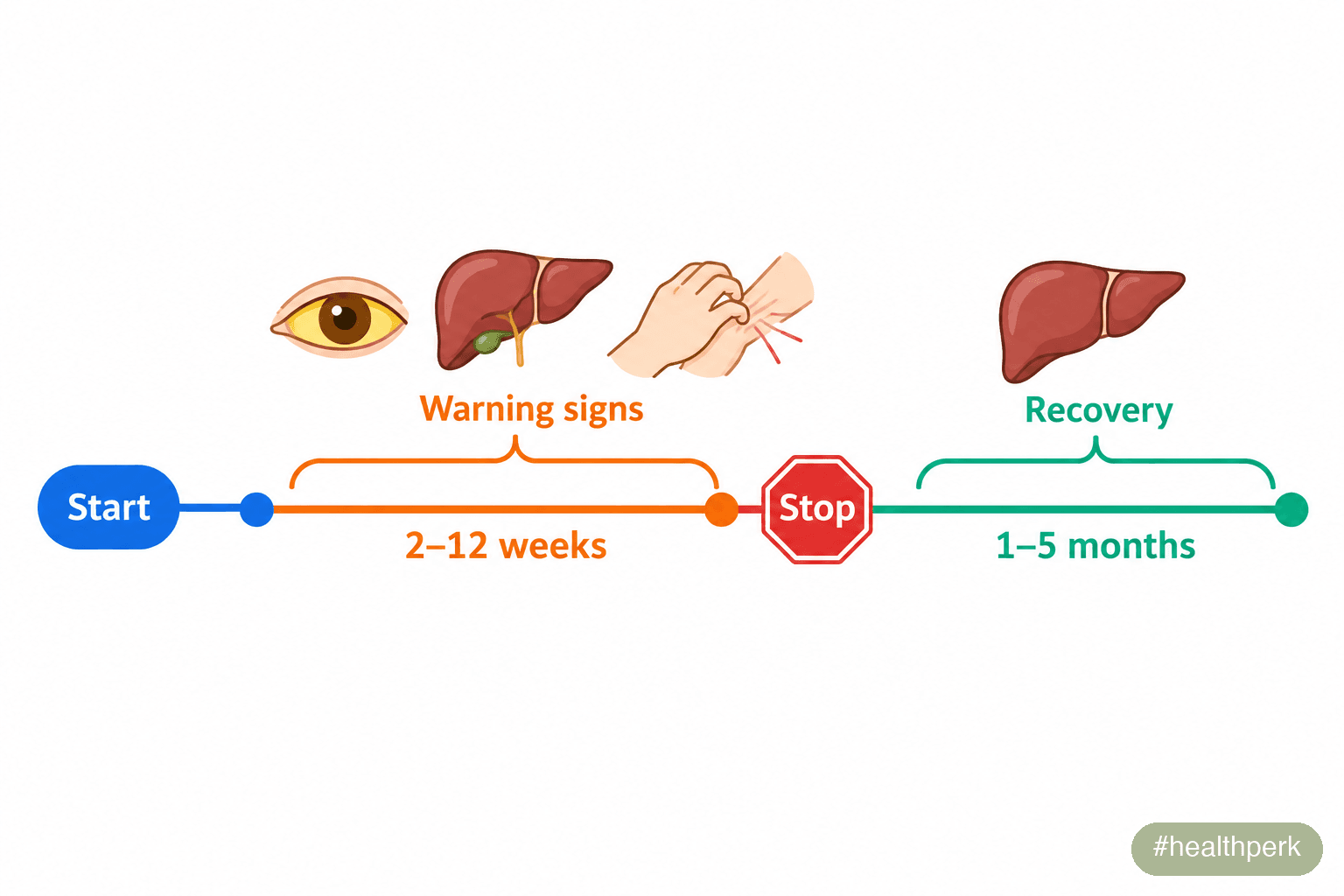 Timeline based on the 2020 Iceland and DILIN case series; individual cases vary. [1]
Ashwagandha and Thyroid, Hormones, and Withdrawal
Thyroid overactivity. Case reports describe thyrotoxicosis, an excess of thyroid hormone. A 73-year-old woman developed a fast heart rhythm and very low TSH after two years of taking ashwagandha root extract to self-treat hypothyroidism. Her symptoms resolved after she stopped. [10] A previously healthy 47-year-old man developed painless thyroiditis two months after starting it, with fatigue, fever, weight loss, and diarrhea. He also improved after stopping. [11]
Testosterone and prostate. Some trials report modest rises in testosterone in men. [7][17] NCCIH advises people with hormone-sensitive prostate cancer to avoid ashwagandha for this reason. [5]
Cortisol suppression. In the 2026 case report, a 55-year-old woman taking about 950 mg a day for over a year developed Cushing-like weight gain and low cortisol. Three months after stopping, her adrenal function had not yet recovered, and she still needed hydrocortisone. [12] This is a single case, but it shows why open-ended, high-dose use deserves caution.
Stopping abruptly. A 2025 case report described a 20-year-old man who developed a racing heart, insomnia, and anxiety two days after stopping 600 mg a day. The authors called it a possible withdrawal effect, while noting that his underlying anxiety could have returned. [13] No tapering schedule has been tested; if you are worried about stopping after long use, plan it with your clinician.
Drug Interactions to Know About
NCCIH lists possible interactions with several common drug classes. [5] Ashwagandha may add to or work against these medicines:
- Thyroid hormone (levothyroxine): it may raise thyroid levels further. [5][9]
- Sedatives, benzodiazepines, and sleep medicines: extra drowsiness. [5]
- Anticonvulsants: listed as a possible interaction. [5]
- Immunosuppressants: possible interaction, so check with the prescriber. [5]
- Diabetes drugs: possible additive blood sugar lowering. [5] The UK Food Standards Agency also lists low blood sugar among its concerns. [29]
- Blood pressure drugs: possible additive lowering. [5]
NCCIH also advises stopping before surgery. [5] If you take any of these medicines, or several supplements at once, our guide on whether you can take multiple supplements together explains how to check combinations.
Root vs Leaf and Standardized Extracts: Doses Used in Trials
Not all ashwagandha products are alike. Milligram amounts on labels only make sense if you know the extract.
KSM-66 (root only). The trial papers describe it as made only from the root and standardized to at least 5% withanolides. [14][15] Trials used 300 mg twice daily for stress (60 days) and insomnia (10 weeks), and 250 or 600 mg a day for stress over 8 weeks. [14][15][16] A 12-month observational study gave 600 mg a day to 191 adults. [7]
Sensoril (root and leaf). This aqueous extract is made from both roots and leaves, and it contains withaferin A. [19] Trials have used 500 mg a day for 8 to 12 weeks. [18][19] A 2026 animal toxicology package, funded by the manufacturer, found no toxicity in rats at doses up to 4,000 mg/kg a day for 90 days. [30]
Shoden. A 2019 trial used 240 mg once daily for 60 days, standardized to 35% withanolide glycosides (84 mg per capsule). No adverse events were reported. [17] Because it is more concentrated, its milligram dose is lower.
Raw root powder and traditional preparations. These deliver far larger amounts by weight. In the Indian liver injury series, daily intake ranged from about 500 mg to 10–20 g, depending on the product. [2]
For sleep, a 2021 meta-analysis of five trials (400 people) found a small benefit. It was clearer at 600 mg a day or more and after 8 weeks or more, and no serious side effects were reported. [20] If sleep is your main goal, compare ashwagandha with other options in our guide to the best supplements for sleep without melatonin.
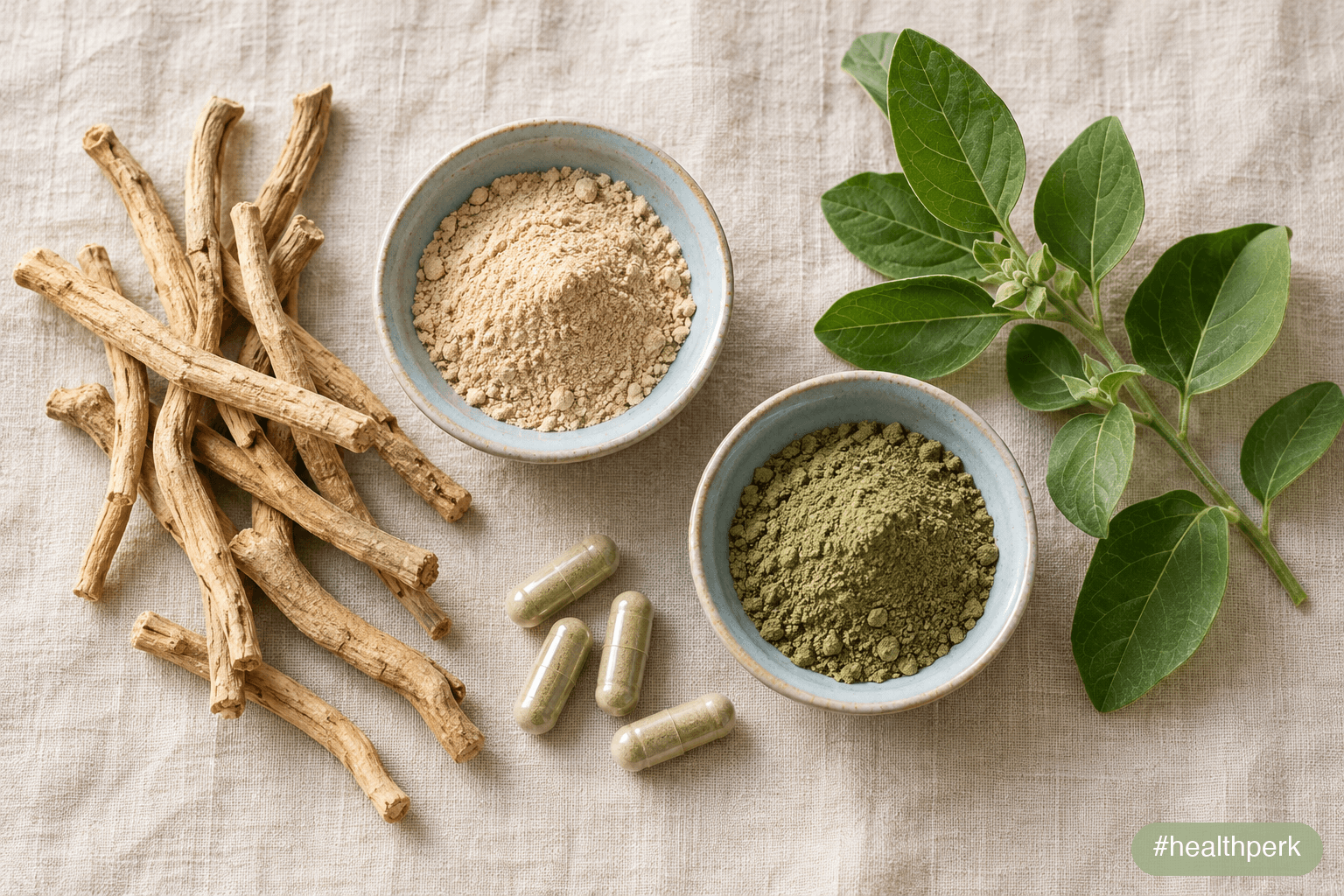 Root and leaf contain different withanolide profiles, and some regulators now treat them separately.
Ashwagandha Extracts Compared
| Criterion | KSM-66 | Sensoril | Shoden | Raw root powder / traditional mixes |
|---|---|---|---|---|
| Plant part | Root only [14] | Root + leaf [19] | Root extract, as described in the 2019 trial [17] | Root (sometimes mixed with other parts or herbs) |
| Standardization | ≥5% withanolides [14] | Aqueous extract with withaferin A [19] | 35% withanolide glycosides [17] | Usually none |
| Typical trial dose | 250–600 mg/day [14][16] | 500 mg/day [18][19] | 240 mg/day [17] | Not standardized; grams per day [2] |
| Example trial length | Up to 12 months, observational [7] | 8–12 weeks [18][19] | 60 days [17] | No controlled trials in this review |
| 2026 regulatory exposure | Root allowed with a warning in the Dutch draft [26] | Leaf content restricted in India and banned in the Dutch draft [26][27] | Depends on plant part | Highly variable quality |
| Human safety data | Most published trials | Moderate | Limited | Mainly case reports |
Editorial verdict. If you choose to use ashwagandha, a root-only, standardized extract at a trial-matched dose has the most human safety data and the least regulatory uncertainty. Leaf-containing products are not proven harmful, but their human safety data is thinner, and regulators are moving against them. [21] Much of the reassuring data comes from manufacturer-linked research, so independent long-term trials are still missing. [6][30]
Why Is Ashwagandha Banned in Denmark? Regulation in 2026
Denmark. The Danish Veterinary and Food Administration says ashwagandha cannot be sold as food, including in supplements. It relies on a risk assessment from the Technical University of Denmark (DTU) that covered the whole plant, including the root. The assessment cites possible harm to sex hormones and reproduction, plus effects on metabolism, the immune system, and the nervous system. No safe daily intake has been set. [24]
Netherlands. In March 2024, the Dutch public health institute RIVM advised against supplements containing ashwagandha, citing liver harm and its historical use to induce abortion. [25] A draft Dutch regulation reported in October 2026 would ban ashwagandha leaf and leaf-derived preparations, but allow root products with a caution statement. Consultation runs until December 7, 2026. [26]
India. On April 15–16, 2026, India's Ayush Ministry and food regulator FSSAI restricted ashwagandha leaves in health supplements. In May 2026, the Karnataka High Court stayed those measures for the companies that challenged them. [27]
United Kingdom. In July 2024, the Food Standards Agency asked for evidence on whether a safe intake level could be set, citing thyroid, blood sugar, and liver concerns. No UK limit had been set at that time. [29]
Australia. The TGA's July 2026 alert said the liver injury risk "appears to be very rare." It has kept ashwagandha available while it continues to assess the evidence. [28]
The pattern is clear. Regulators are separating root from leaf, adding warnings about pregnancy, liver, and thyroid, and asking for better long-term data. Our guide on how to choose supplements safely explains how to check labels and third-party testing.
How Long Can You Take Ashwagandha?
NCCIH says ashwagandha may be safe for up to 3 months, and that long-term safety is not established. [5] Most randomized trials last 8 to 12 weeks, and the longest in the 2026 systematic review ran 180 days. [6]
The longest dataset is a 2026 observational study in which 191 adults took 600 mg a day of root extract for 12 months. It recorded 18 mild adverse events (9.4% of participants), all resolved without treatment. It found no meaningful changes in liver, kidney, or thyroid tests. [7] That is encouraging, but the study had no placebo group and cannot detect rare reactions like liver injury.
A cautious approach is a defined course of 8–12 weeks. After that, decide whether the benefit is clear enough to continue. No tapering schedule has been tested.
Who Should Not Take Ashwagandha?
Pregnant or breastfeeding people. NCCIH advises avoiding ashwagandha in pregnancy and not using it while breastfeeding. [5] Concerns stem from its traditional use to induce abortion, which has never been properly studied. [25] A small, open-label 2026 trial in 70 women in the second trimester reported no adverse events. [23] That is far too little data to change the advice.
People with liver disease. Deaths in case series occurred in people with pre-existing liver disease. [2][3]
People with thyroid disorders. This includes people on thyroid hormone and people with an overactive thyroid. [5][10]
People with autoimmune disease. NCCIH does not recommend it for people with autoimmune disorders. [5]
Men with hormone-sensitive prostate cancer. It may raise testosterone. [5]
Anyone scheduled for surgery. Stop beforehand. [5]
Which ashwagandha approach is right for you?
- Healthy adult with stress or poor sleep: a root-only standardized extract at a trial dose, for an 8–12 week trial, with a check-in at the end.
- On levothyroxine or other daily medicines: speak to your doctor first and ask whether to recheck your thyroid levels after starting.
- History of liver problems or heavy drinking: skip it and choose a lower-risk option, such as the approaches in our sleep anxiety guide.
- Pregnant, trying to conceive, or breastfeeding: avoid it entirely.
- Already taking it for more than a year: discuss stopping with your clinician and, if you have weight gain or fatigue, ask about a cortisol test. [12]
How to Take Ashwagandha More Safely: Step by Step
- Check whether you are in a do-not-use group (pregnancy, liver, thyroid, autoimmune disease, prostate cancer, upcoming surgery).
- Review your medicines with a pharmacist, especially thyroid hormone, sedatives, diabetes, blood pressure, and immune-suppressing drugs.
- Choose a single-ingredient, root-only, standardized extract. Avoid multi-herb blends, which make it harder to tell what caused a problem.
- Match the trial dose for that extract (for example, 300 mg twice daily of KSM-66 or 240 mg of Shoden), and do not stack products.
- Take it with food, and in the evening if it makes you drowsy.
- Watch the first 12 weeks closely for yellow eyes, dark urine, itching, palpitations, or heat intolerance.
- Set an end date of 8–12 weeks, then reassess.
- Plan how to stop with your clinician after long use; no tapering schedule has been tested.
Common Myths About Ashwagandha Safety
Myth: "It's natural, so it can't hurt your liver." LiverTox rates ashwagandha a likely cause of liver injury, and deaths have occurred in people with liver disease. [2][4]
Myth: "Liver injury only happens with contaminated products." In both major case series, testing found ashwagandha and no other toxins. [1][2]
Myth: "Denmark banned it, so it must be dangerous for everyone." The Danish ban rests on a precautionary risk assessment, not on new human trials. Other regulators, including the Dutch draft rules, now distinguish root from leaf. [24][26]
Myth: "More milligrams means more benefit." Extracts are standardized very differently, from at least 5% withanolides to 35% withanolide glycosides. That is why 240 mg of Shoden and 600 mg of KSM-66 are both trial doses. [14][17]
Myth: "It helps the thyroid, so it's fine with thyroid medication." It can raise thyroid hormones, which is exactly why it may push people on levothyroxine into excess. [9][10]
When to See a Doctor
Stop ashwagandha and seek medical care promptly if you notice:
- Yellow skin or eyes, dark urine, pale stools, or persistent itching (possible liver injury).
- Pain in the upper right abdomen, nausea, or loss of appetite that lasts more than a few days.
- A racing or irregular heartbeat, tremor, heat intolerance, or unexplained weight loss (possible thyroid overactivity).
- Severe vomiting or diarrhea after the first doses.
- Rapid weight gain, a rounder face, or deep fatigue after long use (possible cortisol problems).
- Facial swelling, hives, or trouble breathing (call emergency services).
Tell your doctor exactly which product and dose you took, and bring the bottle. Clinicians may not ask about supplements unless you mention them. For a broader view of supplement risks, see our supplement side effects list.
Related Articles on Health Perk
- Supplement side effects list: what to watch for
- How to choose supplements safely
- Best supplements for sleep without melatonin
- Magnesium benefits for sleep and anxiety
- How to sleep better with anxiety
- Can you take multiple supplements together?
Frequently Asked Questions
Is ashwagandha safe to take every day?
For most healthy adults, daily use of a standardized root extract appears safe for up to about 3 months. Trials of 125–600 mg a day showed mostly mild side effects. Long-term safety is less certain. One 12-month observational study found no lab changes, but it lacked a placebo group. Rare liver and thyroid reactions can still occur, so set an end date and reassess.
Can ashwagandha damage your liver?
Yes, but rarely. LiverTox rates ashwagandha a likely cause of liver injury. Published cases usually show jaundice and itching 2–12 weeks after starting, and most people recover within 1–5 months after stopping. Deaths have occurred mainly in people with pre-existing liver disease or cirrhosis. Stop it immediately if your eyes or skin turn yellow.
Who should not take ashwagandha?
Avoid ashwagandha if you are pregnant or breastfeeding, or if you have liver disease, a thyroid disorder, autoimmune disease, or hormone-sensitive prostate cancer. Stop before surgery. Check with your doctor first if you take thyroid hormone, sedatives, anticonvulsants, immunosuppressants, or diabetes or blood pressure drugs, because ashwagandha may change how they work.
Does ashwagandha affect the thyroid?
Yes, it can raise thyroid hormone levels. A small trial found 600 mg a day increased T3 and T4 in people with subclinical hypothyroidism. Case reports describe thyrotoxicosis and painless thyroiditis that resolved after stopping. If you take levothyroxine or have an overactive thyroid, talk to your doctor and consider rechecking your levels.
How long can you take ashwagandha?
NCCIH says ashwagandha may be safe for up to 3 months, and longer-term safety is not established. Most trials last 8–12 weeks, and the longest controlled data reach 180 days. A sensible plan is an 8–12 week course, then a break or reassessment. No evidence-based tapering schedule exists; if you have concerns about stopping after long use, discuss it with your clinician, and stop immediately if you suspect a serious reaction.
Why is ashwagandha banned in Denmark?
Denmark bans ashwagandha in foods and supplements because a Technical University of Denmark risk assessment flagged possible effects on sex hormones, reproduction, metabolism, and the immune and nervous systems, and no safe daily intake could be set. Critics note the assessment did not separate root from leaf. The Netherlands' 2026 draft rules would ban leaf but allow root with a warning.
What happens when you stop taking ashwagandha?
Most people notice nothing. One 2025 case report described a racing heart, insomnia, and anxiety two days after a man stopped 600 mg a day, which the authors considered a possible withdrawal effect. A separate case described lasting cortisol suppression after a year of high-dose use. No tapering schedule has been tested, so plan stopping with your clinician if you have concerns.
Is ashwagandha root safer than leaf?
Probably, based on current evidence. Root extracts have the most human trial data. Leaves contain more withaferin A, a more reactive compound, and human safety data for leaf is limited. India restricted leaf use in April 2026, and Dutch draft rules would ban leaf while allowing root. No head-to-head safety trials exist yet.
Medical disclaimer: This article is for general information only and is not a substitute for professional medical advice, diagnosis, or treatment. Do not start, stop, or change any supplement or medication without talking to a qualified health professional, especially if you are pregnant, breastfeeding, have a medical condition, or take prescription medicines. If you think you are having a serious reaction, seek emergency care. Health Perk does not sell supplements and receives no payment for the products named here. Read how we review for our editorial standards.
References
- Björnsson, H. K., Björnsson, E. S., Avula, B., Khan, I. A., Jonasson, J. G., Ghabril, M., Hayashi, P. H., & Navarro, V. (2020). Ashwagandha-induced liver injury: A case series from Iceland and the US Drug-Induced Liver Injury Network. Liver International, 40(4), 825–829. https://doi.org/10.1111/liv.14393
Supports: Five cases; jaundice after 2–12 weeks; cholestatic or mixed injury; no liver failure; liver tests normal within 1–5 months; no other toxins found in products.
- Philips, C. A., Valsan, A., Theruvath, A. H., Ravindran, R., Oommen, T. T., Rajesh, S., Bishnu, S., & Augustine, P. (2023). Ashwagandha-induced liver injury—A case series from India and literature review. Hepatology Communications, 7(10), e0270. https://doi.org/10.1097/HC9.0000000000000270
Supports: 8 single-ingredient cases; 3 deaths from acute-on-chronic liver failure in patients with pre-existing liver disease; no adulteration; doses from 500 mg to 10–20 g per day.
- McIntyre, D., Nguyen, P., Kim, Y., Meyer, B., & Salloum, M. (2026). Ashwagandha (Withania somnifera)-Associated Liver Injury: A Scoping Review of Clinical Characteristics and Safety Considerations. Cureus, 18(5), e109764. https://doi.org/10.7759/cureus.109764
Supports: 25 published cases through December 2025; most recovered; one transplant and three deaths in patients with cirrhosis.
- National Institute of Diabetes and Digestive and Kidney Diseases (2024). Ashwagandha. LiverTox: Clinical and Research Information on Drug-Induced Liver Injury. https://www.ncbi.nlm.nih.gov/books/NBK548536/
Supports: Likelihood score B; withanolides suspected; large doses cause GI upset; avoid in cirrhosis; no rechallenge.
- National Center for Complementary and Integrative Health (2023). Ashwagandha: Usefulness and Safety. NCCIH, National Institutes of Health. https://www.nccih.nih.gov/health/ashwagandha
Supports: Possibly safe up to 3 months; common side effects; avoid in pregnancy, breastfeeding, thyroid and autoimmune disorders, hormone-sensitive prostate cancer, before surgery; drug interactions.
- Coope, O. C., Willems, M. E. T., Levington, A., Tallon, M. J., Roman-Viñas, B., & Spurr, T. J. (2026). Back to the Roots: Safety and Tolerability of Standardised Ashwagandha (Withania somnifera) Root Extract in Healthy Adults—A Systematic Review of Biomarkers and Adverse Events. Pharmaceuticals, 19(5), 725. https://doi.org/10.3390/ph19050725
Supports: 23 trials, 2,317 participants, 125–600 mg/day for up to 180 days; mild adverse events in both groups; limited data beyond 180 days.
- Salve, J., Kale, S., Prajapati, B. L., Sparavigna, A., Savant, M., Ademola, J., & Langade, D. (2026). Safety of 12-Months Administration of Ashwagandha (Withania somnifera) Standardized Root Extract in Healthy Adults: A Prospective, Observational Study. Phytotherapy Research, 40(8), 4802–4812. https://doi.org/10.1002/ptr.70096
Supports: 191 adults, 600 mg/day root extract for 12 months; 18 mild adverse events; no clinically significant liver, kidney, or thyroid changes; testosterone increase.
- Verma, N., Gupta, S. K., Tiwari, S., & Mishra, A. K. (2021). Safety of Ashwagandha Root Extract: A Randomized, Placebo-Controlled, study in Healthy Volunteers. Complementary Therapies in Medicine, 57, 102642. https://doi.org/10.1016/j.ctim.2020.102642
Supports: 300 mg twice daily for 8 weeks in 80 healthy adults with no changes in liver, blood, or thyroid tests.
- Sharma, A. K., Basu, I., & Singh, S. (2018). Efficacy and Safety of Ashwagandha Root Extract in Subclinical Hypothyroid Patients: A Double-Blind, Randomized Placebo-Controlled Trial. Journal of Alternative and Complementary Medicine, 24(3), 243–248. https://doi.org/10.1089/acm.2017.0183
Supports: 600 mg/day for 8 weeks raised T3 and T4 and lowered TSH.
- Kamal, H. I., Patel, K., Brdak, A., Heffernan, J., & Ahmad, N. (2022). Ashwagandha as a Unique Cause of Thyrotoxicosis Presenting With Supraventricular Tachycardia. Cureus, 14(3), e23494. https://doi.org/10.7759/cureus.23494
Supports: Thyrotoxicosis with tachycardia after two years of self-treatment for hypothyroidism; resolved after stopping.
- Hayashi, M., Hamada, H., Azuma, S. I., & Hayashi, K. (2024). Painless Thyroiditis by Withania somnifera (Ashwagandha). Cureus, 16(3), e55352. https://doi.org/10.7759/cureus.55352
Supports: Painless thyroiditis in a healthy 47-year-old man two months after starting; improved after stopping.
- Javid, J., Kunnuru, S. R., Anne, B., & Muskan, S. (2026). From herbal hope to hormonal havoc: chronic ashwagandha use and HPA axis suppression. Endocrinology, Diabetes & Metabolism Case Reports, 2026(1), EDM250076. https://doi.org/10.1530/EDM-25-0076
Supports: About 950 mg/day for over a year associated with Cushingoid features and adrenal suppression not reversed at three months.
- Holzman, A., Brown, A. E., Kelley, J., Rappaport, D., & Martini, W. A. (2025). Unmasking Potential Withdrawal Effects of Ashwagandha: A Case Report and Review. Cureus, 17(5), e83577. https://doi.org/10.7759/cureus.83577
Supports: Tachycardia, insomnia, and anxiety after abrupt discontinuation of 600 mg/day; proposed GABA-ergic mechanism.
- Chandrasekhar, K., Kapoor, J., & Anishetty, S. (2012). A prospective, randomized double-blind, placebo-controlled study of safety and efficacy of a high-concentration full-spectrum extract of ashwagandha root in reducing stress and anxiety in adults. Indian Journal of Psychological Medicine, 34(3), 255–262. https://doi.org/10.4103/0253-7176.106022
Supports: KSM-66 root-only, ≥5% withanolides; 300 mg twice daily for 60 days; lower cortisol; mild adverse effects comparable to placebo.
- Langade, D., Kanchi, S., Salve, J., Debnath, K., & Ambegaokar, D. (2019). Efficacy and Safety of Ashwagandha (Withania somnifera) Root Extract in Insomnia and Anxiety: A Double-blind, Randomized, Placebo-controlled Study. Cureus, 11(9), e5797. https://doi.org/10.7759/cureus.5797
Supports: KSM-66 300 mg twice daily for 10 weeks in insomnia; well tolerated.
- Salve, J., Pate, S., Debnath, K., & Langade, D. (2019). Adaptogenic and Anxiolytic Effects of Ashwagandha Root Extract in Healthy Adults: A Double-blind, Randomized, Placebo-controlled Clinical Study. Cureus, 11(12), e6466. https://doi.org/10.7759/cureus.6466
Supports: 250 and 600 mg/day for 8 weeks lowered stress scores and cortisol.
- Lopresti, A. L., Smith, S. J., Malvi, H., & Kodgule, R. (2019). An investigation into the stress-relieving and pharmacological actions of an ashwagandha (Withania somnifera) extract: A randomized, double-blind, placebo-controlled study. Medicine, 98(37), e17186. https://doi.org/10.1097/MD.0000000000017186
Supports: Shoden 240 mg/day for 60 days, 35% withanolide glycosides; lower morning cortisol; no adverse events.
- Chengappa, K. N., Bowie, C. R., Schlicht, P. J., Fleet, D., Brar, J. S., & Jindal, R. (2013). Randomized placebo-controlled adjunctive study of an extract of withania somnifera for cognitive dysfunction in bipolar disorder. Journal of Clinical Psychiatry, 74(11), 1076–1083. https://doi.org/10.4088/JCP.13m08413
Supports: Standardized extract 500 mg/day for 8 weeks; minor adverse events.
- Ziegenfuss, T. N., Kedia, A. W., Sandrock, J. E., Raub, B. J., Kerksick, C. M., & Lopez, H. L. (2018). Effects of an Aqueous Extract of Withania somnifera on Strength Training Adaptations and Recovery: The STAR Trial. Nutrients, 10(11), 1807. https://doi.org/10.3390/nu10111807
Supports: Sensoril is an aqueous root and leaf extract containing withaferin A; 500 mg/day for 12 weeks was well tolerated.
- Cheah, K. L., Norhayati, M. N., Husniati Yaacob, L., & Abdul Rahman, R. (2021). Effect of Ashwagandha (Withania somnifera) extract on sleep: A systematic review and meta-analysis. PLoS One, 16(9), e0257843. https://doi.org/10.1371/journal.pone.0257843
Supports: Five trials, 400 participants; small sleep benefit, stronger at ≥600 mg/day and ≥8 weeks; no serious side effects; long-term safety data lacking.
- Dutta, A., & Gupta, J. B. (2026). Plant Part-Specific Differences in Ashwagandha (Withania somnifera): A Comparative Evaluation of Root and Leaf Evidence for Safety and Regulation. Food Science & Nutrition, 14(10), e72364. https://doi.org/10.1002/fsn3.72364
Supports: Root dominated by withanolide A; leaf richer in withaferin A; human leaf data sparse; European assessments did not consistently separate plant parts.
- Kumar, A., Sah, B. K., Ahmad, F., Jamwal, V., & Sahu, S. K. (2026). Potential Adverse Effects of Ashwagandha: A Critical Review of Preclinical and Clinical Evidence. Phytotherapy Research, 40(8), 4913–4931. https://doi.org/10.1002/ptr.70158
Supports: Cytochrome P450 metabolism may form reactive intermediates; endocrine effects implicated in thyrotoxicosis and adrenal suppression.
- Ajgaonkar, A., Tayade, H., & Nayak, A. (2026). Efficacy and safety of Ashwagandha (Withania somnifera) root extract in pregnant women: a prospective, randomized, comparative, open-label, 12-week study. Frontiers in Global Women's Health, 7, 1767865. https://doi.org/10.3389/fgwh.2026.1767865
Supports: Open-label trial in 70 second-trimester women reported no adverse events.
- Danish Veterinary and Food Administration (n.d.). Ashwagandha i kosttilskud og drikkevarer. Fødevarestyrelsen. https://foedevarestyrelsen.dk/kost-og-foedevarer/alt-om-mad/kemi-i-maden/mad-med-uoensket-kemi/ashwagandha
Supports: Ashwagandha cannot be sold as food or supplements in Denmark; DTU assessment covers the root; concerns about sex hormones, reproduction, metabolism, immune and nervous systems.
- National Institute for Public Health and the Environment (RIVM) (2024). RIVM advises against using products containing the herbs Huperzia serrata, Tabernanthe iboga or Ashwagandha. RIVM. https://www.rivm.nl/en/news/rivm-advises-against-using-products-containing-herbs-huperzia-serrata-tabernanthe-iboga-or
Supports: March 2024 advice against ashwagandha supplements; liver harm reports; historical abortifacient use; specific warning for pregnant women.
- NutraIngredients (2026). Ashwagandha, huperzia targeted under proposed Dutch supplement rules. NutraIngredients. https://www.nutraingredients.com/Article/2026/10/06/ashwagandha-huperzia-targeted-under-proposed-dutch-supplement-rules/
Supports: Dutch draft bans ashwagandha leaf, allows root with a caution statement; consultation until December 7, 2026.
- LiveLaw (2026). Karnataka HC Stays FSSAI Advisory, AYUSH Directive Restricting Use Of Ashwagandha Leaves. LiveLaw. https://www.livelaw.in/law-firms/litigation/karnataka-hc-stays-fssai-advisory-ayush-directive-restricting-use-ashwagandha-leaves-535180
Supports: April 15–16, 2026 leaf restrictions; May 2026 interim stay for the petitioning companies.
- The Medical Republic (2026). TGA makes second safety alert on ashwagandha and liver injury. The Medical Republic. https://www.medicalrepublic.com.au/tga-makes-second-safety-alert-on-ashwagandha-and-liver-injury/127554
Supports: July 2026 TGA alert; 11 possible liver injury reports, four since 2024, all resolved; risk "appears to be very rare"; acute vomiting and diarrhea after first doses.
- Food Safety Magazine (2024). UK FSA Assessing Ashwagandha Food Safety Due to Concerns About Possible Toxicity. Food Safety Magazine. https://www.food-safety.com/articles/9601-uk-fsa-assessing-ashwagandha-food-safety-due-to-concerns-about-possible-toxicity
Supports: July 2024 FSA call for evidence; thyroid, low blood sugar, and liver concerns; no UK limits set.
- Summan, M., Doepker, C. L., & Brorby, G. P. (2026). Safety Evaluation of an Aqueous Root and Leaf Extract of Ashwagandha (Withania somnifera). Phytotherapy Research, 40(8), 5030–5047. https://doi.org/10.1002/ptr.70314
Supports: Manufacturer-funded rat toxicology of Sensoril; NOAEL 4,000 mg/kg/day over 90 days; not genotoxic.
Frequently Asked Questions
Is ashwagandha safe to take every day?
For most healthy adults, daily use of a standardized root extract appears safe for up to about 3 months. Trials of 125–600 mg a day showed mostly mild side effects. Long-term safety is less certain. One 12-month observational study found no lab changes, but it lacked a placebo group. Rare liver and thyroid reactions can still occur, so set an end date and reassess.
Can ashwagandha damage your liver?
Yes, but rarely. LiverTox rates ashwagandha a likely cause of liver injury. Published cases usually show jaundice and itching 2–12 weeks after starting, and most people recover within 1–5 months after stopping. Deaths have occurred mainly in people with pre-existing liver disease or cirrhosis. Stop it immediately if your eyes or skin turn yellow.
Who should not take ashwagandha?
Avoid ashwagandha if you are pregnant or breastfeeding, or if you have liver disease, a thyroid disorder, autoimmune disease, or hormone-sensitive prostate cancer. Stop before surgery. Check with your doctor first if you take thyroid hormone, sedatives, anticonvulsants, immunosuppressants, or diabetes or blood pressure drugs, because ashwagandha may change how they work.
Does ashwagandha affect the thyroid?
Yes, it can raise thyroid hormone levels. A small trial found 600 mg a day increased T3 and T4 in people with subclinical hypothyroidism. Case reports describe thyrotoxicosis and painless thyroiditis that resolved after stopping. If you take levothyroxine or have an overactive thyroid, talk to your doctor and consider rechecking your levels.
How long can you take ashwagandha?
NCCIH says ashwagandha may be safe for up to 3 months, and longer-term safety is not established. Most trials last 8–12 weeks, and the longest controlled data reach 180 days. A sensible plan is an 8–12 week course, then a break or reassessment. No evidence-based tapering schedule exists; if you have concerns about stopping after long use, discuss it with your clinician, and stop immediately if you suspect a serious reaction.
Why is ashwagandha banned in Denmark?
Denmark bans ashwagandha in foods and supplements because a Technical University of Denmark risk assessment flagged possible effects on sex hormones, reproduction, metabolism, and the immune and nervous systems, and no safe daily intake could be set. Critics note the assessment did not separate root from leaf. The Netherlands' 2026 draft rules would ban leaf but allow root with a warning.
What happens when you stop taking ashwagandha?
Most people notice nothing. One 2025 case report described a racing heart, insomnia, and anxiety two days after a man stopped 600 mg a day, which the authors considered a possible withdrawal effect. A separate case described lasting cortisol suppression after a year of high-dose use. No tapering schedule has been tested, so plan stopping with your clinician if you have concerns.
Is ashwagandha root safer than leaf?
Probably, based on current evidence. Root extracts have the most human trial data. Leaves contain more withaferin A, a more reactive compound, and human safety data for leaf is limited. India restricted leaf use in April 2026, and Dutch draft rules would ban leaf while allowing root. No head-to-head safety trials exist yet.