Best Nootropics for Beginners: A 2026 Evidence-Based Starter Guide
Best Nootropics for Beginners: A 2026 Evidence-Based Starter Guide
By the HealthPerk Editorial Team · Last updated: May 2026
Quick Answer
What are the best nootropics for beginners in 2026?
For someone new to the category, the honest starting set is small: caffeine paired with L-theanine for acute focus, omega-3 (EPA + DHA) for daily cognitive support, and creatine monohydrate for measurable memory and reasoning benefits in adults under cognitive load. From the herbal tier, bacopa monnieri has the most consistent memory evidence after 8-12 weeks of daily use, while ginkgo biloba has more contested results in healthy adults. Almost everything else marketed as a "beginner nootropic stack" is a combination of moderately evidenced ingredients at sub-therapeutic doses, and is best skipped until single-ingredient trials are complete.
A practical starter framework for 2026:
| Stage | What to trial | Time horizon | Expected magnitude |
|---|---|---|---|
| Stage 1 — Foundations | Sleep, hydration, daylight, caffeine timing | 2-4 weeks | Largest effect |
| Stage 2 — Reliable staples | Omega-3, creatine, L-theanine + caffeine | 4-12 weeks | Modest, consistent |
| Stage 3 — Single herbal trial | Bacopa OR ginkgo OR rhodiola (one at a time) | 8-12 weeks | Variable, individual |
| Stage 4 — Considered synthetic | Citicoline, alpha-GPC, racetams (with caution) | 8-12 weeks | Mixed, contested |

Best nootropics for beginners is one of the most common 2026 search queries in the cognitive enhancement space, and one of the most heavily exploited by marketers. Beginners are typically sold proprietary blends containing eight to fifteen ingredients at undisclosed doses, framed as a "complete stack" that delivers focus, memory, mood, and energy in a single capsule. The reality is the opposite: beginners benefit most from understanding one ingredient at a time, at a known dose, for long enough to evaluate it honestly.
This guide is structured as a starter path rather than a ranked list, because the question "what should I try first" depends on whether you have already addressed foundational habits and basic deficiencies. A beginner who is sleeping six hours and skipping breakfast will gain very little from any nootropic. A beginner whose sleep, light exposure, and nutrition are in order will see clearer signal from a single, well-chosen compound. The 2026 evidence base, including Cochrane reviews and meta-analyses through 2025, consistently favors this kind of sequential approach over the multi-ingredient stacks promoted online.
Table of Contents
- Natural Nootropics for Beginners: Where to Actually Start
- Ginkgo Biloba for Memory: What 2026 Evidence Says
- Bacopa Monnieri Benefits for the Brain
- Nootropics That Actually Work in the 2026 Evidence Base
- Ginkgo vs Bacopa for Memory: A Practical Comparison
- Natural vs Synthetic Nootropics: How to Choose as a Beginner
- Frequently Asked Questions
- References
Natural Nootropics for Beginners: Where to Actually Start

Natural nootropics for beginners are best approached the way a careful cook approaches a new cuisine: one ingredient at a time, in a clean preparation, until its actual flavor is known. The opposite approach - mixing six new herbs in one capsule on day one - guarantees that any benefit (or side effect) cannot be attributed to any specific compound, which means no learning happens.
A reasonable sequential path for a beginner:
- Start with foundations, not pills. Two to four weeks of consistent sleep (7-9 hours), morning daylight exposure within the first hour of waking, hydration, and deliberate caffeine timing will produce a larger perceptible effect on focus than any natural nootropic. Skipping this step is the most common reason beginners conclude "nothing works."
- Add reliable staples next. Omega-3 (EPA + DHA) at 1-2 g daily, creatine monohydrate at 3-5 g daily, and L-theanine 200 mg paired with morning caffeine. These are not exotic, but they are the compounds with the most replicated cognitive evidence in 2026.
- Then trial one herbal compound. Bacopa monnieri, ginkgo biloba, or rhodiola rosea, taken as a single supplement at a known standardized dose, for 8-12 weeks. Keep a brief weekly note. One variable at a time, or the signal is lost.
- Re-evaluate honestly before adding anything else. If a compound produced no perceptible benefit after 12 weeks of consistent use, the prior probability that adding it permanently improves cognition is low. Stopping is a valid result.
Why "natural" is not automatically safer
A common beginner assumption is that natural compounds are inherently milder and safer than synthetic ones. The 2026 evidence does not support this generalization. Bacopa monnieri can cause gastrointestinal symptoms; ginkgo biloba has a clinically meaningful interaction with anticoagulants; rhodiola can produce overstimulation in sensitive individuals; ashwagandha has documented hepatotoxicity in rare cases. Natural origin does not exempt a compound from pharmacology. The safety framework that applies to synthetic nootropics applies equally to herbal ones.
A reasonable beginner shopping principle
For each compound under consideration, three questions are worth answering before purchase: (1) what is the standardized extract or active dose, (2) what is the third-party testing certificate (USP, NSF, or independent COA), and (3) what is the documented effect size in independent (non-industry-funded) trials. Products that cannot answer these questions are not ready for a beginner trial.
Ginkgo Biloba for Memory: What 2026 Evidence Says

Ginkgo biloba for memory is among the most studied herbal nootropics, with research spanning more than three decades and standardized extracts (most commonly EGb 761) used in many trials. The honest summary of the 2026 evidence is that ginkgo's strongest signal appears in older adults with mild cognitive impairment or early-stage dementia, where some trials report modest improvements in memory and daily function, while results in healthy younger adults seeking general cognitive enhancement are mostly neutral.
What current meta-analyses through 2025 support:
- In adults with mild cognitive impairment, standardized ginkgo extract at 240 mg/day has produced statistically significant but modest improvements in cognitive scores in several randomized trials. The effect is smaller than that of cholinesterase inhibitors and not equivalent to a treatment for established dementia.
- In healthy adults under 65, randomized trials of ginkgo for general memory or focus have largely been neutral. The widely cited 2008 JAMA trial of more than 3,000 older adults found no preventive effect of ginkgo on the development of dementia over a median 6.1 years of follow-up, and no significant cognitive benefit in cognitively normal participants.
- For acute use, ginkgo does not produce same-day perceptible improvements in focus or memory. Its mechanism (vascular, antioxidant, and platelet effects) operates over weeks rather than hours.
Practical considerations for beginners
- Standardized to 24% flavone glycosides and 6% terpene lactones (the EGb 761 spec); avoid unstandardized "ginkgo leaf" products.
- Typical adult dose: 120-240 mg/day in divided doses, taken for at least 8-12 weeks before evaluation.
- Significant interaction with anticoagulants (warfarin, apixaban), antiplatelet agents (aspirin, clopidogrel), and SSRIs; check with a pharmacist before combining.
- Discontinue at least one week before scheduled surgery to reduce bleeding risk.
- Side effects are usually mild (headache, mild GI upset) but bleeding events have been reported.
Honest expectations
For a beginner seeking sharper short-term focus, ginkgo is probably not the right starting compound; the evidence base for acute cognitive enhancement in healthy adults is thin. For a beginner with a family history of cognitive decline considering long-term vascular and cognitive support, ginkgo has a more defensible role, particularly when other vascular factors (blood pressure, lipids, glucose) are also being addressed.
Bacopa Monnieri Benefits for the Brain
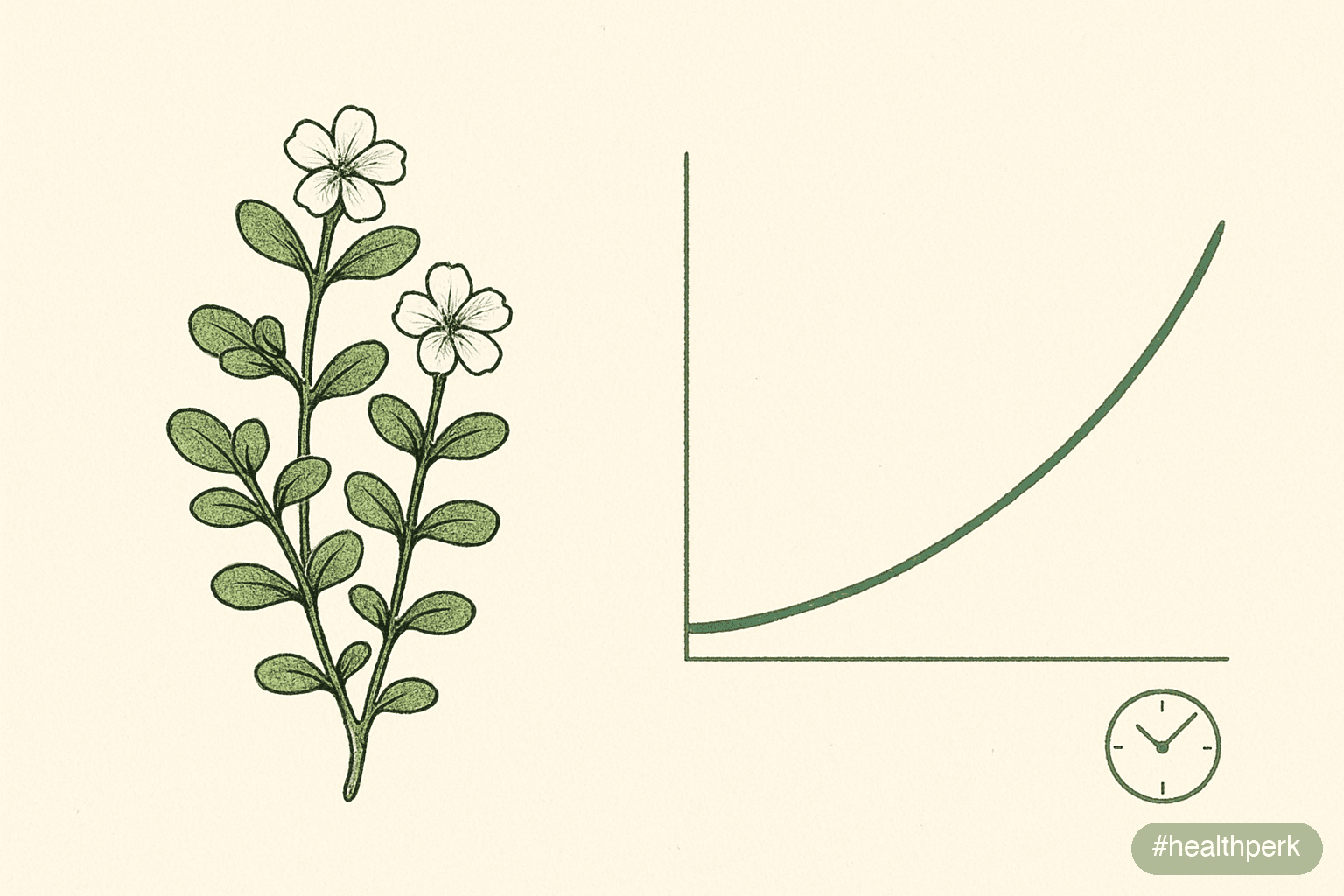
Bacopa monnieri benefits brain function primarily through documented effects on memory acquisition and retention, with the strongest evidence appearing after 8-12 weeks of consistent daily supplementation rather than on a same-day basis. Bacopa is one of the few herbal compounds where meta-analyses of randomized trials show a reasonably consistent signal, although the effect size is modest and individual response varies.
What the 2026 evidence base supports:
- A 2014 meta-analysis in the Journal of Ethnopharmacology pooled randomized trials of standardized bacopa extracts and found measurable improvements in tests of memory speed and acquisition after at least eight weeks of supplementation. Effect sizes were small to moderate.
- Trials in older adults with subjective memory complaints have shown improvements in working memory and recall after 12 weeks at doses of 300 mg/day of an extract standardized to 50-55% bacosides.
- Effects on attention, processing speed, and mood are less consistent than effects on memory acquisition.
- Anxiolytic effects have been reported in several small trials, possibly mediated through GABAergic activity.
How bacopa is thought to work
The proposed mechanisms include modulation of cholinergic signaling, antioxidant activity in hippocampal tissue, and improvements in dendritic branching observed in animal models. The translation of these mechanisms to humans is incomplete, but the consistent memory finding in 8-12 week trials is the most replicated cognitive effect of any herbal nootropic.
Practical considerations for beginners
- Standardized extract to 50-55% bacosides; CDRI 08 and Bacognize are well-characterized commercial standardizations.
- Typical dose: 300 mg/day, taken with a fatty meal (bacosides are fat-soluble).
- Time to perceptible effect: most trials evaluate at 8 and 12 weeks; meaningful change before 8 weeks is uncommon.
- Side effects: nausea, abdominal cramping, and increased bowel motility in a minority of users, usually attenuated by taking with food.
- Caution in people on thyroid medication; bacopa has modest interactions with thyroid hormone metabolism in some studies.
Why bacopa fits beginners better than ginkgo for some goals
If the goal is memory acquisition during a multi-month study or work-learning period, bacopa has more direct human evidence than ginkgo. If the goal is general vascular cognitive support over years, ginkgo has a longer and broader literature. The decision is goal-dependent, not preference-dependent.
Nootropics That Actually Work in the 2026 Evidence Base

Nootropics that actually work in the 2026 evidence base are a much shorter list than the marketing layer suggests. "Actually work" here means: replicated in multiple independent trials, with effect sizes large enough to be perceptible to a typical user, at doses that are disclosed on product labels. By this filter, the list shrinks dramatically.
The compounds that consistently clear that bar:
- Caffeine. The most studied cognitive enhancer in human history, with well-documented effects on vigilance, reaction time, and short-term memory at moderate doses (40-200 mg). Tolerance develops, sleep is disrupted at high or late doses, and individual response varies by CYP1A2 genotype.
- L-theanine, particularly with caffeine. Multiple controlled trials including the 2008 Nutritional Neuroscience study by Owen and colleagues have shown that 100 mg caffeine plus 200 mg L-theanine produces sharper, less anxious focus than caffeine alone.
- Omega-3 (EPA + DHA). Meta-analyses through 2024 support modest improvements in attention and processing speed, particularly in adults with low baseline fish intake. EPA-predominant formulations at 1-2 g/day are most consistently supported.
- Creatine monohydrate. A 2023 Nutrition Reviews meta-analysis pooling randomized trials demonstrated measurable improvements in short-term memory in healthy adults, with larger effects under sleep deprivation and in vegetarians. Standard dose 3-5 g/day.
- Bacopa monnieri, specifically for memory after 8-12 weeks of consistent use.
Compounds with moderate but contested evidence
- Rhodiola rosea for stress-related mental fatigue, particularly in burnout and shift-work contexts.
- Lion's mane (Hericium erinaceus), with a 2023 Nutrients trial showing improved cognitive task performance after 4 weeks, but the total trial base remains small.
- Citicoline and alpha-GPC, with some positive trials in older adults but smaller, less consistent effects in healthy younger adults.
Compounds that do not consistently clear the bar
Proprietary "nootropic blends" with undisclosed per-ingredient doses, products marketed with "limitless" or "10x focus" language, stacks combining many ingredients at sub-therapeutic doses, and unregulated stimulants beyond caffeine. These are not necessarily harmful, but the cost-to-evidence ratio is poor and the marketing claims rarely match the evidence base.
The honest beginner reality
A beginner who takes only caffeine plus L-theanine, omega-3, and creatine consistently for three months will likely experience more cognitive benefit than a beginner who buys a $90 monthly stack of fifteen ingredients. This is unromantic but it is what the 2026 evidence supports.
Ginkgo vs Bacopa for Memory: A Practical Comparison

Ginkgo vs bacopa memory is one of the most common beginner comparison questions, and the answer is goal-dependent rather than ranked. The two compounds have overlapping marketing but distinct evidence profiles, mechanisms, and target populations. Choosing between them sensibly requires matching the compound to the specific cognitive goal.
| Dimension | Ginkgo biloba | Bacopa monnieri |
|---|---|---|
| Primary documented effect | Vascular cognitive support, MCI-stage memory | Memory acquisition and retention |
| Best-evidence population | Older adults with mild cognitive impairment | Adults during learning-heavy periods |
| Time to perceptible effect | 8-12 weeks, often longer | 8-12 weeks |
| Typical standardized dose | 120-240 mg/day (EGb 761, 24/6 spec) | 300 mg/day (50-55% bacosides) |
| Evidence in healthy adults under 65 | Mostly neutral for general focus/memory | Modest but more consistent for memory |
| Same-day effect | None reliable | None reliable |
| Key interactions | Anticoagulants, antiplatelets, SSRIs | Thyroid medications, cholinergics |
| Common side effects | Headache, mild GI, rare bleeding | Nausea, GI cramping |
When ginkgo is the more reasonable choice
- Older adult with subjective memory complaints or early MCI, after medical workup
- Family history of vascular cognitive decline and willingness to commit to 6+ months
- Combination strategy with other vascular risk factor management (blood pressure, lipids, exercise)
When bacopa is the more reasonable choice
- Adult entering a multi-month study, certification, or learning-heavy period
- Goal is memory acquisition specifically, not general vigilance
- Willingness to commit to 12 weeks of daily use with notes
When neither is the right starting point
For a beginner whose primary complaint is "I cannot focus at my desk for two hours" rather than a memory issue, neither ginkgo nor bacopa is the right first compound. The more reasonable starting point is L-theanine + caffeine plus environment/habit work, with a herbal memory compound considered only after that foundation is in place.
Avoiding the "stack both" mistake
A common beginner error is to combine ginkgo and bacopa from the start, on the theory that "more support" is better. This makes attribution impossible and adds two layered interaction profiles without justified evidence of synergy. Single-compound trials are the path to learning.
Natural vs Synthetic Nootropics: How to Choose as a Beginner
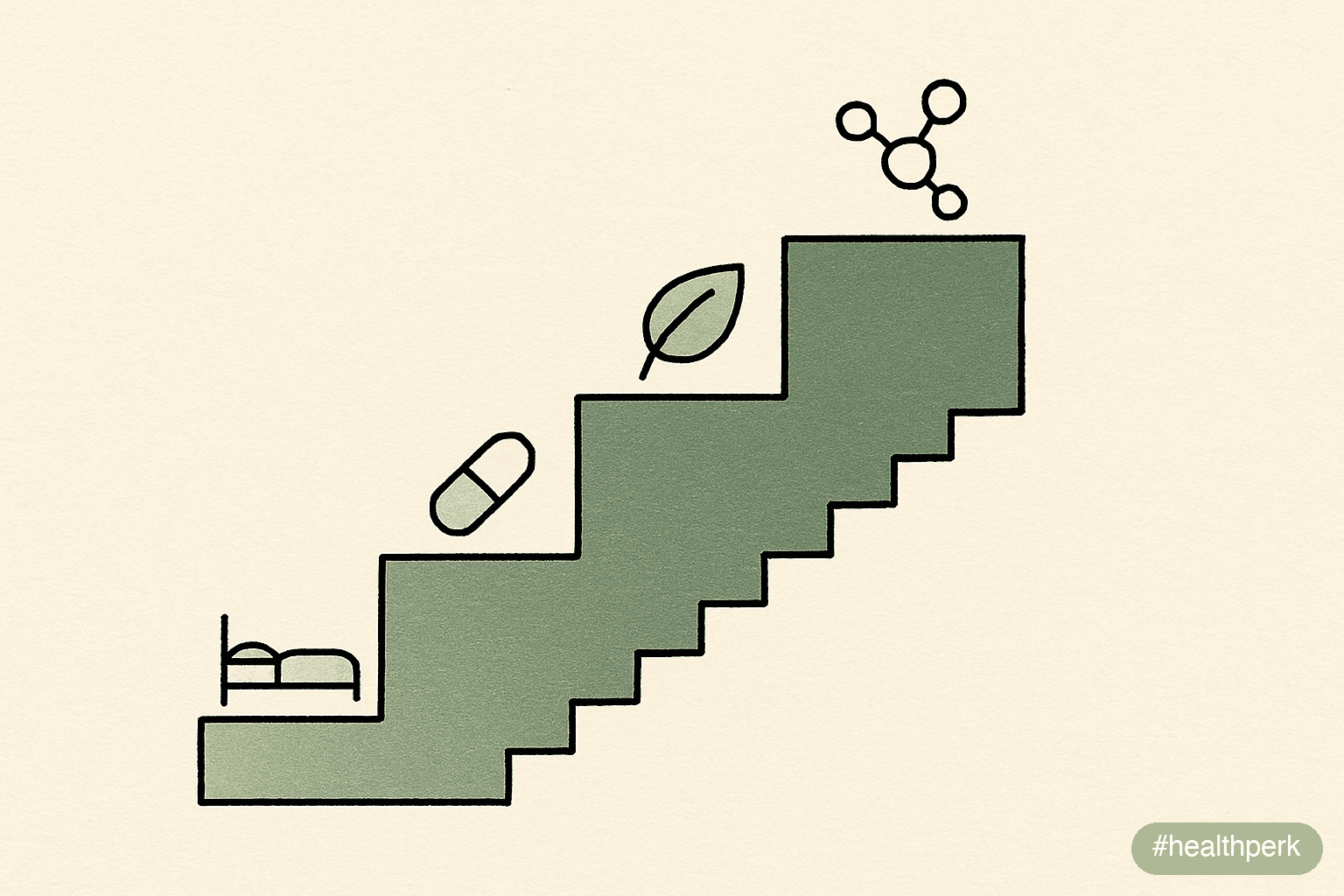
Natural vs synthetic nootropics is a framing that many beginners encounter early and that often produces more confusion than clarity. The category boundary is fuzzy (caffeine is a "natural" alkaloid sold in synthetic pill form; creatine is endogenous in the body and made synthetically for supplementation), and the evidence base does not favor one category over the other in a blanket way. Choosing sensibly between them depends on goal, time horizon, regulatory landscape, and risk tolerance.
What "natural" usually means in 2026 marketing
- Herbal compounds: bacopa monnieri, ginkgo biloba, rhodiola rosea, ashwagandha, lion's mane
- Food-derived compounds: L-theanine (from green tea), omega-3 (from fish or algae), caffeine
- Endogenous compounds sold as supplements: creatine, choline, phosphatidylserine
What "synthetic" usually means in 2026 marketing
- Racetams: piracetam, aniracetam, oxiracetam, phenylpiracetam (regulatory status varies by country)
- Choline donors: citicoline (CDP-choline), alpha-GPC
- Other synthetic compounds: noopept, bromantane, semax (most are unapproved in the US/EU)
- Prescription cognitive medications used off-label (modafinil, methylphenidate) - outside the scope of this beginner guide
What the evidence base actually supports
The strongest replicated evidence in 2026 spans both categories: caffeine and L-theanine (natural), omega-3 and creatine (mostly natural-derived), and bacopa (natural) on one side; citicoline and alpha-GPC (synthetic) with more contested evidence on the other. The category label is less predictive of evidence quality than the specific compound's trial record.
A reasonable decision framework for beginners
- Default to compounds with the most independent (non-industry-funded) trial evidence, regardless of category. This currently favors caffeine + L-theanine, omega-3, creatine, and bacopa.
- Prefer compounds with disclosed standardized doses over proprietary blends, in both categories.
- Be cautious with compounds whose regulatory status is unclear in your country - this disproportionately affects synthetic nootropics like the racetams.
- Treat "natural" and "synthetic" as marketing categories, not safety categories. Natural compounds have pharmacology, interactions, and rare adverse events; synthetic compounds with disclosed mechanisms can be safer than herbal compounds with poorly characterized active constituents.
When synthetic nootropics may have a place for a beginner
Citicoline at 250-500 mg/day, taken for 8-12 weeks, is one of the more reasonable synthetic options for a beginner who has already trialed the natural staples and wants to evaluate one additional compound. It has more disclosed pharmacology than most herbal extracts, although its evidence in healthy younger adults remains modest. Racetams, noopept, and unregulated synthetic compounds are not reasonable starting points for a beginner.
When natural compounds may have a place for a beginner
The natural compounds with the strongest evidence (L-theanine, omega-3, bacopa) and the most consistent safety profile are reasonable starting points for almost any healthy adult beginner without medication interactions. They are inexpensive, widely available, and supported by multiple independent meta-analyses.
The honest summary: the natural vs synthetic question is less important than the evidence-quality and dose-disclosure question. A well-characterized synthetic compound at a known dose can be safer than a poorly characterized herbal extract at an undisclosed dose, and vice versa.
Related Articles on HealthPerk
Explore more on this topic:
- Best Supplements for Focus and Concentration
- Brain Fog Causes and Solutions
- How to Improve Focus Naturally
- How to Increase Concentration Fast
- L-Theanine vs Caffeine for Focus
- Foods for Brain Health
Frequently Asked Questions
What are the best nootropics for beginners to start with?
For most adult beginners, the reasonable starting set is: caffeine paired with L-theanine for acute focus sessions, omega-3 (EPA + DHA) at 1-2 g/day for daily cognitive support, and creatine monohydrate at 3-5 g/day for measurable memory benefits. From the herbal tier, bacopa monnieri has the most consistent memory evidence at 300 mg/day for at least 8-12 weeks. Foundations - sleep, daylight, hydration, deliberate caffeine timing - should be in place before adding any compound.
Are natural nootropics for beginners safer than synthetic ones?
Not automatically. Natural origin does not exempt a compound from pharmacology or interactions. Ginkgo biloba has meaningful interactions with anticoagulants, bacopa can cause GI symptoms, and ashwagandha has rare hepatotoxicity reports. A well-characterized synthetic compound with disclosed dose and mechanism can be safer than a poorly characterized herbal extract. The relevant safety question is the specific compound's profile and interactions, not its natural or synthetic label.
Does ginkgo biloba for memory actually work in healthy adults?
The 2026 evidence is mixed. Ginkgo biloba at 120-240 mg/day of a standardized extract has shown modest cognitive benefits in older adults with mild cognitive impairment in several trials. In healthy adults under 65 seeking general memory or focus improvement, randomized trials have largely been neutral, including the large 2009 JAMA Ginkgo Evaluation of Memory (GEM) trial in older adults. Ginkgo also has no reliable same-day acute effect; perceptible benefit, if any, appears after 8-12 weeks.
What are the main bacopa monnieri benefits brain function gets from supplementation?
The most consistent documented benefit is improved memory acquisition and retention after 8-12 weeks of daily use at 300 mg of an extract standardized to 50-55% bacosides. A 2014 meta-analysis in the Journal of Ethnopharmacology pooled randomized trials and confirmed modest but significant memory improvements at this duration. Effects on attention, processing speed, and mood are less consistent. Bacopa has no reliable same-day effect; commitment to 8-12 weeks is required to evaluate honestly.
Which nootropics that actually work have the strongest 2026 evidence?
The compounds with the strongest replicated evidence are caffeine, L-theanine (particularly combined with caffeine), omega-3 EPA plus DHA, creatine monohydrate, and bacopa monnieri for memory specifically. Moderate but contested evidence supports rhodiola rosea for stress-related fatigue and lion's mane for cognitive task performance. Most proprietary nootropic blends with undisclosed per-ingredient doses fall into a weak-evidence tier and are not reliable starting points for a beginner.
In a ginkgo vs bacopa memory comparison, which should a beginner try first?
The choice is goal-dependent. For a beginner during a learning-heavy period focused on memory acquisition, bacopa monnieri at 300 mg/day has more direct human evidence. For an older adult with subjective memory complaints or mild cognitive impairment, ginkgo biloba at 120-240 mg/day has stronger trial support. For a healthy younger adult seeking general daily focus, neither is the most reasonable starting point - L-theanine plus caffeine and foundational habit work are higher leverage.
How should a beginner think about natural vs synthetic nootropics overall?
Treat the natural vs synthetic split as a marketing label, not a safety or efficacy ranking. Choose compounds based on independent trial evidence, dose disclosure, third-party testing, and known interaction profile rather than category. The strongest-evidence compounds span both categories: caffeine + L-theanine and bacopa on the natural side, citicoline and alpha-GPC as the more reasonable synthetic options. Avoid proprietary blends with undisclosed doses and unregulated synthetic compounds with unclear legal status in your country.
This article is for informational purposes only and does not constitute medical advice. Nootropics, including natural herbal compounds, can interact with prescription medications, may be inappropriate during pregnancy or breastfeeding, and may carry risks in people with bleeding disorders, cardiovascular disease, thyroid disease, liver disease, or psychiatric conditions. Consult a qualified healthcare provider before starting any nootropic supplement, particularly if you are taking prescription medications. Bacopa, ginkgo, and other herbal nootropics have documented interactions with anticoagulants, antiplatelets, antidepressants, and thyroid medications. Individual results vary.
About the author The HealthPerk Editorial Team reviews nutritional and cognitive health research through evidence synthesis cross-referenced with peer-reviewed clinical trials, Cochrane reviews, and clinical practice guidelines. Our nootropic content is reviewed for medical accuracy against current internal medicine, nutritional science, and pharmacology standards. How we review →
References
Kongkeaw, C., Dilokthornsakul, P., Thanarangsarit, P., Limpeanchob, N., & Norman Scholfield, C. (2014). Meta-analysis of randomized controlled trials on cognitive effects of Bacopa monnieri extract. Journal of Ethnopharmacology, 151(1), 528-535. https://doi.org/10.1016/j.jep.2013.11.008
Supports: bacopa monnieri produces modest but significant memory improvements after 8-12 weeks of consistent supplementation
Stough, C., Lloyd, J., Clarke, J., Downey, L. A., Hutchison, C. W., Rodgers, T., & Nathan, P. J. (2001). The chronic effects of an extract of Bacopa monniera (Brahmi) on cognitive function in healthy human subjects. Psychopharmacology, 156(4), 481-484. https://doi.org/10.1007/s002130100815
Supports: bacopa monnieri improves memory acquisition and retention in healthy adults after 12 weeks of supplementation
Snitz, B. E., O'Meara, E. S., Carlson, M. C., Arnold, A. M., Ives, D. G., Rapp, S. R., ... & DeKosky, S. T. (2009). Ginkgo biloba for preventing cognitive decline in older adults: A randomized trial. JAMA, 302(24), 2663-2670. https://doi.org/10.1001/jama.2009.1913
Supports: ginkgo biloba does not significantly slow cognitive decline in cognitively normal older adults over multi-year follow-up
Tan, M. S., Yu, J. T., Tan, C. C., Wang, H. F., Meng, X. F., Wang, C., ... & Tan, L. (2015). Efficacy and adverse effects of ginkgo biloba for cognitive impairment and dementia: A systematic review and meta-analysis. Journal of Alzheimer's Disease, 43(2), 589-603. https://doi.org/10.3233/JAD-140837
Supports: standardized ginkgo extract produces modest improvements in cognition in adults with mild cognitive impairment and dementia
Owen, G. N., Parnell, H., De Bruin, E. A., & Rycroft, J. A. (2008). The combined effects of L-theanine and caffeine on cognitive performance and mood. Nutritional Neuroscience, 11(4), 193-198. https://doi.org/10.1179/147683008X301513
Supports: L-theanine combined with caffeine improves attention and reduces caffeine-associated arousal compared with caffeine alone
Prokopidis, K., Giannos, P., Triantafyllidis, K. K., Kechagias, K. S., Forbes, S. C., & Candow, D. G. (2023). Effects of creatine supplementation on memory in healthy individuals: A systematic review and meta-analysis of randomized controlled trials. Nutrition Reviews, 81(4), 416-427. https://doi.org/10.1093/nutrit/nuac064
Supports: creatine monohydrate produces measurable improvements in short-term memory in healthy adults
Bauer, I., Hughes, M., Rowsell, R., Cockerell, R., Pipingas, A., Crewther, S., & Crewther, D. (2014). Omega-3 supplementation improves cognition and modifies brain activation in young adults. Human Psychopharmacology: Clinical and Experimental, 29(2), 133-144. https://doi.org/10.1002/hup.2379
Supports: omega-3 supplementation improves cognitive performance in healthy young adults
Ishaque, S., Shamseer, L., Bukutu, C., & Vohra, S. (2012). Rhodiola rosea for physical and mental fatigue: A systematic review. BMC Complementary and Alternative Medicine, 12, 70. https://doi.org/10.1186/1472-6882-12-70
Supports: rhodiola rosea has moderate evidence for reducing stress-related mental fatigue
Saitsu, Y., Nishide, A., Kikushima, K., Shimizu, K., & Ohnuki, K. (2019). Improvement of cognitive functions by oral intake of Hericium erinaceus. Biomedical Research, 40(4), 125-131. https://doi.org/10.2220/biomedres.40.125
Supports: lion's mane produces measurable cognitive task performance improvements in healthy adults
Synoradzki, K., & Grieb, P. (2019). Citicoline: A superior form of choline?. Nutrients, 11(7), 1569. https://doi.org/10.3390/nu11071569
Supports: citicoline is among the better-characterized synthetic choline donors used as a nootropic, with disclosed pharmacology and modest cognitive evidence in older adults
Frequently Asked Questions
What are the best nootropics for beginners to start with?
Start with caffeine plus L-theanine for acute focus, omega-3 1-2 g/day for daily cognitive support, and creatine monohydrate 3-5 g/day. From the herbal tier, bacopa monnieri 300 mg/day for at least 8-12 weeks has the most consistent memory evidence. Foundations - sleep, daylight, hydration, deliberate caffeine timing - should be in place before adding any compound.
Are natural nootropics for beginners safer than synthetic ones?
Not automatically. Ginkgo interacts with anticoagulants, bacopa can cause GI symptoms, ashwagandha has rare hepatotoxicity reports. A well-characterized synthetic compound can be safer than a poorly characterized herbal extract. The safety question is the specific compound's profile, not its natural or synthetic label.
Does ginkgo biloba for memory actually work in healthy adults?
Mixed. Ginkgo at 120-240 mg/day shows modest benefits in older adults with mild cognitive impairment in several trials. In healthy adults under 65, randomized trials have largely been neutral, including the 2008 JAMA trial. Ginkgo has no reliable same-day effect; perceptible benefit, if any, appears after 8-12 weeks.
What are the main bacopa monnieri benefits brain function gets from supplementation?
Improved memory acquisition and retention after 8-12 weeks of daily use at 300 mg of an extract standardized to 50-55% bacosides. A 2014 meta-analysis pooled randomized trials and confirmed modest but significant memory improvements. Effects on attention and mood are less consistent. Commitment to 8-12 weeks is required to evaluate honestly.
Which nootropics that actually work have the strongest 2026 evidence?
Caffeine, L-theanine (especially combined with caffeine), omega-3 EPA plus DHA, creatine monohydrate, and bacopa monnieri for memory. Moderate but contested evidence supports rhodiola for stress fatigue and lion's mane for cognitive tasks. Most proprietary blends with undisclosed doses fall into a weak-evidence tier.
In a ginkgo vs bacopa memory comparison, which should a beginner try first?
Goal-dependent. For a beginner during a learning-heavy period focused on memory acquisition, bacopa monnieri at 300 mg/day has more direct human evidence. For an older adult with mild cognitive impairment, ginkgo at 120-240 mg/day has stronger trial support. For a healthy younger adult seeking general daily focus, neither is the most reasonable starting point - L-theanine plus caffeine plus habit work are higher leverage.
How should a beginner think about natural vs synthetic nootropics overall?
Treat the split as a marketing label, not a safety or efficacy ranking. Choose compounds based on independent trial evidence, dose disclosure, third-party testing, and known interactions. The strongest-evidence compounds span both categories: caffeine + L-theanine and bacopa on the natural side, citicoline and alpha-GPC as the more reasonable synthetic options.
More from Supplements