How to Lose Weight Without Exercise: 2026 Evidence-Based Guide to Daily Movement, No-Diet Eating, and the Wearables That Help
How to Lose Weight Without Exercise: 2026 Evidence-Based Guide to Daily Movement, No-Diet Eating, and the Wearables That Help
By the HealthPerk Editorial Team · Last updated: May 2026
Quick Answer
Can you actually lose weight without exercise in 2026, and what does it take?
Yes — most fat loss is driven by the food side of the energy ledger, not by structured exercise sessions. The 2026 obesity-medicine consensus is that how to lose weight without exercise comes down to four levers: a sustained moderate caloric deficit through better eating choices (not necessarily formal dieting), a meaningfully higher daily movement baseline (NEAT — non-exercise activity thermogenesis, mostly walking and standing), enough sleep to keep hunger hormones in range, and credible tracking so the eater can see whether the trajectory is real. Adults who add 3,000–5,000 daily steps to a sedentary baseline and shift toward higher-protein, higher-fiber whole foods typically lose 0.3–0.7% of body weight per week without a single gym session. A wearable that counts steps honestly, plus a smart scale and a simple food-quality framework, is enough infrastructure for most people. This guide covers what actually works without exercise, what does not, the fitness trackers and wearable devices that earn their place, and the supplements that are realistic adjuncts — not replacements — for the food and movement basics.
A short orientation for adults who want fat loss without a gym membership:
| Lever | What it costs | Realistic effect |
|---|---|---|
| Daily steps 7,000–10,000+ | Free; needs a tracker | 200–400 extra kcal/day vs. sedentary |
| Higher-protein, higher-fiber eating | Same grocery bill, different cart | Largest single lever |
| 7–8 hours of sleep | Behavioral, free | Restores hunger hormones; prevents overeating |
| Wearable tracker | $30–$400 once | Visibility → adherence |
| Smart scale | $25–$220 once | 7-day trend, not daily noise |
| Supplements (selective) | $10–$60/month | Small adjuncts only |
The phrase how to lose weight without exercise is one of the most searched weight-loss queries in 2026, and the demand reflects something real: most adults will not sustain three to five structured gym sessions per week across years. The 2026 evidence is reassuring on this point. Structured exercise contributes a relatively small share of total daily energy expenditure for most adults — roughly 10–20% of TDEE in someone who trains seriously, and effectively 0% in someone who does not — while non-exercise activity (walking, standing, fidgeting, household tasks) can swing TDEE by 600–1,000 kcal per day between extremes of sedentary and active adults at the same body weight (Levine, 2007 NEAT review; subsequent confirmations through 2024).
That is the engineering insight behind no-exercise fat loss. The daily movement baseline matters more than the workout, the food pattern matters more than the diet, and the visibility from a basic wearable matters more than the latest supplement. This guide walks through each lever with 2026 evidence, then covers the fitness trackers, wearable devices, and supplements worth considering — and the ones not worth the spend.
Table of Contents
- How "How to Lose Weight Without Exercise" Actually Works
- How to Lose Weight Naturally Without Dieting
- How to Lose Weight Without Dieting (And Still Eat Enough)
- Fat Loss Without Gym: What Actually Works at Home
- Fitness Trackers for Fat Loss: 2026 Picks
- Wearable Devices for Calorie Tracking: Accuracy Reality
- Supplements for Weight Loss Men Can Realistically Use
- Frequently Asked Questions
- References
How "How to Lose Weight Without Exercise" Actually Works
Total daily energy expenditure (TDEE) breaks into four parts: basal metabolic rate (BMR, the cost of being alive — about 60–75% of TDEE in most adults), the thermic effect of food (TEF, 8–15%), non-exercise activity thermogenesis (NEAT, 5–35%), and exercise activity thermogenesis (EAT, 0–20%) (Levine, 2007; Westerterp, 2017 update). For an adult who does not formally exercise, NEAT is the only meaningfully variable component on the expenditure side. Moving NEAT from sedentary (about 1,500 daily steps and mostly seated) to active (10,000+ steps, frequent standing, household activity) can add 300–700 kcal of daily expenditure without a single gym session.
Why this is enough to drive fat loss. A 500 kcal/day deficit produces roughly 0.45 kg of fat loss per week. The 2026 evidence is consistent: adults who shift from 3,000 to 10,000 daily steps while also moderately reducing portion sizes lose weight at rates comparable to adults who add 3–4 weekly cardio sessions to a sedentary baseline (Bassett et al., 2017 step-count meta-analyses; Schoenfeld et al., 2021 NEAT vs. structured-exercise reviews). The mechanism is not magic — calories burned walking 7,000 extra steps daily are roughly equivalent to a 30–40 minute jog four times a week — but the adherence is much higher.
Why food matters more than gym time even when you do exercise. A 60-minute moderate run burns ~500 kcal in a 75 kg adult and is easily offset by a single 600 kcal post-workout indulgence. A 100 g per day shift from refined carbs to lean protein and fiber, in contrast, has compounding effects on satiety, glycemic response, and lean-mass retention that no single workout produces.
What "without exercise" does NOT mean in 2026.
- It does not mean no movement — daily walking and standing are essential.
- It does not mean no resistance training is optimal — even some bodyweight or band work is highly recommended for lean-mass protection and metabolic health, though it is not required to lose weight.
- It does not mean a sedentary life is fine — sitting time independent of weight has cardiometabolic costs (Ekelund et al., 2016 Lancet sedentary-time meta-analysis).
- It does not mean ignoring strength entirely produces optimal results — adults losing weight without any strength stimulus lose 25–40% of their weight as lean mass instead of the 10–15% typical with strength preservation.
The credible 2026 framing: structured exercise is optimal for body composition and health; it is not required for weight loss. For adults whose constraint is time, joint pain, gym anxiety, or simple disinterest, the food + NEAT + sleep + tracking stack works.
How to Lose Weight Naturally Without Dieting
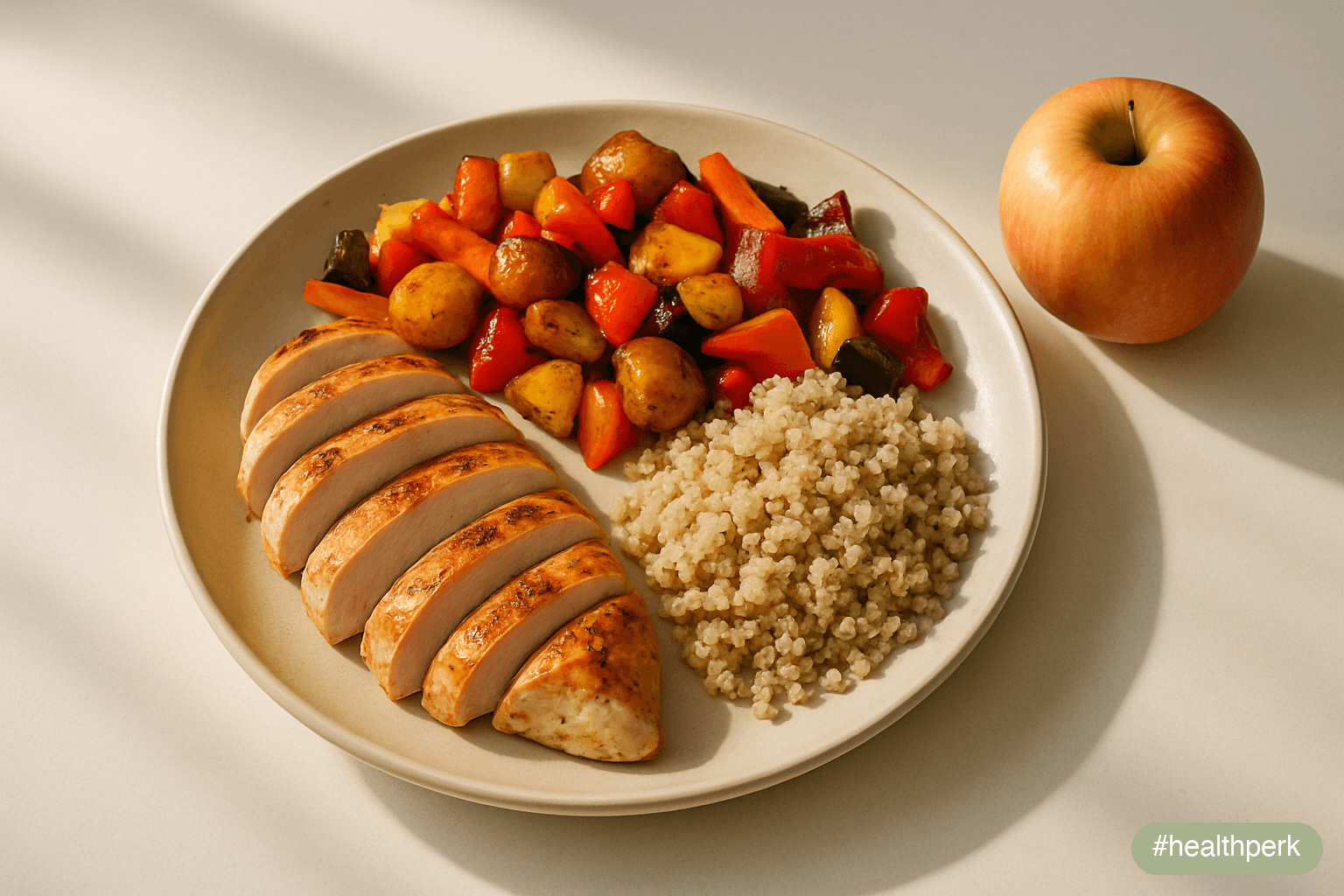
How to lose weight naturally without dieting sounds paradoxical, but the 2026 evidence supports it: structured "diets" with named rules, forbidden foods, and short-term protocols produce 2–5 kg of initial loss that mostly returns within 1–2 years (Mann et al., 2007 American Psychologist diet-failure review; ongoing replications). Adults who instead make sustained, quiet shifts in food quality — without naming it a diet — keep more of the loss longer.
Three food-quality shifts that work without "dieting":
1. Protein at the front of every eating occasion. Most adults under-eat protein and over-eat refined carbohydrate and fat by default. Bringing protein to roughly 25–30% of daily calories (1.2–1.6 g/kg body weight for most adults; 1.6–2.2 g/kg for those doing any strength work) increases satiety, reduces spontaneous intake at later meals, raises TEF, and protects lean mass during a deficit. The change is measurable within two weeks (Weigle et al., 2005 protein-leverage trial).
Practical: Greek yogurt or eggs at breakfast (25–35 g protein), chicken/fish/tofu/legumes at lunch (30–40 g), similar at dinner. No new rules, just a different lead ingredient.
2. Soluble fiber at most meals. Oats, beans, lentils, apples, pears, berries, chia, psyllium, barley. Fiber slows gastric emptying, stimulates GLP-1, and reduces hunger between meals. Most Western adults consume 12–15 g/day; the satiety effect kicks in around 25–35 g/day (Reynolds et al., 2019 Lancet).
Practical: Oats or chia in breakfast, beans in lunch, a piece of fruit and some berries, a high-fiber vegetable at dinner.
3. Whole-food shape, not whole-food perfectionism. "Eat mostly foods that look like what they came from" captures the relevant heuristic without requiring dietary identity changes. Frozen vegetables count. Greek yogurt counts. Canned beans count. Whole-grain bread counts. The shift is from refined snack-form foods (pastries, chips, soda) toward foods that retain their original structure.
These three shifts do not require calorie counting, named protocols, forbidden lists, or social-event awkwardness. They produce a 200–500 kcal/day spontaneous reduction in intake without conscious restriction in most adults (Hall et al., 2019 Cell Metabolism ultra-processed food trial). Combined with higher NEAT, this is enough to drive 0.3–0.7% body-weight loss per week — sustainable, low-friction, and compatible with normal social eating.
What also matters in a no-diet approach:
- Sleep 7–8 hours. Sleep restriction (less than 6 hours) increases ghrelin, decreases leptin, and adds 300–500 kcal of spontaneous intake the next day (Spiegel et al., 2004; subsequent replications). Adults who sleep 7–8 hours lose more fat at the same caloric intake than adults who sleep 5–6 hours (Tasali et al., 2022 JAMA Internal Medicine sleep-extension trial).
- Hydration. Drinking 500 ml of water before meals reduces meal intake 75–90 kcal on average (Dennis et al., 2010 trial in middle-aged and older adults).
- Stress management. Chronic cortisol elevation drives visceral fat and reduces dietary self-regulation. A simple 10-minute daily walk or breathing practice has measurable effects on cortisol and adherence.
This is not a diet. It is a slow re-architecture of defaults. It works.
How to Lose Weight Without Dieting (And Still Eat Enough)
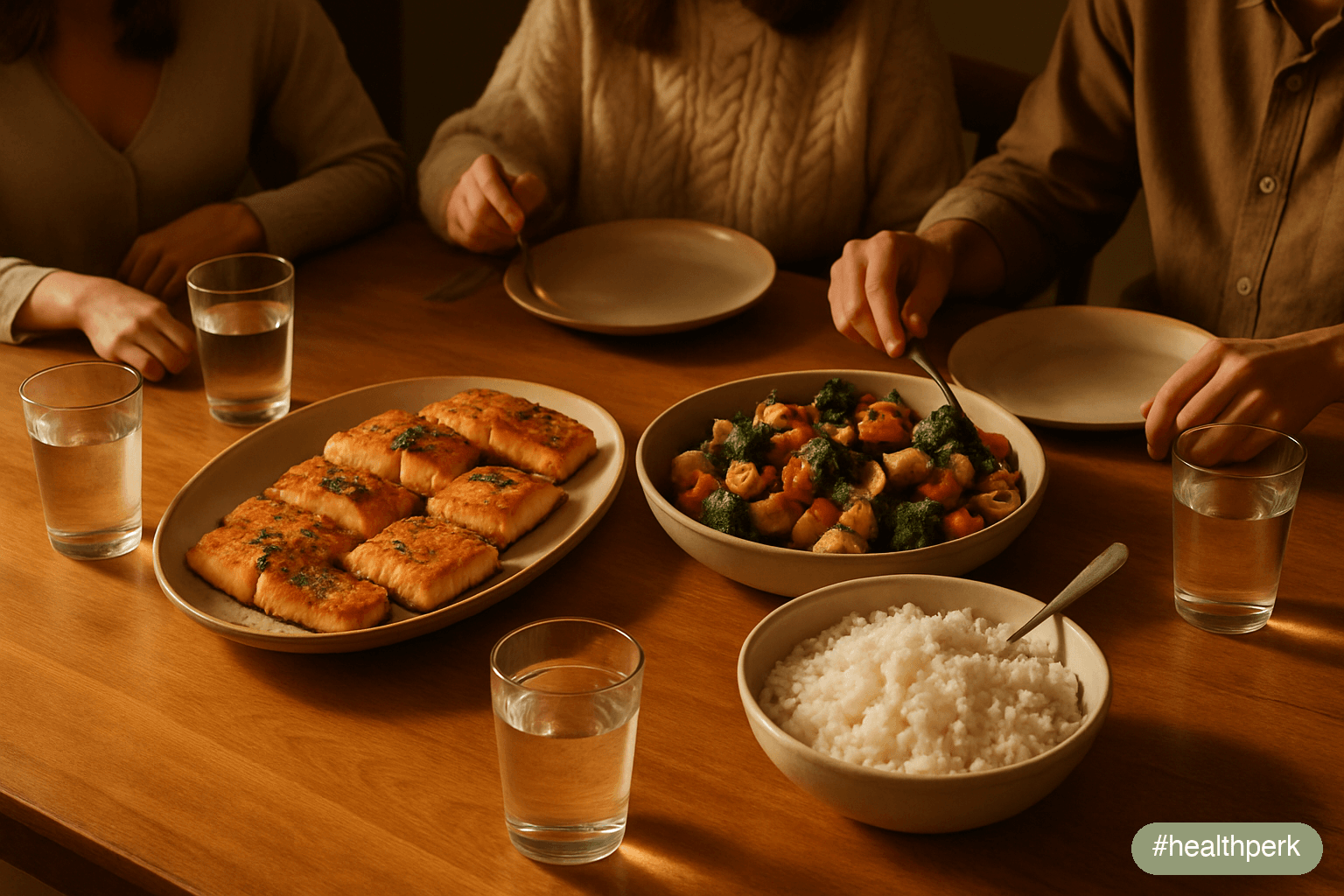
How to lose weight without dieting asks a more specific question: how do you create a caloric deficit without feeling deprived? The 2026 answer is volume eating combined with strategic food substitutions.
The volume principle. Energy density (kcal per gram of food) varies enormously across foods. A 600 kcal lunch can be 200 g of fast-food burger or 1,200 g of grilled chicken, mixed vegetables, roasted potato, and fruit. The latter takes longer to eat, distends the stomach more, triggers more GLP-1 and CCK signaling, and leaves the eater fuller for longer at the same caloric cost (Rolls, 2009; Hall et al., 2019).
Practical substitutions that increase volume at the same or lower calories:
| Refined version | Volume version | Same calories, more food |
|---|---|---|
| 50 g pretzels | 250 g popcorn (air-popped) + apple | ~3× the volume |
| Frappuccino (450 kcal) | Iced coffee with whole milk + protein bar | More protein, more satiety |
| Croissant breakfast | Greek yogurt + berries + oats | 2× the protein, more fiber |
| White-rice bowl | 50/50 white rice + cauliflower rice | Same flavor, half the carbs |
| Crackers + cheese | Apple + cheese + handful of almonds | More fiber, similar fat |
The substitution principle. Most fat-loss success comes from changing the default in 4–6 daily food decisions, not from heroic restriction. Coffee with whole milk + protein powder instead of frappuccino. Greek yogurt instead of pastry. Side salad instead of fries. Whole-grain wrap instead of large baguette. Done five times daily, these substitutions create a 400–600 kcal/day deficit without anyone feeling like they are "on a diet."
Why you can still eat enough. Adults often associate weight loss with hunger because their previous diets were aggressive caloric restrictions on low-protein, low-fiber foods. A moderate deficit (300–500 kcal/day) on a high-protein, high-fiber, volume-eating pattern produces hunger comparable to maintenance for most adults. The trial data is consistent: across all diet patterns at matched calories, the ones with the highest protein, highest fiber, and highest volume report the least hunger and the lowest dropout (Westerterp-Plantenga et al., 2009 satiety meta-analysis).
What to avoid in a no-diet approach:
- Liquid calories (sweetened beverages, juice, syrupy coffee drinks) — they bypass satiety signaling entirely
- Snack-form refined foods (chips, crackers, candy, pastries) — eaten unconsciously, easily over-consumed
- "Fat-free" or "low-fat" highly processed substitutes — typically replace fat with sugar and starch, reducing satiety
- Extremely large portions of even healthy foods — nuts, olive oil, granola, peanut butter are energy-dense enough that 100 g extra adds 500–600 kcal silently
- "Cleanses," juice fasts, "fat-flush" detoxes — short-term water-weight loss with high regain rates
A reasonable test of the no-diet approach: at the end of week 2, the eater has lost 0.5–1.5 kg (mostly water + small fat), reports normal energy, has not skipped social meals, and could continue indefinitely. If hunger is severe, the deficit is too aggressive or the protein and fiber are too low.
Fat Loss Without Gym: What Actually Works at Home
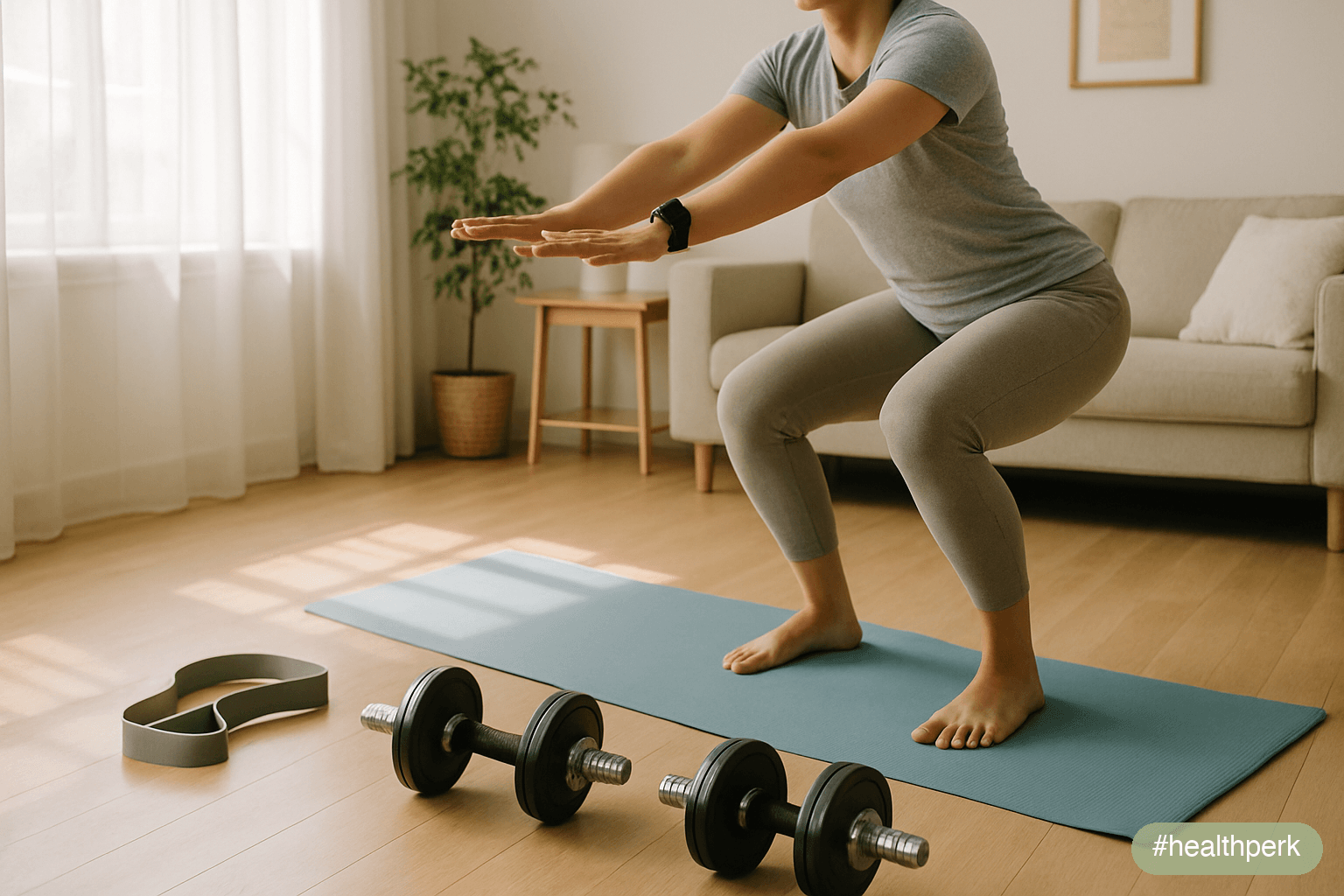
Fat loss without gym is mostly an exercise-substitution question. The two roles a gym plays — adding caloric expenditure and providing a resistance stimulus for lean-mass preservation — can both be filled at home or outdoors for most adults at any starting fitness level.
The home/outdoor stack that replicates gym effects on body composition:
Daily walking (the primary driver). Aim for a baseline of 7,000–10,000 steps daily for most adults, with at least 30 minutes of continuous brisk walking included to push some heart-rate effect. Outdoor walking, treadmill, walking pads under a desk, or stair climbing all count. A walking pad ($150–$400) under a desk lets office workers add 8,000–12,000 steps without scheduling a workout.
Two short bodyweight or band sessions weekly (the lean-mass preserver). 20–30 minutes, twice weekly, of progressive resistance work using bodyweight, resistance bands, or adjustable dumbbells preserves 80–90% of the lean-mass benefit of a structured gym program for the lower-frequency need of fat loss specifically. Recommended movement pattern coverage:
- Squat pattern (bodyweight squat, goblet squat, Bulgarian split squat)
- Hinge pattern (Romanian deadlift with bands or dumbbells, glute bridge)
- Push pattern (push-up, dumbbell or band press)
- Pull pattern (band row, inverted row using a sturdy table, suspension trainer row)
- Carry or core pattern (suitcase carry, dead bug, plank)
Equipment investment for the home version: a $60 set of resistance bands, a $150 pair of adjustable dumbbells, a $25 yoga mat. Total under $250 for years of use.
Postprandial 10-minute walks. A 10-minute walk after meals reduces postprandial glucose 10–20% and improves insulin sensitivity over weeks (Buffey et al., 2022 meta-analysis on postprandial walking). Three meals × 10 minutes = 30 extra minutes of movement and 1,500–2,500 extra steps daily.
Active household and lifestyle defaults. Standing desk for 2–4 hours of the workday. Stairs over elevator. Park further from the entrance. Bike or walk for errands under 2 km. Each of these adds 200–500 daily steps with no conscious "workout" decision. NEAT compounds.
What does NOT need to happen for fat loss without a gym:
- HIIT or intense cardio (not required; raises hunger and joint risk)
- Daily structured exercise (counterproductive for adherence)
- Tracking workouts to the rep (over-engineered for fat-loss-only goals)
- Buying expensive home equipment (a Peloton is fine if you will use it; not necessary)
Realistic 2026 expectations for fat loss without gym:
- Week 1–2: 1–2 kg loss (mostly water + glycogen + small fat)
- Weeks 3–8: 0.3–0.7% body weight per week (mostly fat)
- Weeks 9–16: same rate, with adjustments to step count or food as the body adapts
- Months 4–6: 10–15 kg cumulative loss for adults starting with 20+ kg to lose; 5–8 kg for adults starting with 10 kg to lose
Adherence at 6 months for adults using this approach is consistently higher than for structured-gym fat-loss programs in the 2026 literature, primarily because the failure modes (missed workouts, gym access, motivation) do not apply.
Fitness Trackers for Fat Loss: 2026 Picks
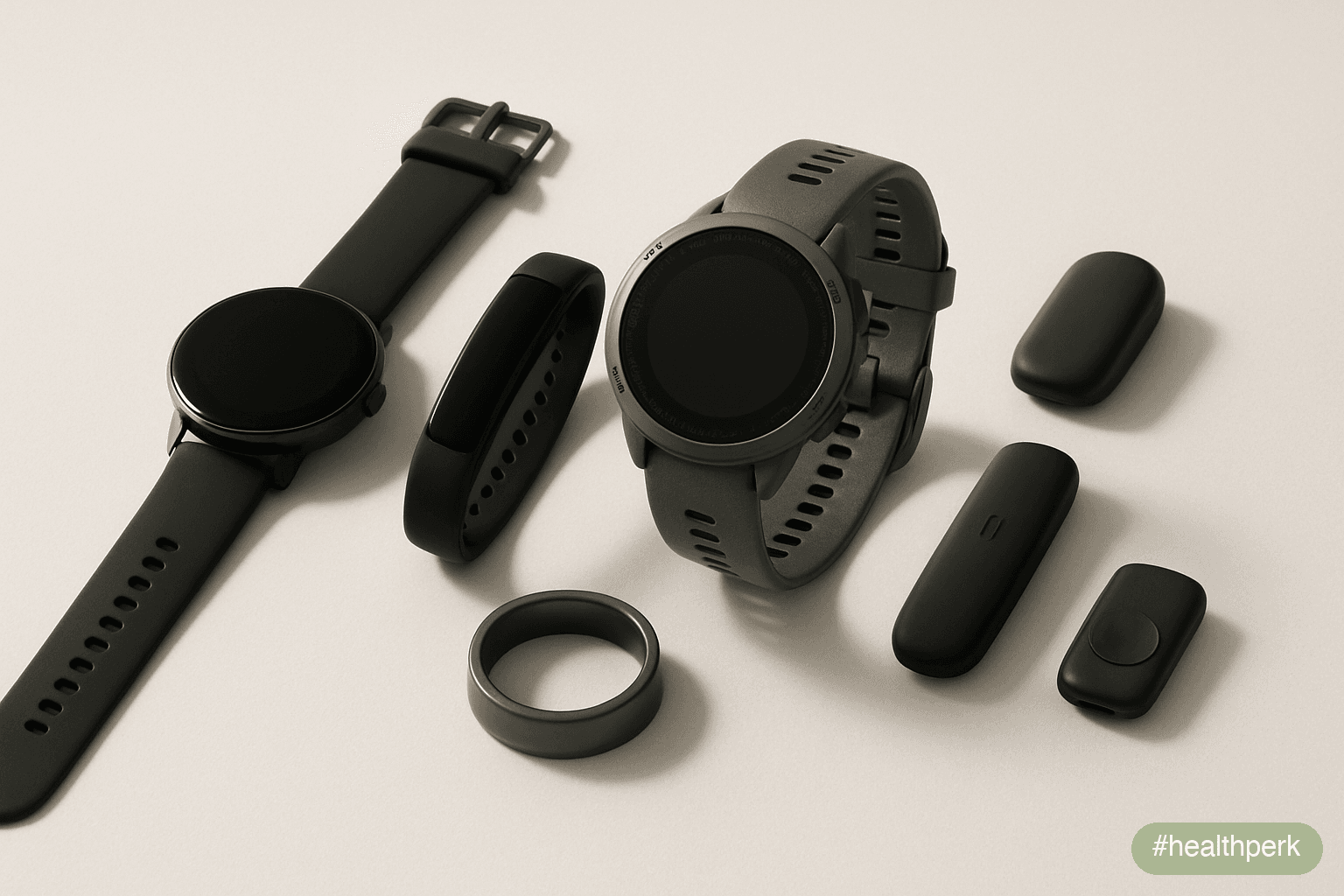
Fitness trackers for fat loss in 2026 serve one main purpose: showing the wearer how much they actually move so they can adjust. Honest step counts and trend data are far more useful than precise calorie estimates (which are unreliable on all wrist devices — see next section).
The 2026 fitness-tracker landscape for non-exercise fat loss:
Budget tier ($25–$80).
- Xiaomi Mi Band 9 / Smart Band 9 Pro. Honest step counting, heart rate, sleep, multi-day battery, ~$45. Best value 2026 tracker for adults whose only need is steps + sleep + basic heart rate.
- Amazfit Bip 6, Band 7. Comparable to Mi Band; longer battery life on Bip series.
- Fitbit Inspire 3. Reasonable budget choice; subscription-locked features less appealing than third-party alternatives.
Mid-tier ($100–$200).
- Fitbit Charge 6. Strong sleep and HRV data; Google integration; subscription unlocks premium insights. Best for adults who want a credible step + sleep + readiness platform without a smartwatch.
- Garmin Vivosmart 5 / Vivoactive 5. Multi-week battery; honest data; no subscription needed for core features. Strong choice for adults who hate charging daily.
- Amazfit Active 2, T-Rex Ultra. Smart-watch features at lower cost than Garmin/Apple; battery 10–20 days.
Premium tier ($300–$500+).
- Apple Watch Series 10 / SE (3rd gen). Strongest ecosystem if the user is on iPhone; sleep tracking improved substantially in 2025. Best for adults wanting tracker + smartwatch + ecosystem integration.
- Garmin Forerunner 165 / 265 / Venu 3 / Fenix 8. Best battery life among premium trackers (1–3 weeks depending on model); deep training metrics that are useful but optional for fat-loss-only goals.
- Polar Vantage M3 / Pacer Pro. Sports-oriented; reasonable battery; good for adults who walk and occasionally run.
Subscription / band-only options.
- Whoop 5.0. Band-only, no display; subscription-based ($30/month or $239/year as of early 2026). Strong recovery, sleep, HRV analytics; calorie estimates unreliable as on all wrist devices.
- Oura Ring Gen 4. Ring rather than wrist; cleanest sleep and HRV data of any consumer wearable; subscription required ($6/month). Less useful for daytime activity tracking than wrist devices.
What to look for in a fitness tracker for fat loss specifically:
- Honest, low-noise step counting (most modern trackers are accurate within 5–10% of validated counters during typical walking)
- Multi-day battery (charging daily is a top failure mode for tracker abandonment)
- Sleep duration and stages (sleep is the second-highest-leverage lever after steps)
- Resting heart rate trend (a rising RHR can signal under-recovery, stress, or illness)
- Phone integration (Apple Health, Google Fit, Health Connect, Fitbit)
- No reliance on aggressive coaching that increases user shame or attrition
What does NOT matter much for fat-loss-only goals:
- "Calorie burn" estimates (unreliable — see next section)
- VO2max estimates (interesting but not actionable for non-runners)
- Built-in workout coaching (less useful when you do not exercise structurally)
- ECG, blood oxygen, skin temperature (health-monitoring features, not weight-loss features)
- "Body battery" or "energy" scores (proprietary, hard to validate, often more confusing than useful)
The best fitness tracker for fat loss is the one the user wears every day and looks at twice — once in the morning (sleep) and once before bed (steps).
Wearable Devices for Calorie Tracking: Accuracy Reality
Wearable devices for calorie tracking in 2026 are useful as relative trackers and almost useless as absolute calorie counters. Understanding the difference is the single most important wearable-related concept for fat loss.
Why wrist-worn calorie estimates are unreliable. Wrist devices measure heart rate via photoplethysmography (PPG), plus motion via accelerometer and gyroscope. They infer energy expenditure through proprietary equations that combine those signals with the user's height, weight, age, and sex. The challenge: heart rate and motion correlate imperfectly with metabolic cost across different activity types. Heart rate is influenced by stress, caffeine, sleep deprivation, temperature, hydration, and individual variation independent of energy use. Validation studies across the major wearables consistently find calorie-expenditure error of 15–40% versus indirect calorimetry reference (Shcherbina et al., 2017 Journal of Personalized Medicine Stanford wearable accuracy study; replicated through 2024 with newer devices).
Specific 2026 accuracy realities:
- Heart rate during steady-state cardio (walking, jogging, cycling): Apple Watch, Fitbit Charge, Garmin, Polar — within 2–5% of chest-strap reference for most adults.
- Heart rate during resistance training, HIIT, or wrist movement: error rises substantially (8–20%) on all wrist devices; chest strap is more accurate.
- Step counting at normal walking speeds: within 5–10% on most modern trackers.
- Step counting at slow speeds (under 60 steps/min) or wheelchair use: substantially less accurate.
- Calorie expenditure estimates: 15–40% error vs. lab reference; over-estimation more common than under-estimation in popular trackers; Apple Watch tends toward over-estimation by 10–25% in lab studies.
- Sleep duration: within 10–15% of polysomnography on most modern devices.
- Sleep stage classification: still relatively rough; total sleep is more reliable than the staged breakdown.
How to use wearable calorie data responsibly:
- Treat it as a relative tracker, not an absolute target. "I burned 2,400 kcal today" is unreliable; "I burned more today than yesterday" is more reliable.
- Do not eat back exercise calories the device reports. Most wearables over-estimate, so eating back the reported burn often eliminates the deficit.
- Use weight trend over weeks as the source of truth. If you are losing 0.3–0.7% per week, your effective deficit is real, whatever the device says.
- Calibrate target intake against trend, not against device estimates. Calculate maintenance from real-world data (intake + weight change over 2–3 weeks), then deficit from there.
Where wearable devices for calorie tracking add genuine value:
- Step count visibility (large adherence effect)
- Sleep duration (the most actionable wearable signal for weight)
- Resting heart rate trend (early signal of fatigue, illness, or over-restriction)
- HRV trend (longer-term recovery indicator; useful for adults adding any exercise)
- Activity-minute reminders (small but real NEAT effect)
Best wearable devices for calorie tracking in 2026 (with calorie data treated as a relative signal):
- For wrist + activity + sleep + smartwatch ecosystem: Apple Watch Series 10 or Garmin Venu 3.
- For wrist + battery life + honest data + no subscription: Garmin Vivoactive 5 or Vivosmart 5.
- For band + sleep + recovery + subscription model: Whoop 5.0.
- For finger + sleep + HRV: Oura Ring Gen 4.
- For budget step count + sleep + heart rate: Xiaomi Mi Band 9 or Amazfit Bip 6.
The 2026 verdict: use a wearable for visibility and accountability. Do not trust its calorie counter. Trust the scale trend across weeks.
Supplements for Weight Loss Men Can Realistically Use
Supplements for weight loss men are an adjunct, not a strategy. The 2026 evidence-based shortlist for male adults trying to lose weight without exercise (or with minimal exercise) is short, cheap, and modest in effect.
Tier 1 — Likely worth the money:
- Whey or plant protein powder. Not a supplement in the marketing sense — just convenient protein. 20–40 g per serving, used once or twice daily to hit protein targets when meals are inconvenient. Effect: helps maintain protein intake at 1.2–2.0 g/kg body weight; the largest dietary lever for fat loss. Cost: $25–$45 per 1 kg tub.
- Creatine monohydrate, 3–5 g/day. Even without structured exercise, creatine improves lean-mass retention slightly during a deficit and supports cognitive function. Safe across decades of use in healthy adults (Kreider et al., 2017 ISSN review; updated 2022). Cost: $15–$25 per several months' supply.
- Vitamin D3, 1,000–2,000 IU/day. Most adults in temperate climates are at the low end or below recommended serum 25(OH)D. Vitamin D deficiency is associated with higher body weight and lower satiety in some trials, though causation remains debated. Useful for general health if intake or sun exposure is low. Cost: $5–$15 per few months.
- Magnesium glycinate or citrate, 200–400 mg/day. Improves sleep quality in adults with low intake; sleep is the second-largest lever after food. Cost: $10–$20 per couple of months.
- Soluble fiber supplement (psyllium husk, glucomannan). 5–10 g/day for adults whose food intake falls short of 25–30 g total daily fiber. Improves satiety and stool quality. Cost: $10–$20 per couple of months.
Tier 2 — Possibly worth it for some men:
- Caffeine, 100–200 mg pre-walk or pre-work. Mild thermogenic effect; small appetite suppression in some men. Not appropriate for adults with hypertension, arrhythmia, anxiety disorders, or sleep difficulty. Cost: cheap if from coffee; ~$8/bottle for tablets.
- Green tea extract, 300–500 mg EGCG/day. Replicated small effect (~1 kg additional loss over 12 weeks vs. placebo in meta-analysis). Caveat: rare hepatotoxicity at high doses; choose products at or below 800 mg EGCG/day. Cost: $15–$25/month.
- Fish oil (omega-3, EPA + DHA), 1–2 g/day combined EPA+DHA. General cardiometabolic support; possible small effects on body composition over months. Cost: $15–$30/month.
Tier 3 — Avoid or be cautious:
- "Fat-burner" stimulant stacks with yohimbine, synephrine, DMHA, DMAA, or unlisted "proprietary blends." Higher cardiovascular risk; minimal or unverified weight-loss benefit; not worth the gamble. Many sold to men through "testosterone-boosting fat-burner" marketing in 2026 still contain stimulants poorly disclosed on labels.
- "Testosterone booster" supplements (tribulus, ZMA combinations, etc.). No credible evidence of meaningful weight-loss or testosterone effects in healthy men with normal T levels. Money better spent on protein, sleep, and strength training.
- CLA, garcinia cambogia, raspberry ketones, forskolin, African mango. Weak or null evidence at best; not worth purchasing in 2026.
- GLP-1-receptor-agonist "natural alternatives" (berberine marketed as "nature's Ozempic"). Berberine has modest blood-sugar effects but is not equivalent to GLP-1 agonists. Reasonable for adults with insulin resistance under clinician supervision; not a substitute for semaglutide/tirzepatide where those are indicated.
A realistic 2026 supplement budget for a man trying to lose weight without exercise:
| Tier 1 stack | Monthly cost |
|---|---|
| Whey or plant protein (1 tub/month) | $30 |
| Creatine | $5 |
| Vitamin D3 | $3 |
| Magnesium | $5 |
| Psyllium fiber | $5 |
| Total | ~$48/month |
Add green tea extract or caffeine if desired and tolerated, for another $15–$25/month. The total stack is less than the cost of a single name-brand fat-burner subscription and produces more replicated effects.
One critical caveat for men over 40 or with existing conditions. Caffeine, green tea extract, fish oil, and other supplements interact with common medications (blood thinners, antihypertensives, antidepressants, statins). Discuss with a clinician before adding anything new, particularly if managing cardiovascular disease, diabetes, kidney or liver disease.
Related Articles on HealthPerk
Explore more on this topic:
- Why Can't I Lose Weight Even Dieting?
- How to Boost Metabolism Naturally
- How to Lose Belly Fat Naturally
- Supplements That Help Weight Loss Naturally
- Natural Appetite Suppressants That Work
- Hormonal Weight Gain Causes
- Foods That Burn Fat Naturally
Frequently Asked Questions
Can you really learn how to lose weight without exercise in 2026?
Yes. Structured exercise contributes a relatively small share of total daily energy expenditure (roughly 10–20% in adults who train seriously, ~0% in those who do not), while non-exercise activity thermogenesis — mostly walking and standing — can swing TDEE by 600–1,000 kcal/day between sedentary and active adults at the same body weight. Adults who add 3,000–5,000 daily steps to a sedentary baseline, shift toward higher-protein and higher-fiber whole foods, sleep 7–8 hours, and use a wearable plus a smart scale typically lose 0.3–0.7% of body weight per week without any gym sessions. Structured exercise remains optimal for body composition and metabolic health, but it is not required for fat loss. The food + NEAT + sleep + tracking stack is the credible 2026 protocol for adults whose constraint is time, joint pain, gym anxiety, or preference.
How do you learn how to lose weight naturally without dieting?
Make three sustained food-quality shifts rather than adopting a named diet: bring protein to roughly 25–30% of daily calories (1.2–1.6 g/kg body weight, or 1.6–2.2 g/kg with any strength work) so satiety, TEF, and lean-mass retention rise together; add soluble fiber at most meals (oats, beans, lentils, apples, berries, chia, psyllium) to reach 25–35 g daily total fiber, which slows gastric emptying and stimulates GLP-1; and shift the overall pattern toward whole-food shape (vegetables, fruits, legumes, lean proteins, whole grains) without forbidding any single food. These three changes produce a 200–500 kcal/day spontaneous reduction in intake without conscious restriction. Combined with daily steps and sleep, the result is 0.3–0.7% body-weight loss per week. No named protocol, no forbidden lists, no social-meal awkwardness.
What is the practical method for how to lose weight without dieting and still eat enough?
Apply two principles: volume eating and strategic substitution. Volume eating uses low-energy-density foods (vegetables, fruits, soups, lean proteins) to fill the plate at the same caloric cost; a 600 kcal whole-food lunch is 1,000–1,200 g of food versus 200 g of fast-food equivalent. Strategic substitution changes the default in 4–6 daily food decisions — coffee with milk and protein instead of frappuccino, Greek yogurt instead of pastry, salad instead of fries, whole-grain wrap instead of large baguette — without any "diet" framing. Done together, these create a 300–600 kcal/day deficit without significant hunger. Avoid liquid calories, refined snack-form foods, extremely large portions of energy-dense "healthy" foods (nuts, granola, peanut butter), and short-term cleanses or juice fasts. If hunger is severe at week two, the deficit is too aggressive or the protein and fiber are too low.
What does fat loss without gym look like at home?
Fat loss without gym substitutes daily walking and two short bodyweight or band sessions for traditional cardio and resistance machines. Aim for 7,000–10,000 daily steps with at least 30 minutes of continuous brisk walking; outdoor walking, treadmill, or a walking pad under a desk all count. Add two 20–30 minute bodyweight or band sessions weekly covering squat, hinge, push, pull, and carry patterns — bodyweight squats, band Romanian deadlifts, push-ups, band rows, suitcase carries. Equipment cost is under $250 for resistance bands, adjustable dumbbells, and a yoga mat. Layer in postprandial 10-minute walks after meals (10–20% lower postprandial glucose) and standing-desk time. Adults using this stack lose 10–15 kg over 4–6 months when starting with 20+ kg to lose, and 5–8 kg starting with 10 kg to lose. Adherence at 6 months is higher than for structured gym programs because the typical failure modes do not apply.
What are the best fitness trackers for fat loss in 2026?
Fitness trackers for fat loss in 2026 sort into three tiers. Budget ($25–$80): Xiaomi Mi Band 9 (best value), Amazfit Bip 6, Fitbit Inspire 3. Mid-tier ($100–$200): Fitbit Charge 6 (strong sleep + Google ecosystem), Garmin Vivosmart 5 or Vivoactive 5 (multi-week battery, no subscription needed). Premium ($300–$500+): Apple Watch Series 10 or SE (best ecosystem on iPhone), Garmin Forerunner or Venu 3 (best battery), Polar Vantage M3. Subscription bands: Whoop 5.0 (recovery + HRV, $30/month or $239/year), Oura Ring Gen 4 (cleanest sleep data, $6/month). What to look for: honest step counting, multi-day battery, sleep stages, resting heart rate trend, health-platform integration. What does not matter for fat-loss-only goals: calorie estimates (unreliable), VO2max for non-runners, "body battery" scores, ECG, SpO2. The best tracker is the one worn daily that the user looks at twice — sleep in the morning, steps before bed.
How accurate are wearable devices for calorie tracking?
Wearable devices for calorie tracking are useful as relative trackers and unreliable as absolute counters. Validation studies (Stanford 2017 and replications through 2024) consistently show 15–40% error in calorie expenditure estimates versus indirect calorimetry reference, across Apple Watch, Fitbit, Garmin, Polar, and others. Heart rate during steady walking, running, and cycling is accurate within 2–5%; during resistance training or HIIT it errors by 8–20%. Step counting is within 5–10% at normal walking speeds. Sleep duration is within 10–15% of polysomnography; sleep stages are rougher. Practical rules: treat calorie data as a relative signal ("more today than yesterday"), not an absolute target; do not "eat back" exercise calories the device reports (over-estimation is common); use weekly weight trend as the source of truth for whether the deficit is real. Wearable value lies in step visibility, sleep duration, resting heart rate trend, and HRV — not in calorie counters.
Which supplements for weight loss men can realistically use?
Supplements for weight loss men in 2026 break into three tiers. Tier 1 (worth it): whey or plant protein powder to hit 1.2–2.0 g/kg body weight protein targets; creatine monohydrate 3–5 g/day for lean-mass retention and cognitive support; vitamin D3 1,000–2,000 IU/day if intake or sun exposure is low; magnesium glycinate or citrate 200–400 mg/day for sleep quality; soluble fiber (psyllium, glucomannan) 5–10 g/day if total fiber intake is under 25–30 g. Total monthly cost roughly $48. Tier 2 (possibly worth it): caffeine 100–200 mg before walks; green tea extract 300–500 mg EGCG/day (~1 kg additional 12-week loss in meta-analysis); fish oil 1–2 g/day combined EPA+DHA. Tier 3 (avoid): stimulant "fat-burner" stacks with yohimbine, synephrine, DMAA, DMHA; "testosterone boosters" in healthy men; CLA, garcinia cambogia, raspberry ketones, forskolin, African mango. Men over 40 or with conditions should clear new supplements with a clinician given common medication interactions.
Will I lose muscle if I lose weight without exercise?
Some lean-mass loss is unavoidable in any caloric deficit. Adults losing weight without any resistance stimulus lose 25–40% of total weight as lean mass; adults adding even 2 short weekly bodyweight or band sessions and hitting 1.6–2.0 g/kg protein limit lean-mass loss to 10–15% of total. Daily walking does not protect lean mass meaningfully. The practical recommendation: even within "no gym" fat loss, include two 20–30 minute home resistance sessions weekly covering squat, hinge, push, pull, and carry patterns with bodyweight, bands, or adjustable dumbbells. Combined with adequate protein, sleep, and a moderate (not aggressive) deficit (300–500 kcal/day rather than 800–1,000), this preserves most of the lean mass and most of the strength while fat falls. Adults losing weight aggressively on low protein with no resistance work often regain weight at a higher body-fat percentage than they started.
How fast can adults lose weight without exercise realistically?
A realistic rate without exercise is 0.3–0.7% of body weight per week for adults with 10+ kg to lose, and 0.2–0.4% for adults with under 10 kg to lose. For a 90 kg adult, that is 0.27–0.63 kg per week, or 1.2–2.7 kg per month. Week 1–2 typically shows 1–2 kg of loss (mostly water and glycogen plus small fat). Plateaus every 4–6 weeks are normal as the body adapts; small adjustments to steps or food usually restart progress. Over 4–6 months, adults using the food + NEAT + sleep + tracking stack typically lose 10–15 kg if starting with 20+ kg to lose, and 5–8 kg if starting with 10 kg to lose. Faster initial loss is possible with very aggressive deficits but is associated with substantially higher regain rates and more lean-mass loss; the slower pace produces better long-term outcomes.
This article is for informational purposes only and does not constitute medical advice. Weight-loss attempts — including changes to food intake, daily activity, sleep, supplement use (whey, creatine, caffeine, green tea extract, vitamin D, magnesium, fish oil), and use of wearable devices — should be discussed with a qualified clinician (primary care, dietitian, obesity-medicine specialist), especially for adults with diabetes, cardiovascular disease, kidney or liver disease, eating disorders, pregnancy, breastfeeding, or who take medications affected by caffeine, green tea, fish oil, or fiber supplements. Wearable calorie estimates carry 15–40% error and should not be used to drive medical decisions. Consumer smart scales provide indicative body composition, not clinical values. Individual results vary
About the author The HealthPerk Editorial Team reviews nutrition, weight management, and wearable-technology research through evidence synthesis cross-referenced with peer-reviewed clinical trials, obesity-medicine guidelines, and consumer-device validation studies. Our weight-loss content is reviewed for accuracy against current nutrition-science, exercise-science, and health-technology standards. How we review →
References
Levine, J. A. (2007). Nonexercise activity thermogenesis — liberating the life-force. Journal of Internal Medicine, 262(3), 273–287. https://doi.org/10.1111/j.1365-2796.2007.01842.x
Supports: NEAT can swing total daily energy expenditure by 600–1,000 kcal/day between sedentary and active adults independent of structured exercise
Westerterp, K. R. (2017). Control of energy expenditure in humans. European Journal of Clinical Nutrition, 71(3), 340–344. https://doi.org/10.1038/ejcn.2016.237
Supports: TDEE components (BMR, TEF, NEAT, EAT) and their relative contributions and variability in adults
Bassett, D. R., Toth, L. P., LaMunion, S. R., & Crouter, S. E. (2017). Step counting: A review of measurement considerations and health-related applications. Sports Medicine, 47(7), 1303–1315. https://doi.org/10.1007/s40279-016-0663-1
Supports: daily step-count increases produce meaningful energy-expenditure and body-weight effects; 7,000–10,000 step targets are evidence-based for health benefits
Ekelund, U., Steene-Johannessen, J., Brown, W. J., Fagerland, M. W., Owen, N., Powell, K. E., Bauman, A., & Lee, I.-M. (2016). Does physical activity attenuate, or even eliminate, the detrimental association of sitting time with mortality? A harmonised meta-analysis of data from more than 1 million men and women. Lancet, 388(10051), 1302–1310. https://doi.org/10.1016/S0140-6736(16)30370-1
Supports: sedentary time has cardiometabolic and mortality costs independent of body weight; daily movement (walking, standing) attenuates the harm
Weigle, D. S., Breen, P. A., Matthys, C. C., Callahan, H. S., Meeuws, K. E., Burden, V. R., & Purnell, J. Q. (2005). A high-protein diet induces sustained reductions in appetite, ad libitum caloric intake, and body weight despite compensatory changes in diurnal plasma leptin and ghrelin concentrations. American Journal of Clinical Nutrition, 82(1), 41–48. https://doi.org/10.1093/ajcn/82.1.41
Supports: increasing dietary protein to ~30% of energy reduces spontaneous intake and produces weight loss without conscious restriction
Hall, K. D., Ayuketah, A., Brychta, R., Cai, H., Cassimatis, T., Chen, K. Y., Chung, S. T., Costa, E., Courville, A., Darcey, V., Fletcher, L. A., Forde, C. G., Gharib, A. M., Guo, J., Howard, R., Joseph, P. V., McGehee, S., Ouwerkerk, R., Raisinger, K., … Zhou, M. (2019). Ultra-processed diets cause excess calorie intake and weight gain: An inpatient randomized controlled trial of ad libitum food intake. Cell Metabolism, 30(1), 67–77. https://doi.org/10.1016/j.cmet.2019.05.008
Supports: ultra-processed food patterns drive ~500 kcal/day higher intake than matched unprocessed patterns; food quality shifts produce spontaneous intake reductions
Reynolds, A., Mann, J., Cummings, J., Winter, N., Mete, E., & Te Morenga, L. (2019). Carbohydrate quality and human health: A series of systematic reviews and meta-analyses. Lancet, 393(10170), 434–445. https://doi.org/10.1016/S0140-6736(18)31809-9
Supports: higher dietary fiber intake (especially soluble) reduces body weight, improves metabolic markers, and reduces cardiometabolic disease risk
Tasali, E., Wroblewski, K., Kahn, E., Kilkus, J., & Schoeller, D. A. (2022). Effect of sleep extension on objectively assessed energy intake among adults with overweight in real-life settings: A randomized clinical trial. JAMA Internal Medicine, 182(4), 365–374. https://doi.org/10.1001/jamainternmed.2021.8098
Supports: extending nightly sleep duration by ~1.2 hours reduced energy intake by ~270 kcal/day in adults with overweight, supporting sleep as a non-exercise weight-loss lever
Buffey, A. J., Herring, M. P., Langley, C. K., Donnelly, A. E., & Carson, B. P. (2022). The acute effects of interrupting prolonged sitting time in adults with standing and light-intensity walking on biomarkers of cardiometabolic health in adults: A systematic review and meta-analysis. Sports Medicine, 52(8), 1765–1787. https://doi.org/10.1007/s40279-022-01649-4
Supports: short postprandial walking and standing breaks reduce postprandial glucose 10–20% and improve cardiometabolic markers without structured exercise
Shcherbina, A., Mattsson, C. M., Waggott, D., Salisbury, H., Christle, J. W., Hastie, T., Wheeler, M. T., & Ashley, E. A. (2017). Accuracy in wrist-worn, sensor-based measurements of heart rate and energy expenditure in a diverse cohort. Journal of Personalized Medicine, 7(2), 3. https://doi.org/10.3390/jpm7020003
Supports: wrist wearable energy-expenditure estimates carry 15–40% error vs. lab reference; heart rate measurements are more accurate but still variable by activity type
Frequently Asked Questions
Can you really learn how to lose weight without exercise in 2026?
Yes. Non-exercise activity thermogenesis (mostly walking and standing) can swing TDEE by 600–1,000 kcal/day independent of structured exercise. Adults who add 3,000–5,000 daily steps to a sedentary baseline, shift toward higher-protein and higher-fiber whole foods, sleep 7–8 hours, and use a wearable plus a smart scale typically lose 0.3–0.7% of body weight per week without any gym sessions. Structured exercise is optimal for body composition and metabolic health but not required for fat loss. The food + NEAT + sleep + tracking stack works for adults whose constraint is time, joint pain, gym anxiety, or preference.
How do you learn how to lose weight naturally without dieting?
Make three sustained food-quality shifts rather than adopting a named diet: bring protein to roughly 25–30% of calories (1.2–1.6 g/kg, or 1.6–2.2 g/kg with strength work); add soluble fiber at most meals (oats, beans, chia, psyllium) to reach 25–35 g daily total fiber; and shift toward whole-food shape (vegetables, fruits, legumes, lean proteins, whole grains) without forbidding foods. These changes produce a 200–500 kcal/day spontaneous reduction in intake without conscious restriction, driving 0.3–0.7% body-weight loss per week. No named protocol, no forbidden lists, no social-meal awkwardness.
What is the practical method for how to lose weight without dieting and still eat enough?
Apply two principles: volume eating and strategic substitution. Volume eating uses low-energy-density foods (vegetables, fruits, lean proteins, soups) to fill the plate at the same caloric cost. Strategic substitution changes the default in 4–6 daily food decisions — coffee with protein instead of frappuccino, Greek yogurt instead of pastry, salad instead of fries, whole-grain wrap instead of baguette — without any diet framing. Together these create a 300–600 kcal/day deficit without significant hunger. Avoid liquid calories, refined snack-form foods, oversized portions of energy-dense healthy foods, and short-term cleanses or juice fasts.
What does fat loss without gym look like at home?
Fat loss without gym combines daily walking (7,000–10,000 steps, with 30 minutes of brisk walking included) with two 20–30 minute bodyweight or band resistance sessions weekly covering squat, hinge, push, pull, and carry patterns. Equipment costs under $250 for bands, adjustable dumbbells, and a mat. Add postprandial 10-minute walks (10–20% lower postprandial glucose) and standing-desk time. Adults using this stack lose 10–15 kg over 4–6 months when starting with 20+ kg to lose, and 5–8 kg starting with 10 kg to lose. Adherence at 6 months is higher than for structured gym programs.
What are the best fitness trackers for fat loss in 2026?
Budget ($25–$80): Xiaomi Mi Band 9, Amazfit Bip 6, Fitbit Inspire 3. Mid-tier ($100–$200): Fitbit Charge 6, Garmin Vivosmart 5 or Vivoactive 5. Premium ($300–$500+): Apple Watch Series 10 or SE, Garmin Forerunner or Venu 3, Polar Vantage M3. Subscription bands: Whoop 5.0 (recovery, HRV), Oura Ring Gen 4 (sleep, HRV). Look for honest step counting, multi-day battery, sleep stages, resting heart rate trend, health-platform integration. Calorie estimates are unreliable on all wrist devices; trust step count, sleep, and weekly weight trend instead.
How accurate are wearable devices for calorie tracking?
Wearable devices for calorie tracking carry 15–40% error in energy-expenditure estimates versus indirect calorimetry across Apple Watch, Fitbit, Garmin, Polar, and others. Heart rate is accurate within 2–5% during steady walking, running, and cycling, but errors 8–20% during resistance training or HIIT. Step counting is within 5–10% at normal walking speeds. Sleep duration is within 10–15% of polysomnography. Treat calorie data as a relative signal, not an absolute target; do not eat back reported exercise calories; use weekly weight trend as the source of truth for deficit accuracy.
Which supplements for weight loss men can realistically use?
Tier 1 (worth it): whey or plant protein to hit 1.2–2.0 g/kg targets; creatine monohydrate 3–5 g/day; vitamin D3 1,000–2,000 IU/day; magnesium glycinate or citrate 200–400 mg/day; soluble fiber (psyllium, glucomannan) 5–10 g/day. Total ~$48/month. Tier 2 (possibly worth it): caffeine 100–200 mg pre-walk; green tea extract 300–500 mg EGCG/day; fish oil 1–2 g/day EPA+DHA. Tier 3 (avoid): stimulant fat-burner stacks (yohimbine, synephrine, DMAA, DMHA), testosterone boosters, CLA, garcinia cambogia, raspberry ketones, forskolin. Men over 40 or with conditions should clear new supplements with a clinician.
Will I lose muscle if I lose weight without exercise?
Some lean-mass loss is unavoidable in any caloric deficit. Adults losing weight without resistance stimulus lose 25–40% of total weight as lean mass; adding two short weekly bodyweight or band sessions plus 1.6–2.0 g/kg protein limits lean-mass loss to 10–15%. Daily walking does not protect lean mass meaningfully. Even within no-gym fat loss, include two 20–30 minute home sessions weekly covering squat, hinge, push, pull, and carry patterns with bodyweight, bands, or adjustable dumbbells. Combined with adequate protein, sleep, and a moderate (300–500 kcal/day) rather than aggressive deficit, this preserves most lean mass and strength.
How fast can adults lose weight without exercise realistically?
Realistic rates without exercise are 0.3–0.7% body weight per week for adults with 10+ kg to lose, and 0.2–0.4% for adults under 10 kg to lose. For a 90 kg adult, that is 0.27–0.63 kg per week or 1.2–2.7 kg per month. Week 1–2 typically shows 1–2 kg of loss (mostly water and glycogen plus small fat). Plateaus every 4–6 weeks are normal; small adjustments to steps or food usually restart progress. Over 4–6 months, the food + NEAT + sleep + tracking stack produces 10–15 kg loss for adults with 20+ kg to lose, and 5–8 kg for those with 10 kg to lose. Slower pacing produces better long-term outcomes than aggressive deficits.