Probiotics Benefits Gut Health: A 2026 Evidence-Based Guide
Probiotics Benefits Gut Health: A 2026 Evidence-Based Guide
By the HealthPerk Editorial Team · Last updated: May 2026
Quick Answer
What are the real probiotics benefits gut health?
The defensible 2026 evidence supports a narrow, strain-specific role for probiotics rather than the broad "gut reset" framing that dominates consumer marketing. The most reproducible clinical benefits are: prevention of antibiotic-associated diarrhea (Lactobacillus rhamnosus GG and Saccharomyces boulardii reduce incidence by roughly 40–60% when started within 48 hours of antibiotic initiation), reduction of acute infectious diarrhea duration in children by about a day, prevention of necrotizing enterocolitis in preterm infants (clinician-supervised), and modest symptom relief in a subset of adults with irritable bowel syndrome. Beyond these indications, probiotic effects are strain-specific, dose-specific, and often disappear when trials are pooled across mixed products. The phrase "probiotic" on a label is regulatory shorthand, not a guarantee of clinical benefit; the strain, dose in colony-forming units, and viability at the end of shelf life are what matter.
A short orientation table:
| Question | Short answer |
|---|---|
| What it is | Live microorganisms (most often Lactobacillus, Bifidobacterium, Saccharomyces boulardii) that confer a documented health benefit at an adequate dose |
| Typical adult dose | 1–10 billion CFU/day for general use; up to 450 billion CFU/day for trial-validated IBS regimens (e.g. VSL#3) |
| Best-validated uses | Prevention of antibiotic-associated diarrhea, acute pediatric infectious diarrhea, NEC prevention in preterm infants, some IBS subtypes |
| When to take | With or just before a meal; for antibiotics, separated by 2–3 hours |
| Storage | Strain-dependent: some require refrigeration, others are shelf-stable; check label |
| Watch for | Immunocompromised adults, central venous catheters, critical illness, post-organ-transplant — discuss with a clinician first |
| Synergy | Combined with prebiotic fiber (synbiotic) when tolerated |
| Limitation | Effects are strain-specific; one product's evidence does not transfer to another |
The phrase probiotics benefits gut health is one of the most-searched supplement queries in 2026, and the consumer story is dominated by claims of "balance," "reset," and "leaky gut repair" that the underlying clinical literature does not support at the category level. What the 2026 evidence does support is more interesting and more narrow: specific strains, at specific doses, produce reproducible benefits in specific clinical situations. Lactobacillus rhamnosus GG is not interchangeable with Lactobacillus acidophilus. A 1 billion-CFU yogurt-aisle product is not the equivalent of a 450 billion-CFU clinician-prescribed formulation. A capsule that delivered 50 billion CFU at manufacture may deliver well under 10 billion CFU at the end of its shelf life if storage conditions were not maintained.
This guide walks through what probiotics actually are and how to read a label, the strain-specific picture for digestive complaints, when to take probiotics for the most reproducible effect, how probiotics relate to prebiotics and synbiotics, and an honest answer to whether probiotics really work for the broad set of conditions they are marketed for in 2026.
Table of Contents
- Probiotics: What They Actually Are and Why the Strain on the Label Matters
- Best Probiotics for Digestion: Strain-Specific Evidence in 2026
- When to Take Probiotics: Timing, Food, and Antibiotic Co-Administration
- Probiotics vs Prebiotics: Live Microbes, Selective Fibers, and Where Synbiotics Fit
- Do Probiotics Really Work: What the 2026 Evidence Map Actually Shows
- Frequently Asked Questions
- References
Probiotics: What They Actually Are and Why the Strain on the Label Matters

Probiotics are, per the joint 2014 ISAPP/FAO/WHO definition reaffirmed through subsequent consensus updates, "live microorganisms that, when administered in adequate amounts, confer a health benefit on the host." Three parts of that definition do most of the work: live, adequate amount, and documented benefit. A dead microbe, a too-low dose, or an unstudied strain may technically be on a supplement label but does not meet the definition in any clinically meaningful sense.
The organisms used commercially fall into a small number of groups:
- Lactobacillus species (now reclassified across multiple genera including Lacticaseibacillus, Lactiplantibacillus, Limosilactobacillus in 2020, though the older names persist on labels): L. rhamnosus GG, L. acidophilus NCFM, L. plantarum 299v, L. reuteri DSM 17938, L. casei Shirota
- Bifidobacterium species: B. lactis BB-12, B. infantis 35624, B. longum BB536, B. animalis subsp. lactis HN019
- Saccharomyces boulardii (CNCM I-745) — a yeast, not a bacterium; resistant to antibiotics, useful in antibiotic-associated and traveler's diarrhea
- Multi-strain formulations such as the VSL#3 / De Simone Formulation lineage (Lactobacillus and Bifidobacterium blend at 450 billion CFU per sachet), used in clinical trials for ulcerative colitis pouchitis and IBS
Three label literacies that matter in 2026:
- Genus, species, strain. "Lactobacillus" is the genus; "rhamnosus" the species; "GG" (or ATCC 53103) the strain. Clinical evidence accrues at the strain level. A label that says only "Lactobacillus blend" or "acidophilus complex" without strain identifiers is uninformative.
- Colony-forming units (CFU) at end of shelf life, not at manufacture. Reputable products state the CFU guaranteed through the printed expiration date, not at the time of packaging. The difference can be an order of magnitude. CFU at manufacture is the marketing number; CFU at expiration is the clinical number.
- Strain viability and storage. Some strains (e.g. many Bifidobacterium species, L. rhamnosus GG in many formulations) require refrigeration. Others (notably Saccharomyces boulardii, Bacillus coagulans, certain encapsulated freeze-dried preparations) are genuinely shelf-stable. Products sold at warm room temperature that list refrigeration-requiring strains have usually lost much of their potency.
Two further distinctions worth keeping straight:
- Probiotics vs fermented foods. Yogurt, kefir, sauerkraut, kimchi, miso, and natto contain live microorganisms but are not, in general, formal probiotics: the strains are usually not identified to the strain level and clinical evidence at the food level is much thinner than at the strain level. They are valuable foods; they are not the same intervention as a strain-defined supplement.
- Probiotics vs postbiotics. Postbiotics are intentionally inactivated microbial preparations or microbial metabolites (e.g. short-chain fatty acids). Because they are not live, they bypass viability concerns and have an emerging but smaller evidence base.
The single most useful 2026 consumer move is to identify the strain matched to the indication, then verify that the product on the shelf lists that strain at the dose used in the trial, with CFU guaranteed through expiration.
Best Probiotics for Digestion: Strain-Specific Evidence in 2026
Best probiotics for digestion is a question whose answer changes with the digestive complaint. The 2026 evidence map is honestly partial — well-supported in some indications, mixed in others, and essentially absent in the broad "general gut health" category that dominates marketing.
The strongest evidence clusters by indication:
- Antibiotic-associated diarrhea (AAD) prevention. Lactobacillus rhamnosus GG (1–2 × 10¹⁰ CFU/day) and Saccharomyces boulardii (250–500 mg or 5 × 10⁹ CFU twice daily) are the two best-validated agents. Pooled meta-analyses show roughly 40–60% reduction in AAD incidence when started within 24–48 hours of the first antibiotic dose and continued for at least the duration of the course. Saccharomyces boulardii has the additional advantage of being a yeast and therefore not killed by the antibiotic itself.
- Acute infectious diarrhea in children. Lactobacillus rhamnosus GG and Saccharomyces boulardii each reduce duration by approximately 1 day in pooled trials. Adult evidence is weaker. The 2020 American Gastroenterological Association guideline recommended against routine probiotic use for acute infectious diarrhea in adults outside of antibiotic-associated and C. difficile contexts; this has not been reversed in the 2026 update.
- Clostridioides difficile-associated diarrhea (CDAD) prevention. A modest but reproducible reduction in CDAD incidence among adults receiving antibiotics, particularly with high-CFU multi-strain or S. boulardii formulations. Not recommended as monotherapy for treatment of established C. difficile infection.
- Irritable bowel syndrome (IBS). Bifidobacterium infantis 35624 has the most consistent single-strain evidence for global IBS symptom improvement, particularly bloating, pain, and gas. The VSL#3 / De Simone Formulation has trial evidence in IBS and pouchitis. Other strains (L. plantarum 299v, B. lactis HN019) have positive but more variable results. The 2023 ACG IBS guideline gave a conditional recommendation against routine probiotic use because of inconsistent evidence across products; the 2026 update preserves the position that strain-specific use may benefit a subset of adults but the category-level recommendation is neutral-to-against.
- Constipation. Modest, inconsistent benefit; Bifidobacterium lactis HN019 and B. lactis DN-173-010 have the most signal. Effects are smaller than from soluble fiber and osmotic laxatives.
- Inflammatory bowel disease. The VSL#3 / De Simone Formulation has trial evidence in mild-to-moderate ulcerative colitis and in pouchitis prevention and maintenance. It is not validated for Crohn's disease and is not a substitute for standard immunomodulator or biologic therapy.
- Traveler's diarrhea. Saccharomyces boulardii has the most consistent prophylactic signal, with effect sizes in the 15–20% absolute risk-reduction range in selected destinations.
- Helicobacter pylori eradication. Probiotics (most notably S. boulardii) modestly improve eradication rates and reduce antibiotic-associated GI side effects when added to standard triple or quadruple therapy.
What does not have defensible 2026 evidence at the category level: "leaky gut" treatment, broad-spectrum "microbiome restoration," eczema treatment in adults (some pediatric prevention evidence exists), weight loss, autism behavioral outcomes, depression treatment as monotherapy, and "boosting immunity" outside the narrower upper-respiratory-infection evidence in children. Marketing pages that promise these outcomes are not aligned with the 2026 literature.
A practical 2026 framing: do not buy a probiotic until you can name (a) the indication you want help with, (b) the strain or formulation with trial evidence for that indication, and (c) the dose used in the trial. If you cannot complete that sentence, the product is unlikely to do anything specific.
When to Take Probiotics: Timing, Food, and Antibiotic Co-Administration

When to take probiotics matters less than which strain and at what dose, but it is not irrelevant. The relevant physiology is that most ingested probiotic organisms must survive gastric acid and bile to reach the small intestine and colon in viable form. Anything that reduces gastric acid exposure or pairs the dose with a buffer improves the probability of meaningful delivery.
Practical 2026 timing guidance:
- With or just before a meal. Studies comparing fasted dosing, dosing 30 minutes before meals, dosing with meals, and dosing 30 minutes after meals consistently favor with or just before a meal — the food reduces gastric acidity transiently and provides matrix for delivery. The single best-studied window is approximately 30 minutes before to just at the start of a meal that contains some fat.
- Consistency over precision. Within the "with-meal" window, daily consistency matters more than the exact clock time. A daily routine that you actually keep beats a more "optimal" routine you abandon.
- For antibiotic-associated diarrhea prevention. Start the probiotic within 24–48 hours of the first antibiotic dose, not after the course ends. Separate the probiotic from the antibiotic by at least 2–3 hours to avoid killing the probiotic organisms (Saccharomyces boulardii is exempt from this concern because it is a yeast and not killed by antibacterial drugs). Continue the probiotic for the full course of antibiotics and ideally for 1–2 weeks after.
- Multiple daily doses. For high-CFU IBS regimens (e.g. VSL#3) prescribed in divided doses, twice-daily with meals is the trial protocol. Single high-dose morning regimens are also used and appear comparable in some formulations.
- Travel and storage. Refrigeration-requiring strains lose potency rapidly above 25 °C. If travelling, choose a shelf-stable preparation (Saccharomyces boulardii, Bacillus coagulans, certain encapsulated freeze-dried Lactobacillus/Bifidobacterium products) and verify the label rather than the marketing copy.
- Initial course length. Most strain-specific benefits appear within 2–4 weeks. If symptoms have not changed at 4–8 weeks, the strain is unlikely to help further at the same dose. Continuing indefinitely "for general health" is not a trial-supported pattern.
- Stop and reassess. Probiotics are usually safe but not free of effects: transient bloating and gas during the first 1–2 weeks are common and usually resolve. If symptoms worsen or persist, stop and reassess strain choice or dose.
Two safety contexts that change the calculus:
- Immunocompromised, central-line, post-transplant, and critically ill adults. Case reports of Lactobacillus and Saccharomyces bacteremia/fungemia exist in these populations. Probiotic use in these settings should be a clinician-supervised decision, not a self-care choice.
- Premature infants. Probiotic prophylaxis for necrotizing enterocolitis prevention is delivered under clinician supervision in NICU protocols and should not be improvised.
Probiotics vs Prebiotics: Live Microbes, Selective Fibers, and Where Synbiotics Fit
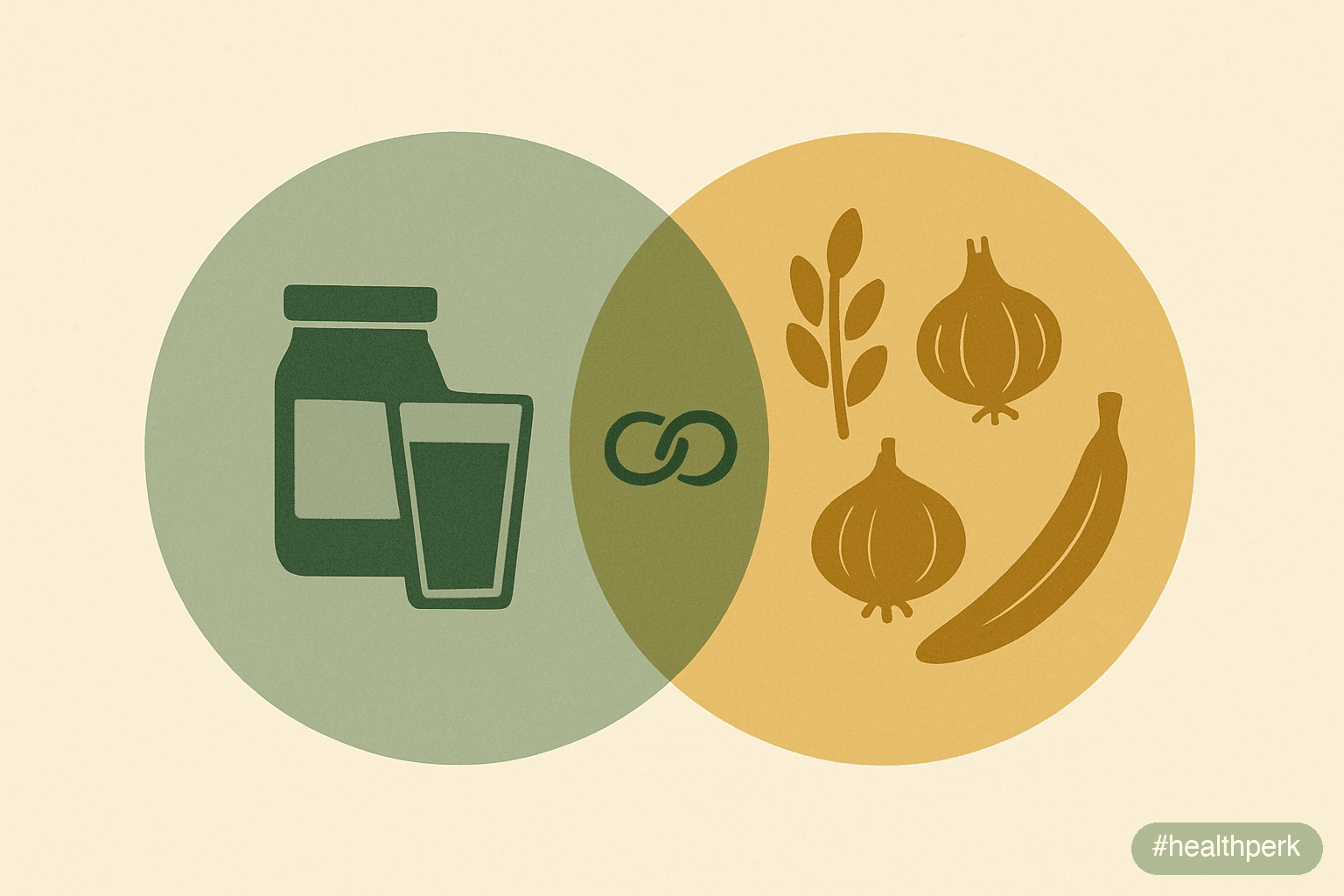
Probiotics vs prebiotics is one of the most commonly conflated supplement-aisle distinctions in 2026, and the difference is structurally simple once the categories are defined.
- Probiotics are live microorganisms that confer a health benefit at an adequate dose.
- Prebiotics are selectively fermented substrates — almost always specific dietary fibers — that confer a health benefit by promoting growth or activity of beneficial gut microbes already present. The 2017 ISAPP consensus narrowed the definition: not every fiber is a prebiotic; the substrate must show selective utilization by host microorganisms with a demonstrated health benefit.
- Synbiotics are products that combine a probiotic with a prebiotic intended to support its survival and activity.
- Postbiotics are inactivated microbial cells or microbial metabolites.
The validated prebiotics in 2026 are a small list:
- Inulin (from chicory root, Jerusalem artichoke, leek, onion, asparagus, banana, garlic)
- Fructooligosaccharides (FOS) (often derived from inulin or sucrose)
- Galactooligosaccharides (GOS) (synthesized from lactose; particularly well-studied in infant formula)
- Resistant starch (in cooled cooked potatoes and rice, green bananas, legumes, oats)
- Beta-glucans (in oats, barley, certain mushrooms) — partially overlap with cholesterol-lowering soluble fiber claims
- Human milk oligosaccharides (HMOs) — relevant in infant nutrition; emerging adult applications
Practical considerations:
- Dose. Documented prebiotic benefit in adults usually requires 3–8 g/day of inulin/FOS/GOS, or 15–30 g/day of resistant starch from food. Below those doses, effects are usually negligible.
- Tolerance. Prebiotic fibers are fermented in the colon and produce gas. Bloating, flatulence, and altered stool form are common in the first 1–2 weeks, especially in adults with IBS or small-intestinal bacterial overgrowth, and dose-escalation from a small starting dose is the practical approach.
- Food-first is reasonable. A diet that already includes oats, legumes, onions, garlic, leeks, asparagus, bananas, and cooled cooked starches typically meets prebiotic dose targets without supplementation.
- Synbiotic logic. Pairing a strain with its preferred fermentable substrate (e.g. some Bifidobacterium with GOS) has trial support in selected indications, but the data are not yet strong enough to recommend synbiotics as a generic upgrade over single-component products for most consumer use cases.
The short answer: probiotics and prebiotics are not substitutes for each other. Probiotics deliver organisms; prebiotics feed organisms. Whether you need either, both, or neither depends on the indication you are trying to address.
Do Probiotics Really Work: What the 2026 Evidence Map Actually Shows

Do probiotics really work is asked thousands of times daily in 2026 and is usually answered honestly only when broken down by indication. The category-level "yes/no" framing is the wrong framing. The defensible synthesis:
Yes, with reproducible benefit:
- Prevention of antibiotic-associated diarrhea in adults and children (L. rhamnosus GG, S. boulardii)
- Reduction of duration of acute infectious diarrhea in children by approximately 1 day (L. rhamnosus GG, S. boulardii)
- Prevention of necrotizing enterocolitis in preterm infants under clinician supervision
- Maintenance of remission in pouchitis after ileal pouch–anal anastomosis (VSL#3 / De Simone Formulation)
- Adjunct to standard triple/quadruple therapy in H. pylori eradication (S. boulardii has the most consistent data)
Yes, with strain-specific and partial benefit:
- Some IBS subtypes — Bifidobacterium infantis 35624, multi-strain VSL#3, L. plantarum 299v have signal; the category as a whole does not
- Mild-to-moderate ulcerative colitis induction and maintenance with VSL#3
- Prevention of C. difficile-associated diarrhea in adults receiving antibiotics
- Prevention of traveler's diarrhea with S. boulardii in selected destinations
- Reduction of crying time in infant colic with L. reuteri DSM 17938 (mainly breastfed infants)
- Prevention of atopic dermatitis in high-risk infants with prenatal/postnatal multi-strain protocols
Insufficient or absent evidence at the category level (in 2026):
- Generalized "microbiome restoration" or "gut reset" claims
- "Leaky gut" or intestinal-permeability treatment in otherwise well adults
- Weight loss or sustained body-composition change
- Depression or anxiety as monotherapy (some adjunctive signal exists in trials but is not robust)
- Autism behavioral outcomes
- Broad "immunity boosting" in already-healthy adults outside the narrower upper-respiratory-infection pediatric evidence
- "Hormonal balance," "skin clarity," and similar consumer-marketing claims
A separate consideration in 2026: a high-quality 2018 trial showed that post-antibiotic probiotic supplementation delayed return of the host microbiome to baseline composition compared with no probiotic and compared with autologous fecal transplant. This does not mean probiotics are harmful — clinical endpoints like AAD prevention remain favorable — but it does mean the "probiotics restore your microbiome" story is more complicated than the marketing suggests. The right framing is that probiotics produce specific clinical effects in specific contexts, not generic microbiome repair.
Practical translation:
- If you are starting antibiotics: L. rhamnosus GG or S. boulardii at trial doses, started early and separated from the antibiotic by 2–3 hours, is a reasonable add-on for most adults.
- If you have IBS: a 4–8-week trial of B. infantis 35624 or another strain-specific product is reasonable; stop if no benefit.
- If you have ulcerative colitis or post-pouch surgery: probiotic use is a clinician-supervised decision tied to your gastroenterology care plan.
- If you are an otherwise well adult eating a varied diet: there is no strong 2026 evidence that a daily generic probiotic does anything specific for you. Fermented foods are reasonable as foods, not as targeted therapeutics.
- If you are immunocompromised, on a central line, post-transplant, or critically ill: do not start a probiotic without your clinical team's input.
Related Articles on HealthPerk
Explore more on this topic:
- How to Choose Supplements Safely
- Supplement Routine for Beginners
- Can You Take Multiple Supplements Together?
- Magnesium Benefits for Sleep and Anxiety
- Vitamin D Deficiency Symptoms
- Omega 3 Benefits for Brain Health
- Zinc Benefits for Immunity
Frequently Asked Questions
What are the real probiotics benefits gut health?
The defensible 2026 evidence supports a narrow, strain-specific role rather than the broad "gut reset" framing of consumer marketing. The most reproducible benefits are prevention of antibiotic-associated diarrhea (L. rhamnosus GG and S. boulardii reduce incidence by roughly 40–60%), reduction of acute infectious diarrhea duration in children by about a day, prevention of necrotizing enterocolitis in preterm infants under clinician supervision, and modest symptom relief in some adults with irritable bowel syndrome. Beyond these indications, effects are strain-specific, dose-specific, and often disappear when trials are pooled across mixed products. The label word "probiotic" is regulatory shorthand and not a guarantee of clinical benefit; strain, CFU dose, and viability through expiration are what determine whether a product is likely to help.
What are Probiotics, exactly?
Probiotics are defined by the ISAPP/FAO/WHO consensus as live microorganisms that, when administered in adequate amounts, confer a health benefit on the host. The organisms most commonly used are Lactobacillus (and the related genera reclassified in 2020), Bifidobacterium, and the yeast Saccharomyces boulardii. Clinical evidence accrues at the strain level (e.g. Lactobacillus rhamnosus GG, Bifidobacterium infantis 35624, Saccharomyces boulardii CNCM I-745), not at the genus or species level. A label that lists only "Lactobacillus blend" without strain identifiers, or only the CFU count at manufacture rather than at end of shelf life, is uninformative. Fermented foods like yogurt, kefir, sauerkraut, and kimchi contain live microbes but are usually not strain-defined formal probiotics.
What are the best probiotics for digestion?
There is no single best probiotic for digestion; the best choice is strain-to-indication matched. For prevention of antibiotic-associated diarrhea, Lactobacillus rhamnosus GG (1–2 × 10¹⁰ CFU/day) and Saccharomyces boulardii (250–500 mg or 5 × 10⁹ CFU twice daily) have the strongest evidence. For acute infectious diarrhea in children, the same two strains reduce duration by about a day. For irritable bowel syndrome, Bifidobacterium infantis 35624 has the most consistent single-strain evidence; VSL#3 / De Simone Formulation has trial support for IBS, ulcerative colitis, and pouchitis. For traveler's diarrhea, Saccharomyces boulardii has the most consistent prophylactic signal. For C. difficile-associated diarrhea prevention during antibiotic courses, high-CFU multi-strain products or S. boulardii are reasonable. Generic "gut health" claims at the category level are not supported.
When to take probiotics for the best effect?
Take probiotics with or just before a meal — ideally about 30 minutes before to at the start of a meal that contains some fat. The food reduces gastric acidity transiently and improves the probability that live organisms reach the small intestine and colon in viable form. Daily consistency matters more than the exact clock time. When taking probiotics alongside antibiotics for antibiotic-associated diarrhea prevention, start within 24–48 hours of the first antibiotic dose and separate the probiotic from the antibiotic by at least 2–3 hours (Saccharomyces boulardii, a yeast, is exempt from this concern). Continue through the antibiotic course and ideally for 1–2 weeks afterward. Most strain-specific benefits appear within 2–4 weeks; if symptoms have not changed by 4–8 weeks, the strain is unlikely to help further.
Probiotics vs prebiotics — what is the difference?
Probiotics are live microorganisms that confer a health benefit at an adequate dose. Prebiotics are selectively fermented substrates — almost always specific dietary fibers such as inulin, fructooligosaccharides (FOS), galactooligosaccharides (GOS), and resistant starch — that promote the growth or activity of beneficial gut microbes already present. The 2017 ISAPP consensus narrowed the prebiotic definition: not every fiber qualifies; the substrate must show selective utilization by host microorganisms with a demonstrated health benefit. Synbiotics combine a probiotic with a prebiotic intended to support its survival. Postbiotics are inactivated cells or microbial metabolites. The two categories are complementary, not interchangeable: probiotics deliver organisms; prebiotics feed organisms. Adults eating a varied diet rich in oats, legumes, onions, garlic, leeks, asparagus, bananas, and cooled cooked starches typically meet prebiotic dose targets from food.
Do probiotics really work or is it marketing?
Both, depending on indication. They work — with reproducible clinical benefit — for antibiotic-associated diarrhea prevention, acute pediatric infectious diarrhea, necrotizing enterocolitis prevention in preterm infants, pouchitis maintenance after ileal pouch–anal anastomosis (VSL#3), and as an adjunct in H. pylori eradication. They work with strain-specific and partial benefit for some IBS subtypes, mild-to-moderate ulcerative colitis (VSL#3), C. difficile-associated diarrhea prevention, traveler's diarrhea, infant colic (L. reuteri DSM 17938), and atopic dermatitis prevention in high-risk infants. They do not have defensible 2026 evidence at the category level for generic "microbiome restoration," "leaky gut" treatment, weight loss, depression as monotherapy, autism behavioral outcomes, or broad immunity boosting in already-healthy adults. The honest framing is indication-specific.
Are probiotics safe for everyone?
Probiotics are safe for most healthy adults and children, with transient bloating and gas during the first 1–2 weeks being the most common effects. Three populations need caution. Immunocompromised adults (HIV with low CD4, post-organ-transplant, post-chemotherapy neutropenia), adults with central venous catheters, and critically ill or post-surgical adults have documented case reports of Lactobacillus bacteremia and Saccharomyces fungemia attributable to probiotic supplementation. Premature infants in the NICU should receive probiotic prophylaxis only under unit protocol and clinician supervision. Adults with severe pancreatitis were harmed in one historical trial of a specific multi-strain product and routine use in this setting is not recommended. For all other adults, probiotic use is generally well tolerated; if symptoms worsen or persist beyond 2 weeks, stop and reassess.
How long does it take for probiotics to work?
Strain-specific benefits typically appear within 2–4 weeks of consistent daily use at the trial-validated dose. For antibiotic-associated diarrhea prevention, the protective effect is operative from the first doses and continues through the antibiotic course. For irritable bowel syndrome symptom improvement, the trial windows are usually 4–8 weeks; if no change has occurred by 8 weeks at the correct dose of a strain with IBS evidence, the strain is unlikely to help further. For pediatric infectious diarrhea, the duration-reducing effect is observed within the acute illness itself (typically days). Probiotics are not a "load up over months for slow build" supplement; either the strain matches the indication and shows effect within weeks, or it does not.
This article is for informational purposes only and does not constitute medical advice. Probiotic use in immunocompromised adults, adults with central venous catheters, critically ill or post-surgical adults, premature infants, and adults with severe pancreatitis should be a clinician-supervised decision. Probiotics are not a substitute for evaluation of persistent or worsening gastrointestinal symptoms, and they are not a substitute for standard therapy in inflammatory bowel disease, C. difficile infection, or other serious conditions. Individual results may vary.
About the author The HealthPerk Editorial Team reviews nutritional and supplement research through evidence synthesis cross-referenced with peer-reviewed clinical trials, Cochrane reviews, and clinical practice guidelines. Our supplement content is reviewed for medical accuracy against current internal medicine, gastroenterology, and nutritional science standards. How we review →
References
Hill, C., Guarner, F., Reid, G., Gibson, G. R., Merenstein, D. J., Pot, B., Morelli, L., Canani, R. B., Flint, H. J., Salminen, S., Calder, P. C., & Sanders, M. E. (2014). The International Scientific Association for Probiotics and Prebiotics consensus statement on the scope and appropriate use of the term probiotic. Nature Reviews Gastroenterology & Hepatology, 11(8), 506–514. https://doi.org/10.1038/nrgastro.2014.66
Supports: 2014 ISAPP/FAO/WHO consensus definition of probiotics as live microorganisms conferring a health benefit at an adequate dose, used as the framing reference in 2026 nutrition labeling and clinical guidelines
Gibson, G. R., Hutkins, R., Sanders, M. E., Prescott, S. L., Reimer, R. A., Salminen, S. J., Scott, K., Stanton, C., Swanson, K. S., Cani, P. D., Verbeke, K., & Reid, G. (2017). The International Scientific Association for Probiotics and Prebiotics (ISAPP) consensus statement on the definition and scope of prebiotics. Nature Reviews Gastroenterology & Hepatology, 14(8), 491–502. https://doi.org/10.1038/nrgastro.2017.75
Supports: 2017 ISAPP narrowed prebiotic definition requiring selective utilization by host microorganisms with a demonstrated health benefit, distinguishing prebiotics from generic dietary fiber
Goldenberg, J. Z., Yap, C., Lytvyn, L., Lo, C. K., Beardsley, J., Mertz, D., & Johnston, B. C. (2017). Probiotics for the prevention of Clostridium difficile-associated diarrhea in adults and children. Cochrane Database of Systematic Reviews, 12(12), CD006095. https://doi.org/10.1002/14651858.CD006095.pub4
Supports: meta-analytic evidence for probiotic prevention of C. difficile-associated diarrhea in adults and children receiving antibiotics
Szajewska, H., & Kołodziej, M. (2015). Systematic review with meta-analysis: Lactobacillus rhamnosus GG in the prevention of antibiotic-associated diarrhoea in children and adults. Alimentary Pharmacology & Therapeutics, 42(10), 1149–1157. https://doi.org/10.1111/apt.13404
Supports: roughly 40–60% reduction in antibiotic-associated diarrhea incidence with L. rhamnosus GG at trial-validated doses started early in the antibiotic course
McFarland, L. V. (2010). Systematic review and meta-analysis of Saccharomyces boulardii in adult patients. World Journal of Gastroenterology, 16(18), 2202–2222. https://doi.org/10.3748/wjg.v16.i18.2202
Supports: evidence for S. boulardii in prevention of antibiotic-associated and traveler's diarrhea and as adjunct in H. pylori eradication
Lacy, B. E., Pimentel, M., Brenner, D. M., Chey, W. D., Keefer, L. A., Long, M. D., & Moshiree, B. (2021). ACG Clinical Guideline: Management of Irritable Bowel Syndrome. American Journal of Gastroenterology, 116(1), 17–44. https://doi.org/10.14309/ajg.0000000000001036
Supports: ACG conditional recommendation against routine probiotic use for IBS at the category level alongside acknowledgment of strain-specific signals, basis for the 2026 framing of strain-to-indication matching
Suez, J., Zmora, N., Zilberman-Schapira, G., Mor, U., Dori-Bachash, M., Bashiardes, S., Kotler, E., Zur, M., Regev-Lehavi, D., Brik, R. B. Z., Federici, S., Horn, M., Cohen, Y., Moor, A. E., Zeevi, D., Korem, T., Kotler, E., Harmelin, A., Itzkovitz, S., Maharshak, N., Shibolet, O., Pevsner-Fischer, M., Shapiro, H., Sharon, I., Halpern, Z., Segal, E., & Elinav, E. (2018). Post-antibiotic gut mucosal microbiome reconstitution is impaired by probiotics and improved by autologous FMT. Cell, 174(6), 1406–1423.e16. https://doi.org/10.1016/j.cell.2018.08.047
Supports: 2018 evidence that post-antibiotic probiotic supplementation can delay return of host microbiome composition to baseline relative to no intervention, contextualizing the limits of "microbiome restoration" marketing claims
AlFaleh, K., & Anabrees, J. (2014). Probiotics for prevention of necrotizing enterocolitis in preterm infants. Cochrane Database of Systematic Reviews, 4(4), CD005496. https://doi.org/10.1002/14651858.CD005496.pub4
Supports: Cochrane-level evidence for probiotic prevention of necrotizing enterocolitis in preterm infants under clinician supervision
Whorwell, P. J., Altringer, L., Morel, J., Bond, Y., Charbonneau, D., O'Mahony, L., Kiely, B., Shanahan, F., & Quigley, E. M. (2006). Efficacy of an encapsulated probiotic Bifidobacterium infantis 35624 in women with irritable bowel syndrome. American Journal of Gastroenterology, 101(7), 1581–1590. https://doi.org/10.1111/j.1572-0241.2006.00734.x
Supports: single-strain trial evidence for Bifidobacterium infantis 35624 in irritable bowel syndrome global symptom improvement, used as the strain-specific anchor for IBS in this guide
Mimura, T., Rizzello, F., Helwig, U., Poggioli, G., Schreiber, S., Talbot, I. C., Nicholls, R. J., Gionchetti, P., Campieri, M., & Kamm, M. A. (2004). Once daily high dose probiotic therapy (VSL#3) for maintaining remission in recurrent or refractory pouchitis. Gut, 53(1), 108–114. https://doi.org/10.1136/gut.53.1.108
Supports: clinical trial evidence for the VSL#3 / De Simone Formulation in pouchitis maintenance after ileal pouch–anal anastomosis, cited as the strongest IBD-adjacent probiotic indication in 2026
Frequently Asked Questions
What are the real probiotics benefits gut health?
The defensible 2026 evidence supports a narrow, strain-specific role rather than the broad gut reset framing of consumer marketing. The most reproducible benefits are prevention of antibiotic-associated diarrhea (L. rhamnosus GG and S. boulardii reduce incidence by roughly 40-60%), reduction of acute infectious diarrhea duration in children by about a day, prevention of necrotizing enterocolitis in preterm infants under clinician supervision, and modest symptom relief in some adults with irritable bowel syndrome. Beyond these indications, effects are strain-specific, dose-specific, and often disappear when trials are pooled across mixed products.
What are Probiotics, exactly?
Probiotics are defined by the ISAPP/FAO/WHO consensus as live microorganisms that, when administered in adequate amounts, confer a health benefit on the host. The organisms most commonly used are Lactobacillus (and the related genera reclassified in 2020), Bifidobacterium, and the yeast Saccharomyces boulardii. Clinical evidence accrues at the strain level (Lactobacillus rhamnosus GG, Bifidobacterium infantis 35624, Saccharomyces boulardii CNCM I-745), not at the genus or species level. A label that lists only Lactobacillus blend without strain identifiers, or only CFU at manufacture rather than end of shelf life, is uninformative.
What are the best probiotics for digestion?
The best choice is strain-to-indication matched. For prevention of antibiotic-associated diarrhea, Lactobacillus rhamnosus GG (1-2 x 10^10 CFU/day) and Saccharomyces boulardii (250-500 mg or 5 x 10^9 CFU twice daily) have the strongest evidence. For acute infectious diarrhea in children, the same strains reduce duration by about a day. For irritable bowel syndrome, Bifidobacterium infantis 35624 has the most consistent single-strain evidence; VSL#3 has trial support for IBS, ulcerative colitis, and pouchitis. For traveler's diarrhea, Saccharomyces boulardii has the most consistent prophylactic signal.
When to take probiotics for the best effect?
Take probiotics with or just before a meal, ideally about 30 minutes before to at the start of a meal containing some fat. The food reduces gastric acidity transiently and improves the probability that live organisms reach the small intestine and colon in viable form. Daily consistency matters more than exact clock time. When taking probiotics alongside antibiotics for antibiotic-associated diarrhea prevention, start within 24-48 hours of the first antibiotic dose and separate the probiotic from the antibiotic by at least 2-3 hours (Saccharomyces boulardii is exempt because it is a yeast). Continue through the antibiotic course and ideally 1-2 weeks afterward.
Probiotics vs prebiotics - what is the difference?
Probiotics are live microorganisms that confer a health benefit at an adequate dose. Prebiotics are selectively fermented substrates - almost always specific dietary fibers such as inulin, fructooligosaccharides (FOS), galactooligosaccharides (GOS), and resistant starch - that promote the growth or activity of beneficial gut microbes already present. The 2017 ISAPP consensus narrowed the prebiotic definition: not every fiber qualifies. Synbiotics combine a probiotic with a prebiotic; postbiotics are inactivated cells or microbial metabolites. Probiotics deliver organisms; prebiotics feed organisms. They are complementary, not interchangeable.
Do probiotics really work or is it marketing?
Both, depending on indication. They work with reproducible benefit for antibiotic-associated diarrhea prevention, acute pediatric infectious diarrhea, NEC prevention in preterm infants, pouchitis maintenance after ileal pouch-anal anastomosis (VSL#3), and as an adjunct in H. pylori eradication. They work with strain-specific and partial benefit for some IBS subtypes, mild-to-moderate ulcerative colitis (VSL#3), C. difficile-associated diarrhea prevention, traveler's diarrhea, infant colic (L. reuteri DSM 17938), and atopic dermatitis prevention in high-risk infants. They do not have defensible category-level evidence for generic microbiome restoration, leaky gut, weight loss, depression monotherapy, or broad immunity boosting in already-healthy adults.
Are probiotics safe for everyone?
Probiotics are safe for most healthy adults and children, with transient bloating and gas during the first 1-2 weeks being most common. Three populations need caution. Immunocompromised adults (HIV with low CD4, post-organ-transplant, post-chemotherapy neutropenia), adults with central venous catheters, and critically ill or post-surgical adults have case reports of Lactobacillus bacteremia and Saccharomyces fungemia attributable to probiotic supplementation. Premature infants in the NICU should receive probiotic prophylaxis only under unit protocol. Adults with severe pancreatitis were harmed in one historical trial and routine use in this setting is not recommended.
How long does it take for probiotics to work?
Strain-specific benefits typically appear within 2-4 weeks of consistent daily use at the trial-validated dose. For antibiotic-associated diarrhea prevention, the protective effect is operative from the first doses and continues through the antibiotic course. For irritable bowel syndrome, trial windows are usually 4-8 weeks; if no change at 8 weeks at the correct dose of a strain with IBS evidence, the strain is unlikely to help further. For pediatric infectious diarrhea, the duration-reducing effect is observed within the acute illness itself. Probiotics are not a load up over months for slow build supplement.
More from Supplements