How to Keep Weight Off After Stopping GLP-1 Drugs: A 2026 Evidence-Based Plan
Most people regain much of their weight after stopping GLP-1 drugs: about two-thirds within a year in STEP 1, and 14% of body weight in SURMOUNT-4. An October 2026 pilot trial found that a wellness app or dietitian-designed meals, started on the day of stopping, cut 4-month regain from 10.75% to about 3.6%. Pair structured tracking with 1.2-1.6 g/kg protein, strength training at least three times a week, and a stop plan made with your prescriber.
How to Keep Weight Off After Stopping GLP-1 Drugs: A 2026 Evidence-Based Plan
By the HealthPerk Editorial Team · Last updated: October 2026
Quick Answer
How do I keep the weight off after stopping Ozempic, Wegovy, or Zepbound?
Plan the stop with your prescriber, start structured support as soon as you stop (a tracking app or planned meals), eat enough protein, lift weights at least three times a week, and weigh yourself regularly so you catch regain early.
| Your situation | First step |
|---|---|
| You plan to stop within the next month | Book a visit with your prescriber to talk through timing, tapering, and a follow-up plan |
| You already stopped and hunger is back | Set up a tracking app and log every meal for the first 4 months |
| You have lost strength or feel "softer" | Start strength training 3 times a week and aim for protein at every meal |
| The scale has gone up 2–3% in a month | Re-tighten your logging and contact your clinician; do not wait until it reaches 5–10% |
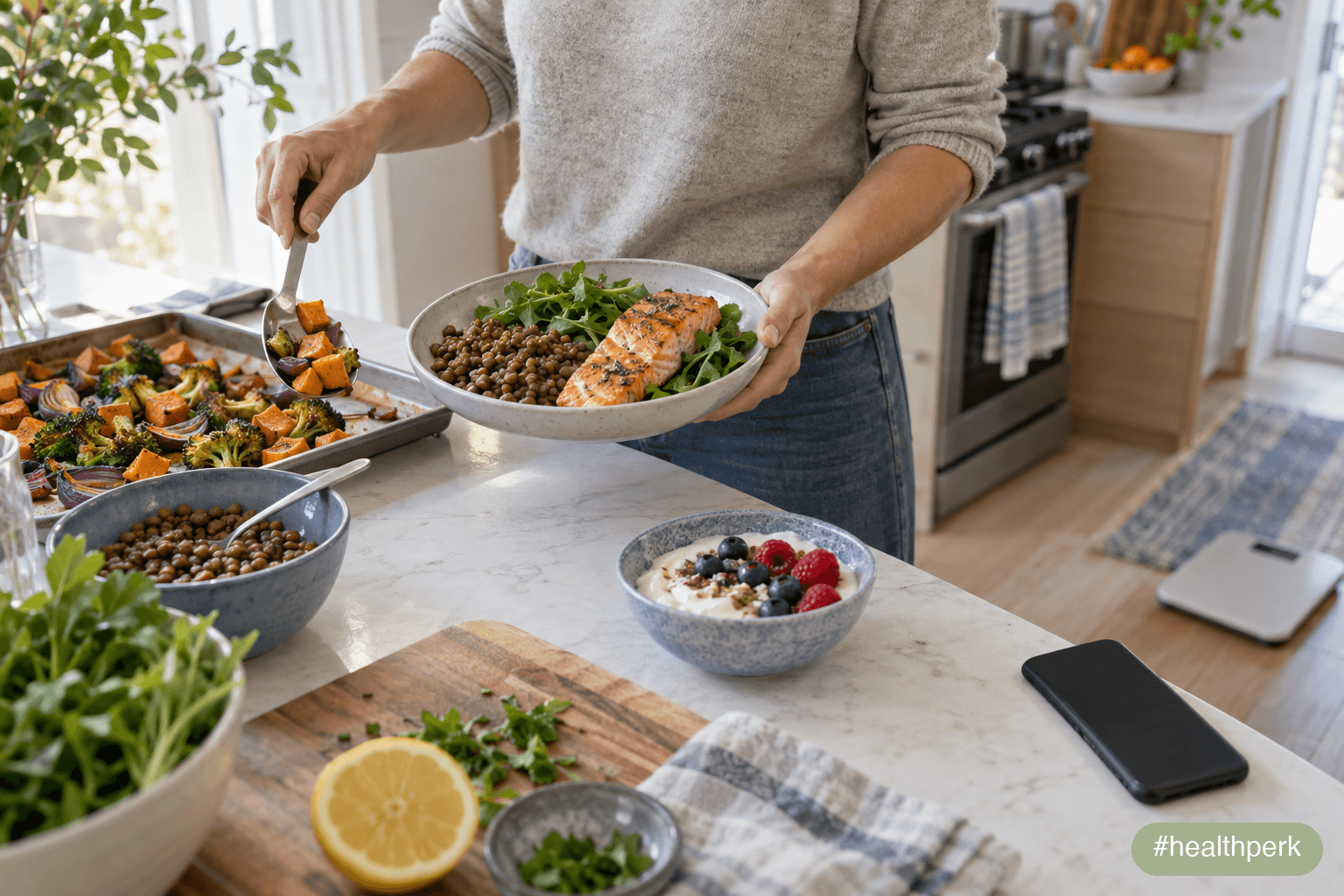 The first months after stopping a GLP-1 medication are when structure around meals matters most.
Millions of people have lost weight on semaglutide (Wegovy, Ozempic) or tirzepatide (Zepbound, Mounjaro), and many will stop because of cost, insurance, side effects, or preference. The trials are clear that most of the lost weight returns once the drug stops: about two-thirds within a year in the STEP 1 extension.
That does not mean nothing helps. In October 2026, a small randomized trial led by Tufts University researchers found that structured support from the day people stopped, either a wellness app or dietitian-designed delivered meals, cut early regain by about two-thirds versus usual care. This guide covers that trial, the wider evidence, and how to build your off-ramp: protein, strength training, tracking, and a plan made with your prescriber.
Table of Contents
- What's New: The October 2026 Trial on Stopping GLP-1s
- Why Weight Comes Back After Stopping GLP-1 Drugs
- The Evidence-Based Options for Keeping Weight Off
- Comparison: Maintenance Strategies After GLP-1s
- Which Strategy Is Right for You
- Practical Tips for the First 4 Months
- Common Misconceptions About Stopping GLP-1s
- When to See a Doctor
- Related Articles on Health Perk
- Frequently Asked Questions
- References
What's New: The October 2026 Trial on Stopping GLP-1s
On October 7, 2026, Obesity Science & Practice published "Preventing Weight Regain After Glucagon-Like Peptide-1 Therapy Discontinuation: A Pilot Randomized Controlled Trial," led by Kelseanna Hollis-Hansen, PhD, MPH, of the Tufts University Food is Medicine Institute [1]. Newsweek covered it the same day; Medical News Today followed on October 14.
Who took part. Thirty-nine adults stopping a GLP-1 after losing more than 10% of body weight (just over 18% on average, per Medical News Today); mostly women, from two regions of Texas, average BMI 31.4 [1].
What they got. At the moment they stopped the drug, participants were randomized to one of three groups for four months [1]:
- Usual care (14 people): ordinary advice for keeping weight off.
- Digital wellness app (12 people): a commercial program (Noom, per press coverage) for 15+ minutes a day: food and weight tracking plus education on eating triggers. Actual use averaged just under three days a week.
- Medically tailored meals (13 people): ten dietitian-designed, home-delivered meals per week, chosen from a menu of about 70.
What happened. Over four months, the usual-care group regained an estimated 10.75% of body weight, compared with 3.60% in the app group and 3.58% in the meals group. That works out to roughly 7 percentage points less regain with either kind of support (app: −7.16%, 95% CI −12.27 to −2.04; meals: −7.17%, 95% CI −12.20 to −2.14) [1].
How much weight to put on it. This is a pilot. Weight was an exploratory outcome (the primary outcomes, adherence and satisfaction, did not differ), the sample was small, follow-up lasted four months, and the authors call for "larger, more diverse trials with longer follow-up" [1]. Obesity medicine physician Caroline Apovian told Newsweek that these interventions may be "a short-term solution," and bariatric surgeon Mir Ali told Medical News Today that continuing GLP-1 medication long-term "remains the most effective strategy at this time." Fair reading: structure seems to blunt early regain, but has not been shown to prevent it over years.
The backdrop. A January 2026 BMJ systematic review and meta-analysis by Oxford researchers (37 studies, 9,341 participants) found that weight returned at an average of 0.4 kg (about 0.9 lb) per month after stopping weight management drugs. Cardiometabolic markers were projected to return to baseline within 1.4 years, and regain was faster than after behavioral programs [2].
Why Weight Comes Back After Stopping GLP-1 Drugs
GLP-1 receptor agonists like semaglutide, and dual GIP/GLP-1 agonists like tirzepatide, work mostly through the brain and gut. They slow stomach emptying, increase fullness after meals, and quiet "food noise," the background pull toward eating. They do not permanently reset these systems: once the drug washes out, appetite signals return, while the body tends to defend its previous weight. The trials show this consistently:
- STEP 1 extension (semaglutide 2.4 mg): after 68 weeks of treatment and 17.3% average weight loss, participants who stopped regained 11.6 percentage points by week 120. Net loss: 5.6%, so about two-thirds was regained in a year [3].
- STEP 4 (semaglutide): after a 20-week run-in with 10.6% loss, those who continued lost a further 7.9%, while those switched to placebo regained 6.9% over 48 weeks [5].
- SURMOUNT-4 (tirzepatide): after 36 weeks and 20.9% loss, continuing tirzepatide produced a further 5.5% loss over 52 weeks, while switching to placebo led to 14.0% regain [4].
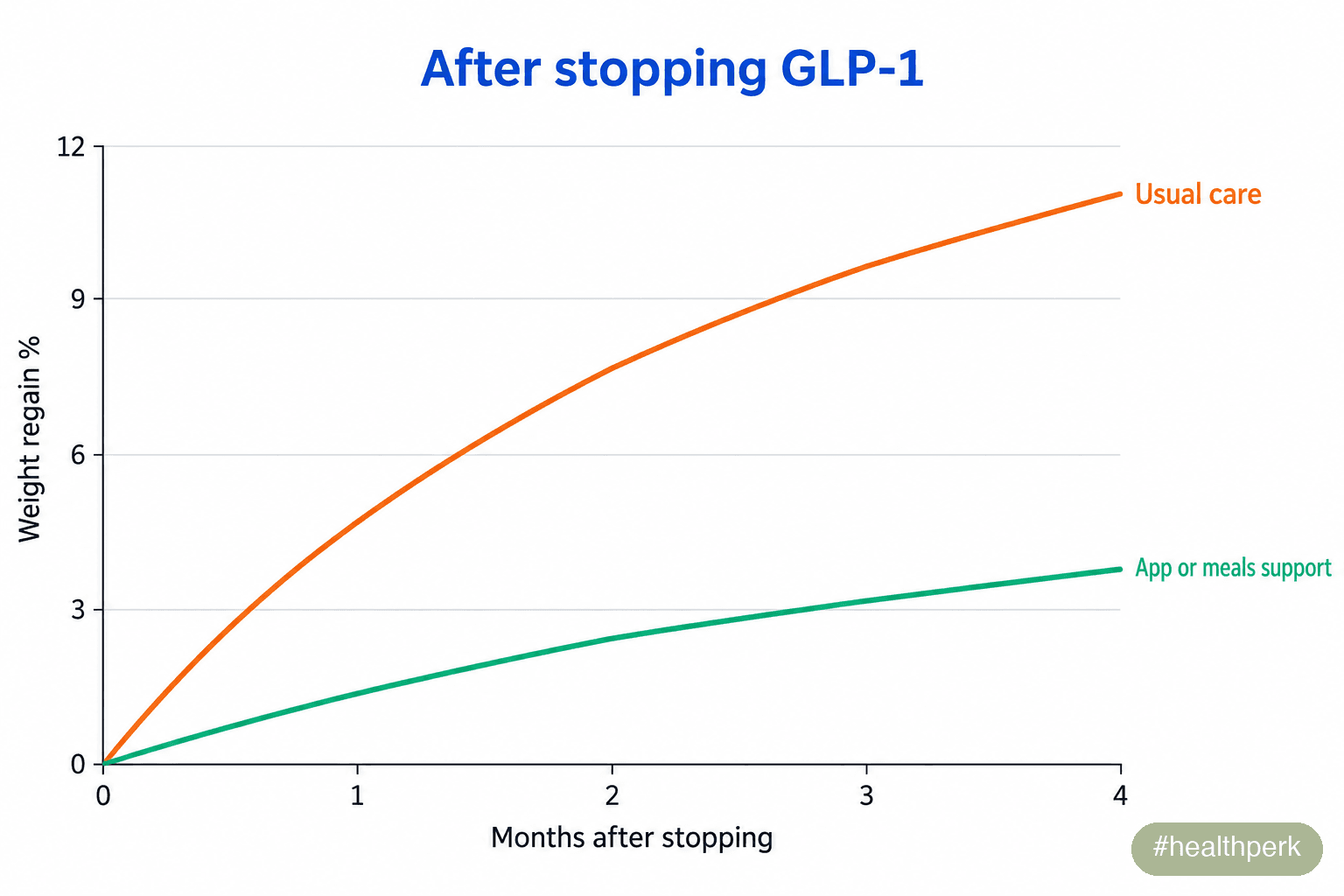 Illustrative curves: the 4-month end points (about 10.8% regain with usual care vs about 3.6% with app or meal support) come from the 2026 Tufts pilot trial; the shape in between is schematic.
The muscle problem. In a DXA body-composition substudy of SURMOUNT-1, tirzepatide cut total body weight by 21.3%, fat mass by 33.9%, and lean mass by 10.9% over 72 weeks [7]. If weight returns mostly as fat, you can end up at a similar weight with less muscle, which is why protein and strength training run through this plan.
The Evidence-Based Options for Keeping Weight Off
1. Plan the stop with your prescriber, including whether to taper
The single most effective way to keep the weight off, based on STEP 4 and SURMOUNT-4, is staying on the medication [4][5]. If you need or want to stop, make it a planned decision with your prescriber.
Things to raise at that visit:
- Tapering vs. stopping. Some clinicians step the dose down gradually rather than stopping outright. Controlled evidence on tapering is limited; decide this with your prescriber, never by skipping or splitting doses yourself.
- Lower-cost or alternative treatment if cost is the reason for stopping.
- A follow-up schedule with weight checks, especially in the first year, which Hollis-Hansen describes as the period "when the risk of weight regain is greatest."
- Other conditions the drug was helping (blood sugar, blood pressure, sleep apnea), which need monitoring as the medication wears off.
2. Start structured support right away: apps and tracking
In the October 2026 trial, people enrolled within 30 days of their last dose, so support started shortly after stopping rather than after months of regain [1]. The trial compared support strategies; it did not test early versus late starts, so beginning before your final dose is practical advice rather than a proven timing effect.
It fits older evidence: a systematic review of 17 longitudinal studies found that regular self-weighing was linked with more weight loss and was not linked with depression or anxiety [10]. People in the National Weight Control Registry (average 33 kg kept off for 5+ years) report self-monitoring their weight, eating consistently across weekdays and weekends, and staying highly active (about an hour a day) [11].
What a good tracking setup includes:
- Food logging (even rough logging) for the first 4 months, when appetite returns.
- Weekly or daily weigh-ins on the same scale at the same time of day. A connected smart scale removes the friction.
- Protein tracking, not just calories.
- Step or activity tracking, plus a log of strength sessions.
Our guides to the best apps for weight loss tracking and habit tracking apps compare options, and our smart scales comparison covers scales that sync with them. You can estimate your new maintenance calories with the TDEE calculator.
3. Structured meals: take decisions off the table
The medically tailored meals group did as well as the app group [1]. Pre-planned meals remove daily food decisions just as appetite returns. Few people can access medically tailored meal programs, but you can approximate them:
- Batch-cook or buy a rotating set of 8–10 portioned, high-protein, high-fiber meals for the week.
- Keep breakfast and lunch nearly identical day to day. Save variety for dinner.
- Work with a registered dietitian if you can, especially if you have diabetes or kidney disease.
4. Protein: protect lean mass
The 2025 joint advisory on nutrition for GLP-1 therapy, from the American College of Lifestyle Medicine, the American Society for Nutrition, the Obesity Medicine Association, and The Obesity Society, notes that above the 0.8 g/kg/day RDA, higher targets of 1.2–1.6 g/kg/day have been proposed during active weight reduction, and that an absolute target of 80–120 g/day may be easier for many people to follow [8]. The advisory also states plainly that structured nutrition support after stopping "has not been studied in controlled trials" [8]; the October 2026 pilot is an early step [1].
Practical translation for a 90 kg (198 lb) adult: about 110–145 g/day at the higher range, or 25–40 g per meal across three meals plus a snack. Good sources: Greek yogurt, eggs, fish, poultry, tofu, lentils, cottage cheese. Add fiber-rich vegetables and legumes for fullness. People with kidney disease should agree on protein targets with their clinician.
5. Exercise and resistance training: protect maintenance and muscle
In a Copenhagen trial, adults who had lost 13.1 kg on a low-calorie diet were randomized to a year of supervised exercise (a mix of aerobic and circuit-style strength sessions), liraglutide, both, or placebo, then followed for a year after all treatment stopped [6]. In that year:
- Regain was 6.0 kg greater after stopping liraglutide alone than after stopping supervised exercise.
- People who had received exercise plus liraglutide weighed 5.1 kg less and had lower body-fat percentage one year later than those who had received liraglutide alone.
- People who had done the combination were far more likely to still be ≥10% below their starting weight than those who had received placebo (odds ratio 7.2).
Liraglutide is an older, daily GLP-1, so effects may differ for semaglutide or tirzepatide. The program combined aerobic and strength work, so the maintenance benefit belongs to structured exercise overall, not to weightlifting alone.
For lean mass specifically, a meta-analysis of six randomized trials in older adults with obesity found that resistance training three times a week during calorie restriction prevented about 93.5% of the lean-mass loss seen with calorie restriction alone [9]. The joint advisory likewise recommends strength training at least three times weekly plus at least 150 minutes of moderate aerobic activity per week [8].
 Resistance training two to three times a week helps protect the muscle that matters for long-term weight maintenance.
A simple starter program: three full-body sessions per week, 6–8 exercises (squat or leg press, hip hinge, push, pull, carry, core), 2–3 sets of 8–12 reps, adding weight when the last reps feel manageable. Use the heart rate zones calculator to set aerobic intensity.
6. Sleep and stress
Short sleep and stress make planned eating harder; they belong to the "sustainable habits around eating, physical activity, sleep, and self-monitoring" that Hollis-Hansen described in Newsweek. See our guide on how to improve sleep quality naturally and use the sleep cycle calculator.
Comparison: Maintenance Strategies After GLP-1s
| Strategy | Strength of evidence | Effect on regain | Lean-mass protection | Cost and effort | Best for |
|---|---|---|---|---|---|
| Continue medication (with prescriber) | Strong: large phase 3 RCTs (STEP 4, SURMOUNT-4) | Prevents regain; often further loss | Neutral; needs protein + training | High drug cost; ongoing | People with access and good tolerance |
| Tracking app started right away | Early: one pilot RCT, plus self-monitoring reviews | About 7 points less regain at 4 months vs. usual care | Indirect (if protein and training are logged) | Low cost; daily few minutes | Most people, as the default |
| Structured or tailored meals | Early: one pilot RCT | About 7 points less regain at 4 months vs. usual care | Good if meals are protein-forward | Medium to high cost; low daily effort | Busy people, people with diabetes or kidney disease |
| Supervised exercise (incl. resistance) | Moderate: RCT with 1-year off-treatment follow-up (liraglutide) | 6 kg less regain vs. stopping drug alone | Strong | Time and possibly gym or trainer cost | Anyone able to train 3x/week |
| Going it alone, no plan | Usual-care arms of trials | About 10.75% regained in 4 months; ~0.4 kg per month on average | Poor | Free | Not recommended |
Editorial verdict: If you are stopping, the best-supported non-drug plan combines resistance training (the strongest evidence) with a tracking app started on the day you stop (the cheapest structured support), plus a protein target and a prescriber-led exit plan. Structured meals are a strong add-on if budget allows. None matches continued medication long term, so keep that option open with your clinician. Read more on how we review evidence.
Which Strategy Is Right for You
"I am stopping because of cost." Prioritize low-cost structure: a free tracking app, a bathroom scale, home strength training, and batch-cooked high-protein meals. Ask your prescriber whether a lower-cost treatment or a gradual plan makes sense.
"I had side effects and want off." Ask your prescriber first; some side effects can be managed. If you stop, lean on structured meals early, when hunger returns faster than habits adjust.
"I am over 60." Muscle protection is your biggest priority. Resistance training three times a week and protein near the upper end of the target range are especially important [9]. Check exercise limits with your doctor.
"I have type 2 diabetes." Stopping can raise blood sugar as well as weight. Do not stop without your diabetes care team. Medically tailored meals and dietitian support are particularly relevant, and glucose monitoring should be part of your tracking.
"I lost a lot of weight and I am very motivated." Use everything: app, daily weigh-ins, a protein target, three strength sessions plus 150+ minutes of cardio weekly, and a regain threshold agreed with your clinician.
Practical Tips for the First 4 Months
- Start before the last dose. Set up your app, scale, meals, and training plan beforehand.
- Weigh in at least weekly, same time, same conditions.
- Set an action threshold. Decide in advance what regain (for example, 2–3% of body weight) triggers a call to your clinician.
- Front-load protein. Aim for about 30 g at breakfast.
- Plan for returning food noise. Keep trigger foods out of reach.
- Schedule strength training like appointments. Three non-consecutive days, 30–45 minutes.
- Walk daily. See losing weight without formal exercise.
- Stay hydrated. Use the water intake calculator as a starting point.
- Recheck your numbers. Recalculate with the TDEE calculator and check your BMI.
Common Misconceptions About Stopping GLP-1s
"If I regain, the drug didn't work." Regain after stopping is the expected pattern in every major trial [2][3][4]. It reflects obesity as a chronic condition, not personal failure.
"Willpower will be enough." The hunger rebound is biological; external structure is what helped in the 2026 trial [1].
"I'll just eat less and skip the gym." Restricting calories without resistance training risks losing more muscle. Exercise had the strongest non-drug evidence for maintenance after a GLP-1 [6][9].
"Supplements can replace the drug." None has been shown to. See our review of weight loss supplements.
"Once I've kept it off for a few months, I'm safe." In the trials, regain continues through the first year and beyond [2][3]. Keep your tracking and training going for at least a year, then reassess.
When to See a Doctor
Contact your prescriber or primary care clinician if you:
- Want to stop or are about to run out of medication: plan the transition together.
- Regain more than about 5% of your body weight within a few months of stopping.
- Have type 2 diabetes and see rising glucose readings, excessive thirst, or frequent urination.
- Notice your blood pressure rising back toward pre-treatment levels.
- Develop binge eating, a sense of loss of control around food, or low mood after stopping.
- Notice marked weakness, falls, or loss of strength, which may signal significant muscle loss.
- Have severe abdominal pain, persistent vomiting, or signs of gallbladder problems (pain in the upper right abdomen, yellowing of the skin or eyes). Seek urgent care for these.
Related Articles on Health Perk
- Best Apps for Weight Loss Tracking in 2026
- Habit Tracking Apps for Health in 2026
- Smart Scales Comparison 2026: Accuracy and Body Composition
- How to Boost Metabolism Naturally
- Why Can't I Lose Weight Even Dieting?
Frequently Asked Questions
How fast does weight come back after stopping semaglutide or tirzepatide?
In a 2026 BMJ meta-analysis of 37 studies, weight returned at about 0.4 kg (0.9 lb) per month on average after stopping weight management drugs. In SURMOUNT-4, people switched from tirzepatide to placebo regained 14% of body weight within a year. In the STEP 1 extension, people regained about two-thirds of their semaglutide weight loss one year after stopping. Regain is usually fastest in the first few months.
Can an app really help me keep weight off after stopping a GLP-1?
Early evidence says it can help. In an October 2026 pilot randomized trial of 39 adults, people using a wellness app from the day they stopped regained about 3.6% of body weight over four months, versus about 10.75% with usual care. The study was small and short, so the long-term benefit is not yet proven, but tracking food and weight is a low-cost step backed by broader self-monitoring research.
How much protein should I eat after stopping a GLP-1 drug?
A 2025 joint advisory from four US nutrition and obesity societies notes that 1.2–1.6 g of protein per kilogram of body weight per day has been proposed during weight reduction, or an absolute 80–120 g per day. Spread it across meals, at roughly 25–40 g each. If you have kidney disease, agree on a target with your clinician before increasing protein.
Should I taper off semaglutide or tirzepatide instead of stopping all at once?
Some clinicians reduce the dose gradually, but controlled evidence on whether tapering reduces regain is still limited. Discuss it with your prescriber, who can weigh your health conditions, side effects, and goals. Do not adjust, split, or skip doses on your own. Whichever route you take, start structured support such as tracking, protein, and strength training at the same time.
Does strength training prevent weight regain after GLP-1s?
It helps, mainly by protecting muscle. Regain itself has been studied with combined exercise: in a Danish trial, people who stopped liraglutide regained 6 kg more over the following year than those who stopped a supervised program mixing aerobic and strength sessions. Separately, a meta-analysis found resistance training during calorie restriction prevented most diet-related lean-mass loss. Combine strength work with regular aerobic activity.
Will I lose muscle when I stop a GLP-1?
Stopping does not itself cause muscle loss. However, part of the weight lost on these drugs is lean mass: in a SURMOUNT-1 substudy, lean mass fell 10.9% while fat mass fell 33.9%. If weight returns mainly as fat, body composition can end up worse than before. Resistance training at least three times weekly plus adequate protein is the best-supported way to protect and rebuild muscle.
Is it better to just stay on the medication?
For weight alone, the largest trials (STEP 4 and SURMOUNT-4) show that continuing treatment maintains or extends weight loss, while stopping leads to substantial regain. Staying on long-term is a reasonable medical choice for many people, as obesity is a chronic condition. Cost, side effects, and personal preference also matter, so the right decision is an individual one made with your prescriber.
Medical disclaimer: This article is for general educational purposes only and does not constitute medical advice. It does not provide medication dosing guidance. Never start, stop, taper, or change the dose of a prescription medication such as semaglutide or tirzepatide without consulting your prescriber. If you have diabetes, kidney disease, heart disease, an eating disorder, or other medical conditions, talk to your healthcare provider before changing your diet or exercise routine.
References
- Hollis-Hansen, K., Vonderschmidt, A., Haskins, C., Kane, R. M., Almandoz, J. P., & Lingvay, I. (2026). Preventing Weight Regain After Glucagon-Like Peptide-1 Therapy Discontinuation: A Pilot Randomized Controlled Trial. Obesity Science & Practice, 12(5), e70194. https://doi.org/10.1002/osp4.70194
Supports: In 39 adults stopping a GLP-1, a wellness app or medically tailored meals cut 4-month regain to about 3.6% vs 10.75% with usual care; pilot, exploratory outcome.
- West, S., Scragg, J., Aveyard, P., Oke, J. L., Willis, L., Haffner, S. J. P., et al. (2026). Weight regain after cessation of medication for weight management: systematic review and meta-analysis. BMJ, 392, e085304. https://doi.org/10.1136/bmj-2025-085304
Supports: Average regain of 0.4 kg/month after stopping weight management drugs; cardiometabolic markers projected to return to baseline within 1.4 years; regain faster than after behavioral programs.
- Wilding, J. P. H., Batterham, R. L., Davies, M., Van Gaal, L. F., Kandler, K., Konakli, K., et al. (2022). Weight regain and cardiometabolic effects after withdrawal of semaglutide: The STEP 1 trial extension. Diabetes, Obesity and Metabolism, 24(8), 1553–1564. https://doi.org/10.1111/dom.14725
Supports: One year after stopping semaglutide 2.4 mg, participants regained two-thirds of their weight loss (net 5.6% below baseline).
- Aronne, L. J., Sattar, N., Horn, D. B., Bays, H. E., Wharton, S., Lin, W.-Y., et al. (2024). Continued Treatment With Tirzepatide for Maintenance of Weight Reduction in Adults With Obesity: The SURMOUNT-4 Randomized Clinical Trial. JAMA, 331(1), 38–48. https://doi.org/10.1001/jama.2023.24945
Supports: After 20.9% lead-in loss, continuing tirzepatide gave a further 5.5% loss while switching to placebo led to 14.0% regain over 52 weeks.
- Rubino, D., Abrahamsson, N., Davies, M., Hesse, D., Greenway, F. L., Jensen, C., et al. (2021). Effect of Continued Weekly Subcutaneous Semaglutide vs Placebo on Weight Loss Maintenance in Adults With Overweight or Obesity: The STEP 4 Randomized Clinical Trial. JAMA, 325(14), 1414–1425. https://doi.org/10.1001/jama.2021.3224
Supports: Continued semaglutide led to −7.9% further weight change vs +6.9% regain after switching to placebo over 48 weeks.
- Jensen, S. B. K., Blond, M. B., Sandsdal, R. M., Olsen, L. M., Juhl, C. R., Lundgren, J. R., et al. (2024). Healthy weight loss maintenance with exercise, GLP-1 receptor agonist, or both combined followed by one year without treatment: a post-treatment analysis of a randomised placebo-controlled trial. eClinicalMedicine, 69, 102475. https://doi.org/10.1016/j.eclinm.2024.102475
Supports: One year after treatment ended, regain was 6.0 kg greater after stopping liraglutide than after stopping supervised exercise; combination therapy best preserved weight loss.
- Look, M., Dunn, J. P., Kushner, R. F., Cao, D., Harris, C., Gibble, T. H., et al. (2025). Body composition changes during weight reduction with tirzepatide in the SURMOUNT-1 study of adults with obesity or overweight. Diabetes, Obesity and Metabolism, 27(5), 2720–2729. https://doi.org/10.1111/dom.16275
Supports: Tirzepatide reduced body weight 21.3%, fat mass 33.9%, and lean mass 10.9% over 72 weeks (DXA substudy).
- Mozaffarian, D., Agarwal, M., Aggarwal, M., Alexander, L., Apovian, C. M., Bindlish, S., et al. (2025). Nutritional priorities to support GLP-1 therapy for obesity: A joint Advisory from the American College of Lifestyle Medicine, the American Society for Nutrition, the Obesity Medicine Association, and The Obesity Society. Obesity, 33(8), 1475–1503. https://doi.org/10.1002/oby.24336
Supports: Protein targets of 1.2–1.6 g/kg/day or 80–120 g/day; strength training at least 3 times weekly plus 150 min aerobic activity; post-cessation nutrition not yet studied in controlled trials.
- Sardeli, A. V., Komatsu, T. R., Mori, M. A., Gáspari, A. F., & Chacon-Mikahil, M. P. T. (2018). Resistance Training Prevents Muscle Loss Induced by Caloric Restriction in Obese Elderly Individuals: A Systematic Review and Meta-Analysis. Nutrients, 10(4), 423. https://doi.org/10.3390/nu10040423
Supports: Resistance training three times per week prevented about 93.5% of calorie-restriction-induced lean mass loss.
- Zheng, Y., Klem, M. L., Sereika, S. M., Danford, C. A., Ewing, L. J., & Burke, L. E. (2015). Self-weighing in weight management: A systematic literature review. Obesity, 23(2), 256–265. https://doi.org/10.1002/oby.20946
Supports: Regular self-weighing is associated with greater weight loss and not with adverse psychological outcomes.
- Wing, R. R., & Phelan, S. (2005). Long-term weight loss maintenance. The American Journal of Clinical Nutrition, 82(1), 222S–225S. https://doi.org/10.1093/ajcn/82.1.222S
Supports: Successful long-term maintainers report self-monitoring weight, high physical activity (~1 h/day), and consistent eating patterns.
Frequently Asked Questions
How fast does weight come back after stopping semaglutide or tirzepatide?
In a 2026 BMJ meta-analysis of 37 studies, weight returned at about 0.4 kg (0.9 lb) per month on average after stopping weight management drugs. In SURMOUNT-4, people switched from tirzepatide to placebo regained 14% of body weight within a year. In the STEP 1 extension, people regained about two-thirds of their semaglutide weight loss one year after stopping. Regain is usually fastest in the first few months.
Can an app really help me keep weight off after stopping a GLP-1?
Early evidence says it can help. In an October 2026 pilot randomized trial of 39 adults, people using a wellness app from the day they stopped regained about 3.6% of body weight over four months, versus about 10.75% with usual care. The study was small and short, so the long-term benefit is not yet proven, but tracking food and weight is a low-cost step backed by broader self-monitoring research.
How much protein should I eat after stopping a GLP-1 drug?
A 2025 joint advisory from four US nutrition and obesity societies notes that 1.2–1.6 g of protein per kilogram of body weight per day has been proposed during weight reduction, or an absolute 80–120 g per day. Spread it across meals, at roughly 25–40 g each. If you have kidney disease, agree on a target with your clinician before increasing protein.
Should I taper off semaglutide or tirzepatide instead of stopping all at once?
Some clinicians reduce the dose gradually, but controlled evidence on whether tapering reduces regain is still limited. Discuss it with your prescriber, who can weigh your health conditions, side effects, and goals. Do not adjust, split, or skip doses on your own. Whichever route you take, start structured support such as tracking, protein, and strength training at the same time.
Does strength training prevent weight regain after GLP-1s?
It helps, mainly by protecting muscle. Regain itself has been studied with combined exercise: in a Danish trial, people who stopped liraglutide regained 6 kg more over the following year than those who stopped a supervised program mixing aerobic and strength sessions. Separately, a meta-analysis found resistance training during calorie restriction prevented most diet-related lean-mass loss. Combine strength work with regular aerobic activity.
Will I lose muscle when I stop a GLP-1?
Stopping does not itself cause muscle loss. However, part of the weight lost on these drugs is lean mass: in a SURMOUNT-1 substudy, lean mass fell 10.9% while fat mass fell 33.9%. If weight returns mainly as fat, body composition can end up worse than before. Resistance training at least three times weekly plus adequate protein is the best-supported way to protect and rebuild muscle.
Is it better to just stay on the medication?
For weight alone, the largest trials (STEP 4 and SURMOUNT-4) show that continuing treatment maintains or extends weight loss, while stopping leads to substantial regain. Staying on long-term is a reasonable medical choice for many people, as obesity is a chronic condition. Cost, side effects, and personal preference also matter, so the right decision is an individual one made with your prescriber.