Light Therapy Lamp for Seasonal Depression: 2026 SAD Lamp Guide
A light therapy lamp giving 10,000 lux of white light for about 30 minutes soon after waking is first-line treatment for winter seasonal affective disorder, and in a major trial it worked as well as fluoxetine. Choose a large, UV-filtered lamp that states the distance for 10,000 lux, because many devices fall short. Check with a doctor first if you have bipolar disorder, retinal disease, or take photosensitizing drugs.
Light Therapy Lamp for Seasonal Depression: 2026 SAD Lamp Guide
By the HealthPerk Editorial Team · Last updated: October 2026
Quick Answer
Does a light therapy lamp work for seasonal depression?
Yes, for most people with winter-pattern SAD. In a major trial, 10,000 lux of white light for about 30 minutes soon after waking matched fluoxetine, a common antidepressant. Response rates were 67% for both, and light started working sooner. The lamp has to deliver 10,000 lux at the distance you will actually sit.
| Your situation | First step |
|---|---|
| Low mood, oversleeping, and carb cravings every late fall | Ask your doctor whether it is SAD, then try 10,000 lux of white light each morning |
| Shopping for a SAD lamp | Choose one that states the distance for 10,000 lux and has a large, UV-filtered screen |
| Hard to get up in the dark | Add a dawn simulator (sunrise alarm) to a light box, or try it first if symptoms are mild |
| Bipolar disorder, or a past episode of mania | Use light therapy only under your psychiatrist's supervision |
| Retinal disease, or you take photosensitizing drugs | See an eye doctor or your prescriber before your first session |
| Thoughts of suicide or self-harm | Call or text 988 (US) or your local emergency number now; a lamp is not enough |
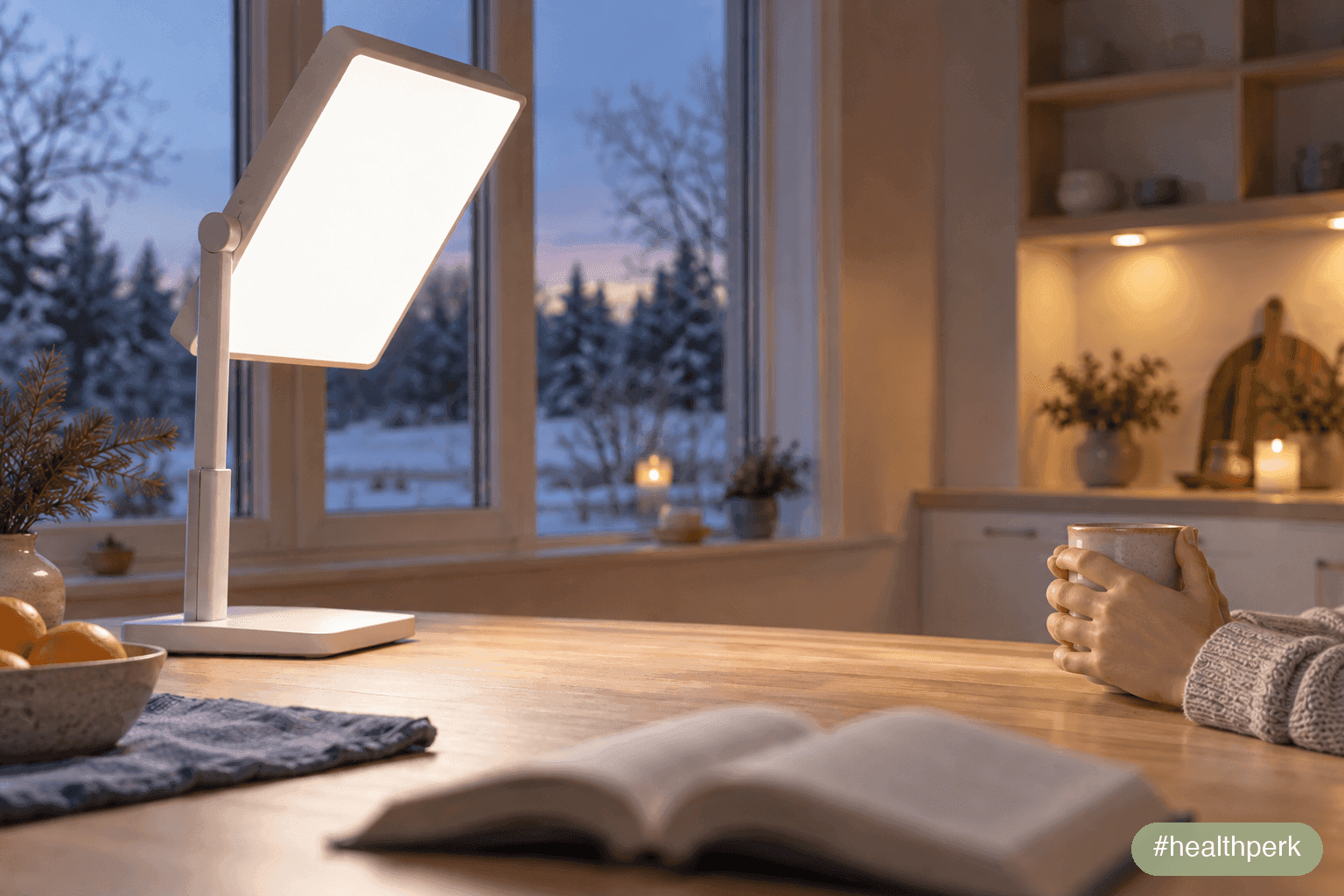
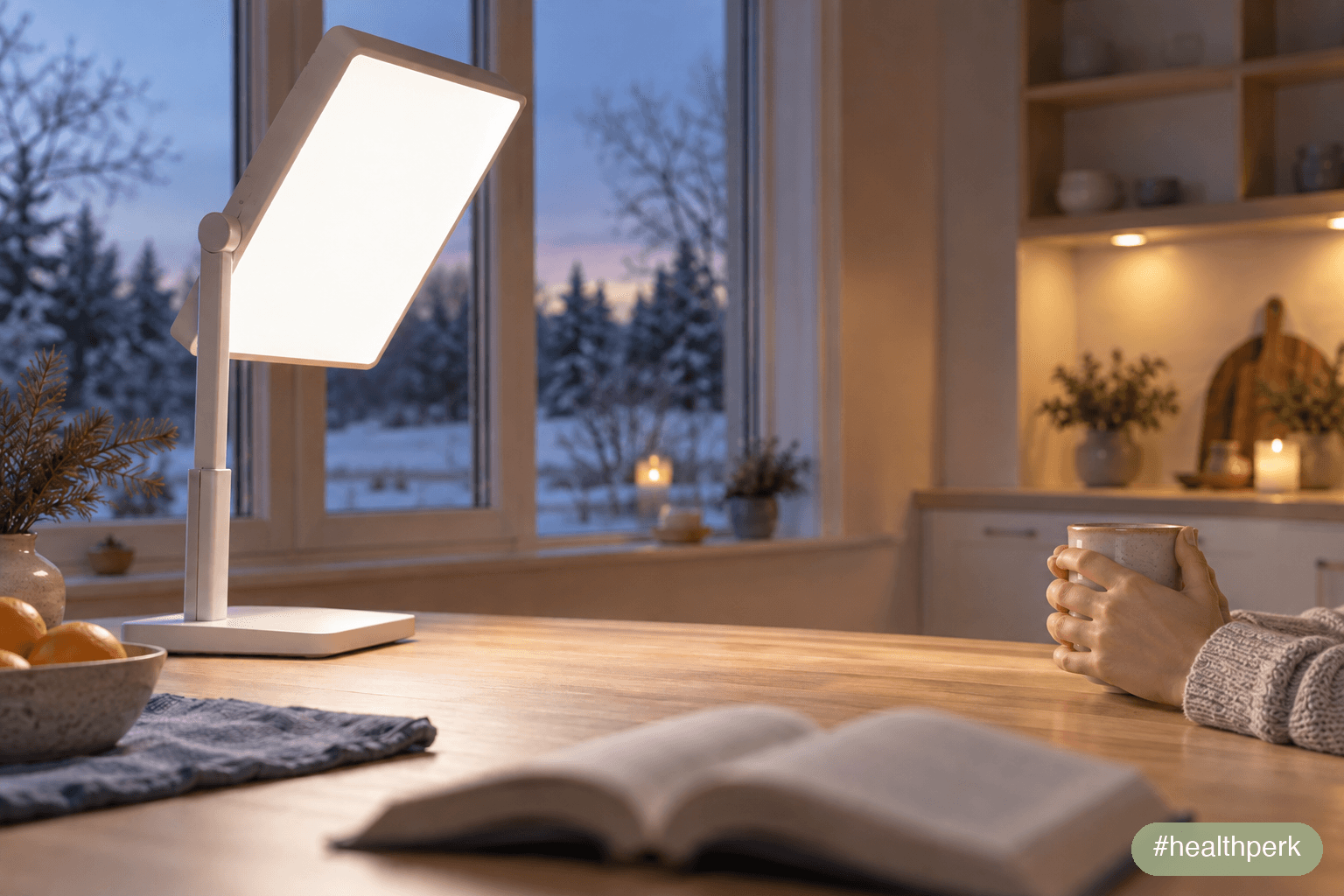 A light therapy lamp works best in the first part of your morning, set above eye level and angled down toward you.
A light therapy lamp, also called a SAD lamp or light box, is the best-studied non-drug treatment for seasonal affective disorder (SAD). SAD is depression that returns at the same time each year, usually in late fall or early winter, and eases in spring. Depending on latitude, it affects about 1.5% to 9% of people. Women are affected more often than men, and risk rises the farther you live from the equator. [13][18]
The hard part is not deciding whether light works. It is choosing a device that delivers a real dose and using it at the right time. When researchers measured 24 commercial devices, only 7 met basic standards for brightness, coverage and glare. [16] This guide covers the evidence, the specs that matter, how lamp types compare, how to use one step by step, and who should check with a doctor first.
Table of Contents
- Does a Light Therapy Lamp Work for Seasonal Depression? What the Evidence Shows
- How Bright Light Lifts Winter Depression: The Body-Clock Mechanism
- What to Look for in a SAD Lamp: The Specs That Matter
- Light Therapy Lamp Types Compared
- SAD Lamp vs Sunrise Alarm (Dawn Simulator)
- Which Light Therapy Option Is Right for You?
- How to Use a Light Therapy Lamp: A Step-by-Step Plan
- Who Should Not Use a SAD Lamp Without Medical Advice
- Common Myths About SAD Lamps
- When to See a Doctor
- Related Articles on Health Perk
- Frequently Asked Questions
- References
Does a Light Therapy Lamp Work for Seasonal Depression? What the Evidence Shows
Bright light therapy has been studied for SAD for more than 30 years. The evidence is consistent in direction, though many trials are small.
The meta-analyses. A 2005 review in the American Journal of Psychiatry pooled the strongest randomized trials. Bright light for SAD had an effect size of 0.84, and dawn simulation had an effect size of 0.73. The authors said these effects were similar to those in most antidepressant drug trials. [2] A 2020 meta-analysis of 19 trials found a smaller but still clear benefit. People were 42% more likely to respond to bright light than to placebo (risk ratio 1.42). The authors noted moderate-to-high risk of bias across the studies. [1]
Head to head with an antidepressant. The Canadian Can-SAD trial randomized 96 people with winter depression. One group received 10,000 lux for 30 minutes each morning plus a placebo pill. The other received a dim placebo light plus fluoxetine 20 mg. Response rates were 67% in both groups, and remission rates were 50% and 54%. Light worked faster at week 1 and caused fewer side effects such as agitation and sleep problems. [4]
Which light color? A 2025 network meta-analysis of 17 trials and 773 patients ranked white light as the most effective visible light for SAD. Blue light did not clearly beat placebo on the main SAD rating scale, and red light showed no benefit. [3]
Beyond winter. Light also helps depression that is not seasonal. A 2025 JAMA Psychiatry meta-analysis of 11 trials (858 patients) found higher remission with bright light added to usual treatment: 40.7% vs 23.5%. [14] In one 8-week trial, light alone beat placebo, and light plus fluoxetine did best, with 75.9% of patients responding. [15]
What it does not do as well. A light therapy lamp treats current symptoms. It may not protect you as well as therapy does next year. In a trial of 177 adults, CBT tailored for SAD (CBT-SAD) led to fewer depression recurrences two winters later than light therapy did: 27.3% vs 45.6%. [12] Evidence on starting light before symptoms begin is also thin. A Cochrane review found only one small trial of 46 people and could not draw conclusions. [13]
How Bright Light Lifts Winter Depression: The Body-Clock Mechanism
Most guides say light "boosts serotonin." That is part of the picture, but the timing data point to the body clock.
The sensor. Your retina contains a small group of light-sensitive ganglion cells that use the pigment melanopsin. These cells send light signals straight to the suprachiasmatic nucleus, the brain's master clock. They do not need rods or cones to do it. [7] This is why the light has to reach your open eyes. Light therapy works through the eyes, not the skin.
The phase-shift hypothesis. Long winter nights can let the body clock drift later than your sleep schedule. You wake while your brain is still in "night mode." Studies that gave melatonin at different times of day found that depression scores tracked how far the clock was out of line with sleep. [6]
Why morning beats evening. In a study of 42 patients, morning light moved the melatonin rhythm earlier, and evening light moved it later. People improved more when morning light shifted their clock further, up to about 2.7 hours. In a larger group of 80, early morning light beat both late morning and evening light. The best time was about 8.5 hours after melatonin onset. That is roughly 2.5 hours after the midpoint of your sleep. [5]
In practice, "morning" means morning for your body clock, not 7 a.m. for everyone. In research, the best response came about 2.5 hours after the midpoint of sleep, which for some people falls before their usual wake time. Don't cut your sleep short to chase that number: using the lamp soon after waking is the standard advice, and a clinician can help fine-tune timing if the standard approach isn't working. The clock change in early November can shift this window, which we cover in our guide to adjusting your sleep after daylight saving time ends.
What to Look for in a SAD Lamp: The Specs That Matter
"10,000 lux" on the box means little without a distance. Light intensity falls off fast as you move away. In lab testing, one device reached 7,000 lux only at about 13.5 inches. Larger boxes held their output over a wider range of distances. [16]
Use this checklist, drawn from the Center for Environmental Therapeutics (CET), a nonprofit founded by light therapy researchers, and from independent device testing: [16][19]
- 10,000 lux at a stated, comfortable distance. The maker should say exactly where you get 10,000 lux. Twelve inches or more is easier to live with than 6 inches.
- A large screen. CET recommends more than 200 square inches. With a small screen, a slight head turn takes you out of the beam.
- UV filtered. SAD light boxes should filter out ultraviolet light, which can harm the skin, cornea and lens. [18][23]
- White light, not blue. CET says full-spectrum and bluish lamps above 5,000 K work no better and cause more glare. Trial data favor white light. [3][19]
- Angled down at your eyes. The light should come from above eye level, like the sky, to cut glare. [19]
- Diffused light without hot spots. In testing, small boxes were the most likely to feel glaring, and many devices had uneven light. [16]
One caveat: as of the 2019 device study, the US Food and Drug Administration (FDA) had not approved any light therapy device for depression or regulated them for that use. [16] Marketing claims are not checked against clinical standards, so the checklist matters more than the brand.
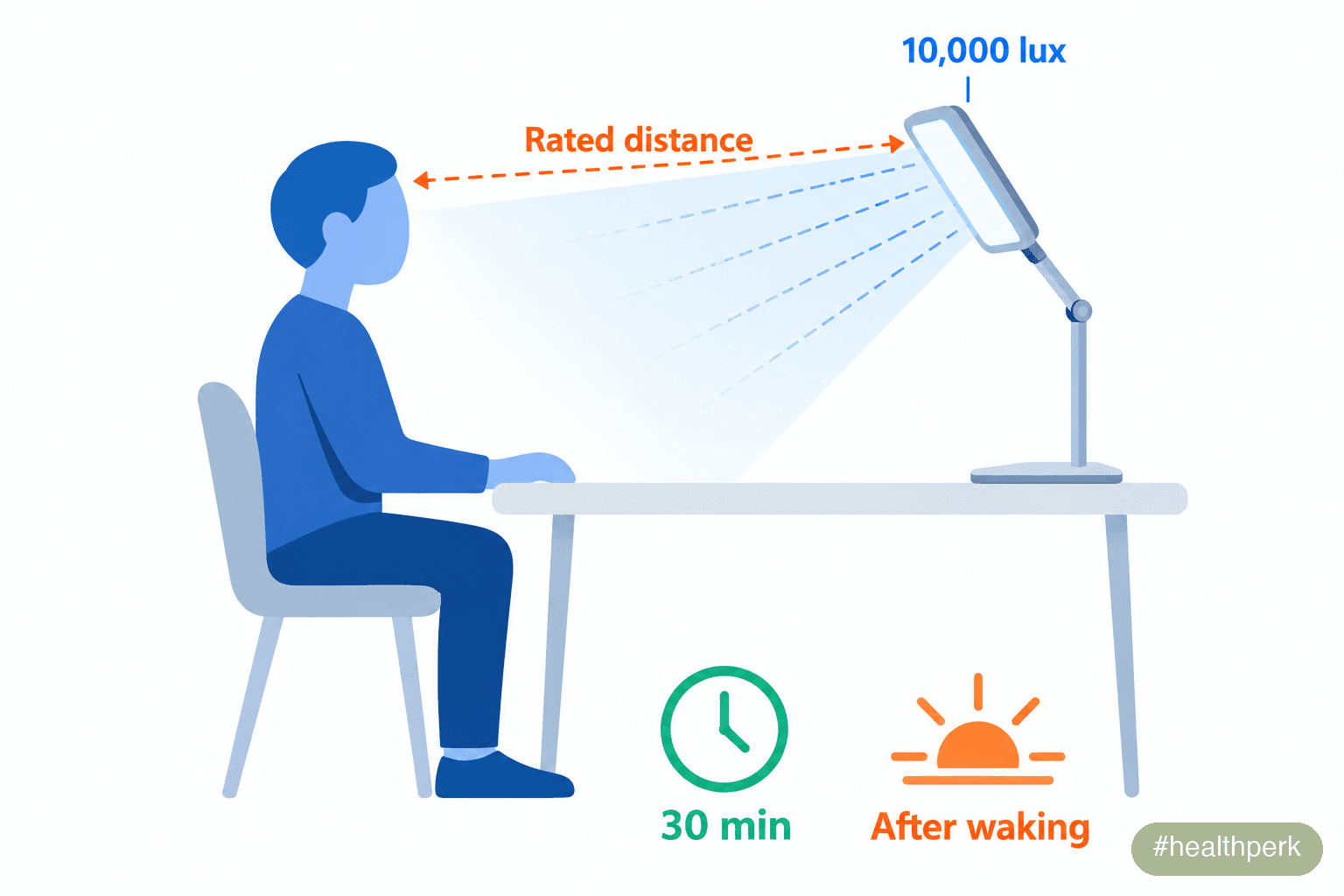 Schematic, not to scale: the lamp sits slightly above eye level and angled down, at the distance the maker rates for 10,000 lux.
Light Therapy Lamp Types Compared
There are four main kinds of devices. Here is how they compare on the factors that decide whether you will get a real dose every day.
| Criterion | Large light box | Compact or tablet lamp | Dawn simulator (sunrise alarm) | Light visor or glasses |
|---|---|---|---|---|
| Typical peak brightness | 10,000 lux at about 12–24 in | 10,000 lux often only at about 6 in, or distance not stated | About 250 lux in the main trial [8] | High but very close to the eye [16] |
| Strength of SAD evidence | Strongest; used in most trials [1][4] | Indirect; depends on matching trial dose | Moderate; fewer and smaller trials [2][8] | Limited [16] |
| Glare and comfort | Lowest glare in testing [16] | Small boxes most often judged glaring [16] | Used during sleep, so no glare | Varies |
| Freedom during a session | Read, eat or work at a table | Must sit close and still | None needed; works while you sleep | Can move around |
| Best for | First-line treatment of diagnosed SAD | Travel, or desks with little space | Hard mornings, mild symptoms, add-on | People who cannot sit still for 30 minutes |
Examples with verified specs. We list these to show what to check, not as endorsements. We did not test them and earn nothing from them; see how we review products.
- Carex Day-Light Classic Plus (large box): rated 10,000 lux at 12 to 14 inches, blocks 99.3% of UV, and has an adjustable height and angle. [21]
- Beurer TL 50 (compact): rated 10,000 lux at about 15 cm (6 inches), with a round light surface about 24.6 cm across. It has a 5,300 K LED light, is UV-free and is listed as a medical device in Europe. [20] That surface works out to about 74 square inches, well under CET's 200.
- Verilux HappyLight Luxe (tablet): "up to 10,000 lux" of UV-free LED light, with 4 brightness levels, 3 color temperature settings and a timer. The product page does not state the distance at which you get 10,000 lux. [22] It cost $69.99 on the maker's site as of October 2026.
Editorial verdict. For diagnosed SAD, a large light box that states 10,000 lux at 12 inches or more is the best choice. It is closest to what worked in the trials, and it is the most comfortable to use every day. Compact lamps are fine for travel or as a backup if you can sit close. A dawn simulator is a good add-on but a weaker stand-alone treatment for moderate or severe symptoms. Light therapy boxes typically cost about $40 to $200. Some insurance plans or FSAs may cover part of the cost. [17]
SAD Lamp vs Sunrise Alarm (Dawn Simulator)
A dawn simulator is a bedside light that slowly brightens before you wake, mimicking a spring sunrise. In the key trial, the light rose over 90 minutes. It is a different tool from a SAD lamp: dimmer, but it works while you sleep.
The evidence is real but smaller. In the 2005 meta-analysis, five dawn-simulation trials had an effect size of 0.73. [2] In one trial of 95 patients, a 1.5-hour dawn signal that peaked at 250 lux led to more remissions and responses than placebo. In that trial it also beat a 10,000-lux light box used at 6 a.m. [8] That one result is often over-quoted. In this trial, the light box did not beat placebo either, and sunshine during the study strongly affected results. Most other evidence still favors the light box.
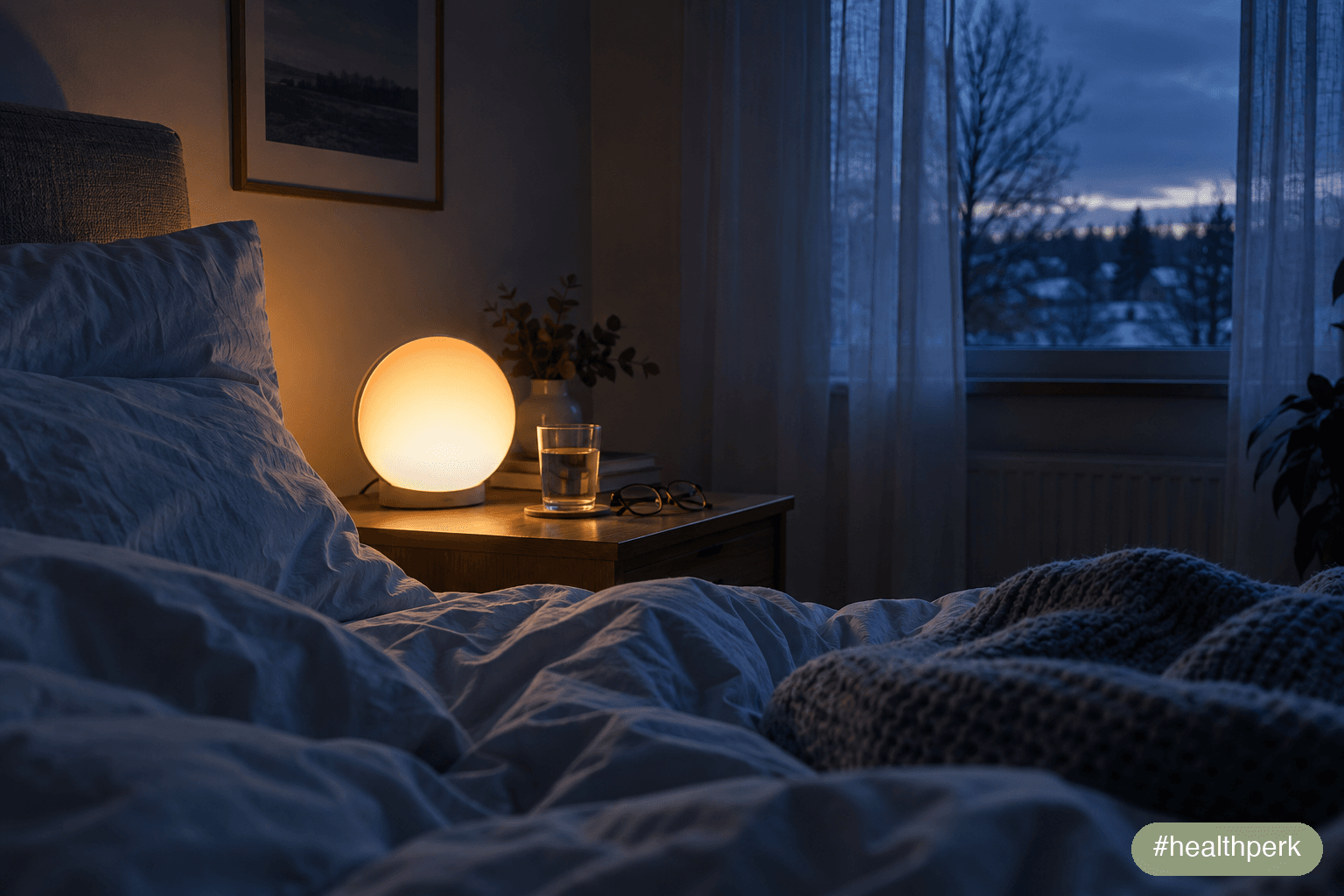 A dawn simulator brightens the room before your alarm, which can make dark winter mornings easier to start.
Bottom line: if you struggle to get out of bed in the dark, a sunrise alarm is a reasonable first step for mild winter blues. For diagnosed SAD, use a light box as your main treatment, and add a dawn simulator if waking is still hard. For more on getting going in the dark, see our evidence-based morning routine for energy.
Which Light Therapy Option Is Right for You?
"I have mild winter blues and still function well." Start with daylight: a morning walk outside, even on cloudy days, plus a bright workspace. A sunrise alarm can help with waking. If your mood still dips each winter, add a light box. An expert consensus suggests at least 250 lux of melanopic light at eye level during the day for healthy adults, a level many indoor spaces may not provide. [9]
"I've been diagnosed with SAD." A large 10,000-lux light box used every morning is first-line treatment. It is as effective as fluoxetine for many people. [4] Ask your clinician about CBT-SAD too, which may protect better in future winters. [12]
"I work at a desk with little space, or I travel." A compact or tablet lamp can work if it states a 10,000-lux distance and you sit that close. Place it to the side so the light comes from above, not straight on. Expect more glare. [16]
"I have bipolar disorder." Light can trigger hypomania or mania. In one trial, midday bright light added to mood-stabilizing medication helped bipolar depression without mood switches. Patients were closely monitored, and the trial excluded people with rapid cycling or mixed symptoms. [11] Use light therapy only under your psychiatrist's care.
"I already take an antidepressant." Light therapy is a compatible add-on to antidepressant medication, and the combination worked best in a nonseasonal depression trial. [24][15] Do not stop or change your medication without your prescriber.
How to Use a Light Therapy Lamp: A Step-by-Step Plan
- Get checked first. Confirm with a doctor that your symptoms fit SAD. Hypothyroidism, anemia and sleep problems can look like winter depression. Our guide on why you might always be tired covers common causes.
- Set up the lamp. Put it on a table at the rated distance, slightly above eye level and angled down toward your face. [19]
- Use it within the first hour after waking. Morning light advances the body clock. Late-day light can disturb sleep. [5][17]
- Start short and build up. Begin with 10 to 15 minutes a day. Increase to 30 minutes over the first week. NIMH describes 30 to 45 minutes a day as typical. [17][18]
- Keep your eyes open, but don't stare. Eat breakfast, read or check email while the light falls on your face. [17]
- Be consistent. Use it daily, including weekends, from fall until spring. [18] Keep wake time steady as well. A tool like our sleep cycle calculator can help you plan a regular schedule.
- Track your mood weekly. Many people feel better within 2 to 4 days, though some need several weeks. [17] Note sleep, energy and mood once a week.
- Adjust or escalate. If you feel "wired," irritable or have trouble sleeping, cut session time or move sessions earlier. If there is no improvement after 4 to 6 weeks, talk to your doctor. [17]
Who Should Not Use a SAD Lamp Without Medical Advice
Bright light is mild compared with most treatments, but it is not risk-free.
Common side effects. In 83 patients using 10,000 lux for 30 minutes, the most common new symptoms were nausea (15.9%), jumpiness or jitteriness (8.8%) and headache (8.4%). Most were mild. [10] Eye strain and trouble sleeping (when used late in the day) are also reported. [17]
Bipolar disorder. Clinicians should watch for emerging hypomania, especially in the first few days of treatment. [24] SAD is more common in people with bipolar II disorder, so it is worth screening for. [18]
Eye conditions. CET advises seeing an eye specialist first if you have inherited retinal dystrophies, age-related macular degeneration, diabetic retinopathy or inflammatory retinal disease. [23]
Photosensitizing medications and supplements. CET lists drugs that can make the eyes or skin sensitive to visible light, including phenothiazine antipsychotics, amiodarone, antimalarial and antirheumatic drugs, and St. John's wort. Some tetracyclines, hydrochlorothiazide, sulfonamides and tricyclic antidepressants are also listed. [23] NIMH also advises medical guidance for people taking light-sensitizing medications. [18] If you take any of these, ask your prescriber before starting.
Common Myths About SAD Lamps
Myth: Any bright lamp will do. Fact: Ordinary room lighting is far dimmer than a therapy lamp, and many "SAD lamps" reach 10,000 lux only very close up. In testing, 17 of 24 devices failed at least one basic criterion. [16]
Myth: A SAD lamp gives you vitamin D. Fact: Skin makes vitamin D from UVB, and SAD lamps filter out UV. [18] Vitamin D supplements may help people with SAD who are deficient, but results are mixed. [18] See our guide to vitamin D deficiency symptoms and the choice between vitamin D2 vs D3 in winter.
Myth: Blue light works better. Fact: In trial data, white light ranked highest. Blue light did not clearly beat placebo on the main SAD scale, and bluish lamps cause more glare. [3][19]
Myth: Red light therapy treats SAD. Fact: Red light showed no benefit for SAD in the 2025 network meta-analysis. [3] Red light devices are designed for skin and tissue uses, which we cover in our review of red light therapy benefits.
Myth: More is better, so use it all day. Fact: Extra time, especially late in the day, can cause insomnia, headache or agitation. Timing matters more than total hours. [5][10]
When to See a Doctor
Light therapy is a treatment, not a replacement for a diagnosis. See a doctor or mental health professional if:
- Your low mood lasts two weeks or more, or it disrupts work, relationships or daily care.
- You have thoughts of death, suicide or self-harm. In the US, call or text 988 now, or call your local emergency number.
- You notice racing thoughts, much less need for sleep, risky spending or unusual elation after starting a lamp. These can be signs of hypomania or mania.
- There is no meaningful improvement after 4 to 6 weeks of daily use. [17]
- You develop eye pain, visual changes or a skin rash during treatment.
- You have SAD every year. Ask about CBT-SAD, and about extended-release bupropion, which is approved to prevent winter episodes. [12][18]
If you prefer to start with self-guided support between appointments, our review of apps for mental health covers evidence-based options.
Related Articles on Health Perk
- Vitamin D2 vs D3: which form to take this winter
- How to adjust your sleep to the daylight saving time change
- Morning routine for high energy
- Best apps for mental health in 2026
- Calm vs Headspace: which meditation app fits you
- Why am I always tired during the day?
Frequently Asked Questions
How long should you sit in front of a light therapy lamp?
Most people need about 30 minutes a day at 10,000 lux. Trials used 30 minutes each morning, and NIMH describes 30 to 45 minutes as typical. Start with 10 to 15 minutes and build up over a week. A dimmer setting or a greater distance means you need longer sessions to get the same dose.
What is the best time of day to use a SAD lamp?
Use it in the morning, ideally within the first hour after you wake. Morning light shifts the body clock earlier, and early morning light worked better than late morning or evening light in trials. Avoid sessions late in the day, which can delay sleep and cause insomnia.
How far away should a light therapy lamp be?
Sit at the distance where the maker says the lamp delivers 10,000 lux. For large boxes, that is often about 12 to 24 inches. Compact lamps may need to be about 6 inches away. If the product does not state a distance for 10,000 lux, you cannot know your dose.
Does a SAD lamp give you vitamin D?
No. Your skin makes vitamin D from ultraviolet B light, and SAD lamps are built to filter out UV. A light therapy lamp works through your eyes and your body clock, not your skin. If your vitamin D is low, ask your doctor about testing and supplements.
Does a SAD lamp work if your eyes are closed?
No. The light needs to reach your retina, where special light-sensitive cells signal your body clock. Keep your eyes open and let the light fall on your face. You do not need to look straight at it. Reading, eating or working during a session is fine.
Is a sunrise alarm as good as a SAD lamp?
Not for most people with diagnosed SAD. Dawn simulators have helped in smaller trials and can make waking easier. But the light box has the most evidence and is first-line treatment. A sunrise alarm works well as an add-on or for mild winter blues.
How long does it take for a light therapy lamp to work?
Many people feel better within 2 to 4 days of daily use, and in trials light often helped within the first 1 to 2 weeks. Some people need several weeks. If you see no meaningful improvement after 4 to 6 weeks, talk to your doctor about other treatments.
Who should not use a light therapy lamp?
Check with a doctor first if you have bipolar disorder, retinal disease, macular degeneration or diabetic eye disease. The same applies if you take photosensitizing drugs such as some antipsychotics, amiodarone, tetracyclines or St. John's wort. Bright light can trigger mania in bipolar disorder and may harm vulnerable retinas.
Medical disclaimer: This article is for general information only and is not medical advice. It does not replace diagnosis or treatment by a qualified health professional. Seasonal affective disorder is a form of depression. If you have thoughts of suicide or self-harm, call or text 988 in the US or contact your local emergency number right away. Talk to your doctor before starting light therapy, especially if you have bipolar disorder, an eye condition, or take photosensitizing medication.
References
- Pjrek, E., Friedrich, M. E., Cambioli, L., Dold, M., Jäger, F., Komorowski, A., Lanzenberger, R., Kasper, S., & Winkler, D. (2020). The Efficacy of Light Therapy in the Treatment of Seasonal Affective Disorder: A Meta-Analysis of Randomized Controlled Trials. Psychotherapy and Psychosomatics, 89(1), 17–24. https://doi.org/10.1159/000502891
Supports: 19 trials; bright light beat placebo (SMD −0.37; response RR 1.42) with moderate-to-high risk of bias.
- Golden, R. N., Gaynes, B. N., Ekstrom, R. D., Hamer, R. M., Jacobsen, F. M., Suppes, T., Wisner, K. L., & Nemeroff, C. B. (2005). The efficacy of light therapy in the treatment of mood disorders: a review and meta-analysis of the evidence. American Journal of Psychiatry, 162(4), 656–662. https://doi.org/10.1176/appi.ajp.162.4.656
Supports: Effect size 0.84 for bright light and 0.73 for dawn simulation in SAD, similar to antidepressant trials.
- Wan, Y., Ding, J., Fan, M., & Huang, H. (2025). Effectiveness of visible light for seasonal affective disorder: A systematic review and network meta-analysis. Medicine, 104(27), e43107. https://doi.org/10.1097/MD.0000000000043107
Supports: 17 RCTs, 773 patients; white light ranked most effective; blue light's SIGH-SAD effect crossed zero; red light showed no benefit.
- Lam, R. W., Levitt, A. J., Levitan, R. D., Enns, M. W., Morehouse, R., Michalak, E. E., & Tam, E. M. (2006). The Can-SAD study: a randomized controlled trial of the effectiveness of light therapy and fluoxetine in patients with winter seasonal affective disorder. American Journal of Psychiatry, 163(5), 805–812. https://doi.org/10.1176/ajp.2006.163.5.805
Supports: 10,000 lux for 30 minutes matched fluoxetine 20 mg (response 67% each; remission 50% vs 54%), with faster onset and fewer adverse events.
- Terman, J. S., Terman, M., Lo, E. S., & Cooper, T. B. (2001). Circadian time of morning light administration and therapeutic response in winter depression. Archives of General Psychiatry, 58(1), 69–75. https://doi.org/10.1001/archpsyc.58.1.69
Supports: Morning light advanced melatonin rhythm; optimal timing about 8.5 hours after melatonin onset or 2.5 hours after sleep midpoint.
- Lewy, A. J., Lefler, B. J., Emens, J. S., & Bauer, V. K. (2006). The circadian basis of winter depression. Proceedings of the National Academy of Sciences, 103(19), 7414–7419. https://doi.org/10.1073/pnas.0602425103
Supports: Depression severity correlated with circadian misalignment, supporting the phase-shift hypothesis.
- Berson, D. M., Dunn, F. A., & Takao, M. (2002). Phototransduction by retinal ganglion cells that set the circadian clock. Science, 295(5557), 1070–1073. https://doi.org/10.1126/science.1067262
Supports: Light-sensitive retinal ganglion cells signal the suprachiasmatic nucleus without rods or cones.
- Avery, D. H., Eder, D. N., Bolte, M. A., Hellekson, C. J., Dunner, D. L., Vitiello, M. V., & Prinz, P. N. (2001). Dawn simulation and bright light in the treatment of SAD: a controlled study. Biological Psychiatry, 50(3), 205–216. https://doi.org/10.1016/s0006-3223(01)01200-8
Supports: 95 patients; 1.5-hour dawn signal peaking at 250 lux beat placebo and bright light; bright light did not differ from placebo; sunshine affected outcomes.
- Brown, T. M., Brainard, G. C., Cajochen, C., Czeisler, C. A., Hanifin, J. P., Lockley, S. W., Lucas, R. J., Münch, M., O'Hagan, J. B., Peirson, S. N., Price, L. L. A., Roenneberg, T., Schlangen, L. J. M., Skene, D. J., Spitschan, M., Vetter, C., Zee, P. C., & Wright, K. P., Jr. (2022). Recommendations for daytime, evening, and nighttime indoor light exposure to best support physiology, sleep, and wakefulness in healthy adults. PLoS Biology, 20(3), e3001571. https://doi.org/10.1371/journal.pbio.3001571
Supports: Expert consensus recommends at least 250 lux melanopic EDI at eye level during the day.
- Terman, M., & Terman, J. S. (1999). Bright light therapy: side effects and benefits across the symptom spectrum. Journal of Clinical Psychiatry, 60(11), 799–808. https://doi.org/10.4088/jcp.v60n1113
Supports: In 83 patients, mostly mild side effects: nausea 15.9%, jumpiness 8.8%, headache 8.4%.
- Sit, D. K., McGowan, J., Wiltrout, C., Diler, R. S., Dills, J. J., Luther, J., Yang, A., Ciolino, J. D., Seltman, H., Wisniewski, S. R., Terman, M., & Wisner, K. L. (2018). Adjunctive Bright Light Therapy for Bipolar Depression: A Randomized Double-Blind Placebo-Controlled Trial. American Journal of Psychiatry, 175(2), 131–139. https://doi.org/10.1176/appi.ajp.2017.16101200
Supports: Midday 7,000-lux light added to antimanic medication raised remission (68.2% vs 22.2%) with no mood switches in screened patients.
- Rohan, K. J., Meyerhoff, J., Ho, S. Y., Evans, M., Postolache, T. T., & Vacek, P. M. (2016). Outcomes One and Two Winters Following Cognitive-Behavioral Therapy or Light Therapy for Seasonal Affective Disorder. American Journal of Psychiatry, 173(3), 244–251. https://doi.org/10.1176/appi.ajp.2015.15060773
Supports: Second-winter recurrence 27.3% after CBT-SAD vs 45.6% after light therapy (N=177).
- Nussbaumer-Streit, B., Forneris, C. A., Morgan, L. C., Van Noord, M. G., Gaynes, B. N., Greenblatt, A., Wipplinger, J., Lux, L. J., Winkler, D., & Gartlehner, G. (2019). Light therapy for preventing seasonal affective disorder. Cochrane Database of Systematic Reviews, 2019(3), CD011269. https://doi.org/10.1002/14651858.CD011269.pub3
Supports: SAD prevalence 1.5%–9% by latitude; only one small trial (46 people) on prevention, too limited for conclusions.
- Menegaz de Almeida, A., Aquino de Moraes, F. C., Cavalcanti Souza, M. E., Cavalcanti Orestes Cardoso, J. H., Tamashiro, F., Miranda, C., Fernandes, L., Kreuz, M., & Alves Kelly, F. (2025). Bright Light Therapy for Nonseasonal Depressive Disorders: A Systematic Review and Meta-Analysis. JAMA Psychiatry, 82(1), 38–46. https://doi.org/10.1001/jamapsychiatry.2024.2871
Supports: 11 trials, 858 patients; remission 40.7% vs 23.5% with adjunctive bright light.
- Lam, R. W., Levitt, A. J., Levitan, R. D., Michalak, E. E., Cheung, A. H., Morehouse, R., Ramasubbu, R., Yatham, L. N., & Tam, E. M. (2016). Efficacy of Bright Light Treatment, Fluoxetine, and the Combination in Patients With Nonseasonal Major Depressive Disorder: A Randomized Clinical Trial. JAMA Psychiatry, 73(1), 56–63. https://doi.org/10.1001/jamapsychiatry.2015.2235
Supports: Light monotherapy beat placebo (d = 0.80); light plus fluoxetine had 75.9% response.
- Oldham, M. A., Oldham, M. B., & Desan, P. H. (2019). Commercially Available Phototherapy Devices for Treatment of Depression: Physical Characteristics of Emitted Light. Psychiatric Research and Clinical Practice, 1(2), 49–57. https://doi.org/10.1176/appi.prcp.2019.20180011
Supports: 24 devices from 12 makers tested; 7 met all criteria; small boxes most glaring; FDA has not approved any device for depression.
- Eisenberg Family Depression Center, University of Michigan (2026). Seasonal Affective Disorder & Light Therapy. Toolkit, revised January 2026. https://depressioncenter.org/sites/default/files/2026-03/Toolkit-Seasonal%20Affective%20Disorder%20and%20Light%20Therapy%202026.pdf
Supports: Start 10–15 minutes and build to 30–45; improvement often in 2–4 days; see a provider after 4–6 weeks without improvement; boxes cost about $40–$200; look for UV filter, white light, downward angle.
- National Institute of Mental Health (2023). Seasonal Affective Disorder. NIH Publication No. 23-MH-8138. https://www.nimh.nih.gov/health/publications/seasonal-affective-disorder
Supports: 10,000-lux UV-filtered box for 30–45 minutes each morning from fall to spring; risk factors; caution with eye conditions and light-sensitizing drugs; mixed vitamin D results; bupropion XL for prevention.
- Center for Environmental Therapeutics (2026, accessed). How to Select a Light Box. https://cet.org/how-to-select-a-light-box/
Supports: 10,000 lux at a comfortable distance; screen over 200 sq in; UV filtering; white light, with bluish lamps above 5,000 K no better and more glaring; downward angle.
- Beurer (2026, accessed). Daylight therapy lamp TL 50. https://www.beurer.com/uk/p/60815/
Supports: 10,000 lux at about 15 cm; 24.6 cm illumination surface; 5,300 K; LED; UV-free; medical device.
- Performance Health (2026, accessed). Carex Day-Light Classic Plus. https://www.performancehealth.com/day-light-classic-plus
Supports: 10,000 lux at 12–14 inches; blocks 99.3% of UV; adjustable angle and height.
- Verilux (2026, accessed). HappyLight Luxe 10,000 lux Light Therapy Lamp w/Timer. https://verilux.com/products/happylight-luxe
Supports: "Up to 10,000 lux" UV-free LED; 4 brightness levels, 3 color temperatures, timer; no distance stated; $69.99 as of October 2026.
- Center for Environmental Therapeutics (2026, accessed). Bright Light Exposure Risks. https://cet.org/bright-light-exposure-risks/
Supports: Retinal conditions and photosensitizing drugs (phenothiazines, amiodarone, antimalarials, St. John's wort, tetracyclines, hydrochlorothiazide, tricyclics) that need specialist advice.
- Terman, M., & Terman, J. S. (2005). Light therapy for seasonal and nonseasonal depression: efficacy, protocol, safety, and side effects. CNS Spectrums, 10(8), 647–663. https://doi.org/10.1017/S1092852900019611
Supports: Clinicians should watch for emergent hypomania, especially in the first days; light is a compatible adjunct to antidepressant medication.
Frequently Asked Questions
How long should you sit in front of a light therapy lamp?
Most people need about 30 minutes a day at 10,000 lux. Trials used 30 minutes each morning, and NIMH describes 30 to 45 minutes as typical. Start with 10 to 15 minutes and build up over a week. A dimmer setting or a greater distance means you need longer sessions to get the same dose.
What is the best time of day to use a SAD lamp?
Use it in the morning, ideally within the first hour after you wake. Morning light shifts the body clock earlier, and early morning light worked better than late morning or evening light in trials. Avoid sessions late in the day, which can delay sleep and cause insomnia.
How far away should a light therapy lamp be?
Sit at the distance where the maker says the lamp delivers 10,000 lux. For large boxes, that is often about 12 to 24 inches. Compact lamps may need to be about 6 inches away. If the product does not state a distance for 10,000 lux, you cannot know your dose.
Does a SAD lamp give you vitamin D?
No. Your skin makes vitamin D from ultraviolet B light, and SAD lamps are built to filter out UV. A light therapy lamp works through your eyes and your body clock, not your skin. If your vitamin D is low, ask your doctor about testing and supplements.
Does a SAD lamp work if your eyes are closed?
No. The light needs to reach your retina, where special light-sensitive cells signal your body clock. Keep your eyes open and let the light fall on your face. You do not need to look straight at it. Reading, eating or working during a session is fine.
Is a sunrise alarm as good as a SAD lamp?
Not for most people with diagnosed SAD. Dawn simulators have helped in smaller trials and can make waking easier. But the light box has the most evidence and is first-line treatment. A sunrise alarm works well as an add-on or for mild winter blues.
How long does it take for a light therapy lamp to work?
Many people feel better within 2 to 4 days of daily use, and in trials light often helped within the first 1 to 2 weeks. Some people need several weeks. If you see no meaningful improvement after 4 to 6 weeks, talk to your doctor about other treatments.
Who should not use a light therapy lamp?
Check with a doctor first if you have bipolar disorder, retinal disease, macular degeneration or diabetic eye disease. The same applies if you take photosensitizing drugs such as some antipsychotics, amiodarone, tetracyclines or St. John's wort. Bright light can trigger mania in bipolar disorder and may harm vulnerable retinas.