Morning Routine for High Energy: The 2026 Evidence-Based Guide
Morning Routine for High Energy: The 2026 Evidence-Based Guide
By the HealthPerk Editorial Team · Last updated: May 2026
Quick Answer
What is the best morning routine for high energy?
A morning routine for high energy is not a willpower ritual — it is a sequence that exploits two well-mapped biological levers: the cortisol awakening response, which peaks ~30–45 minutes after waking, and the circadian phase-setting effect of bright light on the suprachiasmatic nucleus (Clow et al., 2010; Blume et al., 2019). The evidence-based 60-minute sequence: wake at a consistent time (±30 minutes daily), get 2–10 minutes of outdoor light within the first 30 minutes of waking, drink 400–500 mL of water, move the body for 5–20 minutes at low-to-moderate intensity, delay caffeine until 60–90 minutes after waking to avoid blunting adenosine clearance, and anchor breakfast with 25–40 g of protein. This pattern stabilizes the cortisol awakening response, advances and sharpens the circadian phase, restores overnight fluid loss, and prevents the mid-morning crash that follows carb-dominant or skipped breakfasts (Wright et al., 2013; Burke et al., 2015).
| Time after waking | Action | Why |
|---|---|---|
| 0–5 min | Out of bed promptly; open curtains | Stop sleep inertia; signal "morning" to the circadian system |
| 5–20 min | 2–10 min outdoor light (or 10,000 lux indoor box if dark) | Phase-advance the body clock; suppress residual melatonin |
| 5–10 min | 400–500 mL water (plain or with a pinch of salt) | Replace overnight fluid loss; support blood pressure on standing |
| 10–30 min | 5–20 min low-to-moderate movement | Body temperature rise, cortisol awakening response support |
| 30–60 min | Protein-anchored breakfast (25–40 g protein) | Stable glucose, satiety, dopamine precursors |
| 60–90 min | First caffeine (if any), capped at 200 mg before noon | Avoid blunting adenosine clearance; protect sleep at night |

The energy you feel in the morning is mostly set the night before and the first hour after waking — not by what you do at 11 a.m. when fatigue arrives. Two physiological systems do the heavy lifting: the cortisol awakening response (a 50–60% rise in cortisol over 30–45 minutes after waking, which mobilizes glucose and sharpens cognition) and the circadian system, anchored by the suprachiasmatic nucleus and reset daily by light exposure to the eyes (Clow et al., 2010; Blume et al., 2019). A morning routine for high energy is not about meditation playlists or 5-a.m. starts — it is about firing those two systems on time, every day, and not undermining them with delayed caffeine, low fluid, blue-light-saturated late nights, or carb-dominant breakfasts. This guide gives the 60-minute sequence that works, the night-before habits that make it work, and the small daily choices that compound into reliable energy.
Table of Contents
- Why a Morning Routine for High Energy Actually Works
- How to Wake Up Feeling Energized: The First 20 Minutes
- A Daily Routine to Improve Energy: The Full-Day Blueprint
- Habits That Increase Energy Levels: What Compounds Over Weeks
- How to Improve Energy Without Supplements
- How to Stay Energized Throughout the Day
- Best Sleep Habits for Energy: The Night Before Counts More Than the Morning
- Frequently Asked Questions
- References
Why a Morning Routine for High Energy Actually Works
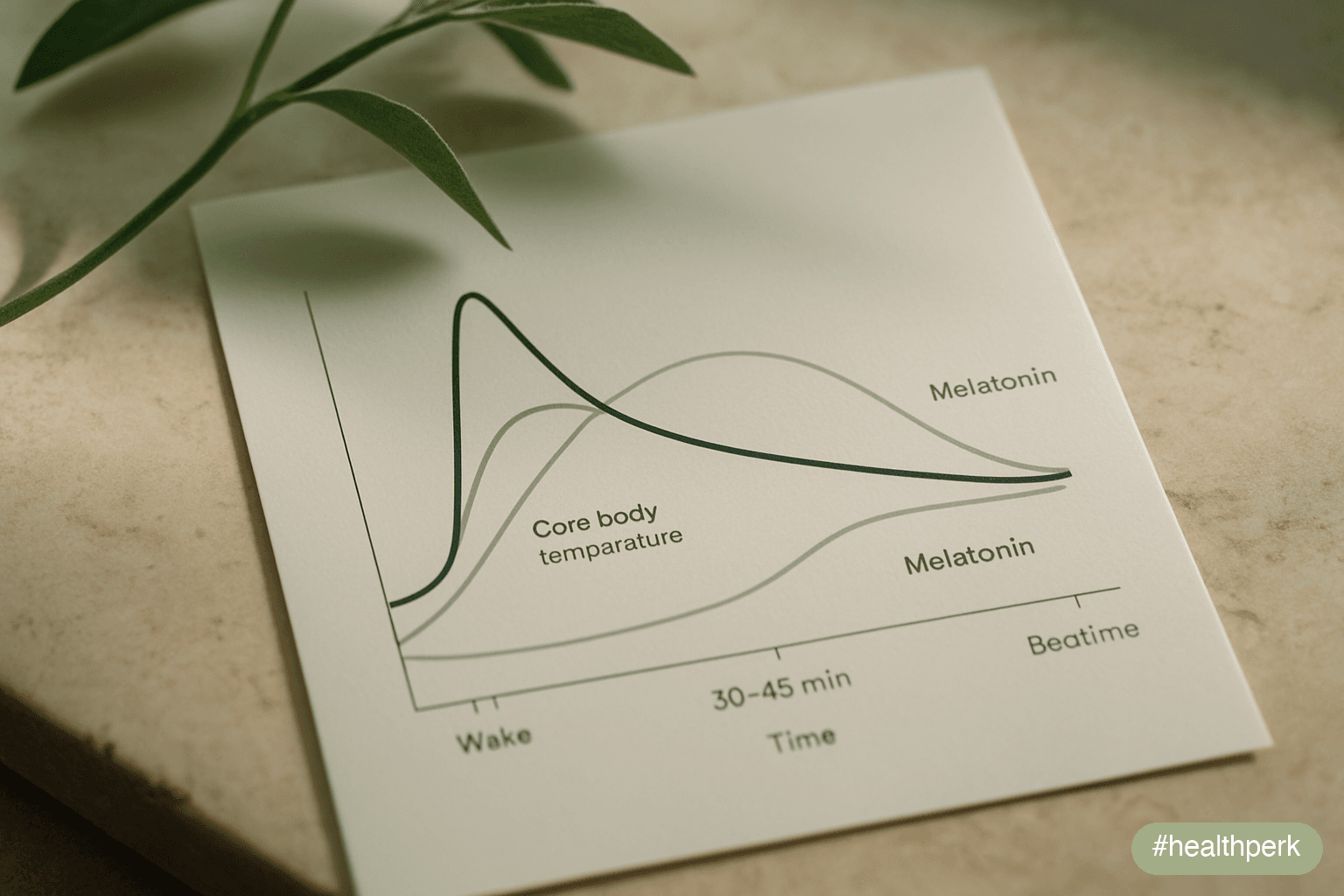
Morning energy is a measurable physiological state, not a mood. Three systems converge in the first 60 minutes after waking:
- The cortisol awakening response (CAR). Cortisol rises ~50–60% in the 30–45 minutes after eyes open, mobilizing glucose, raising cognitive readiness, and shifting blood flow toward muscles and brain (Clow et al., 2010). A blunted CAR — common in chronic stress, insufficient sleep, and circadian misalignment — tracks with the subjective experience of "waking up tired."
- The circadian system. The suprachiasmatic nucleus uses retinal light input to set the timing of every downstream rhythm: alertness, body temperature, blood pressure, metabolic rate, and evening melatonin onset. Morning bright light advances and sharpens the circadian phase; insufficient morning light flattens it (Blume et al., 2019; Wright et al., 2013).
- Adenosine clearance. Sleep clears adenosine, the molecule that drives sleep pressure. The first 60–90 minutes of wakefulness involve continued adenosine clearance and a fall in melatonin; caffeine taken too early displaces some of this natural rise in alertness and tends to be paid back as a crash later (Drake et al., 2013).
A morning routine for high energy aligns inputs (light, water, movement, food, caffeine timing) with these three systems so that the day starts on a steep, clean alertness curve instead of a flat one.
How to Wake Up Feeling Energized: The First 20 Minutes
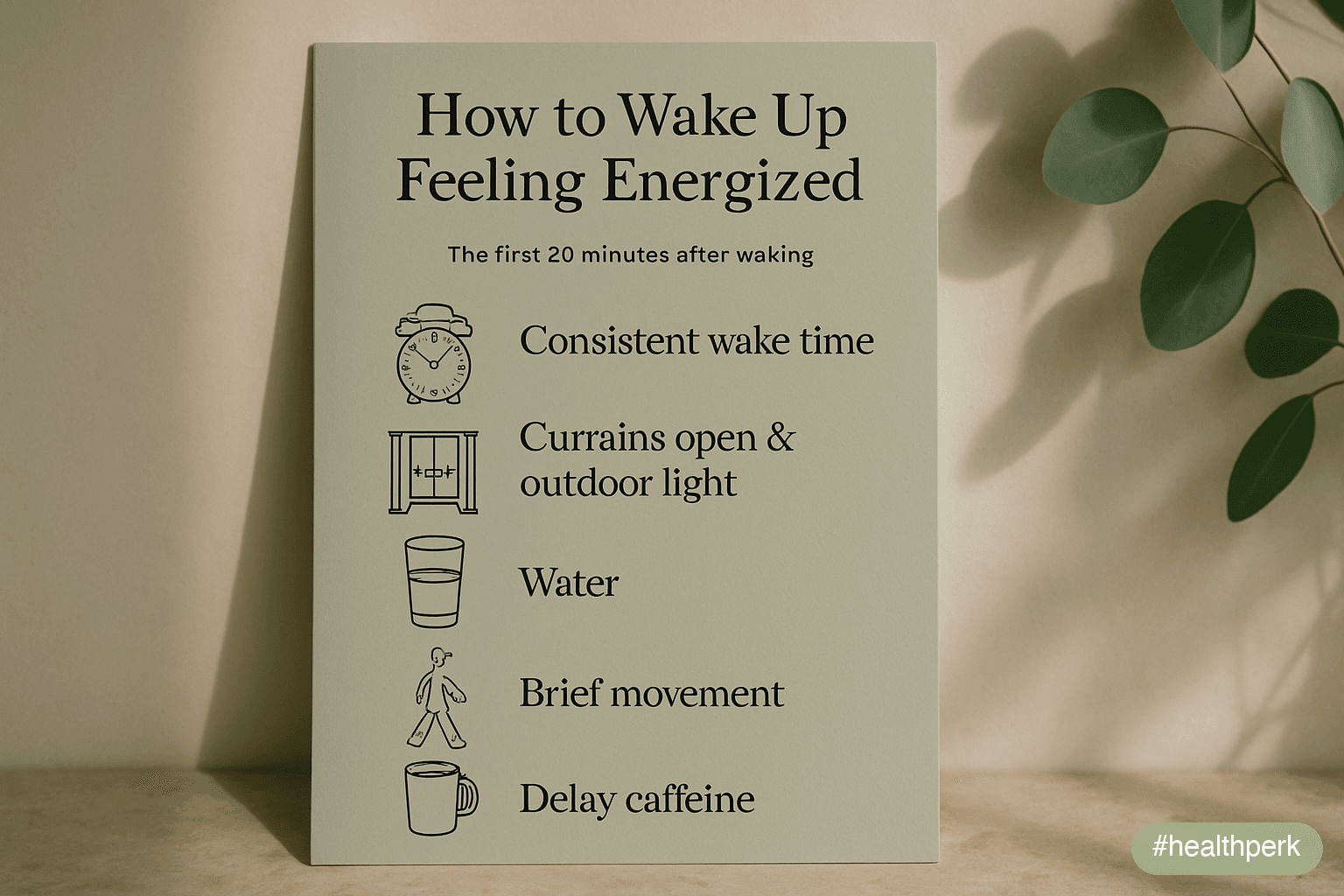
The single highest-leverage move is consistency: wake at the same time within ±30 minutes every day, including weekends. Variable wake times produce "social jet lag" — a chronic mismatch between internal time and clock time — which blunts the cortisol awakening response and degrades next-day energy (Wittmann et al., 2006).
The 20-minute protocol
- Get out of bed within 5 minutes. Snoozing fragments the final REM cycle and deepens sleep inertia. If hitting snooze is reflex, move the alarm out of reach.
- Open curtains immediately. A bright-window stimulus is weaker than outdoor light but starts the signal.
- Step outside for 2–10 minutes if daylight is available — a cloudy morning still delivers 1,000–10,000+ lux versus 200–500 lux indoors. Sunglasses off; do not stare at the sun. In winter or pre-dawn schedules, a 10,000 lux light box at eye level for 10–20 minutes is an evidence-based substitute (Blume et al., 2019).
- Drink 400–500 mL of water. Overnight fluid loss through respiration and urine is typically 300–500 mL. A pinch of salt in the first glass is reasonable for people who feel dizzy on standing, work hot environments, or train soon after waking.
- Move for 5–20 minutes at low-to-moderate intensity. A walk outdoors combines movement with light exposure. Mobility work, easy bodyweight circuits, or yoga also raise core body temperature, which is the strongest internal signal that morning has arrived.
What to avoid in the first 20 minutes
- Phone before light. Pre-light phone scrolling delivers the "checking" cognitive load without the alertness benefit and floods working memory with reactive tasks.
- Caffeine immediately on waking. Caffeine antagonizes adenosine receptors; taking it before adenosine has fully cleared shortens the effective duration of alertness later in the day and tends to produce an 11 a.m. crash. Push the first cup to 60–90 minutes after waking; the "afternoon-style" tiredness will not occur, and total caffeine demand falls.
- High-sugar breakfast on an empty system. Pastry-only or juice-only starts produce a glucose spike followed by a reactive trough within 90–120 minutes (Burke et al., 2015).
A Daily Routine to Improve Energy: The Full-Day Blueprint
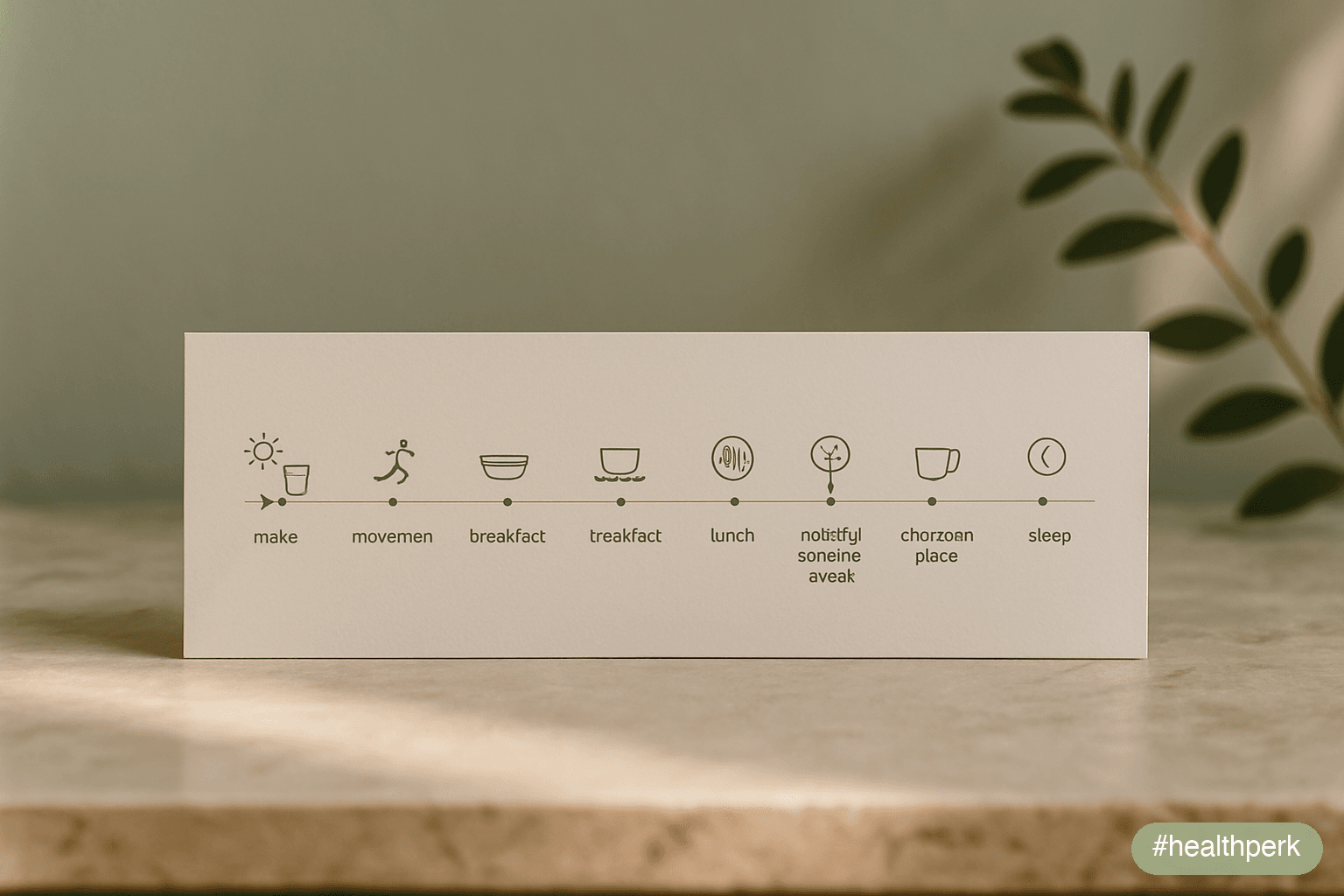
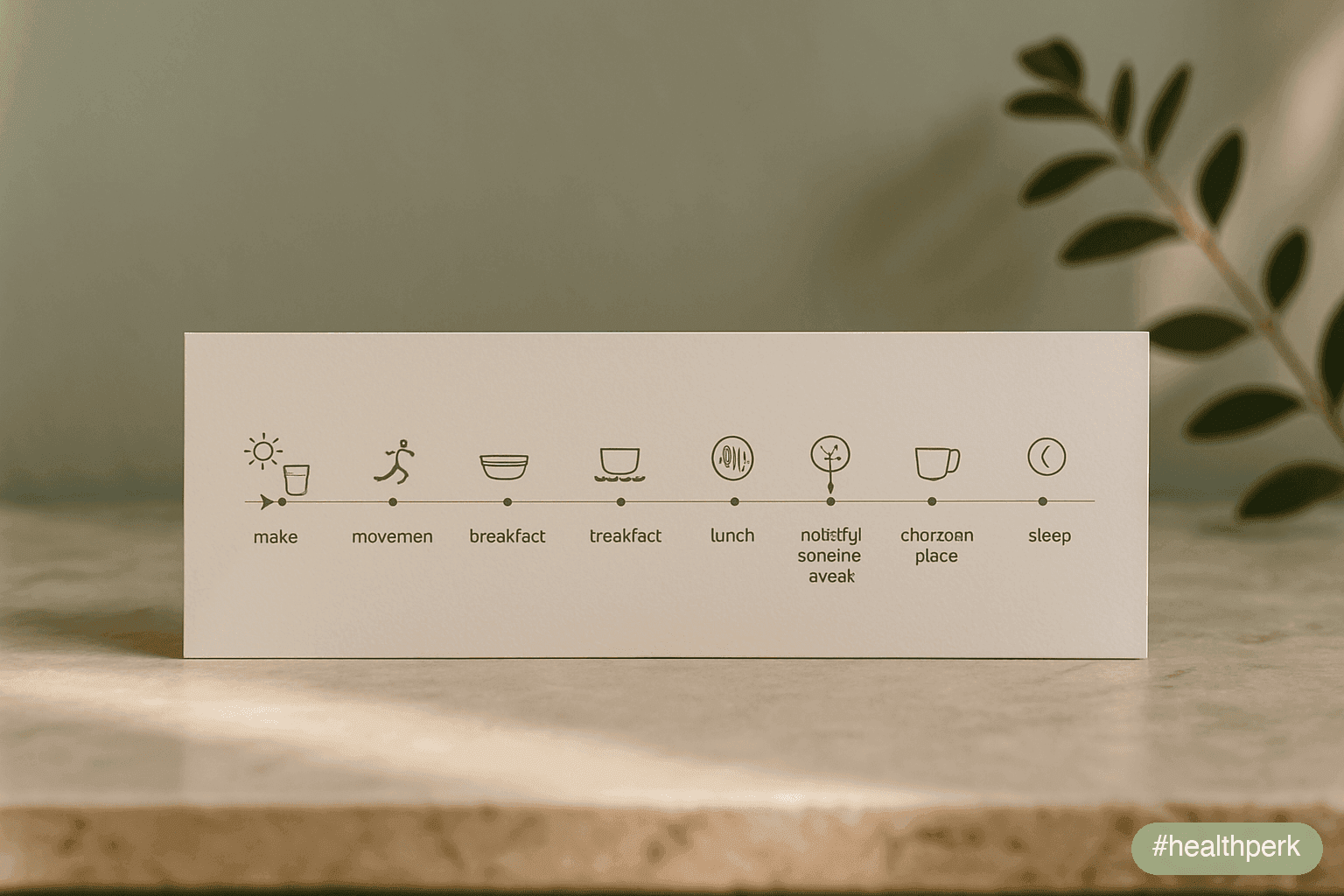
A daily routine to improve energy is the morning routine extended across the day with three additional anchors: midday light, structured caffeine timing, and a wind-down ramp.
Morning anchor (covered above)
Consistent wake time, light within 30 minutes, water, brief movement, protein-anchored breakfast, caffeine 60–90 minutes after waking.
Mid-morning to midday
- First focused work block ~90 minutes after waking, aligned with peak cortisol and post-caffeine alertness.
- A 10-minute outdoor break around midday. Continued light exposure stabilizes the circadian phase and is one of the strongest evidence-based protections against afternoon fatigue (Wright et al., 2013).
- Lunch with a protein anchor and fiber. Carb-dominant lunches are the single most reliable cause of the afternoon energy crash; pair complex carbohydrates with 25–40 g of protein and vegetables.
Afternoon
- Caffeine cutoff 8 hours before target bedtime. Caffeine's half-life is ~5–6 hours; later doses measurably worsen sleep architecture even when they do not delay sleep onset (Drake et al., 2013).
- Brief movement break every 60–90 minutes — a flight of stairs, a 5-minute walk. Restores attentional capacity without sugar or caffeine.
- Avoid high-carb afternoon snacks in the post-lunch window where energy is already vulnerable.
Evening
- Dim and warm the lighting 2–3 hours before bed. Bright overhead lighting in the evening delays melatonin onset by 60–90 minutes; warm, low-level lamps protect the same window (Gooley et al., 2011).
- Earlier, lighter dinner. Late, large meals (within 2–3 hours of sleep) impair sleep quality and morning fasting glucose.
- Wind-down ramp: reading, conversation, gentle stretching, warm shower (the post-shower drop in core temperature is a strong sleep-onset signal).
- Consistent bedtime within ±30 minutes — the night-end anchor that protects the morning anchor.
Habits That Increase Energy Levels: What Compounds Over Weeks
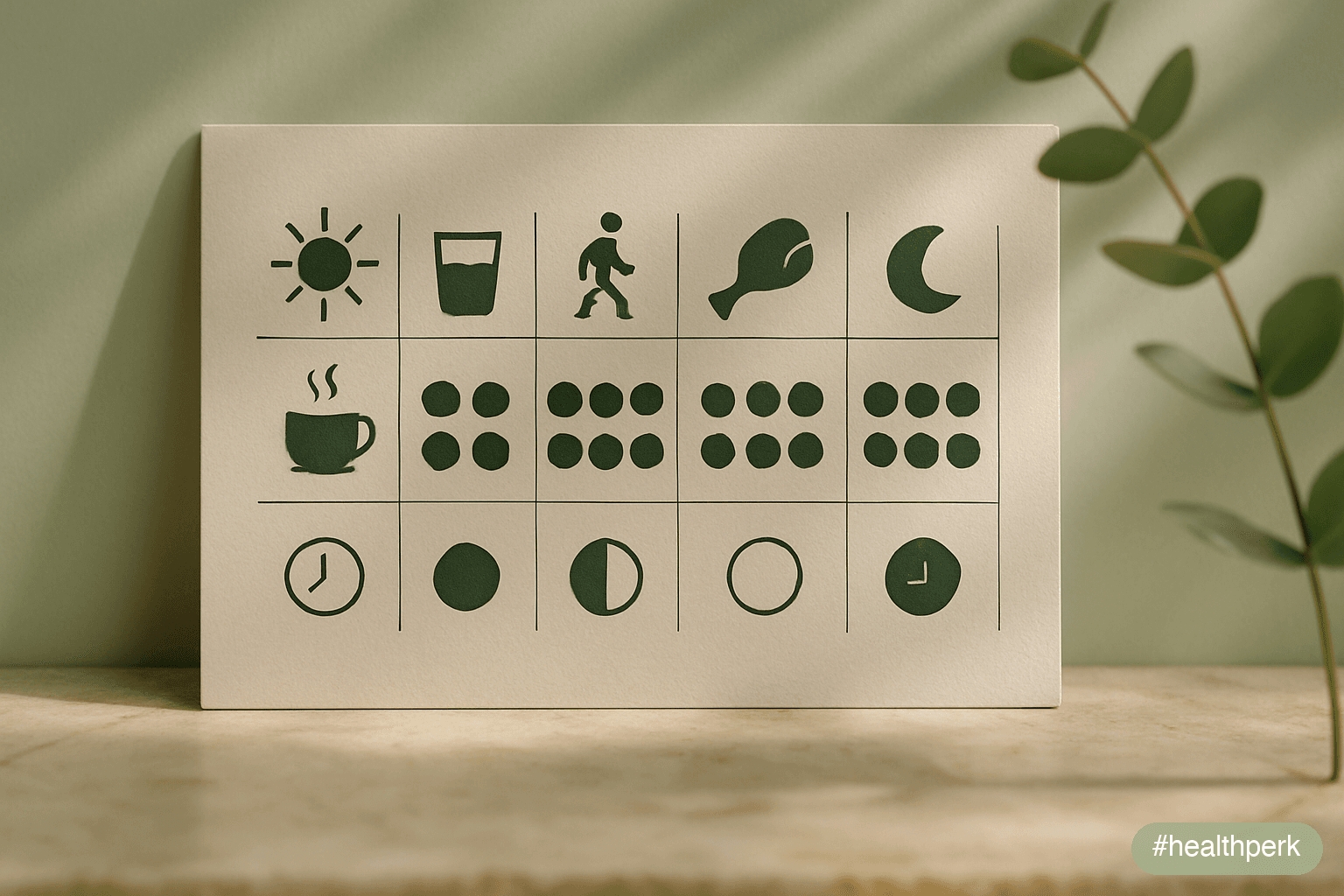
A single perfect morning rarely changes baseline energy. The compounding habits that move it (Wright et al., 2013; Burke et al., 2015; St-Onge et al., 2016):
- Daily morning bright-light exposure (2–10 min outside, every day). Stabilizes the cortisol awakening response and tightens the circadian phase. Effect builds over 2–4 weeks.
- Consistent sleep window. Same wake time on weekends ±60 minutes maximum. Eliminates social jet lag.
- Protein at every meal (25–40 g). Stable glycemia and satiety; reduces between-meal energy dips.
- 30+ grams of fiber per day from whole foods. Slows glucose absorption and supports a gut microbiome associated with stable mood and energy.
- 150–300 minutes per week of moderate aerobic activity plus 2 strength sessions. Increases mitochondrial density and improves sleep architecture (Kredlow et al., 2015).
- Caffeine ≤200 mg per day, all before noon. Maintains adenosine sensitivity; reduces evening sleep impairment.
- Sun-set-aligned wind-down ramp. Dim, warm lighting 2–3 hours before bed; screen brightness down; large doses of bright overhead light off.
- Hydration of 30–35 mL/kg body weight per day, more in heat and exercise.
- Alcohol minimized, especially within 3 hours of bed. Even modest evening alcohol fragments sleep architecture and increases overnight cortisol.
- Daily outdoor exposure even on dim days. Outdoor illuminance is an order of magnitude higher than indoor, regardless of weather.
Track three to five at a time. Twenty-eight days is enough to feel the compounded effect, particularly if the previous baseline was disorganized.
How to Improve Energy Without Supplements
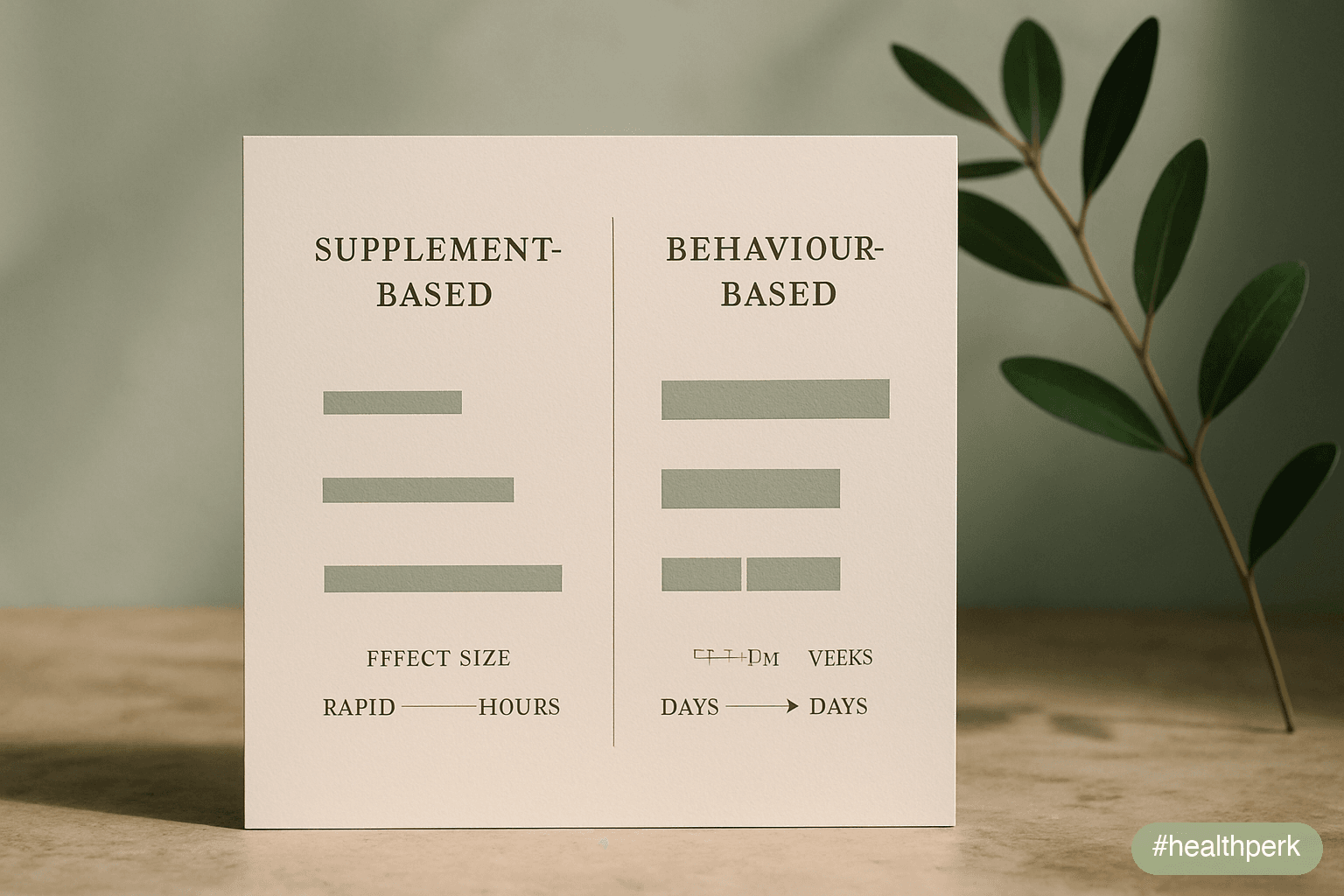
For most adults with persistent low-grade fatigue, the largest sustainable energy gains come from behavior, not pills. The evidence-based levers, ranked by effect size:
- Sleep quantity and consistency. Bringing sleep from 6 hours to 7–8 hours and stabilizing the wake time produces the largest single improvement in subjective energy and cognitive performance.
- Daily morning light. Free, available everywhere, and pharmacologically potent for circadian regulation.
- Protein-anchored meals and steady glycemia. Eliminates the reactive-hypoglycemia tail that drives afternoon fatigue.
- Hydration. Even mild dehydration (1–2% body mass) measurably degrades concentration and effort tolerance.
- Aerobic and resistance exercise. Builds mitochondrial capacity over weeks; acute movement is a fast, reliable energy boost (Loy et al., 2013; Puetz et al., 2008).
- Caffeine timing rather than caffeine amount. Most people drink too early and too late, not too much.
- Evening light and meal timing. The shape of the night dictates the shape of the morning.
- Social contact and outdoor time. Both correlate with energy and mood independent of exercise.
When supplements are genuinely indicated
Iron (in women with low ferritin and heavy periods), B12 (in vegans, older adults, and PPI users), vitamin D (in winter or limited sun exposure), and creatine (well-tolerated, evidence-supported general performance benefit) are the four with the strongest case. None replace the behaviors above.
What is overrated
Generic "energy" blends, adrenal-support proprietary stacks, "detox" products, IV vitamin clinics for healthy adults, and any single supplement promising a transformation in 7 days. Real energy is built; it is not bought.
How to Stay Energized Throughout the Day
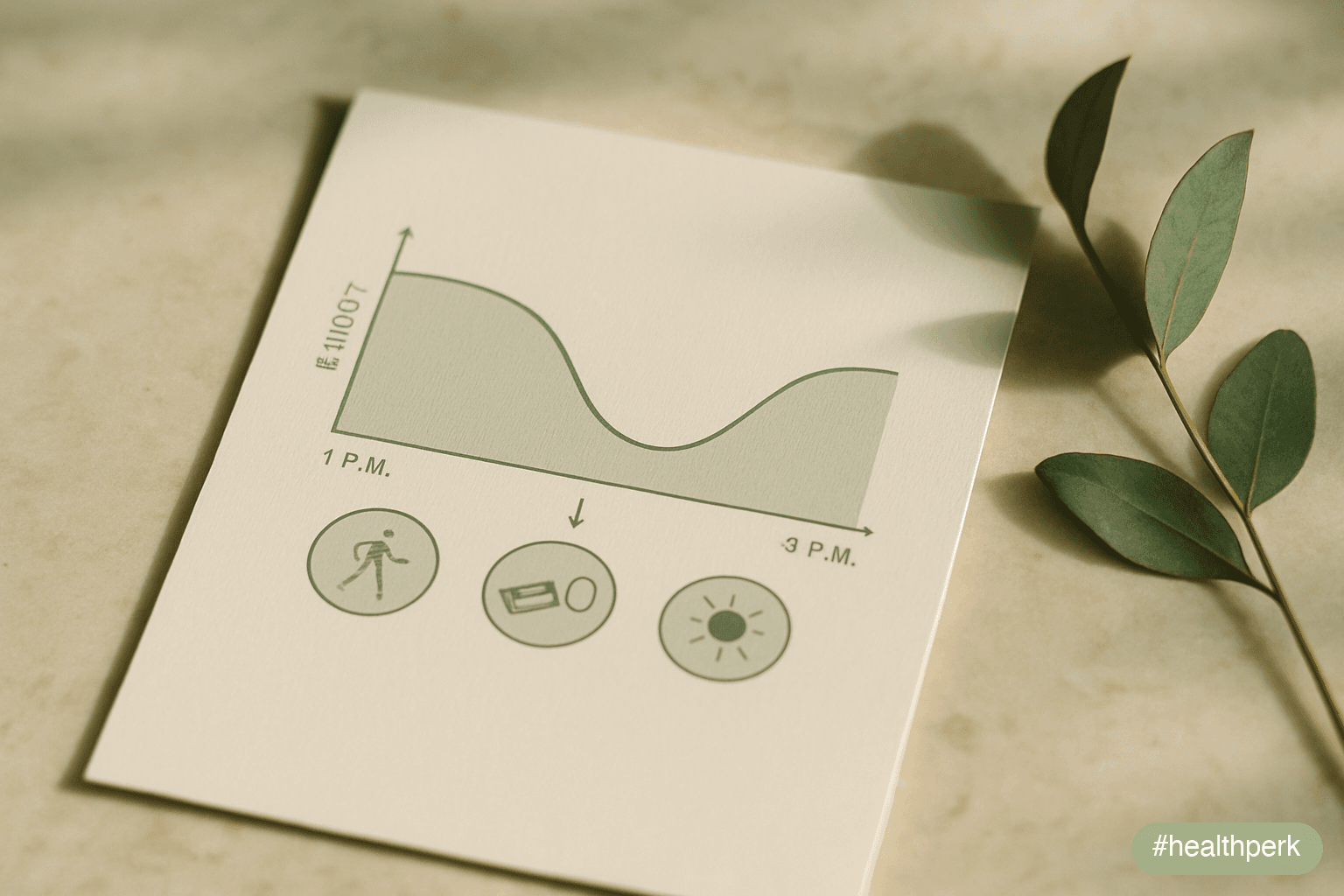
The afternoon dip between roughly 1 and 4 p.m. is a normal circadian feature, not a pathology — but it is amplified by carb-heavy lunches, caffeine misuse, dehydration, and indoor-only days. To stay energized throughout the day:
- Front-load complex carbohydrates earlier in the day, not at lunch. Pair lunch carbs with substantial protein and fiber. A 60–80 g pasta bowl with no protein is the single most reliable crash producer.
- Step outside for 5–10 minutes after lunch. Light plus movement is a non-pharmacological alertness booster better than a second coffee, and it does not impair the evening.
- Use the 90-minute work / 5–10-minute break rhythm. Cognitive performance falls predictably with continuous focus; movement breaks restore it.
- Hydrate proactively. Two 250–500 mL water targets between meals.
- Short power nap (10–20 minutes) before 3 p.m. if available. Longer or later naps degrade nighttime sleep.
- Strategic caffeine, not reactive caffeine. Plan one cup mid-morning, optionally a half cup at lunch. Caffeine after 2 p.m. (or 8 hours before bed) is the wrong tool for an afternoon crash; outdoor light and brief movement are correct.
- Protein-forward afternoon snack (Greek yogurt, nuts, hard-boiled eggs, jerky) if there is a long gap to dinner.
- End the workday with a brief outdoor walk to reinforce circadian timing and offload accumulated stress before the evening.
Best Sleep Habits for Energy: The Night Before Counts More Than the Morning
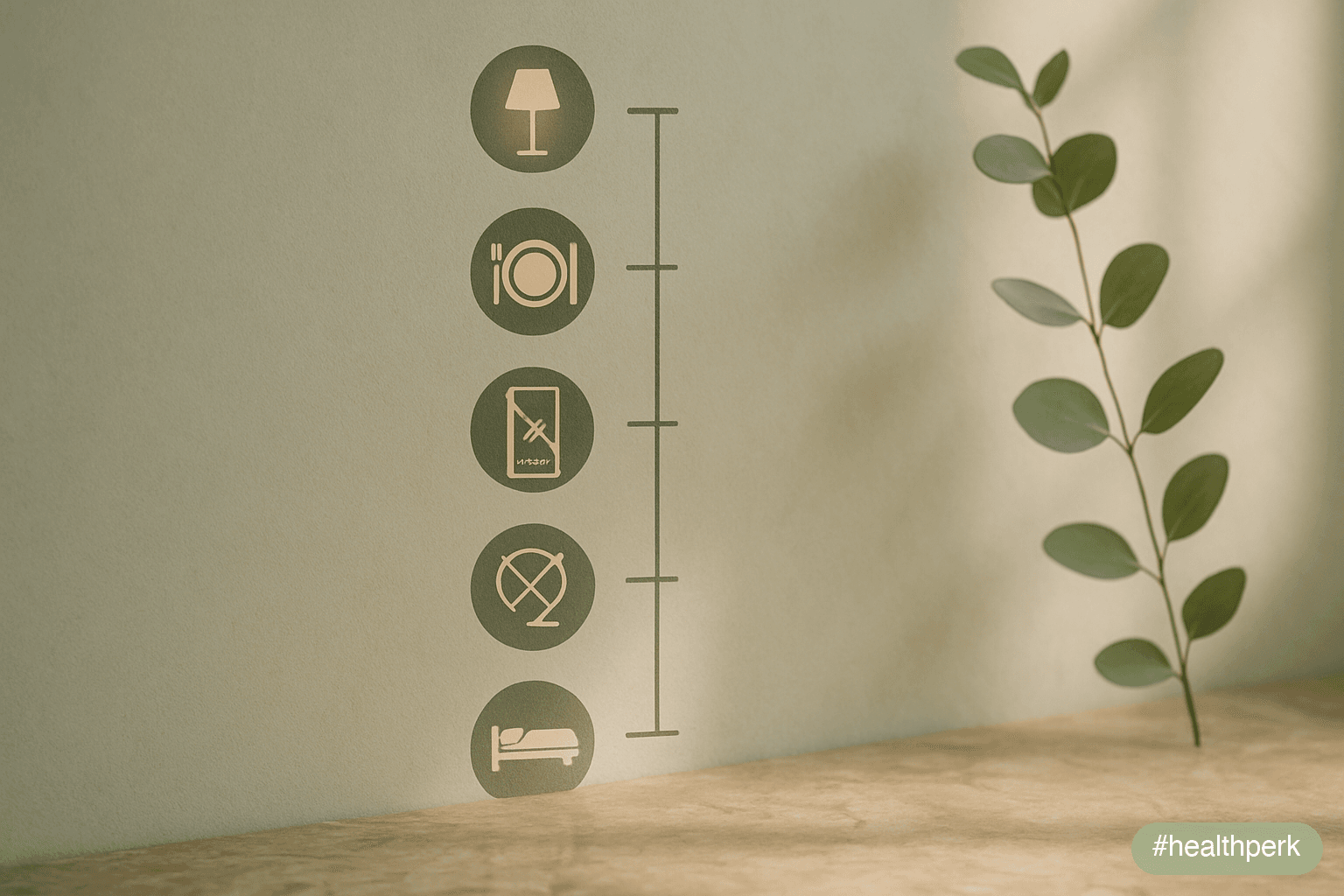
Morning energy is, in large part, an output of last night's sleep. The best sleep habits for energy (St-Onge et al., 2016; Walker, 2017):
- Consistent bedtime and wake time, ±30 minutes daily, weekends included.
- 7–9 hours in bed for most adults (individual genetic short-sleepers exist but are rare).
- Cool, dark, quiet bedroom. 18–20 °C (64–68 °F) is the typical range that supports the overnight core-temperature drop. Blackout curtains and eye masks help in light-polluted environments.
- Bedroom for sleep and intimacy only. No work, no eating, no scrolling in bed.
- Last meal 2–3 hours before bed; modest portions.
- Alcohol minimized within 3 hours of bed. Alcohol sedates but fragments REM and increases overnight heart rate and cortisol.
- Caffeine cutoff at least 8 hours before target bedtime.
- Dim and warm lighting 2–3 hours before bed. Bright overhead light suppresses melatonin onset and pushes circadian timing later (Gooley et al., 2011).
- Wind-down ramp of 30–60 minutes: low-stimulation activity, paper or e-reader rather than phone, warm shower or bath.
- If awake longer than ~20 minutes in the middle of the night, get out of bed and read in dim light until sleepy again — protects bed–sleep association.
- For shift workers or chronic insomnia, see a sleep clinician. Cognitive behavioral therapy for insomnia (CBT-I) is the first-line evidence-based treatment.
A well-shaped night sets a steep cortisol awakening response; that response is then leveraged by the morning routine. The two systems are one system.
Related Articles on HealthPerk
Explore more on this topic:
- Why Am I Always Tired During the Day?
- How to Boost Energy Naturally Without Caffeine
- How to Avoid the Afternoon Energy Crash
- Foods That Boost Energy
- Best Supplements for Energy and Fatigue
Frequently Asked Questions
What is the best morning routine for high energy?
The evidence-based 60-minute sequence: wake at a consistent time, get 2–10 minutes of outdoor light within the first 30 minutes, drink 400–500 mL of water, move for 5–20 minutes at low-to-moderate intensity, eat a protein-anchored breakfast with 25–40 g of protein, and delay the first caffeine until 60–90 minutes after waking. Each element targets a specific physiological lever: light sets the circadian phase, water replaces overnight losses, movement raises core body temperature, protein stabilizes glucose, and delayed caffeine preserves natural adenosine clearance. Done consistently across two to four weeks, the effect on baseline energy is large and durable.
How long does a morning routine for high energy take to work?
Many people notice within the first three to seven days that the morning feels different — faster to clear-headed, less reliance on the first coffee, fewer mid-morning crashes. The deeper benefits — improved sleep onset at night, stable afternoon energy, less weekend recovery debt — typically build over two to four weeks as the cortisol awakening response and circadian phase tighten. If after four weeks of consistent practice fatigue remains severe, the next step is a fatigue workup: ferritin, vitamin B12, vitamin D, thyroid, and a sleep apnea screen.
How do I wake up feeling energized without caffeine?
Outdoor light within the first 30 minutes is the single most powerful intervention, followed by 400–500 mL of water and 5–20 minutes of low-to-moderate movement. These three actions activate the same alertness circuits caffeine targets without the rebound. Consistent wake time and adequate sleep the night before are non-negotiable. If those are in place and morning grogginess persists, look at evening alcohol, late screen use, and bedroom temperature — the morning is almost always a symptom of the previous night.
When should I drink coffee in the morning?
Push the first cup to 60–90 minutes after waking. The first 60–90 minutes of wakefulness involve continued adenosine clearance and a fall in melatonin — the body is already shifting into alertness, and caffeine in this window blunts that natural arc. Delayed caffeine extends the useful duration of the same dose and prevents the typical 11 a.m. crash. Cap caffeine at ≤200 mg per day and finish all caffeine at least 8 hours before bedtime to protect sleep architecture.
What should I eat for breakfast for high energy?
Anchor with 25–40 g of protein and pair with complex carbohydrates and a source of fat. Examples: three eggs with whole-grain toast and avocado; Greek yogurt with berries, nuts, and oats; a protein smoothie with whey or pea protein, banana, peanut butter, and milk; smoked salmon with eggs and tomato. Protein blunts the post-meal glucose curve, sustains satiety until lunch, and supplies tyrosine — the precursor of dopamine. Pastry-only, cereal-only, or juice-only starts produce a glucose spike and a reactive trough within 90–120 minutes.
Do I need to wake up at 5 a.m.?
No. The benefits of a morning routine for high energy come from consistency and the first-hour sequence, not from an early wake time. A consistent 7 a.m. wake works as well as a consistent 5 a.m. wake, provided sleep duration is adequate. Forcing an early wake at the cost of sleep duration is counterproductive — the cortisol awakening response is blunted by insufficient sleep, and the morning routine then has nothing to leverage. Optimize the wake time for your sleep window, not for an aesthetic.
What are the best sleep habits for energy?
Consistent bedtime and wake time within ±30 minutes daily, 7–9 hours in bed for most adults, a cool dark quiet bedroom (18–20 °C), the last meal 2–3 hours before bed, alcohol minimized close to bed, caffeine cutoff 8 hours before bed, dim and warm lighting in the 2–3 hours pre-sleep, and a 30–60 minute wind-down ramp without phones in bed. Cognitive behavioral therapy for insomnia (CBT-I) is the first-line treatment for chronic insomnia. Sleep is the foundation of every daytime energy strategy.
How do I stay energized throughout the day at a desk job?
Front-load complex carbs earlier in the day, anchor lunch with protein and vegetables rather than a large bowl of pasta or rice, step outside for 5–10 minutes after lunch, hydrate proactively (two 250–500 mL water targets between meals), and use a 90-minute work / 5–10-minute movement break rhythm. A short 10–20 minute nap before 3 p.m. is a powerful and underused tool when available. Avoid afternoon caffeine — outdoor light and brief movement are the right response to the 1–4 p.m. dip.
This article is for informational purposes only and does not constitute medical advice. Persistent fatigue that does not improve with consistent sleep, light, hydration, and balanced meals over four weeks deserves a medical workup, including ferritin, vitamin B12, vitamin D, thyroid function, and sleep apnea screening. Consult a qualified healthcare provider before making significant changes to medication, supplementation, diet, or exercise, especially if you are pregnant or breastfeeding, have cardiovascular disease, diabetes, or another chronic medical condition, or take prescription medications. Individual results may vary.
About the author The HealthPerk Editorial Team reviews internal-medicine, sleep medicine, chronobiology, and nutrition literature through evidence synthesis cross-referenced with peer-reviewed clinical trials and current professional-society guidelines. How we review →
References
Clow, A., Hucklebridge, F., Stalder, T., Evans, P., & Thorn, L. (2010). The cortisol awakening response: more than a measure of HPA axis function. Neuroscience & Biobehavioral Reviews, 35(1), 97–103. https://doi.org/10.1016/j.neubiorev.2009.12.011
Supports: cortisol awakening response physiology and its role in morning alertness
Blume, C., Garbazza, C., & Spitschan, M. (2019). Effects of light on human circadian rhythms, sleep and mood. Somnologie, 23(3), 147–156. https://doi.org/10.1007/s11818-019-00215-x
Supports: morning bright light, circadian phase advancement, mood and alertness
Wright, K. P., McHill, A. W., Birks, B. R., Griffin, B. R., Rusterholz, T., & Chinoy, E. D. (2013). Entrainment of the human circadian clock to the natural light-dark cycle. Current Biology, 23(16), 1554–1558. https://doi.org/10.1016/j.cub.2013.06.039
Supports: outdoor light exposure shifts and sharpens circadian timing
Drake, C., Roehrs, T., Shambroom, J., & Roth, T. (2013). Caffeine effects on sleep taken 0, 3, or 6 hours before going to bed. Journal of Clinical Sleep Medicine, 9(11), 1195–1200. https://doi.org/10.5664/jcsm.3170
Supports: caffeine half-life and pre-bed cutoff rationale
Burke, L. M., Hawley, J. A., Wong, S. H. S., & Jeukendrup, A. E. (2015). Carbohydrates for training and competition. In Sports Nutrition (ed. Maughan). Wiley/IOC. https://doi.org/10.1002/9781118692318
Supports: macronutrient pacing and post-meal glucose dynamics
Wittmann, M., Dinich, J., Merrow, M., & Roenneberg, T. (2006). Social jetlag: misalignment of biological and social time. Chronobiology International, 23(1–2), 497–509. https://doi.org/10.1080/07420520500545979
Supports: variable wake times degrade weekday energy and alertness
Gooley, J. J., Chamberlain, K., Smith, K. A., Khalsa, S. B., Rajaratnam, S. M., Van Reen, E., Zeitzer, J. M., Czeisler, C. A., & Lockley, S. W. (2011). Exposure to room light before bedtime suppresses melatonin onset and shortens melatonin duration in humans. Journal of Clinical Endocrinology & Metabolism, 96(3), E463–E472. https://doi.org/10.1210/jc.2010-2098
Supports: bright evening light suppresses melatonin and pushes the circadian phase later
St-Onge, M. P., Grandner, M. A., Brown, D., Conroy, M. B., Jean-Louis, G., Coons, M., & Bhatt, D. L. (2016). Sleep duration and quality: impact on lifestyle behaviors and cardiometabolic health: a scientific statement from the American Heart Association. Circulation, 134(18), e367–e386. https://doi.org/10.1161/CIR.0000000000000444
Supports: sleep duration recommendations and cardiometabolic effects of insufficient sleep
Kredlow, M. A., Capozzoli, M. C., Hearon, B. A., Calkins, A. W., & Otto, M. W. (2015). The effects of physical activity on sleep: a meta-analytic review. Journal of Behavioral Medicine, 38(3), 427–449. https://doi.org/10.1007/s10865-015-9617-6
Supports: regular exercise improves sleep architecture and downstream energy
Loy, B. D., O'Connor, P. J., & Dishman, R. K. (2013). The effect of a single bout of exercise on energy and fatigue states: a systematic review and meta-analysis. Fatigue: Biomedicine, Health & Behavior, 1(4), 223–242. https://doi.org/10.1080/21641846.2013.843266
Supports: acute exercise reliably increases subjective energy and reduces fatigue
- Puetz, T. W., Flowers, S. S., & O'Connor, P. J. (2008). A randomized controlled trial of the effect of aerobic exercise training on feelings of energy and fatigue in sedentary young adults with persistent fatigue. Psychotherapy and Psychosomatics, 77(3), 167–174. https://doi.org/10.1159/000116610
Supports: aerobic training increases energy and reduces fatigue over weeks
- Walker, M. P. (2017). Why We Sleep: Unlocking the Power of Sleep and Dreams. Scribner.
Supports: integrative summary of sleep–energy biology and behavioral recommendations
Frequently Asked Questions
What is the best morning routine for high energy?
The evidence-based 60-minute sequence: wake at a consistent time, get 2–10 minutes of outdoor light within the first 30 minutes, drink 400–500 mL of water, move for 5–20 minutes at low-to-moderate intensity, eat a protein-anchored breakfast with 25–40 g of protein, and delay the first caffeine until 60–90 minutes after waking. Each element targets a specific physiological lever: light sets the circadian phase, water replaces overnight losses, movement raises core body temperature, protein stabilizes glucose, and delayed caffeine preserves natural adenosine clearance. Done consistently across two to four weeks, the effect on baseline energy is large and durable.
How long does a morning routine for high energy take to work?
Many people notice within the first three to seven days that the morning feels different — faster to clear-headed, less reliance on the first coffee, fewer mid-morning crashes. The deeper benefits — improved sleep onset at night, stable afternoon energy, less weekend recovery debt — typically build over two to four weeks as the cortisol awakening response and circadian phase tighten. If after four weeks of consistent practice fatigue remains severe, a fatigue workup is appropriate: ferritin, vitamin B12, vitamin D, thyroid, and a sleep apnea screen.
How do I wake up feeling energized without caffeine?
Outdoor light within the first 30 minutes is the single most powerful intervention, followed by 400–500 mL of water and 5–20 minutes of low-to-moderate movement. These three actions activate the same alertness circuits caffeine targets without the rebound. Consistent wake time and adequate sleep the night before are non-negotiable. If those are in place and morning grogginess persists, look at evening alcohol, late screen use, and bedroom temperature — the morning is almost always a symptom of the previous night.
When should I drink coffee in the morning?
Push the first cup to 60–90 minutes after waking. The first 60–90 minutes of wakefulness involve continued adenosine clearance and a fall in melatonin — the body is already shifting into alertness, and caffeine in this window blunts that natural arc. Delayed caffeine extends the useful duration of the same dose and prevents the typical 11 a.m. crash. Cap caffeine at ≤200 mg per day and finish all caffeine at least 8 hours before bedtime to protect sleep architecture.
What should I eat for breakfast for high energy?
Anchor with 25–40 g of protein and pair with complex carbohydrates and a source of fat. Examples: three eggs with whole-grain toast and avocado; Greek yogurt with berries, nuts, and oats; a protein smoothie with whey or pea protein, banana, peanut butter, and milk; smoked salmon with eggs and tomato. Protein blunts the post-meal glucose curve, sustains satiety until lunch, and supplies tyrosine — the precursor of dopamine. Pastry-only, cereal-only, or juice-only starts produce a glucose spike and a reactive trough within 90–120 minutes.
Do I need to wake up at 5 a.m.?
No. The benefits of a morning routine for high energy come from consistency and the first-hour sequence, not from an early wake time. A consistent 7 a.m. wake works as well as a consistent 5 a.m. wake, provided sleep duration is adequate. Forcing an early wake at the cost of sleep duration is counterproductive — the cortisol awakening response is blunted by insufficient sleep, and the morning routine then has nothing to leverage. Optimize the wake time for your sleep window, not for an aesthetic.
What are the best sleep habits for energy?
Consistent bedtime and wake time within ±30 minutes daily, 7–9 hours in bed for most adults, a cool dark quiet bedroom (18–20 °C), the last meal 2–3 hours before bed, alcohol minimized close to bed, caffeine cutoff 8 hours before bed, dim and warm lighting in the 2–3 hours pre-sleep, and a 30–60 minute wind-down ramp without phones in bed. Cognitive behavioral therapy for insomnia (CBT-I) is the first-line treatment for chronic insomnia. Sleep is the foundation of every daytime energy strategy.
How do I stay energized throughout the day at a desk job?
Front-load complex carbs earlier in the day, anchor lunch with protein and vegetables rather than a large bowl of pasta or rice, step outside for 5–10 minutes after lunch, hydrate proactively (two 250–500 mL water targets between meals), and use a 90-minute work / 5–10-minute movement break rhythm. A short 10–20 minute nap before 3 p.m. is a powerful and underused tool when available. Avoid afternoon caffeine — outdoor light and brief movement are the right response to the 1–4 p.m. dip.
More from Supplements