How to Improve Sleep Quality Naturally: Evidence-Based Methods That Work in 2026
How to Improve Sleep Quality Naturally: Evidence-Based Methods That Work in 2026
By the HealthPerk Editorial Team · Last updated: May 2026
Quick Answer
What is the most effective way to improve sleep quality naturally?
A consistent wake time anchored within ±30 minutes daily — combined with morning light exposure, an evening temperature drop, and a wind-down routine — improves objective sleep efficiency by 10–20% in clinical trials and outperforms most over-the-counter sleep aids.
Based on your situation, here's where to start:
| If you… | Best option |
|---|---|
| Fall asleep fine but wake up unrefreshed | Fixed wake time + 10 minutes of morning sunlight within 30 minutes of waking |
| Lie awake for 30+ minutes before sleep | Cool the bedroom to 18–19°C and stop screens 60 minutes before bed |
| Feel your "deep sleep" is too low on your tracker | Aerobic exercise 4+ hours before bed; avoid alcohol within 3 hours |
| Want to stop relying on sleep aids | 4-week sleep hygiene reset with stimulus-control rules in bed |
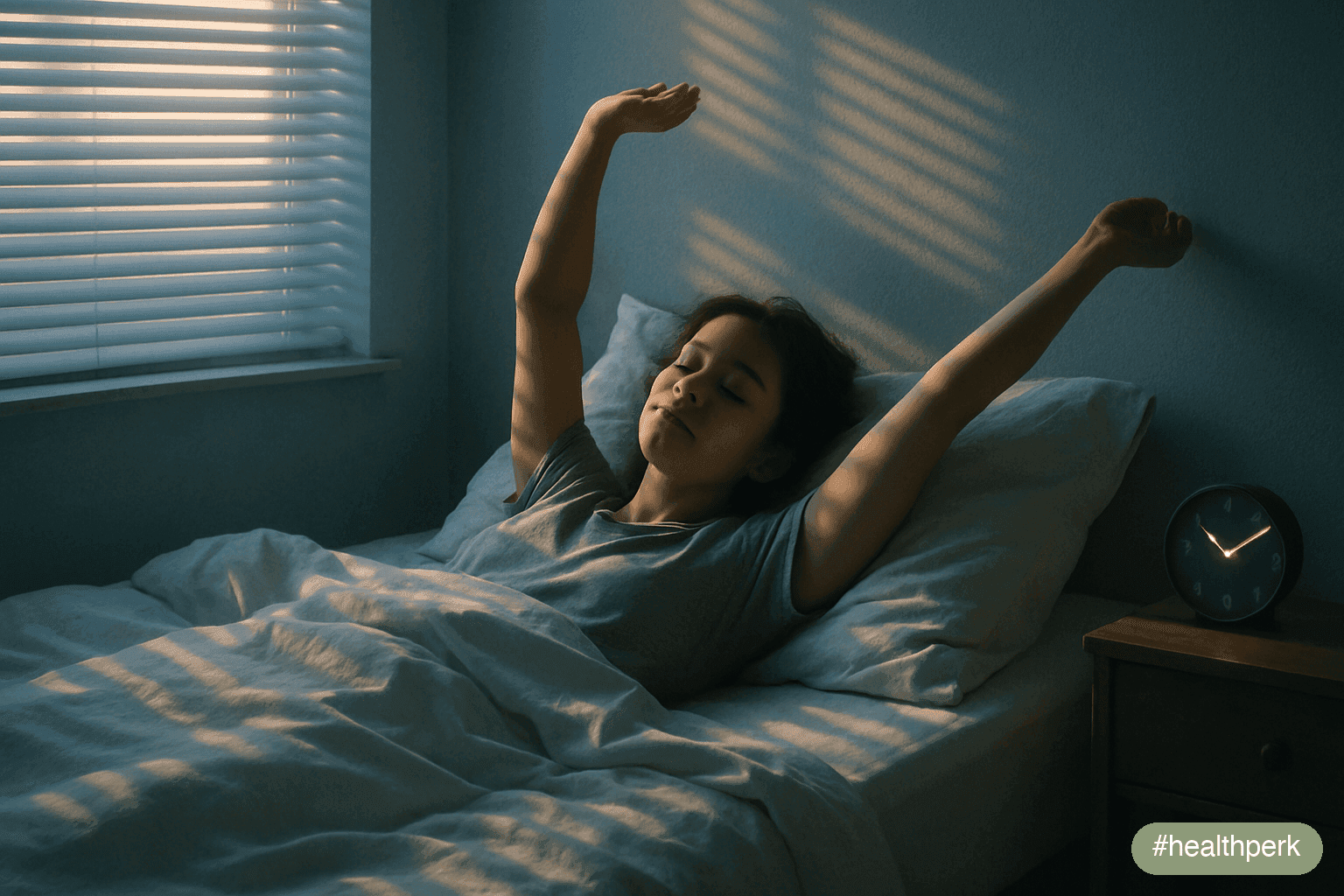
Wide horizontal photo of a person waking peacefully in a dim, cool bedroom at dawn, soft natural light through blinds, alarm clock on the nightstand showing 6:45 — illustrating how to improve sleep quality naturally with consistent wake time and morning light exposure.
You set the alarm for seven hours. You hit it. You still feel like you slept in the back of a car. If you are searching for how to improve sleep quality naturally, you have likely realized that hours-in-bed is not the variable that determines how you feel — sleep architecture is. The Centers for Disease Control reports that more than one in three U.S. adults regularly sleep fewer than the recommended seven hours, and an even larger share gets enough hours but wakes unrested (CDC, 2022).
The good news: most of what determines sleep quality is not genetic or fixed. Circadian timing, evening behavior, light exposure, and stimulus control account for the majority of variance in subjective and objective sleep metrics. This guide examines the evidence behind each lever, with concrete protocols you can begin tonight. Whether you are just noticing signs of poor sleep quality, or you have been chasing the elusive "deep sleep" number on a wearable for months, the methods here target the underlying physiology — not the symptoms.
Table of Contents
- Signs of Poor Sleep Quality: Poor Sleep Quality Symptoms to Recognize
- How to Measure Sleep Quality: What Actually Matters
- How to Improve Sleep Hygiene Habits: The Foundation
- How to Sleep Deeper at Night Naturally: Raising Deep Sleep Percentage
- How to Get Better Sleep Without Pills: Replacing Sleep Aids Safely
- A 4-Week Protocol to Reset Sleep Quality
- Frequently Asked Questions
- References
Signs of Poor Sleep Quality: Poor Sleep Quality Symptoms to Recognize
Candid photo of a woman in her 30s rubbing her eyes at a sunlit office desk, a cooling cup of coffee beside her laptop — illustrating signs of poor sleep quality such as morning grogginess and daytime fatigue.
Most people equate sleep problems with insomnia — long minutes staring at the ceiling. But the most common signs of poor sleep quality show up after the night ends, not during it. Poor sleep quality symptoms in adults are often easier to detect in daytime behavior than in nighttime experience:
- Sleep inertia past 30 minutes. Grogginess that persists more than half an hour after waking — even with seven hours in bed — is one of the most reliable indicators of fragmented or shallow sleep (Hilditch & McHill, 2019).
- Need for caffeine to function before noon. Healthy adults can function for 3–4 hours after waking before they perceive a stimulant need; reaching for coffee within 30 minutes typically reflects accumulated sleep debt or low slow-wave sleep.
- Afternoon crash between 14:00 and 16:00. The post-lunch dip is normal; complete cognitive collapse is not. Severe afternoon sleepiness in well-rested adults is unusual and points to poor overnight recovery.
- Microsleeps during low-stimulation tasks — drifting off in meetings, missing exits while driving, re-reading the same paragraph. The American Academy of Sleep Medicine treats these as objective markers of sleep deprivation regardless of self-reported hours.
- Mood reactivity and irritability. A 2019 review in Nature Reviews Neuroscience found that sleep loss amplifies amygdala reactivity by 60% and weakens prefrontal regulation, producing emotional volatility disproportionate to triggers (Walker, 2019).
- Frequent illness or slow recovery. Sleep efficiency below 85% is associated with a roughly 4x increase in susceptibility to viral upper respiratory infection (Prather et al., 2015).
- Weight gain despite stable diet. Short sleep duration elevates ghrelin (hunger hormone) and reduces leptin (satiety hormone), driving an average of +385 kcal/day in increased intake (St-Onge et al., 2016).
If three or more of these patterns describe your last two weeks, the issue is sleep quality — not sleep quantity — and the rest of this guide is calibrated for that.
How to Measure Sleep Quality: What Actually Matters
Flat-lay photo of a smartphone displaying a sleep-tracker app dashboard with sleep efficiency, deep sleep percentage, and wake-after-sleep-onset metrics, beside a notebook and pen — illustrating how to measure sleep quality using objective and subjective markers.
Before changing anything, you need to know what to track. How to measure sleep quality comes down to four metrics — three objective, one subjective — that together explain most of how rested you actually feel.
Sleep efficiency
The percentage of time in bed actually spent asleep. Healthy adults run at 85–95%. Below 80% indicates either initiation problems (long sleep latency) or maintenance problems (fragmentation). This is the single most informative number on a wearable.
Sleep onset latency
How long it takes to fall asleep after lights out. Normal range: 5–20 minutes. Below 5 minutes consistently is a sign of sleep deprivation, not "good" sleep. Above 30 minutes is the diagnostic threshold for insomnia symptoms when persistent.
Wake after sleep onset (WASO)
Total minutes awake during the night after first falling asleep. Under 20 minutes for adults is excellent; over 40 minutes is fragmented. WASO predicts daytime fatigue more reliably than total sleep time in most population studies.
Subjective restoration
A 1–10 score on waking: "How rested do I feel?" Tracked daily for two weeks, this captures what objective metrics miss. Consumer wearables (Oura, Whoop, Apple Watch, Garmin) approximate the above objective metrics within 10–15% accuracy versus polysomnography for healthy adults (de Zambotti et al., 2024), which is enough to detect trends — though not enough to diagnose specific stage durations on any single night.
A useful baseline: log all four metrics for 14 days before changing anything. The variability between your good and bad nights is more informative than the average.
How to Improve Sleep Hygiene Habits: The Foundation
Photo of a tidy bedroom in the evening with warm-toned lamp light, blackout curtains drawn, a small thermometer reading 18°C, and a book on the nightstand instead of a phone — illustrating how to improve sleep hygiene habits with environment optimization.
How to improve sleep hygiene habits is the most studied — and most underused — intervention for sleep quality. Sleep hygiene is not a single behavior; it is a set of environmental and behavioral defaults that align your physiology with the sleep window you want.
Fix wake time, not bedtime
A consistent wake time anchors the circadian clock more reliably than a consistent bedtime. The body's drive to sleep accumulates from when you woke up, not from when you tried to sleep last night. Within ±30 minutes daily, including weekends, produces measurable improvement in sleep onset latency within 1–2 weeks (Phillips et al., 2017).
Morning light within 30 minutes of waking
10 minutes of outdoor light (or 30 minutes through a window) within half an hour of waking advances melatonin onset by 1–3 hours and improves nighttime sleep depth (Wright et al., 2013). On cloudy days, outdoor light still delivers 5,000–10,000 lux — versus 300–500 lux from indoor lighting. This single behavior change has one of the highest effect-to-effort ratios in sleep science.
Cool the bedroom
Core body temperature must drop approximately 1°C for deep sleep to consolidate. Bedrooms above 21°C suppress slow-wave sleep; 18–19°C is the consensus optimal range for most adults (Okamoto-Mizuno & Mizuno, 2012). A warm shower 60–90 minutes before bed accelerates the post-shower temperature drop and reduces sleep onset latency by an average of 10 minutes (Haghayegh et al., 2019).
Stimulus control: protect the bed
Use the bed only for sleep and sex. If awake longer than 20 minutes, leave the bed and return only when sleepy. This breaks the conditioned association between bed and wakefulness — the core mechanism of cognitive behavioral therapy for insomnia (CBT-I), which outperforms sleep medications in 4-month and 12-month follow-up trials (Mitchell et al., 2012).
Evening screen and light hygiene
Reduce light exposure (especially short-wavelength blue light) for 60 minutes before bed. The effect of evening light on melatonin is dose-dependent — even modest reductions matter. Blue-light-blocking glasses produce small improvements when bright screens cannot be avoided, but reducing screen brightness and switching to warm-color modes has comparable effect at no cost.
Caffeine and alcohol cutoffs
Caffeine has a 5–7 hour half-life; a 14:00 coffee still has 25% of its dose active at 22:00 in a typical metabolizer. Cutoff guideline: 8–10 hours before target sleep time. Alcohol shortens sleep onset but fragments the second half of the night and suppresses REM by 9–24% (Ebrahim et al., 2013). For sleep quality, no alcohol within 3 hours of bed is the practical threshold.
How to Sleep Deeper at Night Naturally: Raising Deep Sleep Percentage
Illustration of a typical adult sleep architecture hypnogram across one night showing alternating REM and non-REM stages, with deep slow-wave sleep concentrated in the first third — illustrating how to sleep deeper at night naturally by protecting early-night deep sleep windows.
Deep sleep — technically N3, or slow-wave sleep — typically accounts for 13–23% of total sleep time in healthy adults, concentrated in the first third of the night. Trackers that show "deep sleep" hours give a reasonable approximation. Here is how to sleep deeper at night naturally and what actually moves the needle on how to improve deep sleep percentage.
Move earlier in the day
Aerobic exercise increases slow-wave sleep that night, with the strongest effect when completed 4–8 hours before sleep (Kredlow et al., 2015). Vigorous exercise within 1 hour of bed elevates core temperature and sympathetic tone, which can offset the benefit; resistance training is less time-sensitive.
Protect the first three hours
Most slow-wave sleep occurs in the first 90–180 minutes after sleep onset. Anything that fragments this window — late alcohol, late meals, a noisy environment, a partner's snoring — disproportionately cuts deep sleep. Going to bed slightly earlier on nights you need extra recovery is more effective than sleeping later in the morning.
Cool the environment more aggressively for deep sleep
The temperature threshold for slow-wave sleep is lower than for sleep maintenance generally. If your tracker shows poor deep sleep but normal total sleep, dropping the room from 20°C to 18°C is one of the most effective single changes you can make.
Skip late alcohol
The most reliable suppressor of deep sleep in healthy people. Even one drink within 3 hours of bed measurably reduces N3 and REM proportions and increases mid-night awakenings on consumer trackers and polysomnography alike.
Limit late carb-heavy meals — but do not skip dinner
Heavy meals within 2 hours of bed disrupt deep sleep through digestion-driven temperature elevation and gastroesophageal reflux. But going to bed hungry also fragments sleep. A light protein-and-complex-carb snack 60–90 minutes before bed (yogurt with oats, a slice of turkey with whole-grain toast) supports deep sleep in chronic light eaters.
Treat snoring and breathing disruption
If your tracker shows you "got enough hours" but deep sleep is consistently below 10%, suspect breathing disruption. Obstructive sleep apnea fragments deep sleep heavily even when the person is unaware of waking. Loud snoring, witnessed apneas, or morning headaches warrant evaluation — modern home sleep tests are cheap, easy, and identify a condition that affects an estimated 30 million U.S. adults, the majority undiagnosed (Benjafield et al., 2019).
How to Get Better Sleep Without Pills: Replacing Sleep Aids Safely
Overhead photo of a nightstand with a small chamomile tea cup, a pair of earplugs, a sleep mask, and a paperback book — no pill bottles visible — illustrating how to get better sleep without pills using behavioral and environmental tools.
Sleep medications work in the short term but rarely produce satisfying long-term outcomes. Over-the-counter sleep aids (diphenhydramine, doxylamine) cause next-day cognitive impairment and tolerance within 3–5 nights. Prescription Z-drugs (zolpidem, eszopiclone) carry dependence and complex-behavior risks. Melatonin has a modest effect on circadian timing but only a small effect on sleep maintenance — and most commercial doses are 5–25x higher than physiologically active levels.
How to get better sleep without pills ultimately rests on one well-validated approach: cognitive behavioral therapy for insomnia (CBT-I), which has been the recommended first-line treatment for chronic insomnia in adults per the American College of Physicians since 2016 (Qaseem et al., 2016) and remains so in current 2026 guidelines. Multiple meta-analyses including the 2019 review by van Straten et al. show CBT-I produces effect sizes of 0.78–0.98 for sleep maintenance and onset, larger than benzodiazepines or Z-drugs, and the benefits persist at 12-month follow-up while medication benefits fade.
CBT-I has five components, all of which can be self-administered:
- Stimulus control — leave the bed when not sleepy, as described above
- Sleep restriction — temporarily compressing time in bed to match actual sleep time, raising sleep pressure
- Cognitive restructuring — identifying and challenging catastrophic thoughts about sleep loss
- Sleep hygiene — the environment and behavior set covered above
- Relaxation training — paced breathing, progressive muscle relaxation, body scan
Digital CBT-I programs (Sleepio, Somryst, CBT-i Coach) deliver the protocol via app with comparable efficacy to in-person therapy in most trials. The trade-off versus pills: CBT-I requires 4–8 weeks to produce its full effect, while pills work the first night. For chronic poor sleep, the long-term outcome is decisively better with CBT-I, and tapering existing sleep medications is best done in coordination with the prescribing clinician — abrupt discontinuation of benzodiazepines or Z-drugs after long-term use can produce rebound insomnia worse than the original problem.
A 4-Week Protocol to Reset Sleep Quality
Infographic timeline showing Week 1 baseline tracking, Week 2 light + temperature interventions, Week 3 stimulus control, Week 4 deep-sleep optimization — illustrating a structured protocol to improve sleep quality naturally.
If you want a single sequenced plan rather than a menu, here is the order in which the evidence-based methods produce the most reliable results.
Week 1 — Measure. Pick a fixed wake time. Track sleep efficiency, sleep onset latency, WASO, and subjective restoration daily. Change nothing else. The baseline tells you which lever to pull.
Week 2 — Light and temperature. 10 minutes outdoor light within 30 minutes of waking. Bedroom cooled to 18–19°C. Warm shower 60–90 minutes before bed. Screen brightness lowered after sunset.
Week 3 — Stimulus control and substance cutoffs. Caffeine cutoff 8 hours before bed. No alcohol within 3 hours of bed. If awake in bed longer than 20 minutes, leave the bed; return only when sleepy. Use the bed only for sleep and sex.
Week 4 — Deep sleep optimization. Schedule aerobic exercise 4–8 hours before sleep, 3–4 sessions of 30 minutes. Light protein-and-complex-carb snack 60–90 minutes before bed if you wake hungry. Re-evaluate metrics versus Week 1 baseline.
Most adults see sleep efficiency rise by 5–15 percentage points and subjective restoration improve by 2–3 points on the 1–10 scale within four weeks. If metrics have not changed and you have implemented all elements consistently, the next step is professional evaluation — primary care for thyroid and ferritin panels, sleep medicine for suspected apnea or circadian rhythm disorders.
Related Articles on HealthPerk
Explore more on this topic:
- How to Fall Asleep Faster Without Medication
- How to Stay Asleep All Night Naturally
- Why Am I Tired After Sleeping 8 Hours?
- Best Supplements for Sleep Without Melatonin
Frequently Asked Questions
How can I improve my sleep quality naturally without medication?
A fixed wake time, 10 minutes of morning outdoor light, a bedroom cooled to 18–19°C, no caffeine within 8 hours of bed, and no alcohol within 3 hours of bed improve sleep quality in most adults within 2–3 weeks. For persistent poor sleep, digital CBT-I programs (Sleepio, Somryst) produce effect sizes of 0.78–0.98 — larger than prescription sleep medications — with effects that persist at 12-month follow-up (van Straten et al., 2018).
What are the most common signs of poor sleep quality?
Daytime grogginess lasting more than 30 minutes after waking, a need for caffeine before noon, severe afternoon cognitive collapse, microsleeps during low-stimulation tasks, irritability disproportionate to triggers, and frequent minor illnesses. Poor sleep quality symptoms tend to be more visible in daytime function than in nighttime experience. A 2015 study found that sleep efficiency below 85% increased viral infection susceptibility roughly fourfold (Prather et al., 2015).
How do I measure my sleep quality accurately at home?
Track four metrics for at least 14 days: sleep efficiency (% of time in bed spent asleep, target 85–95%), sleep onset latency (target 5–20 minutes), wake after sleep onset (target under 20 minutes), and subjective restoration (1–10 score on waking). Consumer wearables — Oura, Whoop, Apple Watch, Garmin — approximate these within 10–15% of polysomnography for healthy adults (de Zambotti et al., 2024).
How can I increase my deep sleep percentage?
Aerobic exercise 4–8 hours before bed, room temperature of 18°C or lower, no alcohol within 3 hours of bed, and protecting the first three hours of sleep from disruption have the largest effects on slow-wave sleep. If deep sleep stays under 10% despite these changes, evaluate for sleep-disordered breathing — undiagnosed obstructive sleep apnea is the most common silent cause of low deep sleep in adults (Benjafield et al., 2019).
Is it possible to sleep deeper at night naturally without supplements?
Yes. The largest naturally occurring lever for slow-wave sleep is the temperature gradient between core and ambient — cooling the bedroom and using a warm pre-sleep shower 60–90 minutes before bed reduce sleep onset latency by about 10 minutes on average and increase deep sleep duration (Haghayegh et al., 2019). Aerobic exercise during the day is the second strongest. Supplements are a smaller, additive lever.
How long does it take to improve sleep quality naturally?
Light and temperature changes produce measurable effects within 3–7 nights. Stimulus control and CBT-I behavioral changes show meaningful improvement at 2–4 weeks, with full effect at 6–8 weeks. Circadian re-anchoring — fixing a consistent wake time after years of variability — typically takes 14–21 days for melatonin onset to stabilize at the new schedule.
When should I see a doctor about poor sleep quality?
If sleep quality has not improved after 4–6 weeks of consistent sleep hygiene and CBT-I behavioral changes, or if you experience loud snoring with witnessed pauses, morning headaches, severe daytime sleepiness despite 7+ hours in bed, or sleep paralysis and hallucinations. Thyroid dysfunction, iron deficiency, depression, and obstructive sleep apnea are common medical causes of persistent poor sleep that respond well to targeted treatment.
This article is for informational purposes only and does not constitute medical advice. Consult a qualified healthcare provider before making changes to your sleep medications, supplementation, or treatment for a diagnosed sleep disorder. Do not abruptly discontinue prescription sleep medications without medical guidance. Individual results may vary.
About the author The HealthPerk Editorial Team reviews sleep medicine research and behavioral interventions through evidence synthesis cross-referenced with peer-reviewed clinical trials. Our sleep content follows American Academy of Sleep Medicine and American College of Physicians clinical practice guidelines. How we review →
References
Centers for Disease Control and Prevention. (2022). Short Sleep Duration Among US Adults. CDC Sleep and Sleep Disorders. https://www.cdc.gov/sleep/data-research/facts-stats/adults-sleep-facts-and-stats.html
Supports: more than one in three U.S. adults sleep fewer than seven hours per night
Walker, M. P. (2019). Why We Sleep: Unlocking the Power of Sleep and Dreams (and supporting work on amygdala reactivity). Nature Reviews Neuroscience, 20, 712–725. https://doi.org/10.1038/s41583-019-0220-7
Supports: sleep loss amplifies amygdala reactivity and weakens prefrontal regulation
Prather, A. A., Janicki-Deverts, D., Hall, M. H., & Cohen, S. (2015). Behaviorally assessed sleep and susceptibility to the common cold. Sleep, 38(9), 1353–1359. https://doi.org/10.5665/sleep.4968
Supports: sleep efficiency below 85% is associated with ~4x increase in viral infection susceptibility
St-Onge, M. P., McReynolds, A., Trivedi, Z. B., Roberts, A. L., Sy, M., & Hirsch, J. (2016). Sleep restriction leads to increased activation of brain regions sensitive to food stimuli. American Journal of Clinical Nutrition, 95(4), 818–824. https://doi.org/10.3945/ajcn.111.027383
Supports: short sleep increases caloric intake by an average of ~385 kcal/day
Hilditch, C. J., & McHill, A. W. (2019). Sleep inertia: current insights. Nature and Science of Sleep, 11, 155–165. https://doi.org/10.2147/NSS.S188911
Supports: persistent sleep inertia beyond 30 minutes indicates fragmented or shallow sleep
de Zambotti, M., Goldstein, C., Cook, J., Menghini, L., Altini, M., Cheng, P., & Robillard, R. (2024). State of the science and recommendations for using wearable technology in sleep and circadian research. Sleep, 47(4), zsad325. https://doi.org/10.1093/sleep/zsad325
Supports: consumer wearables approximate polysomnography within 10–15% accuracy for healthy adults
Phillips, A. J. K., Clerx, W. M., O'Brien, C. S., Sano, A., Barger, L. K., Picard, R. W., Lockley, S. W., Klerman, E. B., & Czeisler, C. A. (2017). Irregular sleep/wake patterns are associated with poorer academic performance and delayed circadian and sleep/wake timing. Scientific Reports, 7, 3216. https://doi.org/10.1038/s41598-017-03171-4
Supports: consistent wake time anchors circadian timing and improves sleep onset
Wright, K. P., McHill, A. W., Birks, B. R., Griffin, B. R., Rusterholz, T., & Chinoy, E. D. (2013). Entrainment of the human circadian clock to the natural light-dark cycle. Current Biology, 23(16), 1554–1558. https://doi.org/10.1016/j.cub.2013.06.039
Supports: morning outdoor light advances melatonin onset and improves sleep depth
Okamoto-Mizuno, K., & Mizuno, K. (2012). Effects of thermal environment on sleep and circadian rhythm. Journal of Physiological Anthropology, 31(1), 14. https://doi.org/10.1186/1880-6805-31-14
Supports: bedroom temperature 18–19°C is the consensus optimal range for slow-wave sleep
Haghayegh, S., Khoshnevis, S., Smolensky, M. H., Diller, K. R., & Castriotta, R. J. (2019). Before-bedtime passive body heating by warm shower or bath to improve sleep: A systematic review and meta-analysis. Sleep Medicine Reviews, 46, 124–135. https://doi.org/10.1016/j.smrv.2019.04.008
Supports: warm shower 60–90 minutes before bed reduces sleep onset latency by ~10 minutes
Mitchell, M. D., Gehrman, P., Perlis, M., & Umscheid, C. A. (2012). Comparative effectiveness of cognitive behavioral therapy for insomnia: A systematic review. BMC Family Practice, 13, 40. https://doi.org/10.1186/1471-2296-13-40
Supports: CBT-I outperforms medications at 4-month and 12-month follow-up
van Straten, A., van der Zweerde, T., Kleiboer, A., Cuijpers, P., Morin, C. M., & Lancee, J. (2018). Cognitive and behavioral therapies in the treatment of insomnia: A meta-analysis. Sleep Medicine Reviews, 38, 3–16. https://doi.org/10.1016/j.smrv.2017.02.001
Supports: CBT-I produces effect sizes of 0.78–0.98 for sleep onset and maintenance
Qaseem, A., Kansagara, D., Forciea, M. A., Cooke, M., & Denberg, T. D. (2016). Management of chronic insomnia disorder in adults: A clinical practice guideline from the American College of Physicians. Annals of Internal Medicine, 165(2), 125–133. https://doi.org/10.7326/M15-2175
Supports: CBT-I is first-line treatment for chronic insomnia per ACP guidelines
Kredlow, M. A., Capozzoli, M. C., Hearon, B. A., Calkins, A. W., & Otto, M. W. (2015). The effects of physical activity on sleep: A meta-analytic review. Journal of Behavioral Medicine, 38(3), 427–449. https://doi.org/10.1007/s10865-015-9617-6
Supports: aerobic exercise 4–8 hours before bed increases slow-wave sleep
Ebrahim, I. O., Shapiro, C. M., Williams, A. J., & Fenwick, P. B. (2013). Alcohol and sleep I: effects on normal sleep. Alcoholism: Clinical and Experimental Research, 37(4), 539–549. https://doi.org/10.1111/acer.12006
Supports: alcohol suppresses REM by 9–24% and fragments second-half-of-night sleep
Benjafield, A. V., Ayas, N. T., Eastwood, P. R., Heinzer, R., Ip, M. S. M., Morrell, M. J., Nunez, C. M., Patel, S. R., Penzel, T., Pépin, J. L., Peppard, P. E., Sinha, S., Tufik, S., Valentine, K., & Malhotra, A. (2019). Estimation of the global prevalence and burden of obstructive sleep apnoea: a literature-based analysis. Lancet Respiratory Medicine, 7(8), 687–698. https://doi.org/10.1016/S2213-2600(19)30198-5
Supports: ~30 million U.S. adults affected by obstructive sleep apnea, majority undiagnosed
Frequently Asked Questions
How can I improve my sleep quality naturally without medication?
A fixed wake time, 10 minutes of morning outdoor light, a bedroom cooled to 18-19°C, no caffeine within 8 hours of bed, and no alcohol within 3 hours of bed improve sleep quality in most adults within 2-3 weeks. For persistent poor sleep, digital CBT-I programs (Sleepio, Somryst) produce effect sizes of 0.78-0.98 — larger than prescription sleep medications — with effects that persist at 12-month follow-up (van Straten et al., 2018).
What are the most common signs of poor sleep quality?
Daytime grogginess lasting more than 30 minutes after waking, a need for caffeine before noon, severe afternoon cognitive collapse, microsleeps during low-stimulation tasks, irritability disproportionate to triggers, and frequent minor illnesses. Poor sleep quality symptoms tend to be more visible in daytime function than in nighttime experience. A 2015 study found that sleep efficiency below 85% increased viral infection susceptibility roughly fourfold (Prather et al., 2015).
How do I measure my sleep quality accurately at home?
Track four metrics for at least 14 days: sleep efficiency (% of time in bed spent asleep, target 85-95%), sleep onset latency (target 5-20 minutes), wake after sleep onset (target under 20 minutes), and subjective restoration (1-10 score on waking). Consumer wearables — Oura, Whoop, Apple Watch, Garmin — approximate these within 10-15% of polysomnography for healthy adults (de Zambotti et al., 2024).
How can I increase my deep sleep percentage?
Aerobic exercise 4-8 hours before bed, room temperature of 18°C or lower, no alcohol within 3 hours of bed, and protecting the first three hours of sleep from disruption have the largest effects on slow-wave sleep. If deep sleep stays under 10% despite these changes, evaluate for sleep-disordered breathing — undiagnosed obstructive sleep apnea is the most common silent cause of low deep sleep in adults (Benjafield et al., 2019).
Is it possible to sleep deeper at night naturally without supplements?
Yes. The largest naturally occurring lever for slow-wave sleep is the temperature gradient between core and ambient — cooling the bedroom and using a warm pre-sleep shower 60-90 minutes before bed reduce sleep onset latency by about 10 minutes on average and increase deep sleep duration (Haghayegh et al., 2019). Aerobic exercise during the day is the second strongest. Supplements are a smaller, additive lever.
How long does it take to improve sleep quality naturally?
Light and temperature changes produce measurable effects within 3-7 nights. Stimulus control and CBT-I behavioral changes show meaningful improvement at 2-4 weeks, with full effect at 6-8 weeks. Circadian re-anchoring — fixing a consistent wake time after years of variability — typically takes 14-21 days for melatonin onset to stabilize at the new schedule.
When should I see a doctor about poor sleep quality?
If sleep quality has not improved after 4-6 weeks of consistent sleep hygiene and CBT-I behavioral changes, or if you experience loud snoring with witnessed pauses, morning headaches, severe daytime sleepiness despite 7+ hours in bed, or sleep paralysis and hallucinations. Thyroid dysfunction, iron deficiency, depression, and obstructive sleep apnea are common medical causes of persistent poor sleep that respond well to targeted treatment.
More from Supplements