How to Sleep Better With Anxiety: 2026 Evidence-Based Guide
How to Sleep Better With Anxiety: 2026 Evidence-Based Guide
By the HealthPerk Editorial Team · Last updated: May 2026
Quick Answer
How do you sleep better with anxiety?
To sleep better with anxiety in 2026, treat the anxiety and the insomnia as a single loop rather than two separate problems. Cognitive behavioral therapy for insomnia (CBT-I) combined with cognitive behavioral therapy for anxiety (CBT) is the first-line, evidence-based approach and produces durable benefit at six- and twelve-month follow-up — outperforming sleep medication alone in head-to-head trials. Layer onto that a fixed wake time, a 60-minute screen-free wind-down, paced breathing or body-scan meditation at sleep onset, and — only if needed — short-term use of magnesium glycinate, L-theanine, or ashwagandha. Reserve melatonin for circadian-shift problems, not for anxiety-driven insomnia where it is largely ineffective.
| Anxiety-sleep problem | First-line 2026 approach | Adjuncts (evidence-supported) |
|---|---|---|
| Racing thoughts at sleep onset | CBT-I cognitive restructuring + body-scan meditation | L-theanine 200 mg, magnesium glycinate 200–400 mg |
| 3 a.m. anxiety wake-ups | Stimulus control + worry journaling pre-bed | Ashwagandha 300–600 mg evening |
| Generalized anxiety + chronic insomnia | CBT + CBT-I in parallel (or digital programs in tandem) | SSRI/SNRI under prescriber care; avoid chronic benzodiazepines |
| Perimenopausal anxiety insomnia (women) | CBT-I + clinician-supervised MHT if indicated | Magnesium glycinate, evening glycine 3 g |
| Stress-driven insomnia (men) | CBT-I + screen for sleep apnea | Ashwagandha 600 mg; rule out apnea before sedating supplements |
| Pregnancy-related anxiety insomnia | Behavioral CBT-I (no supplements without OB clearance) | Sleep position changes, magnesium only with OB approval |
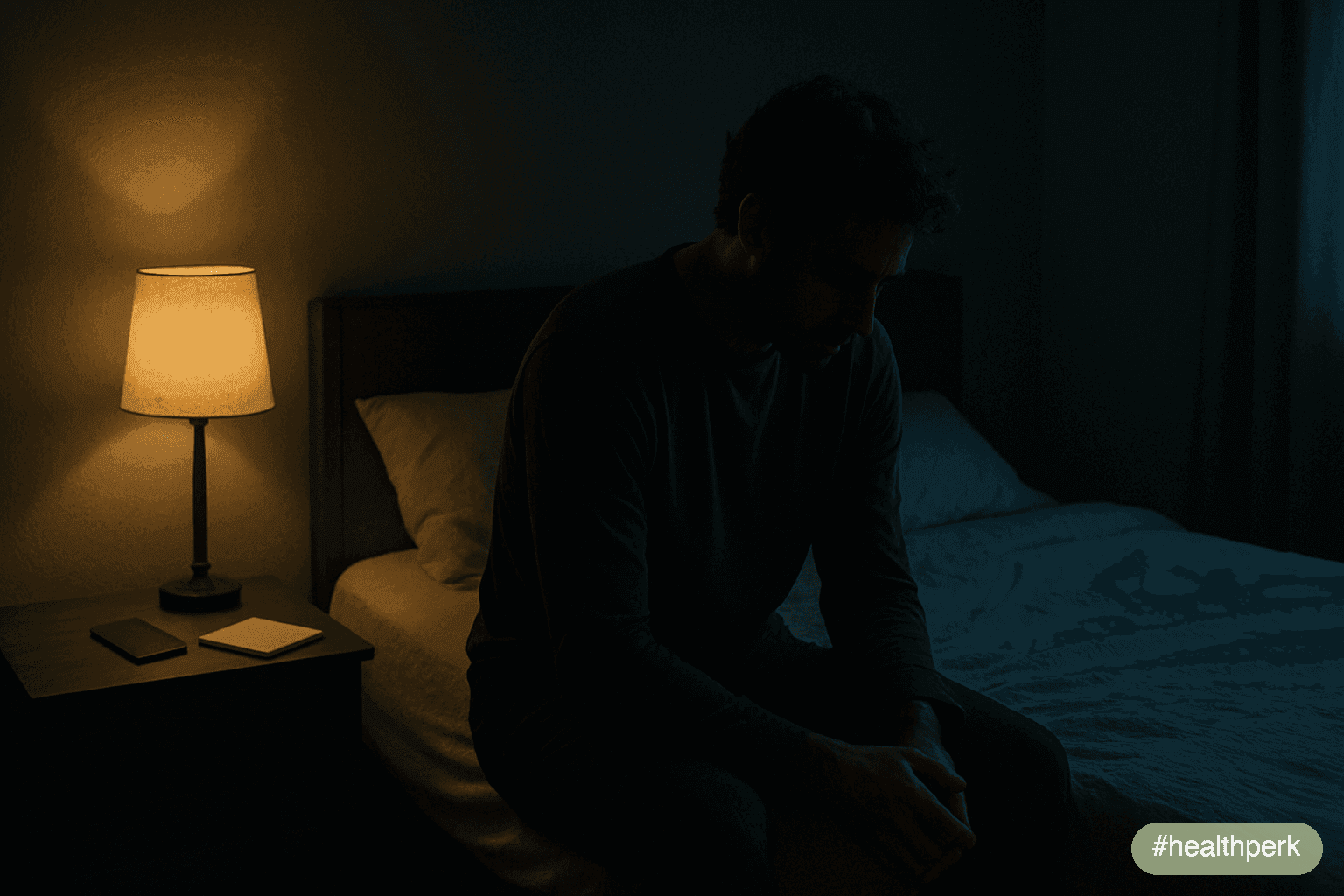
Wide horizontal photograph of an adult sitting on the edge of a dimly lit bed at 2 a.m., a phone face-down on the nightstand, an open notebook with a "worry list" beside it, and a single warm lamp — illustrating how to sleep better with anxiety.
Anxiety and insomnia drive each other. Pre-sleep cognitive arousal — racing thoughts, planning, replaying the day, anticipating tomorrow — activates the sympathetic nervous system, elevates cortisol, and makes sleep onset slow and fragmented. Lost sleep then worsens emotional regulation the next day, increases amygdala reactivity, and amplifies anxiety symptoms (Goldstein & Walker, 2014). The result is a self-reinforcing loop in which "trying harder to sleep" actively makes sleep worse. Breaking that loop requires changing the cognitive and behavioral inputs, not adding a sedative on top. This guide covers what works in 2026 for insomnia caused by anxiety, the sleep supplements for anxiety and stress that have evidence behind them, and how insomnia in women and sleep problems in men diverge in causes and treatment across the lifespan.
Table of Contents
- Insomnia Caused by Anxiety: Solutions That Work in 2026
- Sleep Supplements for Anxiety and Stress: 2026 Evidence Map
- Insomnia in Women: Causes and Treatment Through the Life Stages
- Sleep Supplements for Women: Cycle, Pregnancy, and Menopause
- Sleep Problems in Men: Causes Across the Lifespan
- Supplements for Sleep in Men: Testosterone, Stress, and Apnea Risk
- When to See a Clinician
- Frequently Asked Questions
- References
Insomnia Caused by Anxiety: Solutions That Work in 2026
A circular diagram showing the anxiety–insomnia loop: pre-sleep arousal → delayed sleep onset → fragmented sleep → next-day fatigue and amygdala reactivity → heightened anxiety → more pre-sleep arousal — illustrating insomnia caused by anxiety solutions.
Insomnia caused by anxiety solutions that hold up in 2026 share one feature: they target the loop, not just the symptom. Sleeping pills sedate the brain for one night; cognitive and behavioral interventions retrain the system over weeks. The American Academy of Sleep Medicine and the American College of Physicians both recommend CBT-I as the first-line treatment for chronic insomnia, including insomnia comorbid with anxiety (Edinger et al., 2021; Qaseem et al., 2016).
The five evidence-based moves, in order
- Fixed wake time, seven days a week. A consistent wake time anchors the circadian system more reliably than a consistent bedtime. Pick a time you can keep on weekends and hold it within a 30-minute window.
- Sleep restriction with a clinician or app. Compress time-in-bed to actual time-asleep for 1–2 weeks (minimum 5.5 hours), then expand by 15 minutes per week until sleep is consolidated. This is the single most powerful component of CBT-I for anxiety-driven insomnia (Maurer et al., 2020).
- Stimulus control. Bed is for sleep only. If awake more than 15–20 minutes, leave the bed, do something quiet and dim under 50 lux, return only when sleepy. Repeat as needed.
- Cognitive restructuring of catastrophic sleep thoughts. Replace "if I don't sleep I'll fail tomorrow" with "I have functioned on poor sleep before." A worry journal completed 90 minutes before bed offloads rumination from the sleep window.
- Paced breathing or body scan at lights-out. 4-7-8 breathing or a 10-minute body scan drops sympathetic tone and shortens onset latency by 5–15 minutes in adults with anxiety-comorbid insomnia (Ong et al., 2014).
Digital CBT-I works as well as in-person CBT-I for anxiety insomnia
A 2020 meta-analysis of digital CBT-I trials found onset-latency, wake-after-sleep-onset, and insomnia severity improvements comparable to clinician-delivered CBT-I, with no loss of effect when anxiety is comorbid (Soh et al., 2020). 2026 options include Somryst (FDA-authorized, prescription), Stellar Sleep (direct-to-consumer), Sleepio (employer or NHS), and the free CBT-i Coach and Insomnia Coach apps from the U.S. Department of Veterans Affairs.
What to avoid if anxiety is driving your insomnia
- Chronic benzodiazepines or "z-drugs": short-term efficacy, rebound insomnia, dependence, and worsened cognition with long-term use.
- Diphenhydramine (Benadryl, ZzzQuil): tolerance in days, anticholinergic burden linked to long-term cognitive risk in older adults.
- Alcohol as a sedative: shortens onset but fragments REM and worsens anxiety the next day.
- Sleep-tracker fixation: orthosomnia — anxiety driven by the score itself — is well-documented and worsens anxiety-related insomnia (Baron et al., 2017).
When SSRIs or SNRIs are appropriate
If the anxiety is severe enough to meet criteria for generalized anxiety disorder, panic disorder, or comorbid depression, a serotonin-targeting medication prescribed by a clinician treats the upstream cause. SSRIs and SNRIs may transiently worsen sleep architecture in the first 2–4 weeks but consolidate sleep as the anxiety remits over 8–12 weeks (Wichniak et al., 2017). They are not first-line for primary insomnia without anxiety pathology.
Sleep Supplements for Anxiety and Stress: 2026 Evidence Map
A flat-lay photograph of supplement bottles grouped into three tiers — Tier 1 (magnesium glycinate, L-theanine, ashwagandha), Tier 2 (glycine, apigenin, lavender oil), Tier 3 (valerian, passionflower) — on a neutral background, illustrating sleep supplements for anxiety and stress.
Sleep supplements for anxiety and stress have a real but modest evidence base in 2026. None is a replacement for CBT-I, none works as well as treating the underlying anxiety, and most show effect sizes equivalent to 10–20 minutes off sleep onset latency or a 5-point drop on standardized anxiety scales. Used realistically — as a behavioral-program adjunct rather than a primary therapy — three to four supplements are worth considering.
Tier 1 — evidence and tolerability favor a trial
- Magnesium glycinate, 200–400 mg evening. A 2022 systematic review found magnesium supplementation reduced anxiety symptoms in adults with mild-to-moderate anxiety and modestly improved sleep onset (Boyle et al., 2017). Glycinate and threonate forms cross the blood–brain barrier and avoid the laxative effect of magnesium oxide. Safe for most adults; avoid with kidney impairment.
- L-theanine, 200 mg evening. An amino acid from green tea. A 2020 RCT showed L-theanine reduced stress-related symptoms and improved subjective sleep quality at 200 mg/day over 4 weeks (Hidese et al., 2019). Non-sedating; useful for "wired but tired" presentations.
- Ashwagandha (Withania somnifera) root extract, 300–600 mg. Standardized KSM-66 or Sensoril extracts have RCT evidence for cortisol reduction and sleep quality improvement at 8 weeks (Salve et al., 2019; Langade et al., 2019). Avoid in pregnancy, with thyroid medication adjustments needed in some users; not for autoimmune-flare-prone individuals without clinician oversight.
Tier 2 — promising but smaller evidence base
- Glycine, 3 g evening. Lowers core body temperature, shortens onset latency in small trials (Yamadera et al., 2007). Safe profile.
- Apigenin, 50 mg evening. A chamomile-derived flavonoid; preclinical evidence is strong, human trials are limited but consistent.
- Lavender essential oil (Silexan, oral 80 mg capsule). Approved in Germany for anxiety; RCTs show comparable efficacy to low-dose lorazepam at 6 weeks without dependence (Kasper et al., 2014).
- Saffron (Crocus sativus) extract, 28–30 mg. Anxiolytic and antidepressant effects in 2023–2025 trials; safe at studied doses.
Tier 3 — weaker or inconsistent
- Valerian root. Mixed RCT results; standardization varies wildly across products. Modest effects when present.
- Passionflower (Passiflora incarnata). Small trials suggest anxiolytic and sleep-promoting effects; quality varies.
What does not belong in anxiety-insomnia stacks
- Melatonin: indicated for circadian-shift problems (jet lag, delayed sleep phase, shift work) and not for anxiety-driven insomnia. Adults stacking melatonin against an anxiety problem typically see no benefit beyond a placebo response.
- CBD: 2026 data still inconsistent; product quality and dosing vary widely.
- GABA orally: does not meaningfully cross the blood–brain barrier.
How to run a supplement trial safely
Start one supplement at a time. Use it for 14 nights at the studied dose. Track sleep onset latency and a simple anxiety rating each evening. Stop anything that produces no clear benefit at 2–4 weeks. Never combine with prescription sedatives, alcohol, or benzodiazepines without explicit clinician approval. Re-read Best Supplements for Sleep Without Melatonin for fuller dosing and interaction detail.
Insomnia in Women: Causes and Treatment Through the Life Stages
A horizontal infographic showing insomnia risk across the female lifespan: puberty (≈10% prevalence) → reproductive years (≈15–20%) → pregnancy (≈30–60%) → perimenopause (≈40–50%) → post-menopause (≈30–40%) — illustrating insomnia in women causes and treatment.
Insomnia in women causes and treatment require a life-stage lens. Women have roughly a 1.4–1.7× higher lifetime risk of insomnia than men, and the gap widens during reproductive transitions (Zhang & Wing, 2006). Hormonal cycling, pregnancy, and the perimenopausal transition each create distinct sleep-disrupting mechanisms that respond to different interventions.
Reproductive years (menstrual cycle)
The 3–5 days before menstruation produce a reproducible drop in sleep quality in women with premenstrual symptoms. Progesterone-driven thermoregulation changes raise core body temperature; estrogen and serotonin fluctuations elevate anxiety. Behavioral: regular wake time, cooler bedroom (about 18 °C / 65 °F), light exposure on waking. Supplement: magnesium glycinate 200–400 mg evenings 7–10 days before menses, with calcium intake adequate. CBT-I generalizes well across the cycle.
Pregnancy
Insomnia affects 30–60% of pregnancies, peaking in the third trimester (Sedov et al., 2018). Causes: progesterone surge in T1, mechanical discomfort and reflux in T2–T3, fetal movement, nocturia, and anticipatory anxiety. Treatment: CBT-I is safe and effective in pregnancy (Sedov et al., 2022); pregnancy-specific positioning (left side, full-length pillow); no melatonin or ashwagandha without OB clearance. Magnesium is generally safe at dietary doses; supplement doses require OB approval.
Postpartum
Sleep loss in the first six months is non-pathological but contributes to postpartum depression risk. CBT-I adapted for the postpartum period and protected sleep windows with a partner shifting feed responsibility are the highest-leverage moves. Screen for postpartum depression and anxiety using validated scales.
Perimenopause
Insomnia prevalence in perimenopause reaches 40–50% (Baker et al., 2018). Vasomotor symptoms (hot flashes, night sweats) fragment sleep; oestrogen withdrawal increases anxiety; obstructive sleep apnea risk rises after menopause. Treatment combines CBT-I, room cooling and moisture-wicking sleepwear, and, when symptoms are moderate-to-severe, menopausal hormone therapy (MHT) under clinician care. The 2024 Menopause Society Position Statement supports MHT for vasomotor sleep disruption in eligible women under age 60 within 10 years of menopause (The Menopause Society, 2022).
Post-menopause
Sleep apnea screening becomes important: post-menopausal women's apnea risk approaches male levels. Untreated apnea is a common cause of post-menopausal insomnia and treatment-resistant anxiety; STOP-BANG or home sleep test should be considered.
Sleep Supplements for Women: Cycle, Pregnancy, and Menopause
A four-column matrix labeled Cycle / Pregnancy / Perimenopause / Post-menopause with checkmarks against magnesium glycinate, glycine, L-theanine, ashwagandha, valerian, and melatonin — illustrating sleep supplements for women across life stages.
Sleep supplements for women vary materially by life stage. The same magnesium-glycinate-and-L-theanine stack that works in a reproductive-age woman is not appropriate in pregnancy and is incomplete for a perimenopausal woman with vasomotor symptoms.
Reproductive years
- Magnesium glycinate 200–400 mg evening: well-tolerated; helpful for premenstrual sleep disruption.
- L-theanine 200 mg evening: useful for anxiety-driven onset insomnia.
- Ashwagandha 300–600 mg: 8-week trials in women show cortisol and sleep quality improvement, but avoid if pregnant, breastfeeding, or trying to conceive without clinician input.
- Vitex (chasteberry): PMS-targeted; some evidence for sleep quality improvement when PMS is the driver, not a first-line sleep supplement.
Pregnancy
- Do not start new sleep supplements without obstetric clearance. Most herbal sleep supplements lack pregnancy safety data.
- Magnesium is generally considered safe at dietary-replacement doses; supplemental doses require OB approval.
- Melatonin in pregnancy: insufficient safety data; the current ACOG-aligned default is to avoid except under specific maternal-fetal-medicine guidance.
- Diphenhydramine is used historically in pregnancy but not for chronic insomnia; CBT-I should be the primary tool.
Perimenopause and post-menopause
- Magnesium glycinate 200–400 mg evening: cardiovascular and sleep benefits; particularly relevant given menopause-related magnesium needs.
- L-theanine 200 mg: anxiety component.
- Glycine 3 g evening: helps with vasomotor symptom–related thermoregulation.
- Black cohosh: targets vasomotor symptoms; some pooled data show sleep benefit when hot flashes are the dominant driver. Hepatotoxicity rare but reported — short-term use only.
- Soy isoflavones: modest vasomotor benefit; sleep effect is indirect.
- Melatonin 0.5–3 mg: limited but supportive evidence in post-menopausal women for sleep continuity; not for vasomotor symptoms directly.
- MHT (oestradiol ± progesterone): when clinically indicated, dramatically reduces vasomotor sleep disruption and is the most effective single intervention for moderate-to-severe perimenopausal insomnia.
Universal cautions for women
- Iron deficiency is a common cause of restless legs syndrome and insomnia in women of reproductive age; check ferritin (target ≥75 ng/mL for RLS).
- Hypothyroidism is more prevalent in women and disrupts sleep architecture; TSH should be checked when insomnia is unexplained.
- Many sleep supplements interact with hormonal contraception, antidepressants, and thyroid medication — review the medication list with a clinician.
Sleep Problems in Men: Causes Across the Lifespan
A horizontal infographic showing primary sleep problem in men by decade: 20s (delayed sleep phase, stress), 30s (shift work, parenting), 40s (obesity-related apnea risk emerges), 50s (apnea prevalence climbs to ≈20%), 60s+ (insomnia, fragmented sleep, BPH-driven nocturia) — illustrating sleep problems in men causes.
Sleep problems in men causes diverge from women's profile mainly through three drivers: obstructive sleep apnea, testosterone-related sleep architecture changes, and shift-work circadian disruption. Where insomnia in women is anxiety- and hormone-cycling-dominant, sleep problems in men in 2026 are predominantly apnea-, weight-, and stress-dominant — though anxiety insomnia is increasingly common and under-recognized in men.
Obstructive sleep apnea (OSA) is the dominant cause to rule out
OSA prevalence in men is roughly 2× that of pre-menopausal women and reaches 20–30% in men over 50, with higher rates in adults with obesity (Senaratna et al., 2017). Loud habitual snoring, witnessed apneas, morning headaches, daytime sleepiness, treatment-resistant hypertension, and atrial fibrillation should trigger STOP-BANG screening and a home sleep test. Sedating a man with anxiety insomnia who actually has OSA is harmful — sedatives worsen upper-airway tone and worsen apnea.
Testosterone, age, and sleep architecture
Sleep itself drives most testosterone production; lost sleep lowers testosterone (Leproult & Van Cauter, 2011). The relationship is bidirectional: lower testosterone with aging contributes to sleep fragmentation. Restoring sleep with CBT-I and weight management normalizes testosterone more reliably than exogenous testosterone in most adults; testosterone replacement therapy is a specialist decision when hypogonadism is confirmed.
Stress and anxiety in men
Men are less likely than women to report anxiety symptoms but show comparable rates of stress-driven insomnia, often presenting as early-morning awakening or "3 a.m. mind racing." Cultural under-reporting means men are under-diagnosed and under-treated. CBT-I and CBT for stress and anxiety work equally well; the barrier is engagement, not efficacy.
Shift work
Roughly 15–20% of working-age men work non-standard schedules. Shift work disorder, with its mixed insomnia and excessive sleepiness pattern, is the dominant occupational sleep problem in men. Strategic light exposure, modafinil under prescriber care, and consolidated sleep-block scheduling are the standard interventions.
Nocturia and BPH in older men
Benign prostatic hyperplasia and the nocturia it produces is a major sleep disruptor in men over 50. Pelvic-floor and BPH-targeted treatment improves sleep continuity; this is not an insomnia problem in the conventional sense and is missed when only behavioural sleep interventions are tried.
Supplements for Sleep in Men: Testosterone, Stress, and Apnea Risk
A decision-tree diagram starting with "Rule out OSA first" → if negative → stress-anxiety stack (magnesium glycinate, L-theanine, ashwagandha) → if testosterone low → "fix sleep first" → if BPH/nocturia → BPH-specific treatment — illustrating supplements for sleep men.
Supplements for sleep men in 2026 follow the same evidence map as in women — but the order of operations is different. Before any sleep supplement is recommended for a man with chronic insomnia, OSA should be ruled out, because most sedating supplements (including alcohol and melatonin at higher doses) worsen apnea.
After OSA is ruled out, the men's stack
- Magnesium glycinate, 300–400 mg evening. Men typically require slightly higher doses than women because of larger lean body mass; men also have higher prevalence of magnesium-depleting medications (PPIs, diuretics).
- Ashwagandha 600 mg (Sensoril or KSM-66) for 8 weeks. Strong evidence in men for cortisol reduction and sleep onset latency improvement; an additional small benefit on testosterone in deficient men in published trials (Lopresti et al., 2019).
- L-theanine 200 mg evening. Same evidence base as in women; useful for anxiety-driven onset insomnia.
- Glycine 3 g evening. Useful where slow sleep onset is the chief complaint.
- Tart cherry concentrate 30 ml evening (older men). Modest endogenous melatonin support without exogenous melatonin's apnea risk.
Supplements men commonly mis-use
- Melatonin 5–10 mg "for sleep." Most over-the-counter products are 10–20× the studied dose; supraphysiologic doses can worsen mood the next day and offer no continuity benefit. If using melatonin, 0.3–1 mg only and only for circadian-shift problems.
- Testosterone for sleep. Testosterone replacement does not improve sleep in eugonadal men and can worsen OSA. It is a treatment for confirmed hypogonadism — not a sleep aid.
- Pre-workout stimulants late in the day. Caffeine half-life of 5–6 hours; pre-workouts taken after 2 p.m. routinely cause onset insomnia in men who attribute the problem to "anxiety."
Lifestyle adjuncts that materially help men's sleep
- Weight loss of 5–10% in men with BMI > 28 reduces OSA severity and consolidates sleep.
- Alcohol cap at 1 drink ≥ 3 hours before bed — alcohol is the single most common cause of "I sleep but don't feel rested" in working-age men.
- Resistance training 3×/week improves slow-wave sleep and reduces stress-related insomnia.
For a fuller supplement comparison and dosing detail, see Best Supplements for Sleep Without Melatonin and Magnesium for Sleep: Dosage and Benefits.
When to See a Clinician
A vertical checklist graphic listing red flags — daytime sleepiness, witnessed apneas, daily anxiety attacks, suicidal ideation, weight loss, chronic insomnia ≥3 nights/week for ≥3 months — illustrating when to see a clinician for anxiety insomnia.
Self-management is appropriate for transient or mild anxiety insomnia. Escalate to clinician care for any of:
- Chronic insomnia: difficulty falling or staying asleep at least 3 nights per week for at least 3 months despite adequate opportunity.
- Suspected OSA: loud snoring, witnessed apneas, AM headaches, treatment-resistant hypertension, BMI > 30 with daytime sleepiness.
- Daily anxiety: panic attacks, avoidance behaviour, anxiety on most days for more than two weeks, or anxiety that disrupts daily function.
- Suicidal ideation, severe depression, or weight loss: psychiatric evaluation is the priority.
- Pregnancy: any new sleep supplement requires OB clearance.
- Children and adolescents: paediatric sleep medicine evaluation; adult CBT-I protocols are not directly transferable.
Related Articles on HealthPerk
- How to Fall Asleep Faster Without Medication
- Best Supplements for Sleep Without Melatonin
- Magnesium for Sleep: Dosage and Benefits
- How to Stay Asleep All Night Naturally
- Why Do I Wake Up at 3am Every Night
Frequently Asked Questions
How do I sleep better with anxiety tonight?
For tonight, the most reliable single move is a 90-minute pre-bed "worry-offload" routine: 10 minutes of writing down everything on your mind, 30 minutes of dim, screen-free quiet, a paced 4-7-8 breathing exercise at lights-out, and — if awake more than 20 minutes — leaving the bed for quiet, low-light activity until you feel sleepy. To sleep better with anxiety over weeks, start a CBT-I program (Stellar Sleep, Somryst, or the free CBT-i Coach) alongside whatever is being done for the anxiety itself. A single calm night does not break the cycle; consistent practice over four to eight weeks does.
What is the best treatment for insomnia caused by anxiety?
The first-line treatment is CBT-I, ideally combined with CBT for the underlying anxiety. CBT-I addresses the conditioned arousal and unhelpful sleep cognitions that keep insomnia going; CBT for anxiety addresses the upstream worry that fuels pre-sleep arousal. In moderate-to-severe generalized anxiety or panic disorder, an SSRI or SNRI prescribed by a clinician treats the anxiety pathology and consolidates sleep over 8–12 weeks. Chronic benzodiazepines and over-the-counter antihistamines are not appropriate long-term solutions.
Which sleep supplements for anxiety and stress actually work?
Magnesium glycinate (200–400 mg evening), L-theanine (200 mg evening), and standardized ashwagandha root extract (300–600 mg evening) have the strongest 2026 evidence base for combined anxiety and sleep effects. Supplemental glycine (3 g evening) and oral lavender oil (Silexan 80 mg) have smaller but consistent trial data. None replaces CBT-I; supplements are best used as a behavioral-program adjunct, one at a time, for 2–4 week trials.
Why is insomnia in women more common than in men?
Women have a 1.4–1.7× higher lifetime insomnia risk, driven by reproductive-hormone cycling (menstrual cycle, pregnancy, peri- and post-menopause), higher prevalence of anxiety disorders, and higher prevalence of conditions like restless legs syndrome and hypothyroidism that disrupt sleep. The gap widens around major reproductive transitions; perimenopausal insomnia prevalence reaches 40–50%. Treatment is life-stage specific: CBT-I generalises across stages, but supplements and medical adjuncts (MHT in perimenopause, iron in deficiency) vary by life stage.
Are sleep supplements for women safe in pregnancy?
Most herbal sleep supplements lack adequate pregnancy safety data and should not be started without obstetric clearance. Magnesium is generally safe at dietary-replacement doses; supplement doses require OB approval. Melatonin lacks robust pregnancy safety data and is typically avoided. Ashwagandha, valerian, and most other herbal sleep aids should be avoided in pregnancy. CBT-I is safe and effective in pregnancy and is the appropriate primary tool for pregnancy-related insomnia.
What causes sleep problems in men most often?
In men, the single most important cause to rule out is obstructive sleep apnea, which affects 20–30% of men over 50 and is the most common cause of "I sleep eight hours but feel exhausted." Stress and anxiety insomnia are common and under-reported in men. Shift work, weight gain, alcohol use, evening caffeine, and benign prostatic hyperplasia with nocturia round out the most common drivers. The order of operations matters: rule out apnea before adding sedating sleep supplements.
Which supplements for sleep in men have the best evidence?
For men with anxiety- and stress-driven insomnia and no untreated OSA, magnesium glycinate (300–400 mg evening), ashwagandha (600 mg standardized extract for 8 weeks), L-theanine (200 mg evening), and glycine (3 g evening) have the best 2026 evidence base. Older men may benefit from tart cherry concentrate (30 ml evening) for endogenous melatonin support. Avoid high-dose over-the-counter melatonin and avoid using testosterone as a sleep aid in eugonadal men.
Can anxiety insomnia be cured?
Anxiety insomnia is highly responsive to evidence-based treatment. Roughly 70–80% of adults completing a full course of CBT-I (in person or digital) achieve clinically meaningful improvement, with about half reaching remission by the end of the 6–9 week program. When the underlying anxiety is also treated — through CBT, lifestyle change, and where indicated medication — durable cure rates are higher still. The key is treating the loop, not just the symptom, and giving the program enough time (weeks, not nights) to work.
This article is for informational purposes only and does not constitute medical advice. Persistent insomnia (≥3 nights per week for ≥3 months), suspected obstructive sleep apnea, severe anxiety or depression, suicidal ideation, pregnancy, and any concern in a child or adolescent warrant clinical evaluation. Supplement recommendations assume a healthy adult without contraindications; verify all supplements with a clinician if pregnant or breastfeeding, on prescription medication (especially SSRIs, SNRIs, anticoagulants, thyroid medication, or hormonal contraception), with kidney or liver disease, with autoimmune disease, or before surgery. Do not stop prescribed psychiatric medication without clinician guidance. Individual results vary.
About the author The HealthPerk Editorial Team reviews anxiety and sleep medicine through peer-reviewed clinical practice guidelines (American Academy of Sleep Medicine, American College of Physicians, The Menopause Society), Cochrane and high-quality systematic reviews, randomized controlled trials, and standardized clinical assessment tools. We do not accept manufacturer payment for editorial coverage or rankings. How we review →
References
Edinger, J. D., Arnedt, J. T., Bertisch, S. M., Carney, C. E., Harrington, J. J., Lichstein, K. L., Sateia, M. J., Troxel, W. M., Zhou, E. S., Kazmi, U., Heald, J. L., & Martin, J. L. (2021). Behavioral and psychological treatments for chronic insomnia disorder in adults: an American Academy of Sleep Medicine clinical practice guideline. Journal of Clinical Sleep Medicine, 17(2), 255–262. https://doi.org/10.5664/jcsm.8986
Supports: AASM guideline establishing CBT-I as first-line treatment for chronic insomnia including anxiety-comorbid insomnia
Qaseem, A., Kansagara, D., Forciea, M. A., Cooke, M., & Denberg, T. D. (2016). Management of chronic insomnia disorder in adults: a clinical practice guideline from the American College of Physicians. Annals of Internal Medicine, 165(2), 125–133. https://doi.org/10.7326/M15-2175
Supports: ACP clinical practice guideline recommending CBT-I as initial treatment for chronic insomnia
Maurer, L. F., Espie, C. A., Omlin, X., Reid, M. J., Sharman, R., Gavriloff, D., Emsley, R., & Kyle, S. D. (2020). Isolating the role of time in bed restriction in the treatment of insomnia: a randomized, controlled, dismantling trial comparing sleep restriction therapy with time in bed regularization. Sleep, 43(11), zsaa096. https://doi.org/10.1093/sleep/zsaa096
Supports: sleep restriction as the most powerful CBT-I component for anxiety-driven insomnia
Soh, H. L., Ho, R. C., Ho, C. S., & Tam, W. W. (2020). Efficacy of digital cognitive behavioural therapy for insomnia: a meta-analysis of randomised controlled trials. Sleep Medicine, 75, 315–325. https://doi.org/10.1016/j.sleep.2020.08.020
Supports: digital CBT-I efficacy comparable to in-person CBT-I including with anxiety comorbidity
Ong, J. C., Manber, R., Segal, Z., Xia, Y., Shapiro, S., & Wyatt, J. K. (2014). A randomized controlled trial of mindfulness meditation for chronic insomnia. Sleep, 37(9), 1553–1563. https://doi.org/10.5665/sleep.4010
Supports: mindfulness and body scan for sleep onset latency in anxiety-comorbid insomnia
Goldstein, A. N., & Walker, M. P. (2014). The role of sleep in emotional brain function. Annual Review of Clinical Psychology, 10, 679–708. https://doi.org/10.1146/annurev-clinpsy-032813-153716
Supports: bidirectional link between sleep loss, amygdala reactivity, and anxiety symptom amplification
Boyle, N. B., Lawton, C., & Dye, L. (2017). The effects of magnesium supplementation on subjective anxiety and stress: a systematic review. Nutrients, 9(5), 429. https://doi.org/10.3390/nu9050429
Supports: magnesium supplementation effects on anxiety and stress symptoms in adults
Hidese, S., Ogawa, S., Ota, M., Ishida, I., Yasukawa, Z., Ozeki, M., & Kunugi, H. (2019). Effects of L-theanine administration on stress-related symptoms and cognitive functions in healthy adults: a randomized controlled trial. Nutrients, 11(10), 2362. https://doi.org/10.3390/nu11102362
Supports: L-theanine 200 mg/day for stress symptoms and sleep quality
Salve, J., Pate, S., Debnath, K., & Langade, D. (2019). Adaptogenic and anxiolytic effects of ashwagandha root extract in healthy adults: a double-blind, randomized, placebo-controlled clinical study. Cureus, 11(12), e6466. https://doi.org/10.7759/cureus.6466
Supports: ashwagandha standardized extract for cortisol reduction and anxiety
Langade, D., Kanchi, S., Salve, J., Debnath, K., & Ambegaokar, D. (2019). Efficacy and safety of ashwagandha (Withania somnifera) root extract in insomnia and anxiety: a double-blind, randomized, placebo-controlled study. Cureus, 11(9), e5797. https://doi.org/10.7759/cureus.5797
Supports: ashwagandha for insomnia and anxiety symptoms
- Lopresti, A. L., Smith, S. J., Malvi, H., & Kodgule, R. (2019). An investigation into the stress-relieving and pharmacological actions of an ashwagandha (Withania somnifera) extract: a randomized, double-blind, placebo-controlled study. Medicine, 98(37), e17186. https://doi.org/10.1097/MD.0000000000017186
Supports: ashwagandha effects on cortisol and testosterone in men
- Yamadera, W., Inagawa, K., Chiba, S., Bannai, M., Takahashi, M., & Nakayama, K. (2007). Glycine ingestion improves subjective sleep quality in human volunteers, correlating with polysomnographic changes. Sleep and Biological Rhythms, 5(2), 126–131. https://doi.org/10.1111/j.1479-8425.2007.00262.x
Supports: glycine 3 g evening for sleep onset latency
- Kasper, S., Gastpar, M., Müller, W. E., Volz, H. P., Möller, H. J., Schläfke, S., & Dienel, A. (2014). Lavender oil preparation Silexan is effective in generalized anxiety disorder—a randomized, double-blind comparison to placebo and paroxetine. International Journal of Neuropsychopharmacology, 17(6), 859–869. https://doi.org/10.1017/S1461145714000017
Supports: oral lavender oil (Silexan) for generalized anxiety with sleep benefit
- Zhang, B., & Wing, Y. K. (2006). Sex differences in insomnia: a meta-analysis. Sleep, 29(1), 85–93. https://doi.org/10.1093/sleep/29.1.85
Supports: female:male insomnia prevalence ratio and lifespan distribution
- Sedov, I. D., Cameron, E. E., Madigan, S., & Tomfohr-Madsen, L. M. (2018). Sleep quality during pregnancy: a meta-analysis. Sleep Medicine Reviews, 38, 168–176. https://doi.org/10.1016/j.smrv.2017.06.005
Supports: insomnia prevalence and trajectory across pregnancy
- Sedov, I. D., Goodman, S. H., & Tomfohr-Madsen, L. M. (2022). Cognitive behavioral therapy for insomnia in pregnancy: a meta-analysis. Sleep Medicine Reviews, 62, 101594. https://doi.org/10.1016/j.smrv.2022.101594
Supports: CBT-I safety and efficacy in pregnancy
- Baker, F. R., Lampio, L., Saaresranta, T., & Polo-Kantola, P. (2018). Sleep and sleep disorders in the menopausal transition. Sleep Medicine Clinics, 13(3), 443–456. https://doi.org/10.1016/j.jsmc.2018.04.011
Supports: insomnia prevalence in perimenopause and post-menopause and clinical drivers
- The Menopause Society. (2022). The 2022 hormone therapy position statement of The North American Menopause Society. Menopause, 29(7), 767–794. https://doi.org/10.1097/GME.0000000000002028
Supports: hormone therapy guidance for vasomotor and sleep symptoms in perimenopause
- Senaratna, C. V., Perret, J. L., Lodge, C. J., Lowe, A. J., Campbell, B. E., Matheson, M. C., Hamilton, G. S., & Dharmage, S. C. (2017). Prevalence of obstructive sleep apnoea in the general population: a systematic review. Sleep Medicine Reviews, 34, 70–81. https://doi.org/10.1016/j.smrv.2016.07.002
Supports: OSA prevalence in men and the sex difference in apnea risk
- Leproult, R., & Van Cauter, E. (2011). Effect of 1 week of sleep restriction on testosterone levels in young healthy men. JAMA, 305(21), 2173–2174. https://doi.org/10.1001/jama.2011.710
Supports: bidirectional sleep–testosterone relationship in men
- Wichniak, A., Wierzbicka, A., Walęcka, M., & Jernajczyk, W. (2017). Effects of antidepressants on sleep. Current Psychiatry Reports, 19(9), 63. https://doi.org/10.1007/s11920-017-0816-4
Supports: SSRI and SNRI effects on sleep architecture and consolidation over treatment course
- Baron, K. G., Abbott, S., Jao, N., Manalo, N., & Mullen, R. (2017). Orthosomnia: are some patients taking the quantified self too far? Journal of Clinical Sleep Medicine, 13(2), 351–354. https://doi.org/10.5664/jcsm.6472
Supports: tracker- and app-induced sleep anxiety as a driver of anxiety insomnia
Frequently Asked Questions
How do I sleep better with anxiety tonight?
For tonight, the most reliable single move is a 90-minute pre-bed worry-offload routine: 10 minutes of writing down everything on your mind, 30 minutes of dim, screen-free quiet, a paced 4-7-8 breathing exercise at lights-out, and — if awake more than 20 minutes — leaving the bed for quiet, low-light activity until you feel sleepy. To sleep better with anxiety over weeks, start a CBT-I program alongside whatever is being done for the anxiety itself.
What is the best treatment for insomnia caused by anxiety?
The first-line treatment is CBT-I, ideally combined with CBT for the underlying anxiety. CBT-I addresses the conditioned arousal and unhelpful sleep cognitions; CBT for anxiety addresses the upstream worry. In moderate-to-severe generalized anxiety or panic disorder, an SSRI or SNRI prescribed by a clinician treats the anxiety pathology and consolidates sleep over 8–12 weeks. Chronic benzodiazepines and over-the-counter antihistamines are not appropriate long-term solutions.
Which sleep supplements for anxiety and stress actually work?
Magnesium glycinate 200–400 mg evening, L-theanine 200 mg evening, and standardized ashwagandha root extract 300–600 mg evening have the strongest 2026 evidence base for combined anxiety and sleep effects. Supplemental glycine 3 g evening and oral lavender oil Silexan 80 mg have smaller but consistent trial data. None replaces CBT-I; supplements are best used as a behavioral-program adjunct, one at a time, for 2–4 week trials.
Why is insomnia in women more common than in men?
Women have a 1.4–1.7× higher lifetime insomnia risk driven by reproductive-hormone cycling, higher prevalence of anxiety disorders, and higher prevalence of conditions like restless legs syndrome and hypothyroidism that disrupt sleep. The gap widens around major reproductive transitions; perimenopausal insomnia prevalence reaches 40–50%. Treatment is life-stage specific.
Are sleep supplements for women safe in pregnancy?
Most herbal sleep supplements lack adequate pregnancy safety data and should not be started without obstetric clearance. Magnesium is generally safe at dietary-replacement doses; supplement doses require OB approval. Melatonin, ashwagandha, valerian, and most herbal sleep aids should be avoided in pregnancy. CBT-I is safe and effective in pregnancy and is the appropriate primary tool.
What causes sleep problems in men most often?
The single most important cause to rule out is obstructive sleep apnea, which affects 20–30% of men over 50. Stress and anxiety insomnia are common and under-reported in men. Shift work, weight gain, alcohol use, evening caffeine, and benign prostatic hyperplasia with nocturia round out the most common drivers. Rule out apnea before adding sedating sleep supplements.
Which supplements for sleep in men have the best evidence?
For men with anxiety- and stress-driven insomnia and no untreated OSA, magnesium glycinate 300–400 mg evening, ashwagandha 600 mg standardized extract for 8 weeks, L-theanine 200 mg evening, and glycine 3 g evening have the best 2026 evidence base. Older men may benefit from tart cherry concentrate. Avoid high-dose over-the-counter melatonin and avoid testosterone as a sleep aid in eugonadal men.
Can anxiety insomnia be cured?
Anxiety insomnia is highly responsive to evidence-based treatment. Roughly 70–80% of adults completing a full course of CBT-I achieve clinically meaningful improvement, with about half reaching remission by the end of the 6–9 week program. When the underlying anxiety is also treated, durable cure rates are higher still.
More from Supplements