GLP-1 Drugs vs CPAP for Sleep Apnea: What the 2026 Evidence Says (and Where Wearables Fit)
A September 2026 JAMA Otolaryngology review found GLP-1 drugs reduce sleep apnea severity by 5.7–21.9 events per hour, versus about 31 for CPAP. Tirzepatide (Zepbound), FDA-approved for OSA with obesity in December 2024, works best alongside CPAP rather than instead of it. Wearable alerts can prompt testing but do not diagnose sleep apnea.
GLP-1 Drugs vs CPAP for Sleep Apnea: What the 2026 Evidence Says (and Where Wearables Fit)
By the HealthPerk Editorial Team · Last updated: October 2026
Quick Answer
Can GLP-1 drugs replace a CPAP machine for sleep apnea?
For most people, no. A September 2026 JAMA Otolaryngology review found GLP-1 drugs cut breathing events by roughly 6–22 per hour, versus about 31 for CPAP. They work best alongside CPAP in people with obesity.
| Your situation | Sensible first step |
|---|---|
| Loud snoring, gasping, or daytime sleepiness, never tested | Take the STOP-BANG questionnaire, then ask a clinician about a home sleep apnea test |
| Your watch or ring sent a "possible sleep apnea" alert | Book a clinician visit for formal testing; the alert is not a diagnosis |
| Diagnosed OSA, using CPAP, and living with obesity | Ask whether tirzepatide could be added to CPAP, not swapped for it |
| Diagnosed OSA, cannot tolerate CPAP | Discuss a custom oral appliance, positional therapy, mask refitting, or weight-loss medication |
| Mild OSA that happens mostly on your back | Ask about positional therapy and confirm with a follow-up test |
| Drowsy driving, witnessed long pauses, or chest symptoms at night | See a doctor promptly; do not wait for a wearable trend |
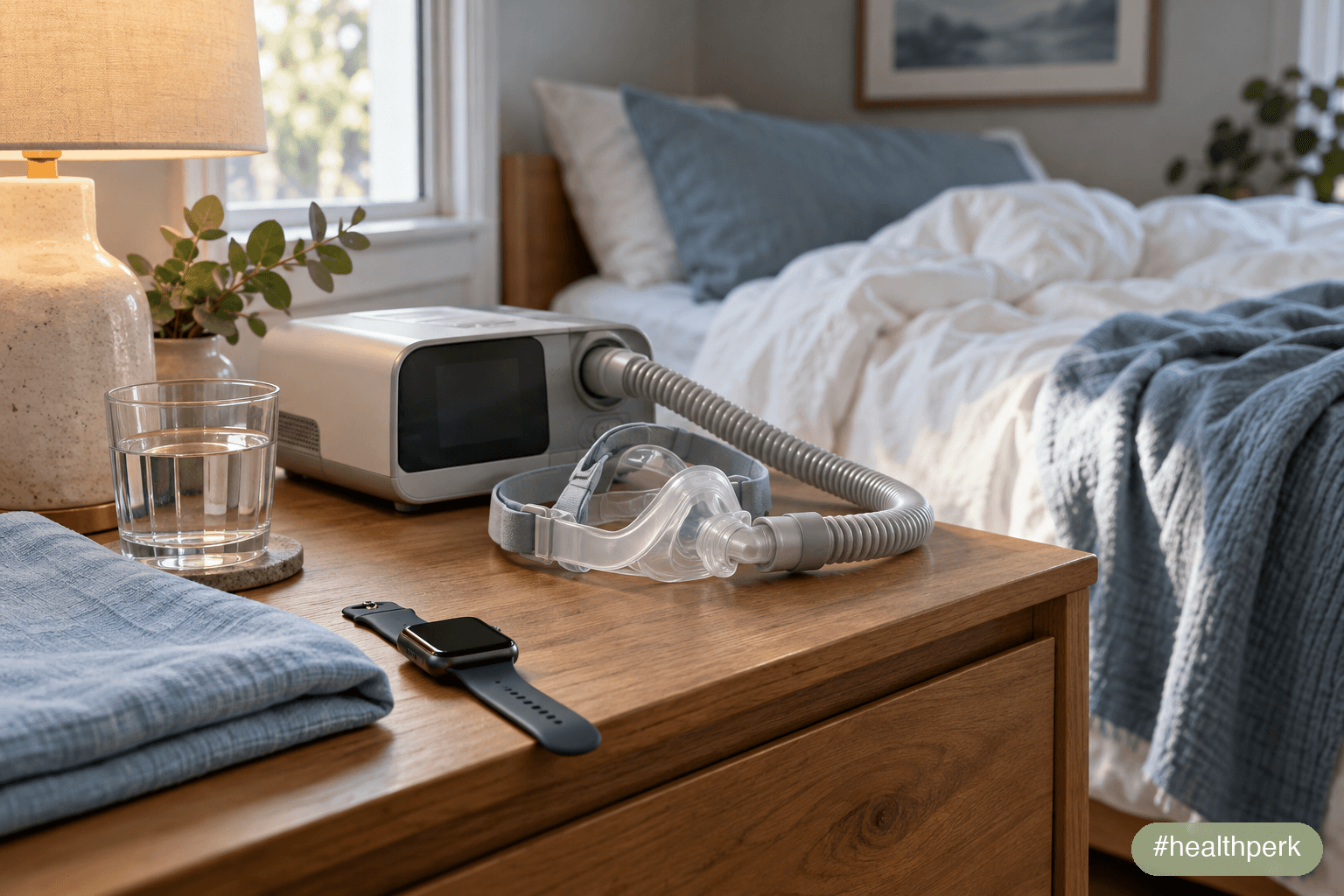 CPAP is still the standard treatment for obstructive sleep apnea, but weight-loss drugs and wearables now shape how people get diagnosed and treated.
Obstructive sleep apnea (OSA) is common: an estimated 936 million adults aged 30–69 worldwide have it, and about 425 million have moderate to severe disease [13]. For decades treatment has meant CPAP, a machine that blows pressurized air through a mask to hold the throat open. It works well when people use it, but many people stop.
In December 2024, tirzepatide (Zepbound) became the first drug approved by the FDA for moderate to severe OSA in adults with obesity [5]. With smartwatches now flagging possible sleep apnea too, many people are asking: can a weekly injection replace the mask? Research published this fall gives a fairly clear answer. This guide compares the options and explains where screening tools, home sleep tests, and wearables fit in.
Table of Contents
- What's New: The 2026 GLP-1 vs CPAP Evidence
- How Sleep Apnea Works and Why Weight Loss Helps
- Getting Diagnosed: STOP-BANG, Home Sleep Tests, and Wearables
- Treatment Options in Detail
- GLP-1 vs CPAP vs Other Options: Comparison Table
- Which Sleep Apnea Treatment Is Right for You?
- Practical Tips for Better Results
- Common Misconceptions
- When to See a Doctor
- Related Articles on Health Perk
- Frequently Asked Questions
- References
What's New: The 2026 GLP-1 vs CPAP Evidence
The JAMA Otolaryngology–Head & Neck Surgery review (September 3, 2026). Otolaryngologists Alexandria Harris and Thomas Kaffenberger of the University of Pittsburgh Medical Center reviewed the evidence on GLP-1 drugs for OSA (published online September 3; October 1 issue) [1]. The Hill covered it under the headline that CPAP is still the best option. Key findings:
- Six meta-analyses showed GLP-1 drugs reduce the apnea-hypopnea index (AHI), the number of breathing pauses or shallow breaths per hour of sleep, by 5.7 to 21.9 events per hour [1].
- In the SURMOUNT-OSA trials, tirzepatide reduced AHI by 20 to 24 events per hour more than placebo. In 42–50% of patients, OSA went into remission or became mild without symptoms [1].
- GLP-1 drugs did not match CPAP. The authors put the AHI reduction at roughly 22 events per hour versus 31 for CPAP, noted that cardiovascular benefit is unproven, and warned that weight often returns after stopping [1].
- GLP-1 drugs are best used as complementary therapy alongside CPAP, or before airway surgery. They suit people with a BMI above 30 who cannot tolerate CPAP or have obesity-related conditions, and are unlikely to help people without obesity or with mainly anatomical OSA [1].
These figures come from different studies, not a head-to-head trial, so the 22-vs-31 comparison is an approximation.
The Sleep and Breathing meta-analysis (October 6, 2026). A separate team pooled 6 randomized trials (1,069 adults with moderate to severe OSA; four liraglutide, two tirzepatide). GLP-1-based therapies reduced AHI by 9.99 events per hour, weight by 9.68 kg, and systolic blood pressure by 4.77 mmHg versus control, with no increase in adverse events [2]. Results varied widely between trials, and the authors concluded that the findings "do not establish them as substitutes for CPAP" [2].
Earlier in 2026, a network meta-analysis of 34 trials and 3,964 participants reached a similar conclusion. CPAP produced the largest AHI reduction (about 22 events per hour versus no active treatment) and improved daytime sleepiness. GLP-1 drugs mainly improved weight and blood sugar [3].
How Sleep Apnea Works and Why Weight Loss Helps
In OSA, the soft tissues of the throat relax during sleep and partly or fully block the airway. Each blockage lowers blood oxygen and briefly wakes the brain, usually without you noticing. That is why people with untreated OSA can sleep eight hours and still wake up tired.
Doctors grade severity by AHI: 5–14 events per hour is mild, 15–29 moderate, and 30 or more severe.
Why GLP-1 drugs help. According to the JAMA review, weight loss is the main established mechanism. GLP-1 drugs reduce fat in the tongue and in the tissue around the throat, both of which make the airway more likely to collapse [1]. In SURMOUNT-OSA, participants started with an average BMI of about 39. Those on tirzepatide lost 17.7–19.6% of their body weight over 52 weeks, compared with 1.6–2.3% on placebo [4]. Early laboratory research suggests the drugs might also affect breathing control and inflammation apart from weight loss. This has not been shown in people [1].
Why CPAP works differently. CPAP doesn't change anatomy. It holds the airway open with air pressure for as long as the mask is on. In the SAVE trial, average AHI fell from 29.0 to 3.7 events per hour on CPAP [14]. That is why CPAP lowers AHI more than drugs do, and why it stops working the moment you take the mask off.
Why weight loss isn't a cure for everyone. Some airways are narrow because of jaw shape, large tonsils, or nasal problems, which weight loss does not change [1].
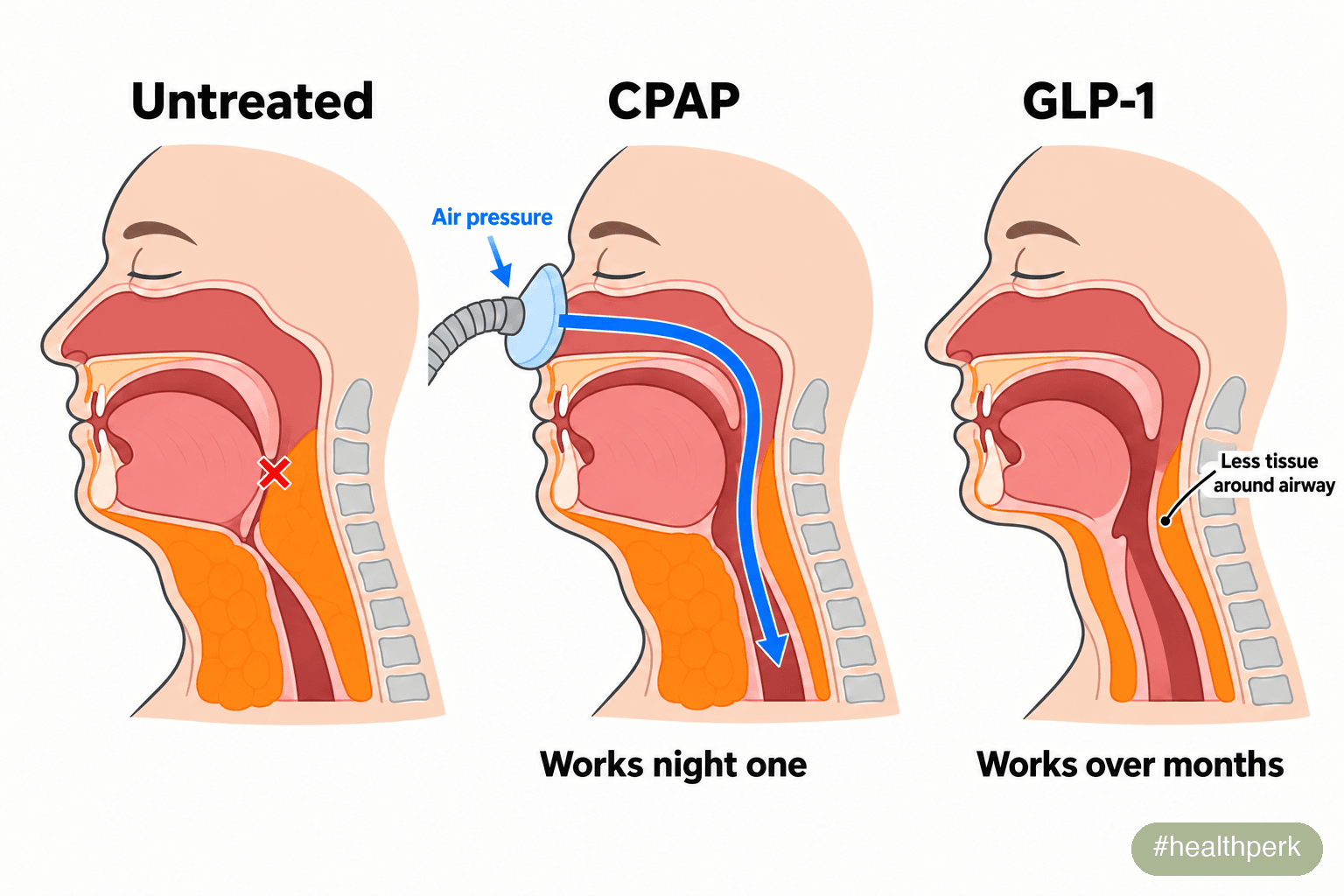 CPAP holds the airway open mechanically every night; GLP-1 drugs shrink the fat that narrows it, which takes months.
Getting Diagnosed: STOP-BANG, Home Sleep Tests, and Wearables
Every treatment decision depends on the AHI from a sleep test, so diagnosis comes first.
Step 1: The STOP-BANG questionnaire
STOP-BANG has eight yes/no items: Snoring, Tiredness, Observed pauses in breathing, high blood Pressure, BMI over 35, Age over 50, Neck circumference over 40 cm, and male Gender. A score of 0–2 suggests low risk of moderate to severe OSA, and 5–8 suggests high risk. A score of 3 or more caught 93% of moderate to severe OSA and 100% of severe OSA, but it also flags many people who don't have OSA [8]. Check the BMI item with our BMI calculator. The American Academy of Sleep Medicine (AASM) recommends against diagnosing OSA from questionnaires alone [9].
Step 2: A home sleep apnea test or polysomnography
Adults with an uncomplicated case and signs of moderate to severe OSA can be diagnosed with in-lab polysomnography or a technically adequate home sleep apnea test (HSAT), a small kit that records airflow, breathing effort, and oxygen in your own bed [9]. If one home test is negative, inconclusive, or technically poor, the next step is an in-lab study. People with significant heart or lung disease, neuromuscular conditions, chronic opioid use, prior stroke, or severe insomnia should go straight to the lab [9].
Step 3: Where wearables fit (and where they don't)
Two smartwatch features have FDA authorization to notify users of possible sleep apnea:
- Samsung Galaxy Watch (De Novo authorization, February 2024): for adults 22 and older without a prior diagnosis; checks two nights within 10 days [7].
- Apple Watch Sleep Apnea Notification Feature (cleared September 13, 2024): uses the accelerometer to track "breathing disturbances" over 30 days. Against a home sleep test in 1,499 participants, it detected 66.3% of moderate to severe cases with 98.5% specificity [6].
An alert deserves a doctor's visit, but no alert does not mean you're fine: the Apple feature misses about a third of moderate to severe cases. The FDA documents state it is "not intended to diagnose, treat, or aid in the management of sleep apnea" [6].
Many smart rings and trackers show overnight blood-oxygen variation or breathing estimates as wellness metrics. Without FDA authorization for sleep apnea notification, treat them as conversation starters, not screening results. Our guides to the best sleep tracking devices and the Oura Ring 5 explain these metrics.
Bottom line: wearables do not diagnose sleep apnea. Only a sleep test interpreted by a clinician can.
Treatment Options in Detail
CPAP (and auto-adjusting APAP)
- How it works: A bedside machine delivers air pressure through a nasal, nasal-pillow, or full-face mask; APAP adjusts pressure through the night.
- Evidence: The AASM strongly recommends PAP for adults with OSA and excessive sleepiness, and conditionally for impaired sleep-related quality of life or high blood pressure. CPAP or APAP is preferred over bilevel machines [10].
- Effect: The largest AHI reduction of any non-surgical option, about 31 events per hour in the evidence cited by the JAMA review [1], plus less daytime sleepiness [3].
- Limits: Adherence is only 30–60% [1]. In the SAVE trial, average use was 3.3 hours a night, and CPAP did not reduce heart attacks or strokes, though it improved snoring, sleepiness, mood, and quality of life [14].
Tirzepatide (Zepbound) and other GLP-1 drugs
- Approval: FDA-approved December 20, 2024 for moderate to severe OSA in adults with obesity, with a reduced-calorie diet and more physical activity [5].
- Dose studied: Once-weekly injection at the maximum tolerated dose, 10 mg or 15 mg, for 52 weeks [4][5].
- Effect: In SURMOUNT-OSA, AHI fell by 25.3 events per hour without PAP (5.3 on placebo) and 29.3 with PAP (5.5 on placebo). At week 52, 42.2% and 50.2% reached an AHI under 5, or 5–14 without daytime sleepiness, versus 15.9% and 14.3% on placebo [4].
- Side effects: Mostly gastrointestinal: diarrhea 22–26%, nausea 22–25%, vomiting 9–18%, versus 1–13% on placebo [4].
- Limits: Results take months, weight often returns after stopping, and heart benefits in OSA are unproven [1]. Liraglutide had smaller effects on AHI [2][3].
Oral appliances (mandibular advancement devices)
- How it works: A custom mouthguard-like device holds the lower jaw slightly forward, keeping the tongue away from the back of the throat.
- Evidence: AASM and dental sleep medicine guidelines recommend oral appliances, rather than no treatment, for adults who can't tolerate CPAP or prefer an alternative. They favor a custom, titratable device fitted by a qualified dentist, a follow-up sleep test, and dental checks for bite changes [11].
Positional therapy
- How it works: Vibrating sensors, semi-rigid backpacks, or special pillows keep you off your back.
- Evidence: A Cochrane review of 8 trials found CPAP lowered AHI by 6.4 events per hour more than positional therapy. Sleepiness scores were similar, and people used positional therapy about 2.5 hours longer per night (low to moderate certainty) [12].
- Best for: People whose sleep study shows AHI clearly higher on their back.
GLP-1 vs CPAP vs Other Options: Comparison Table
| Criterion | CPAP / APAP | Tirzepatide (GLP-1/GIP) | Oral appliance | Positional therapy |
|---|---|---|---|---|
| Typical AHI reduction | Largest (~31 events/h in pooled data) [1] | ~20–24 events/h vs placebo [4]; GLP-1 class 5.7–21.9 [1] | Varies by person; requires follow-up testing [11] | ~6 events/h less effective than CPAP [12] |
| Time to effect | First night | Months (tracks weight loss) | Weeks (fitting and adjustment) | First night |
| Who it suits | Most OSA, any severity, any weight | Moderate–severe OSA with obesity | CPAP-intolerant or preference [11] | OSA mainly when sleeping on the back |
| Main downsides | Mask discomfort, 30–60% adherence [1] | GI side effects, weight regain after stopping [1][4] | Jaw or tooth discomfort, bite changes [11] | Only addresses one body position |
| Improves weight / metabolic health | No [3] | Yes (−17.7% to −19.6% weight) [4] | No | No |
| FDA status for OSA | Standard of care | Approved Dec 2024 (adults with obesity) [5] | Prescription devices | Various consumer and medical devices |
Editorial verdict: For controlling breathing events, CPAP is still the clear first choice, and the 2026 evidence confirms it [1][2][3]. Tirzepatide is the most significant new option in years for people with OSA and obesity, but treat it as a partner to CPAP, not a replacement: it targets an underlying cause while CPAP protects your sleep in the meantime. Oral appliances and positional therapy are reasonable, evidence-supported alternatives for the right people, especially if CPAP has failed.
Which Sleep Apnea Treatment Is Right for You?
Profile 1: Newly diagnosed, severe OSA, BMI 38, very sleepy during the day. Start CPAP now, because it works from the first night, and ask about adding tirzepatide. In SURMOUNT-OSA trial 2, people already on PAP who added it lost about a fifth of their body weight [4]. Retest after major weight loss.
Profile 2: Moderate OSA, obesity, has tried CPAP and given up. First try fixing the CPAP problem: a different mask, humidification, or coaching. If CPAP still fails, tirzepatide is a reasonable, approved option, and a custom oral appliance can protect your nights while the weight comes off [1][11].
Profile 3: Mild to moderate OSA, normal weight, small jaw or large tonsils. GLP-1 drugs are unlikely to help [1]. Talk to your doctor about an oral appliance, an ear, nose, and throat (ENT) evaluation, or CPAP. If your sleep study shows OSA mostly on your back, positional therapy may be enough.
Profile 4: Your watch flagged possible sleep apnea, but you feel fine. Take the STOP-BANG questionnaire and see a clinician. A home sleep test is usually the next step [9]. Don't start sleep-apnea-specific treatment based on a watch alert alone; get an AHI number first. Weight-management treatment is a separate decision your clinician can make while the sleep test is being arranged.
Practical Tips for Better Results
- Retest after big weight changes. Substantial weight loss can change how much CPAP pressure you need, or whether you need it at all; only a repeat sleep study can show this.
- Don't stop CPAP on your own when you start a GLP-1 drug. Weight loss takes months. Until a new test shows your AHI has dropped, keep using the machine.
- Fix the mask before giving up. Fit, dryness, and claustrophobia often have solutions, and the AASM recommends education and troubleshooting support when starting PAP [10].
- Track usage, not just symptoms. Most CPAP machines record nightly hours of use and leftover AHI. Bring that data to appointments.
- Use wearables to spot trends, not to make decisions. A sleep tracker can show whether your sleep duration or resting heart rate improves on treatment. It cannot confirm your apnea is controlled. Our sleep apps guide covers useful options.
- Protect muscle while losing weight. Eat enough protein and do resistance training while on GLP-1 drugs; our TDEE calculator can help set calorie targets.
Common Misconceptions
"GLP-1 drugs cure sleep apnea." In SURMOUNT-OSA, about half of participants or fewer reached remission or mild OSA without symptoms after a year, which means at least half did not [4]. Weight often returns after stopping [1].
"If my smartwatch didn't alert me, I don't have sleep apnea." Apple's feature missed about a third of moderate to severe cases in its validation study, and the FDA documents say a missing alert does not mean you are free of sleep apnea [6].
"CPAP prevents heart attacks." It has not been shown to. In the SAVE trial, CPAP did not reduce heart attacks or strokes in people with existing heart disease, although average use was only 3.3 hours a night [14]. CPAP does clearly improve sleepiness and quality of life [10][14].
When to See a Doctor
See a clinician soon if you notice any of the following:
- Someone has seen you stop breathing, choke, or gasp during sleep
- You've nodded off or nearly fallen asleep while driving
- Loud snoring together with high blood pressure that is hard to control
- Morning headaches, waking often to urinate at night, or ongoing daytime fog despite enough sleep (see our guide to feeling tired after 8 hours of sleep)
- A STOP-BANG score of 3 or more, or a sleep apnea notification from an FDA-authorized wearable
- You have OSA and plan to start or stop a GLP-1 drug, or you have lost or gained a lot of weight
- Chest pain, irregular heartbeat, or severe shortness of breath at night. This needs urgent medical care.
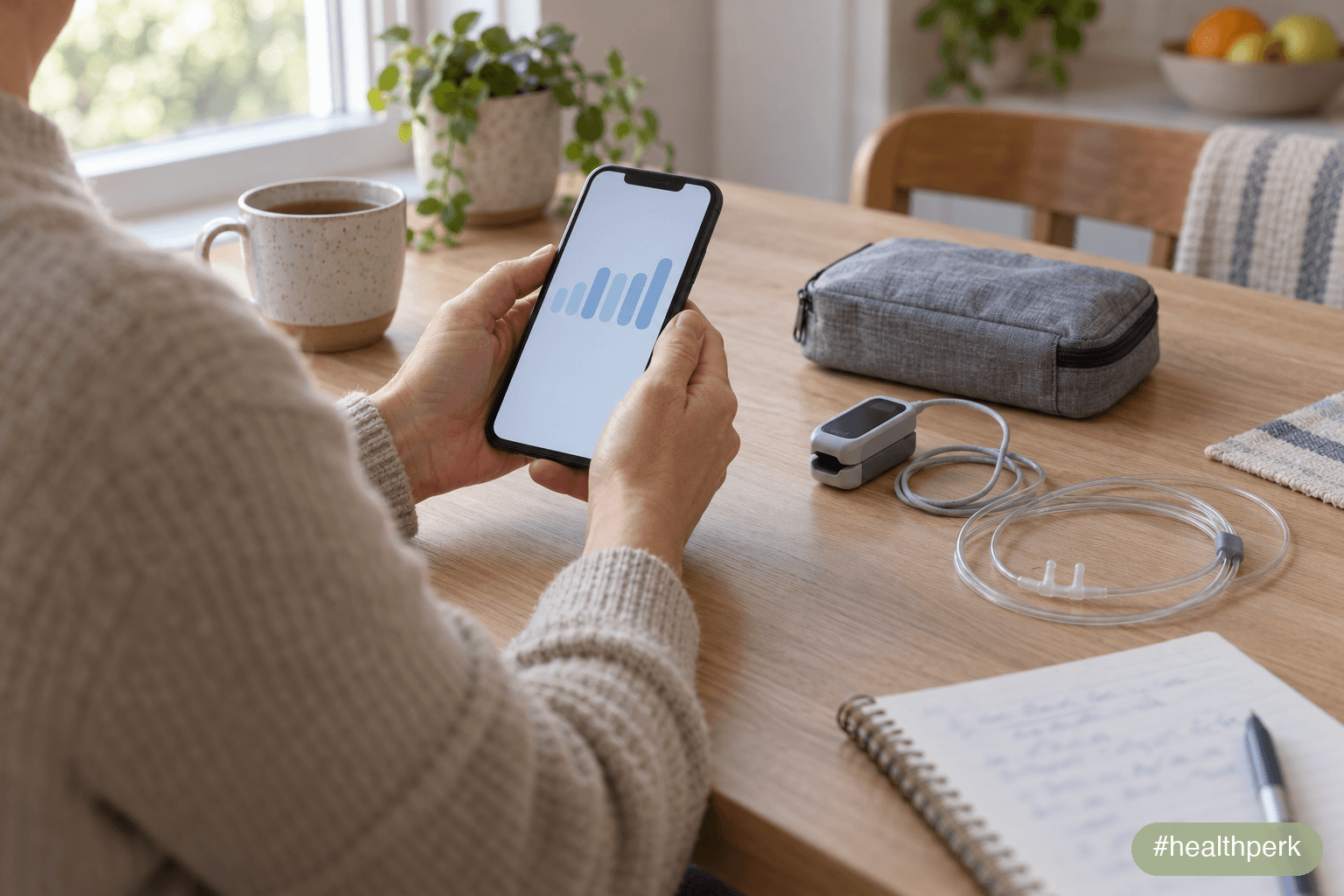 Bring your CPAP usage data or wearable trends to appointments; a home sleep test is what actually confirms the diagnosis.
Related Articles on Health Perk
- Best Sleep Tracker for Light Sleepers: 2026 Devices Compared
- Oura Ring 5 Review: Is It the Best Smart Ring of 2026?
- Wearable Health Devices List 2026: Sleep, Focus, Recovery & App Integration
- Why Do I Feel Tired After Sleeping 8 Hours?
- Why Can't I Lose Weight Even Dieting?
Frequently Asked Questions
Is tirzepatide approved for sleep apnea?
Yes. On December 20, 2024, the FDA approved Zepbound (tirzepatide) for moderate to severe obstructive sleep apnea in adults with obesity, together with a reduced-calorie diet and more physical activity. Approval rested on two 52-week trials in 469 adults without type 2 diabetes. It is not approved for OSA in people without obesity.
How much do GLP-1 drugs reduce AHI compared with CPAP?
A September 2026 JAMA Otolaryngology review found GLP-1 drugs reduced AHI by 5.7 to 21.9 events per hour across six meta-analyses, versus about 31 for CPAP. Tirzepatide cut AHI by 20 to 24 events per hour more than placebo. These figures come from different trials, not head-to-head studies.
Can I stop using CPAP if I start Zepbound?
Not on your own. Weight loss and AHI improvement build up over months, and in SURMOUNT-OSA only 42–50% of participants reached remission or mild, symptom-free OSA after a year. Keep using CPAP and ask for a repeat sleep test after significant weight loss to decide whether pressure can be lowered or therapy stopped.
Can an Apple Watch or Samsung watch diagnose sleep apnea?
No. Both are FDA-authorized only to notify undiagnosed adults of possible sleep apnea. Apple's feature caught 66.3% of moderate to severe cases in validation testing, so it misses about one in three. An alert means you should book a sleep test, and no alert does not rule out sleep apnea.
What is a good STOP-BANG score?
A score of 0–2 suggests low risk of moderate to severe OSA, 3–4 intermediate risk, and 5–8 high risk. A score of 3 or more caught 93% of moderate to severe cases in validation studies but also flags many people without OSA. It is a screening tool; diagnosis needs a home sleep test or polysomnography.
Do oral appliances work as well as CPAP?
They generally lower AHI less than CPAP, but some people wear them more consistently. AASM guidelines recommend a custom, titratable appliance fitted by a qualified dentist for adults who cannot tolerate CPAP or prefer an alternative, followed by a sleep test to confirm the device is actually controlling the apnea.
Does sleeping on my side help sleep apnea?
For people whose apnea happens mainly on their back, it can. A Cochrane review found CPAP lowered AHI by about 6.4 more events per hour than positional therapy, but people used positional devices about 2.5 hours longer each night. A sleep study showing position-dependent OSA should guide the choice.
Will GLP-1 drugs help sleep apnea if I'm not overweight?
Probably not. The 2026 JAMA review concluded that GLP-1 drugs are unlikely to help people without obesity or whose OSA mainly comes from airway anatomy, such as jaw structure or large tonsils. For them, CPAP, oral appliances, positional therapy, or an ear, nose, and throat evaluation are better options to discuss with a doctor.
Medical Disclaimer: This article is for informational purposes only and does not constitute medical advice. Obstructive sleep apnea is a medical condition that requires diagnosis by a qualified clinician. Do not start, stop, or change any medication or CPAP therapy without consulting your healthcare provider. If you have chest pain, severe breathlessness, or fall asleep while driving, seek medical care promptly. See how we review for our editorial standards.
References
- Harris A, Kaffenberger T (2026). Glucagon-Like Peptide-1 Receptor Agonists for Obstructive Sleep Apnea: A Review. JAMA Otolaryngology–Head & Neck Surgery, 152(10), 992–1000. https://doi.org/10.1001/jamaoto.2026.2266
Supports: GLP-1 RAs reduce AHI by 5.7–21.9 events/h across six meta-analyses; ~22 vs 31 events/h compared with CPAP; CPAP adherence 30–60%; best used as complementary therapy; unlikely to help people without obesity.
- Carvalhal G, Mora MMR, Peralta-Jiménez GA, Ayasa L, Barrera V, Advani K, Aljazeeri J (2026). GLP-1 receptor agonists for obstructive sleep apnea: a meta-analysis of randomized controlled trials. Sleep and Breathing, 30(5), 279. https://doi.org/10.1007/s11325-026-03826-5
Supports: 6 RCTs, 1,069 participants; AHI −9.99 events/h, weight −9.68 kg, SBP −4.77 mmHg; not substitutes for CPAP.
- Chiappa GR, Santos PCN, Cavalcante DVS, Sá Filho AS, Prado N, Lombardo KM, Sequero PS, Esquinas AM (2026). Comparative effectiveness of continuous positive airway pressure and glucagon-like peptide-1 receptor agonists in obstructive sleep apnea: A network meta-analysis of randomised trials. Diabetes, Obesity and Metabolism, 28(5), 3557–3567. https://doi.org/10.1111/dom.70572
Supports: 34 trials, 3,964 participants; CPAP gave the largest AHI reduction (−22.17 events/h) and improved sleepiness; GLP-1 RAs mainly improved weight and glycemic indices.
- Malhotra A, Grunstein RR, Fietze I, Weaver TE, Redline S, Azarbarzin A, Sands SA, Schwab RJ, et al. (2024). Tirzepatide for the Treatment of Obstructive Sleep Apnea and Obesity. New England Journal of Medicine, 391(13), 1193–1205. https://doi.org/10.1056/NEJMoa2404881
Supports: SURMOUNT-OSA AHI changes (−25.3 and −29.3 events/h), weight loss 17.7–19.6%, remission/mild-OSA rates 42.2–50.2%, GI adverse event rates.
- U.S. Food and Drug Administration (2024). FDA Approves First Medication for Obstructive Sleep Apnea. FDA News Release. https://www.fda.gov/news-events/press-announcements/fda-approves-first-medication-obstructive-sleep-apnea
Supports: December 20, 2024 approval of Zepbound for moderate to severe OSA in adults with obesity; 469 adults; 10 or 15 mg weekly for 52 weeks.
- U.S. Food and Drug Administration (2024). 510(k) Summary K240929: Sleep Apnea Notification Feature (SANF). FDA CDRH. https://www.accessdata.fda.gov/cdrh_docs/pdf24/K240929.pdf
Supports: Apple Watch sleep apnea notification cleared September 13, 2024; sensitivity 66.3%, specificity 98.5%; not intended to diagnose; absence of notification does not rule out sleep apnea.
- American Academy of Sleep Medicine (2024). Samsung Galaxy Watch sleep apnea feature receives FDA authorization. AASM News. https://aasm.org/samsung-galaxy-watch-sleep-apnea-feature-receives-fda-authorization/
Supports: Samsung's sleep apnea feature received FDA De Novo authorization in February 2024 for adults 22+ without a prior diagnosis.
- Chung F, Abdullah HR, Liao P (2016). STOP-Bang Questionnaire: A Practical Approach to Screen for Obstructive Sleep Apnea. Chest, 149(3), 631–638. https://doi.org/10.1378/chest.15-0903
Supports: STOP-BANG items, score bands (0–2 low, 5–8 high), 93% and 100% sensitivity at score ≥3.
- Kapur VK, Auckley DH, Chowdhuri S, Kuhlmann DC, Mehra R, Ramar K, Harrod CG (2017). Clinical Practice Guideline for Diagnostic Testing for Adult Obstructive Sleep Apnea: An American Academy of Sleep Medicine Clinical Practice Guideline. Journal of Clinical Sleep Medicine, 13(3), 479–504. https://doi.org/10.5664/jcsm.6506
Supports: questionnaires should not diagnose OSA; HSAT or PSG for uncomplicated patients; PSG after negative HSAT and for complex patients.
- Patil SP, Ayappa IA, Caples SM, Kimoff RJ, Patel SR, Harrod CG (2019). Treatment of Adult Obstructive Sleep Apnea with Positive Airway Pressure: An American Academy of Sleep Medicine Clinical Practice Guideline. Journal of Clinical Sleep Medicine, 15(2), 335–343. https://doi.org/10.5664/jcsm.7640
Supports: PAP strongly recommended for OSA with excessive sleepiness; CPAP/APAP over BPAP; education and troubleshooting at PAP initiation.
- Ramar K, Dort LC, Katz SG, Lettieri CJ, Harrod CG, Thomas SM, Chervin RD (2015). Clinical Practice Guideline for the Treatment of Obstructive Sleep Apnea and Snoring with Oral Appliance Therapy: An Update for 2015. Journal of Clinical Sleep Medicine, 11(7), 773–827. https://doi.org/10.5664/jcsm.4858
Supports: oral appliances for CPAP-intolerant adults; custom titratable device; follow-up sleep testing and dental oversight.
- Srijithesh PR, Aghoram R, Goel A, Dhanya J (2019). Positional therapy for obstructive sleep apnoea. Cochrane Database of Systematic Reviews, 2019(5), CD010990. https://doi.org/10.1002/14651858.CD010990.pub2
Supports: CPAP reduced AHI 6.4 events/h more than positional therapy; similar sleepiness scores; positional therapy used ~2.5 h/night longer.
- Benjafield AV, Ayas NT, Eastwood PR, Heinzer R, Ip MSM, Morrell MJ, et al. (2019). Estimation of the global prevalence and burden of obstructive sleep apnoea: a literature-based analysis. The Lancet Respiratory Medicine, 7(8), 687–698. https://doi.org/10.1016/S2213-2600(19)30198-5
Supports: 936 million adults aged 30–69 with OSA worldwide; 425 million moderate to severe.
- McEvoy RD, Antic NA, Heeley E, Luo Y, Ou Q, Zhang X, et al. (2016). CPAP for Prevention of Cardiovascular Events in Obstructive Sleep Apnea. New England Journal of Medicine, 375(10), 919–931. https://doi.org/10.1056/NEJMoa1606599
Supports: CPAP reduced AHI from 29.0 to 3.7 events/h; mean adherence 3.3 h/night; no reduction in cardiovascular events; improved sleepiness, snoring, quality of life, and mood.
Frequently Asked Questions
Is tirzepatide approved for sleep apnea?
Yes. On December 20, 2024, the FDA approved Zepbound (tirzepatide) for moderate to severe obstructive sleep apnea in adults with obesity, together with a reduced-calorie diet and more physical activity. Approval rested on two 52-week trials in 469 adults without type 2 diabetes. It is not approved for OSA in people without obesity.
How much do GLP-1 drugs reduce AHI compared with CPAP?
A September 2026 JAMA Otolaryngology review found GLP-1 drugs reduced AHI by 5.7 to 21.9 events per hour across six meta-analyses, versus about 31 for CPAP. Tirzepatide cut AHI by 20 to 24 events per hour more than placebo. These figures come from different trials, not head-to-head studies.
Can I stop using CPAP if I start Zepbound?
Not on your own. Weight loss and AHI improvement build up over months, and in SURMOUNT-OSA only 42–50% of participants reached remission or mild, symptom-free OSA after a year. Keep using CPAP and ask for a repeat sleep test after significant weight loss to decide whether pressure can be lowered or therapy stopped.
Can an Apple Watch or Samsung watch diagnose sleep apnea?
No. Both are FDA-authorized only to notify undiagnosed adults of possible sleep apnea. Apple's feature caught 66.3% of moderate to severe cases in validation testing, so it misses about one in three. An alert means you should book a sleep test, and no alert does not rule out sleep apnea.
What is a good STOP-BANG score?
A score of 0–2 suggests low risk of moderate to severe OSA, 3–4 intermediate risk, and 5–8 high risk. A score of 3 or more caught 93% of moderate to severe cases in validation studies but also flags many people without OSA. It is a screening tool; diagnosis needs a home sleep test or polysomnography.
Do oral appliances work as well as CPAP?
They generally lower AHI less than CPAP, but some people wear them more consistently. AASM guidelines recommend a custom, titratable appliance fitted by a qualified dentist for adults who cannot tolerate CPAP or prefer an alternative, followed by a sleep test to confirm the device is actually controlling the apnea.
Does sleeping on my side help sleep apnea?
For people whose apnea happens mainly on their back, it can. A Cochrane review found CPAP lowered AHI by about 6.4 more events per hour than positional therapy, but people used positional devices about 2.5 hours longer each night. A sleep study showing position-dependent OSA should guide the choice.
Will GLP-1 drugs help sleep apnea if I'm not overweight?
Probably not. The 2026 JAMA review concluded that GLP-1 drugs are unlikely to help people without obesity or whose OSA mainly comes from airway anatomy, such as jaw structure or large tonsils. For them, CPAP, oral appliances, positional therapy, or an ear, nose, and throat evaluation are better options to discuss with a doctor.