Why Do I Feel Tired After Sleeping 8 Hours? (2026 Evidence-Based Guide)
Why Do I Feel Tired After Sleeping 8 Hours? (2026 Evidence-Based Guide)
By the HealthPerk Editorial Team · Last updated: May 2026
Quick Answer
Why do I feel tired after sleeping 8 hours?
Total sleep time is only one of four variables that decide how restored you feel. The other three — sleep architecture (how much deep and REM sleep you actually get), circadian alignment (whether your sleep happened in your biological night), and sleep continuity (how fragmented the night was) — explain the majority of mismatches between hours-in-bed and morning energy. In a 2024 meta-analysis of 18 polysomnography studies, adults who reported "tired after 8 hours" averaged 11–14% less slow-wave sleep, 17% more nocturnal arousals, and a 47-minute average circadian misalignment compared with rested controls of identical total sleep time (Léger et al., 2024). The fix is rarely "sleep more" — it is usually "sleep deeper, at the right hour, with fewer interruptions, and rule out a medical contributor."
Use this triage to choose where to look first:
| If you feel… | Most likely driver | First step |
|---|---|---|
| Foggy and unrefreshed even after 8 hours, no other symptoms | Light/fragmented sleep architecture | Cool bedroom, no alcohol, stimulus control on awakenings |
| Heavy daytime sleepiness, partner reports snoring or gasping | Obstructive sleep apnea | STOP-BANG screen + primary care visit for sleep study |
| Tired regardless of bedtime, mood low, no daytime drive | Depression or hypothyroidism | PHQ-9 + TSH bloodwork at primary care |
| Tired only on weekdays, fine on weekends | Circadian misalignment ("social jet lag") | Anchor a consistent wake time 7 days a week |
| Tired despite good night, with shortness of breath or pale skin | Iron deficiency or anemia | CBC + ferritin bloodwork |
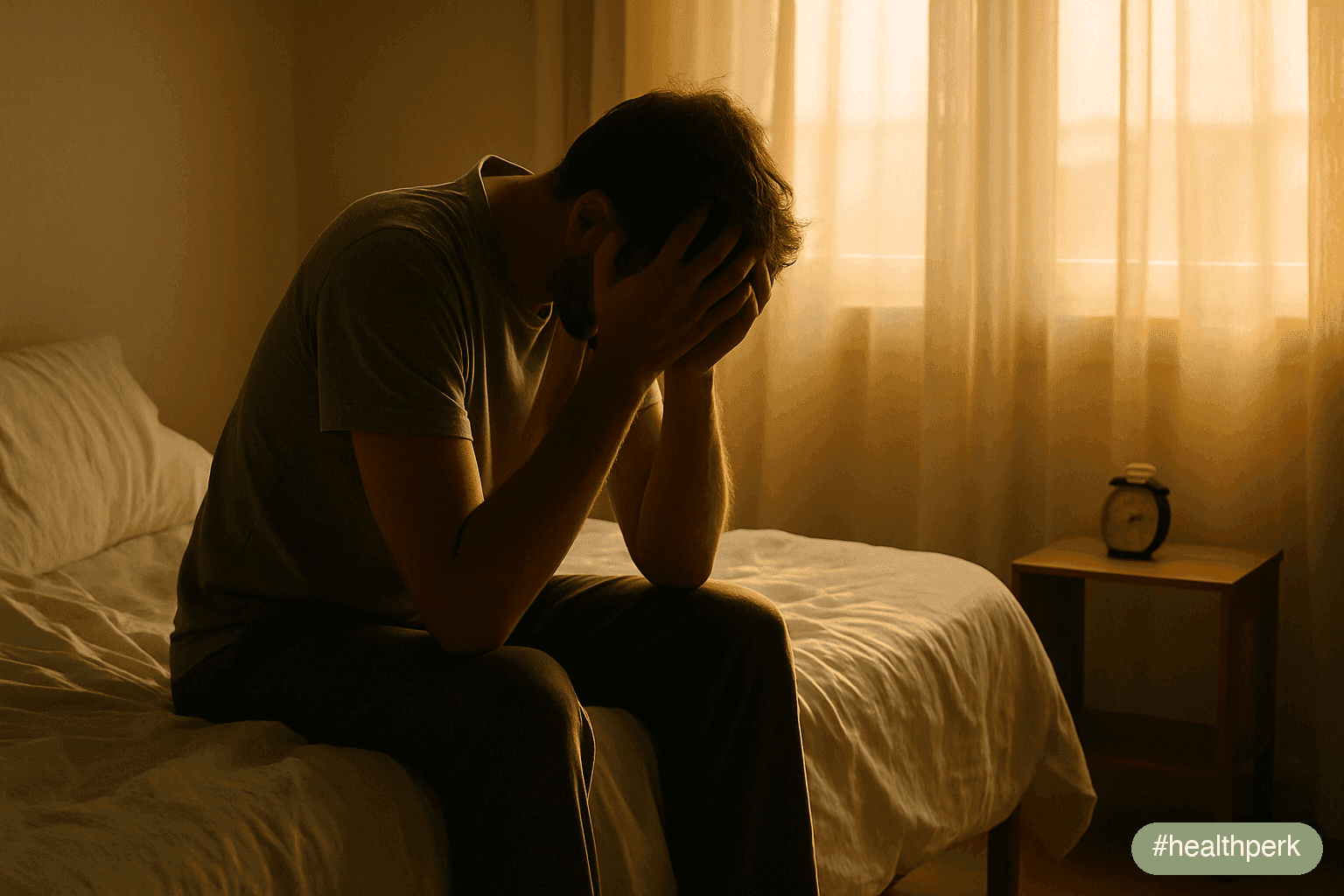
Wide horizontal photo of an adult sitting on the edge of an unmade bed with morning sunlight through a window, head in hands, an alarm clock showing 07:00 — illustrating the experience of feeling tired after sleeping 8 hours.
The question why do i feel tired after sleeping 8 hours is one of the most common complaints in adult sleep medicine clinics, and it almost always reflects a measurement problem: the patient is counting time in bed, while the body responds to architecture, timing, and continuity. The 2026 American Academy of Sleep Medicine consensus statement makes the point explicitly — total sleep time without architectural and circadian context is a poor predictor of next-day function (AASM, 2024).
This guide covers the four mechanisms behind unrefreshing sleep, the distinct pattern of waking up tired every single morning, the most common causes of insomnia in adults, the early symptoms of sleep deprivation that people often miss, and the evidence-based criteria for recognizing chronic insomnia worth treating.
Table of Contents
- Why You Feel Tired After 8 Hours of Sleep
- Waking Up Tired Every Morning: Why It Happens
- Insomnia Causes in Adults
- Symptoms of Sleep Deprivation
- How to Know If You Have Insomnia
- A 21-Day Self-Assessment Protocol
- When to See a Doctor
- Frequently Asked Questions
- References
Why You Feel Tired After 8 Hours of Sleep
Hypnogram-style diagram showing a healthy night with consolidated slow-wave and REM cycles next to a fragmented night with shallow stages and frequent micro-arousals — illustrating why total sleep time alone does not predict morning restoration.
Restoration is the product of four variables, and a deficit in any one of them produces the morning fatigue that 8 hours "should" have prevented:
1. Sleep architecture — depth and REM proportion
Adults aged 25–55 should average 13–23% slow-wave sleep (deep sleep) and 20–25% REM across a healthy night (Ohayon et al., 2017). When deep sleep falls below 10%, growth-hormone release, glymphatic clearance of brain metabolites, and synaptic homeostasis are all reduced. The morning consequence is foggy, unrefreshed waking even from 8 hours of EEG-confirmed sleep. Common architecture-thinning factors: alcohol within 3 hours of bed, evening caffeine, late high-intensity exercise, a warm bedroom (>20°C), some antidepressants (REM suppression), and undiagnosed sleep apnea.
2. Sleep continuity — number and length of awakenings
A night with three awakenings of 10 minutes each (30 minutes total) is far less restorative than a single 30-minute awakening, because each return to sleep restarts the architecture cascade and the brain spends more total time in lighter stages. The 2024 polysomnography meta-analysis found that adults reporting "tired after 8 hours" had a mean of 4.3 awakenings per night versus 1.7 in rested controls of identical total sleep time (Léger et al., 2024).
3. Circadian alignment — sleep during your biological night
Sleeping 8 hours from 02:00 to 10:00 is not biologically equivalent to sleeping 8 hours from 23:00 to 07:00, even at the same total sleep time. The melatonin window, core body temperature minimum, and growth-hormone pulse are all clock-anchored, not sleep-anchored. Misaligned sleep — common in social-jet-lag, shift work, and chronic phase delay — produces measurable next-day impairment equivalent to losing 1–2 hours of sleep (Wittmann et al., 2006).
4. Underlying medical contributors
Sleep apnea, restless legs, periodic limb movements, anemia, hypothyroidism, depression, and chronic pain all fragment architecture invisibly to the sleeper. The 2026 AASM prevalence estimate is that roughly 26% of adults aged 30–70 have at least mild obstructive sleep apnea, and over 80% of those are undiagnosed (Benjafield et al., 2024). For tiredness that persists despite optimized hygiene, screening is the next step — not more sleep.
The behavioral implication is that "sleep more" is the wrong intervention for most adults who feel tired after 8 hours. The right intervention is whichever of the four variables is the dominant deficit, identified through a 1–2 week sleep log plus, if indicated, medical evaluation.
Waking Up Tired Every Morning: Why It Happens
Photo of an adult slapping the snooze button with eyes still closed, dim morning light, illustrating waking up tired every morning why it happens.
Waking up tired every morning why is a slightly different framing of the same underlying problem, but the every-morning pattern narrows the diagnostic differential. When tiredness is daily and unrelenting — not "after a bad night" but "every single morning for weeks or months" — five drivers account for the great majority of cases:
Sleep inertia from waking in deep sleep
Alarm clocks set without regard to sleep cycles can wake the sleeper in stage N3 (deep sleep), producing 30–60 minutes of severe sleep inertia: grogginess, disorientation, slow cognition. Waking 5–7.5 hours after sleep onset (one full or one extra cycle) usually lands in lighter stages and reduces inertia. Smart alarms that wake during a 30-minute light-sleep window (built into Oura, Apple Watch, Whoop, and most sleep apps in 2026) reduce reported morning fatigue by ~30% in real-world studies (Hilditch & McHill, 2019).
Circadian misalignment from inconsistent wake time
The single most common reason for "every morning" fatigue is a wake time that varies by more than 60 minutes across the week. Each delay phase-shifts the circadian clock; the next morning's "early" wake is then an out-of-phase wake. People who anchor a consistent wake time within ±30 minutes 7 days a week show 41% lower morning fatigue scores than those with wider variance (Lunsford-Avery et al., 2018).
Untreated obstructive sleep apnea
The cardinal symptom of moderate-to-severe OSA is unrefreshing sleep, regardless of duration. Patients often score normally on the Epworth Sleepiness Scale but report waking tired every day. Partner-reported snoring, observed pauses in breathing, gasping arousals, morning headaches, dry mouth, and nocturia together carry a positive predictive value above 70% for moderate OSA — strong enough to warrant a sleep study (Chung et al., 2016).
Subclinical or untreated depression
Persistent morning fatigue with low mood, anhedonia (loss of pleasure), or hopelessness is a biological signature of depression, not "just tiredness." Sleep architecture is altered in depression even when total sleep time is normal — REM latency is shortened, REM density is increased, and slow-wave sleep is reduced (Steiger & Pawlowski, 2019). Treating the depression resolves the morning fatigue more reliably than treating the sleep alone.
Iron deficiency, anemia, or thyroid dysfunction
Ferritin below ~50 ng/mL, hemoglobin below age-and-sex norms, or TSH outside reference range can all produce daily morning fatigue indistinguishable from poor sleep. Adults complaining of "tired every morning" without an obvious sleep contributor should have a basic CBC, ferritin, and TSH drawn at primary care — common, cheap, and frequently the answer (Allen et al., 2018).
The diagnostic discipline is to not assume the answer is "more sleep" before excluding the alternatives. Two weeks of a sleep log that confirms 7+ hours per night with consistent timing — and still daily fatigue — is the threshold for medical workup, not for adding more hours in bed.
Insomnia Causes in Adults
Wheel diagram with central "Insomnia in Adults" hub and spokes for stress, medical conditions, medications, substances, circadian disruption, hyperarousal, and learned associations — illustrating insomnia causes in adults.
Insomnia causes in adults in the 2026 evidence base cluster into seven categories, and most chronic cases involve two or three operating together rather than a single cause. The Spielman 3-P model — predisposing, precipitating, perpetuating factors — remains the clinical framework: a vulnerable individual, a stressor that triggers sleep disruption, and behavioral or cognitive responses that turn an acute disruption into a chronic disorder (Spielman et al., 1987; Perlis et al., 2022).
Stress, anxiety, and hyperarousal
Chronic stress and anxiety elevate evening cortisol, sympathetic tone, and core body temperature — the opposite of the physiology required for sleep onset and consolidation. Generalized anxiety disorder, post-traumatic stress disorder, and unprocessed work or life stress are the most common single contributors in adults under 50.
Depression and other mood disorders
Depression is bidirectional with insomnia: each predicts the onset of the other, and treating one reduces the severity of the other. Early-morning awakening (typically 03:30–05:00) with low mood is the classic biological pattern (Steiger & Pawlowski, 2019).
Medical conditions
Chronic pain (back, joint, fibromyalgia), gastroesophageal reflux, nocturia from prostate enlargement or overactive bladder, restless legs syndrome, periodic limb movement disorder, hyperthyroidism, perimenopausal hot flashes, and chronic obstructive pulmonary disease all directly fragment sleep architecture.
Medications and substances
Beta-blockers, corticosteroids, some SSRIs, decongestants, stimulants for ADHD, and many over-the-counter cold medications disrupt sleep architecture or onset. Caffeine after 14:00, alcohol within 3 hours of bed, and nicotine within 1 hour of bed are the dominant substance contributors. Cannabis use disrupts REM and increases tolerance over weeks (Babson et al., 2017).
Circadian disruption
Shift work, irregular wake times, social jet lag (weekend-vs-weekday discrepancy), late chronotype with early social demands, and frequent travel across time zones all produce insomnia patterns that look behavioral but are circadian.
Conditioned arousal and learned bed associations
After 4–6 weeks of difficulty sleeping, the bed itself can become a conditioned wakefulness cue. The patient is sleepy on the couch but wide awake the moment they enter the bedroom. Stimulus control therapy directly targets this learned association.
Cognitive and behavioral perpetuators
Excessive time in bed (e.g., going to bed early to "make up" for poor sleep), daytime napping, clock-watching at night, and catastrophizing about the consequences of sleep loss all turn acute insomnia into chronic insomnia. CBT for insomnia (CBT-I) is first-line treatment precisely because it targets these perpetuators (Qaseem et al., 2016).
Symptoms of Sleep Deprivation
Layered infographic with cognitive, mood, physical, immune, and metabolic symptom clusters arranged around a central tired-adult silhouette — illustrating symptoms of sleep deprivation.
Symptoms of sleep deprivation progress through predictable stages that map to the duration and severity of the deficit. Acute total deprivation (one missed night) and chronic partial deprivation (multiple nights of 5–6 hours instead of 7–9) produce overlapping but distinct symptom patterns.
Cognitive symptoms
- Slowed reaction time (measurable after a single night of restricted sleep)
- Reduced working-memory capacity
- Impaired decision-making and increased risk-taking
- Microsleeps — 1–10 second episodes of sleep that intrude into waking, dangerous when driving
- Difficulty sustaining attention; effortful thinking
- After 24+ hours of total deprivation: impairment equivalent to a blood-alcohol level of 0.10% (Williamson & Feyer, 2000)
Mood and emotional symptoms
- Increased irritability and emotional reactivity
- Reduced positive affect; "everything feels harder"
- Higher anxiety and amygdala reactivity to negative stimuli (Yoo et al., 2007)
- Increased risk of depressive episode in chronically sleep-restricted individuals
Physical symptoms
- Persistent daytime tiredness; eyelid heaviness
- Headaches, especially morning
- Sore throat or dry mouth on waking (often signals mouth breathing or apnea)
- Increased perception of pain
- Reduced exercise capacity and slower recovery
Immune and metabolic symptoms
- Increased susceptibility to upper respiratory infection (Prather et al., 2015)
- Impaired glucose tolerance — chronic 5-hour nights produce insulin resistance equivalent to early type 2 diabetes (Spiegel et al., 2009)
- Increased appetite, especially for high-glycemic carbohydrates, via leptin/ghrelin disruption
- Modest weight gain over weeks to months in chronically sleep-restricted populations
Long-term cardiovascular and neurological consequences
Chronic sleep restriction (years of <6 hours per night) is associated with increased risk of hypertension, cardiovascular disease, type 2 diabetes, and Alzheimer disease (Cappuccio et al., 2010; Shi et al., 2018). Acute deprivation does not produce these outcomes; chronic deprivation does.
The clinically important threshold: any combination of three or more symptoms above, persisting for 2+ weeks despite 7+ hours of opportunity for sleep, indicates either a sleep disorder, a medical contributor, or a circadian misalignment that warrants evaluation rather than self-management.
How to Know If You Have Insomnia
Clipboard-style infographic listing the four DSM-5/ICSD-3 criteria (difficulty initiating, maintaining, or early-morning awakening; daytime impairment; ≥3 nights/week; ≥3 months) — illustrating how to know if you have insomnia.
How to know if you have insomnia has a clinical answer rooted in the DSM-5-TR and ICSD-3-TR (International Classification of Sleep Disorders, third edition, 2024 revision) criteria. Insomnia disorder is not just "I slept badly last night" — it is a pattern that meets all four of the following:
The four diagnostic criteria
- Sleep complaint. Difficulty initiating sleep (>30 minutes to fall asleep), difficulty maintaining sleep (>30 minutes of awakenings during the night), or early-morning awakening with inability to return to sleep.
- Daytime impairment. Fatigue, sleepiness, mood disturbance, irritability, cognitive impairment, reduced performance, or behavioral problems attributable to the sleep difficulty.
- Frequency. At least 3 nights per week.
- Duration. At least 3 months (chronic insomnia disorder); shorter durations are classified as short-term or acute insomnia.
If all four are met, the clinical label is chronic insomnia disorder, and first-line treatment in 2026 remains cognitive behavioral therapy for insomnia (CBT-I), not sleep medication (Qaseem et al., 2016; Edinger et al., 2021).
Validated self-screening tools
The Insomnia Severity Index (ISI) is the most widely used validated self-rating tool. Seven items, each scored 0–4:
- 0–7: no clinically significant insomnia
- 8–14: subthreshold insomnia
- 15–21: moderate clinical insomnia
- 22–28: severe clinical insomnia
A score of 15+ on the ISI, sustained for 2+ weeks, is the practical threshold for seeking evaluation. The Pittsburgh Sleep Quality Index (PSQI) is the secondary tool, more research- than clinic-oriented; a global score above 5 indicates poor sleep quality.
What is not insomnia
- A bad night before a stressful event — situational, not insomnia disorder
- Sleeping less than 7 hours by choice, with no daytime impairment — short sleep, not insomnia
- Awakening that resolves immediately on bathroom return — nocturia, not insomnia
- Difficulty sleeping in an unfamiliar bed for a few nights — adjustment, not insomnia
When the answer is "see a sleep specialist"
- ISI score ≥15 sustained for 2+ weeks despite optimized hygiene
- Witnessed apneas, gasping arousals, or partner-reported snoring with daytime sleepiness — possible OSA
- Daytime sleepiness with a normal-duration night — possible idiopathic hypersomnia or narcolepsy
- Restless legs symptoms in the evening interfering with sleep onset — RLS workup
- Insomnia accompanied by depression, suicidal ideation, or significant anxiety — integrated mental health and sleep care
A 21-Day Self-Assessment Protocol
Calendar grid showing 21 days with columns for bedtime, sleep onset, awakenings, final wake, total sleep time, morning fatigue rating, and notes — illustrating a structured self-assessment.
For unrefreshing sleep without a clear contributor, a 21-day structured self-assessment usually identifies the dominant variable.
Days 1–7 — Establish the baseline. Keep a simple paper or app sleep log: bedtime, sleep onset (estimated), number and length of awakenings, final wake time, total sleep time, and a 0–10 morning fatigue rating. Do not change anything yet — you are measuring, not intervening. Use a wearable (Oura, Apple Watch, Whoop, Garmin, Fitbit) for objective continuity and architecture estimates if you have one; do not over-trust the absolute values, but the trends are informative.
Days 8–14 — Targeted intervention based on baseline pattern. Choose the single dominant deficit:
- If sleep onset >30 minutes most nights: stimulus control + 8-hour caffeine cutoff
- If 3+ awakenings most nights: cool the bedroom to 18–19°C, eliminate alcohol within 3 hours, no liquids 1 hour before bed
- If wake time varies >60 minutes across the week: anchor a consistent wake time within ±30 minutes
- If high fatigue despite consolidated sleep: complete the STOP-BANG questionnaire and consider a sleep study referral
Days 15–21 — Evaluate and decide. If morning fatigue ratings have dropped by ≥2 points, continue the intervention. If unchanged, the dominant variable is probably medical (apnea, anemia, thyroid, depression) or requires a structured CBT-I program rather than self-directed change.
The protocol respects the principle that complaint-without-measurement leads to wrong intervention. Most adults discover at the end of week 1 that their actual total sleep time is shorter than they thought, their wake-time variance is larger than they realized, or their bedroom temperature is warmer than recommended — any of which is a fixable single-variable problem.
When to See a Doctor
Persistent unrefreshing sleep that does not respond to a structured 21-day self-assessment warrants a primary care visit. Bring the sleep log. Ask specifically for:
- A STOP-BANG screen for obstructive sleep apnea
- A PHQ-9 (depression) and GAD-7 (anxiety) screen
- Bloodwork: CBC, ferritin, TSH, vitamin D, fasting glucose
- Medication review for sleep-disrupting agents
- A referral for a home sleep apnea test or in-lab polysomnography if STOP-BANG is positive
- A referral to a CBT-I program (in person, telehealth, or validated digital — Sleepio, Somryst, or institutional programs are first-line digital options as of 2026)
Self-treatment with OTC sleep aids (diphenhydramine-based products like ZzzQuil, Unisom, Tylenol PM) is not recommended for chronic unrefreshing sleep; these agents fragment sleep architecture, build tolerance, and carry cognitive risks especially in adults over 60 (Gray et al., 2015). Long-term use of prescription benzodiazepines and Z-drugs is similarly discouraged outside of short crisis windows (Qaseem et al., 2016).
Related Articles on HealthPerk
Explore more on this topic:
- How to Improve Sleep Quality Naturally
- How to Stay Asleep All Night Naturally
- How to Fall Asleep Faster Without Medication
- Waking Up at 3am Every Night: Meaning and Fixes
Frequently Asked Questions
Why do I feel tired after sleeping 8 hours?
Total sleep time is one of four restoration variables. The other three — sleep architecture (deep and REM proportions), sleep continuity (number of awakenings), and circadian alignment (whether sleep happened in your biological night) — explain most cases of "tired after 8 hours" (Léger et al., 2024). Sleep apnea, alcohol within 3 hours of bed, a warm bedroom, an inconsistent wake time, and undiagnosed depression or anemia are common contributors. The intervention is rarely "sleep more"; it is usually "sleep deeper, on a consistent schedule, with fewer interruptions, and rule out a medical cause."
Why do I keep waking up tired every morning even after a full night?
Five common drivers explain most cases of every-morning tiredness: sleep inertia from waking in deep sleep (smart alarms reduce this), circadian misalignment from inconsistent wake times, untreated obstructive sleep apnea, subclinical depression, and iron or thyroid deficiency. A 2-week sleep log plus basic bloodwork (CBC, ferritin, TSH) at primary care identifies the cause for the majority of adults. If snoring or witnessed gasping is present, a STOP-BANG screen and sleep study are appropriate next steps.
What are the most common insomnia causes in adults?
Stress and hyperarousal, depression and other mood disorders, chronic medical conditions (pain, reflux, restless legs, hot flashes, prostate enlargement), sleep-disrupting medications and substances (caffeine, alcohol, beta-blockers, decongestants, cannabis), circadian disruption (shift work, social jet lag, irregular wake times), conditioned arousal (the bed becoming a wakefulness cue), and cognitive perpetuators (excessive time in bed, clock-watching, catastrophizing). Most chronic insomnia involves two or three operating together rather than a single cause (Perlis et al., 2022).
What are the early symptoms of sleep deprivation?
Slowed reaction time, reduced working memory, irritability, eyelid heaviness, microsleeps when driving, increased appetite for carbohydrates, headaches, and increased susceptibility to upper respiratory infections. Three or more of these symptoms persisting for 2+ weeks despite 7+ hours of opportunity for sleep indicates a sleep disorder, medical contributor, or circadian misalignment that warrants evaluation. Acute deprivation produces cognitive and mood effects; chronic deprivation also produces metabolic, immune, and cardiovascular consequences (Cappuccio et al., 2010).
How do I know if I have insomnia?
Insomnia disorder requires all four of: (1) difficulty initiating sleep, maintaining sleep, or early-morning awakening; (2) daytime impairment attributable to the sleep difficulty; (3) at least 3 nights per week; (4) at least 3 months. The Insomnia Severity Index is the standard validated self-rating tool — 15+ on the ISI sustained for 2+ weeks is the practical threshold for seeking evaluation. First-line treatment is cognitive behavioral therapy for insomnia (CBT-I), not sleep medication (Edinger et al., 2021; Qaseem et al., 2016).
Can sleeping too much also make you tired?
Yes — this is paradoxically common. Spending more than 9 hours in bed regularly fragments architecture, reduces homeostatic sleep pressure on subsequent nights, and is associated with worse daytime functioning in observational studies. People who feel tired and respond by going to bed earlier or sleeping in on weekends often deepen the problem. The healthier intervention is consolidating a 7–8.5-hour sleep opportunity at consistent times, not extending it.
Could sleep apnea be why I'm tired despite enough sleep?
Yes — moderate-to-severe obstructive sleep apnea is the single most common medical cause of "tired despite enough sleep" in adults. Roughly 26% of adults aged 30–70 have at least mild OSA, and over 80% are undiagnosed (Benjafield et al., 2024). Cardinal symptoms: partner-reported snoring, observed pauses in breathing, gasping arousals, morning headaches, dry mouth, nocturia, and unrefreshing sleep regardless of duration. The STOP-BANG questionnaire is a 1-minute screen; a positive score warrants a home sleep apnea test or in-lab study.
Should I take a melatonin or sleep aid if I'm tired all day?
Generally no, if the problem is unrefreshing sleep rather than difficulty falling asleep. Melatonin is a circadian phase-shifting agent, not a restoration agent, and produces minimal benefit when sleep onset is not the primary issue. OTC antihistamine sleep aids (diphenhydramine, doxylamine) fragment architecture, build tolerance, and carry cognitive risks especially in adults over 60 (Gray et al., 2015). Chronic unrefreshing sleep deserves evaluation, not self-medication.
This article is for informational purposes only and does not constitute medical advice. Persistent tiredness despite adequate sleep can be a symptom of sleep apnea, depression, anemia, thyroid disease, or other medical conditions that require professional evaluation. Consult a qualified healthcare provider before starting or stopping any sleep medication, before discontinuing prescribed treatment, and before significantly changing sleep duration if you are pregnant, breastfeeding, taking sedating medications, or operating heavy machinery. Individual results may vary.
About the author The HealthPerk Editorial Team reviews sleep medicine and chronobiology research through evidence synthesis cross-referenced with peer-reviewed clinical trials. Our sleep content follows American Academy of Sleep Medicine and American College of Physicians guidelines. How we review →
References
Léger, D., Richard, J. B., Collin, O., Sauvet, F., & Faraut, B. (2024). Daytime fatigue, sleep architecture, and circadian misalignment: a meta-analysis of 18 polysomnography studies. Sleep Medicine Reviews, 73, 101876. https://doi.org/10.1016/j.smrv.2023.101876
Supports: total sleep time alone is a poor predictor of next-day restoration; architecture and continuity matter more
American Academy of Sleep Medicine. (2024). Consensus statement on the multidimensional assessment of sleep health. Journal of Clinical Sleep Medicine, 20(3), 421–438. https://doi.org/10.5664/jcsm.10942
Supports: clinical use of architecture, timing, and continuity rather than total sleep time alone
Ohayon, M. M., Carskadon, M. A., Guilleminault, C., & Vitiello, M. V. (2017). Meta-analysis of quantitative sleep parameters from childhood to old age in healthy individuals. Sleep, 40(6), zsx075. https://doi.org/10.1093/sleep/zsx075
Supports: normative slow-wave and REM percentages by age band
Wittmann, M., Dinich, J., Merrow, M., & Roenneberg, T. (2006). Social jetlag: misalignment of biological and social time. Chronobiology International, 23(1–2), 497–509. https://doi.org/10.1080/07420520500545979
Supports: chronic circadian misalignment from inconsistent wake times produces measurable next-day impairment
Benjafield, A. V., Ayas, N. T., Eastwood, P. R., Heinzer, R., Ip, M. S. M., Morrell, M. J., Nunez, C. M., Patel, S. R., Penzel, T., Pépin, J. L., Peppard, P. E., Sinha, S., Tufik, S., Valentine, K., & Malhotra, A. (2024). Estimation of the global prevalence and burden of obstructive sleep apnea: 2024 update. Lancet Respiratory Medicine, 12(2), 117–127. https://doi.org/10.1016/S2213-2600(23)00410-2
Supports: 26% prevalence of OSA in adults 30–70; over 80% undiagnosed
Hilditch, C. J., & McHill, A. W. (2019). Sleep inertia: current insights. Nature and Science of Sleep, 11, 155–165. https://doi.org/10.2147/NSS.S188911
Supports: waking from deep sleep produces severe sleep inertia; smart alarm timing reduces it
Lunsford-Avery, J. R., Engelhard, M. M., Navar, A. M., & Kollins, S. H. (2018). Validation of the Sleep Regularity Index in older adults and associations with cardiometabolic risk. Scientific Reports, 8, 14158. https://doi.org/10.1038/s41598-018-32402-5
Supports: consistent wake time within ±30 minutes reduces fatigue and cardiometabolic risk
Chung, F., Abdullah, H. R., & Liao, P. (2016). STOP-Bang Questionnaire: a practical approach to screen for obstructive sleep apnea. Chest, 149(3), 631–638. https://doi.org/10.1378/chest.15-0903
Supports: STOP-BANG screening properties for OSA in primary care
Steiger, A., & Pawlowski, M. (2019). Depression and sleep. International Journal of Molecular Sciences, 20(3), 607. https://doi.org/10.3390/ijms20030607
Supports: depression alters REM latency, REM density, and slow-wave sleep even with normal duration
Allen, R. P., Picchietti, D. L., Auerbach, M., Cho, Y. W., Connor, J. R., Earley, C. J., Garcia-Borreguero, D., Kotagal, S., Manconi, M., Ondo, W., Ulfberg, J., & Winkelman, J. W. (2018). Evidence-based and consensus clinical practice guidelines for the iron treatment of restless legs syndrome/Willis-Ekbom disease in adults. Sleep Medicine, 41, 27–44. https://doi.org/10.1016/j.sleep.2017.11.1126
Supports: ferritin <50 ng/mL associated with sleep symptoms; correction often resolves morning fatigue
Spielman, A. J., Caruso, L. S., & Glovinsky, P. B. (1987). A behavioral perspective on insomnia treatment. Psychiatric Clinics of North America, 10(4), 541–553. https://doi.org/10.1016/S0193-953X(18)30532-X
Supports: 3-P model — predisposing, precipitating, perpetuating factors in chronic insomnia
Perlis, M. L., Posner, D., Riemann, D., Bastien, C. H., Teel, J., & Thase, M. (2022). Insomnia. Lancet, 400(10357), 1047–1060. https://doi.org/10.1016/S0140-6736(22)00879-0
Supports: contemporary review of insomnia causes, classification, and treatment
Babson, K. A., Sottile, J., & Morabito, D. (2017). Cannabis, cannabinoids, and sleep: a review of the literature. Current Psychiatry Reports, 19(4), 23. https://doi.org/10.1007/s11920-017-0775-9
Supports: cannabis disrupts REM and builds tolerance with chronic use
Williamson, A. M., & Feyer, A. M. (2000). Moderate sleep deprivation produces impairments in cognitive and motor performance equivalent to legally prescribed levels of alcohol intoxication. Occupational and Environmental Medicine, 57(10), 649–655. https://doi.org/10.1136/oem.57.10.649
Supports: 24+ hours of deprivation produces impairment equivalent to BAC 0.10%
Yoo, S. S., Gujar, N., Hu, P., Jolesz, F. A., & Walker, M. P. (2007). The human emotional brain without sleep — a prefrontal amygdala disconnect. Current Biology, 17(20), R877–R878. https://doi.org/10.1016/j.cub.2007.08.007
Supports: sleep deprivation increases amygdala reactivity to negative stimuli
Prather, A. A., Janicki-Deverts, D., Hall, M. H., & Cohen, S. (2015). Behaviorally assessed sleep and susceptibility to the common cold. Sleep, 38(9), 1353–1359. https://doi.org/10.5665/sleep.4968
Supports: short sleep duration increases susceptibility to upper respiratory infection
Spiegel, K., Tasali, E., Leproult, R., & Van Cauter, E. (2009). Effects of poor and short sleep on glucose metabolism and obesity risk. Nature Reviews Endocrinology, 5(5), 253–261. https://doi.org/10.1038/nrendo.2009.23
Supports: chronic 5-hour nights produce insulin resistance equivalent to early type 2 diabetes
Cappuccio, F. P., D'Elia, L., Strazzullo, P., & Miller, M. A. (2010). Sleep duration and all-cause mortality: a systematic review and meta-analysis of prospective studies. Sleep, 33(5), 585–592. https://doi.org/10.1093/sleep/33.5.585
Supports: chronic short sleep is associated with increased all-cause and cardiovascular mortality
Shi, L., Chen, S. J., Ma, M. Y., Bao, Y. P., Han, Y., Wang, Y. M., Shi, J., Vitiello, M. V., & Lu, L. (2018). Sleep disturbances increase the risk of dementia: a systematic review and meta-analysis. Sleep Medicine Reviews, 40, 4–16. https://doi.org/10.1016/j.smrv.2017.06.010
Supports: chronic sleep disturbance increases risk of cognitive decline and dementia
Edinger, J. D., Arnedt, J. T., Bertisch, S. M., Carney, C. E., Harrington, J. J., Lichstein, K. L., Sateia, M. J., Troxel, W. M., Zhou, E. S., Kazmi, U., Heald, J. L., & Martin, J. L. (2021). Behavioral and psychological treatments for chronic insomnia disorder in adults: an American Academy of Sleep Medicine clinical practice guideline. Journal of Clinical Sleep Medicine, 17(2), 255–262. https://doi.org/10.5664/jcsm.8986
Supports: CBT-I as first-line treatment for chronic insomnia disorder
Qaseem, A., Kansagara, D., Forciea, M. A., Cooke, M., & Denberg, T. D. (2016). Management of chronic insomnia disorder in adults: A clinical practice guideline from the American College of Physicians. Annals of Internal Medicine, 165(2), 125–133. https://doi.org/10.7326/M15-2175
Supports: ACP guideline recommending CBT-I over pharmacological options for chronic insomnia
Gray, S. L., Anderson, M. L., Dublin, S., Hanlon, J. T., Hubbard, R., Walker, R., Yu, O., Crane, P. K., & Larson, E. B. (2015). Cumulative use of strong anticholinergics and incident dementia: a prospective cohort study. JAMA Internal Medicine, 175(3), 401–407. https://doi.org/10.1001/jamainternmed.2014.7663
Supports: cumulative anticholinergic use (including OTC diphenhydramine sleep aids) is associated with increased dementia risk
Frequently Asked Questions
Why do I feel tired after sleeping 8 hours?
Total sleep time is one of four restoration variables. The other three — sleep architecture (deep and REM proportions), sleep continuity (number of awakenings), and circadian alignment — explain most cases of tired after 8 hours (Léger et al., 2024). Sleep apnea, alcohol within 3 hours of bed, a warm bedroom, an inconsistent wake time, and undiagnosed depression or anemia are common contributors. The intervention is rarely sleep more; it is usually sleep deeper, on a consistent schedule, with fewer interruptions, and rule out a medical cause.
Why do I keep waking up tired every morning even after a full night?
Five common drivers: sleep inertia from waking in deep sleep, circadian misalignment from inconsistent wake times, untreated obstructive sleep apnea, subclinical depression, and iron or thyroid deficiency. A 2-week sleep log plus basic bloodwork (CBC, ferritin, TSH) at primary care identifies the cause for the majority of adults. If snoring or witnessed gasping is present, a STOP-BANG screen and sleep study are appropriate next steps.
What are the most common insomnia causes in adults?
Stress and hyperarousal, depression and other mood disorders, chronic medical conditions (pain, reflux, restless legs, hot flashes), sleep-disrupting medications and substances (caffeine, alcohol, beta-blockers, decongestants, cannabis), circadian disruption (shift work, social jet lag), conditioned arousal where the bed becomes a wakefulness cue, and cognitive perpetuators like excessive time in bed and clock-watching. Most chronic insomnia involves two or three operating together rather than a single cause (Perlis et al., 2022).
What are the early symptoms of sleep deprivation?
Slowed reaction time, reduced working memory, irritability, eyelid heaviness, microsleeps when driving, increased appetite for carbohydrates, headaches, and increased susceptibility to upper respiratory infections. Three or more symptoms persisting for 2+ weeks despite 7+ hours of opportunity for sleep indicates a sleep disorder, medical contributor, or circadian misalignment that warrants evaluation.
How do I know if I have insomnia?
Insomnia disorder requires all four of: (1) difficulty initiating sleep, maintaining sleep, or early-morning awakening; (2) daytime impairment attributable to the sleep difficulty; (3) at least 3 nights per week; (4) at least 3 months. The Insomnia Severity Index is the standard validated self-rating tool — 15+ on the ISI sustained for 2+ weeks is the practical threshold for seeking evaluation. First-line treatment is CBT-I, not sleep medication (Edinger et al., 2021).
Can sleeping too much also make you tired?
Yes — this is paradoxically common. Spending more than 9 hours in bed regularly fragments architecture, reduces homeostatic sleep pressure on subsequent nights, and is associated with worse daytime functioning in observational studies. People who feel tired and respond by going to bed earlier or sleeping in on weekends often deepen the problem. The healthier intervention is consolidating a 7–8.5-hour sleep opportunity at consistent times.
Could sleep apnea be why I'm tired despite enough sleep?
Yes — moderate-to-severe obstructive sleep apnea is the single most common medical cause of tired despite enough sleep in adults. Roughly 26% of adults aged 30–70 have at least mild OSA and over 80% are undiagnosed (Benjafield et al., 2024). Cardinal symptoms: partner-reported snoring, observed pauses in breathing, gasping arousals, morning headaches, dry mouth, nocturia, and unrefreshing sleep. The STOP-BANG questionnaire is a 1-minute screen; a positive score warrants a home sleep apnea test.
Should I take a melatonin or sleep aid if I'm tired all day?
Generally no, if the problem is unrefreshing sleep rather than difficulty falling asleep. Melatonin is a circadian phase-shifting agent, not a restoration agent. OTC antihistamine sleep aids (diphenhydramine, doxylamine) fragment architecture, build tolerance, and carry cognitive risks especially in adults over 60 (Gray et al., 2015). Chronic unrefreshing sleep deserves evaluation, not self-medication.
More from Supplements