Oura Ring 5 Review: Is It the Best Smart Ring of 2026?
Oura Ring 5 Review: Is It the Best Smart Ring of 2026?
Quick Answer
Is the Oura Ring 5 worth buying in 2026?
Yes — for most health-focused users, the Oura Ring 5 is the most accurate and comfortable smart ring available right now.
Based on your situation, here's where to start:
| If you… | Best option |
|---|---|
| Want the most accurate sleep + HRV tracking | Oura Ring 5 — outperforms all current smart ring rivals on both metrics |
| Already own an Oura Ring 4 | Hold off — software features are largely shared; upgrade only if comfort matters to you |
| Care about no subscription fee | Samsung Galaxy Ring — $399 upfront, zero monthly cost |
| Need medical-grade blood pressure readings | Wait until late 2026 / 2027 — the feature is still under FDA review |
| Track women's health (cycle, fertility) | Oura Ring 5 — the most comprehensive cycle-tracking feature set in any smart ring |
Why Most Wearables Still Fail at Sleep Tracking
Fitness bands and smartwatches were designed for the wrist — a convenient but noisy location for physiological signals. Arterial blood flow is weaker at the wrist than at the finger, which is why finger-based optical sensors can capture heart rate variability, blood oxygen saturation, and skin temperature with significantly less interference from motion or ambient light.
A 2022 peer-reviewed study published in JMIR Formative Research confirmed that finger-based sensors outperformed wrist-based devices for nocturnal heart rate accuracy, with Oura achieving a mean difference of under one beat per minute compared to a medical reference monitor — a margin that wrist-based devices struggled to match.
The practical result: if your goal is to understand your sleep architecture, stress recovery, or cardiovascular baselines, a ring form factor gives you cleaner data to work with. This review focuses on whether the Oura Ring 5 makes the most of that advantage.
Design and Comfort: The Ring 5's Biggest Win
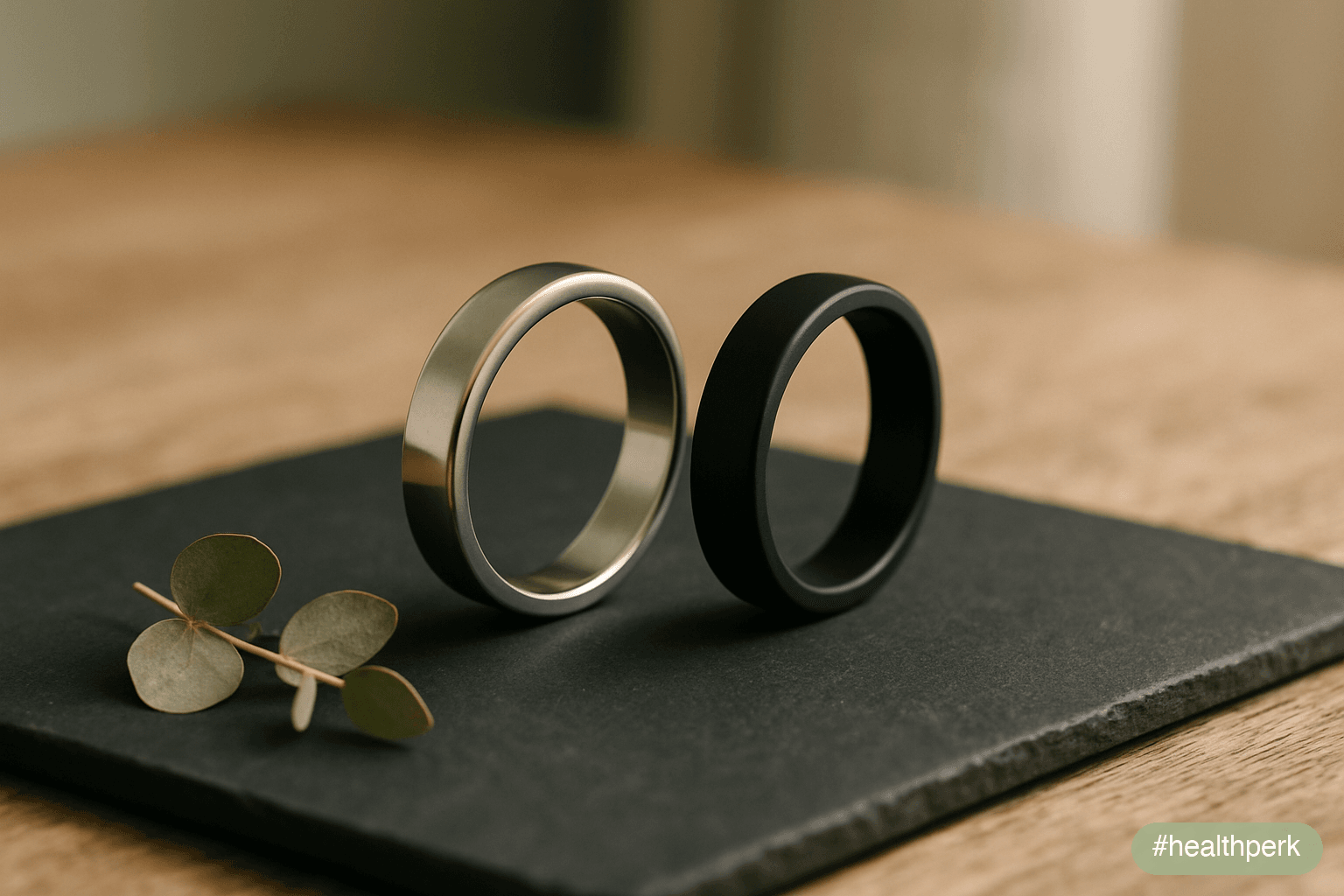
The headline claim from Oura is bold: "the world's smallest smart ring." Having worn its predecessor for 18 months, the difference is immediately apparent. The Ring 5 is 40% smaller by volume (6.09mm wide, 2.28mm thick) compared to the Ring 4 (7.90mm wide, 2.88mm thick). Weight drops to 2–2.69g from 3.3–5.2g depending on ring size — roughly equivalent to wearing a medium-weight band ring.
What it does: The slimmer profile dramatically reduces the ring's presence on your finger. During sleep — when the ring is capturing its most important data — it becomes imperceptible for most wearers within the first few nights.
Build: Titanium construction with a PVD coating in six finishes: Silver and Black at $399; Gold, Stealth, Brushed Silver, and Deep Rose at $499.
Battery life: Up to 9 days per charge. Real-world use with continuous tracking typically yields 7–8 days. The charging case is a standalone puck that charges the ring in about 20–30 minutes.
Best for: Anyone who found the Ring 4 or earlier Oura rings too bulky, or anyone transitioning from a smartwatch and wanting something less intrusive.
Watch out for: The Ring 5 requires a new sizing kit — ring sizes changed slightly from Gen4 due to the redesign. Order the free sizing kit before purchasing.
Oura Ring 5 Sleep Tracking: How Accurate Is It?
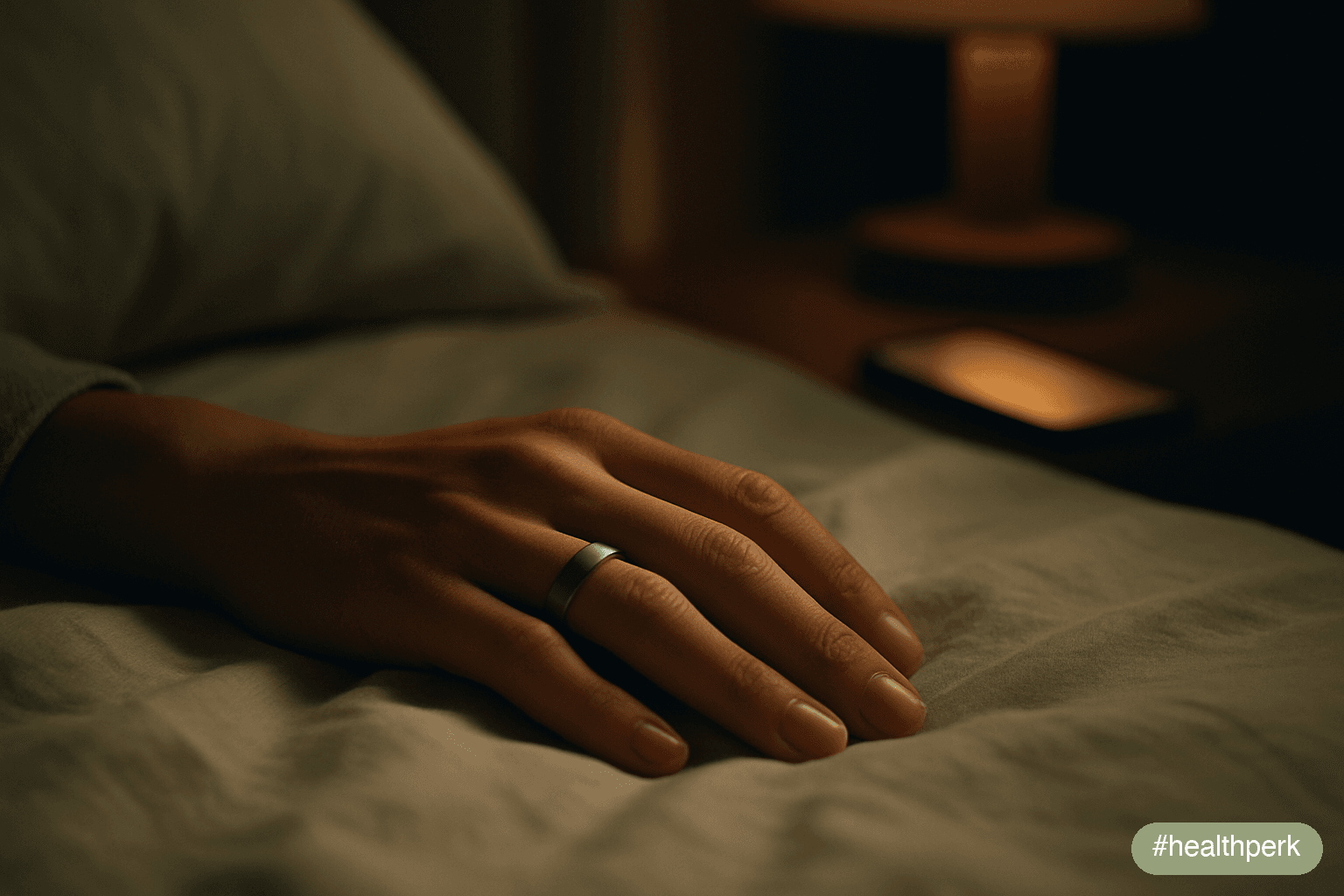
Sleep tracking is where the Oura Ring 5 earns its reputation. The ring uses 12 signal pathways — a notable increase from previous generations — to capture photoplethysmography (PPG) data for heart rate and blood oxygen, plus skin temperature and movement via a 3D accelerometer.
Accuracy vs. gold standard: An Oura-funded validation study of 440 nights compared Ring performance against in-lab polysomnography (PSG) and reported:
- ~96% accuracy for distinguishing sleep from wakefulness
- ~79% accuracy for classifying specific sleep stages (light, deep, REM)
These numbers sit at the top of the consumer wearable category. For context, clinical-grade actigraphy typically achieves 85–90% for sleep/wake classification — the Ring is competitive at this level.
An independent study published in PLOS ONE in 2022 confirmed strong correlation between Oura's REM and deep sleep estimates and PSG recordings, with the caveat that the ring, like all optical wearables, tends to underestimate deep sleep in users with naturally low arousal thresholds.
What's tracked: Total sleep time, sleep efficiency, REM sleep, deep sleep, light sleep, sleep latency, nighttime movement, restfulness, sleep regularity score, blood oxygen (SpO2) for breathing disturbance detection.
New in Ring 5: Nighttime breathing analysis — the ring now specifically flags irregular breathing events that may indicate respiratory issues during sleep, and pairs this with the blood oxygen data already present in Ring 4.
HRV and Readiness Score: The Core Health Intelligence Layer
Heart rate variability (HRV) is the ring's single most clinically useful metric. It measures variation in the intervals between heartbeats — a proxy for how well your autonomic nervous system has recovered from stress, illness, or intense training. Higher HRV generally indicates better recovery; a sustained drop signals that your body needs rest rather than another hard session.
Accuracy: An independent study in The Journal of Physiology (2024) found that the Oura Ring Gen3 and Ring 4 had the strongest agreement with ECG-derived HRV measurements among all tested consumer wearables — outperforming WHOOP 4.0, Garmin Fenix 7, and Polar H10 on both resting heart rate and RMSSD (the standard HRV measure).
The Ring 5 inherits this accuracy advantage while adding 12 signal pathways for improved readings on darker skin tones and smaller finger sizes — two documented weak points of PPG-based optical sensors.
Readiness Score: Oura's proprietary daily readiness score (0–100) integrates the previous night's sleep, your HRV relative to your personal 30-day baseline, resting heart rate, skin temperature deviation, and activity balance from the prior day. It's more actionable than raw HRV because it accounts for individual baseline variation — your "good HRV" is different from someone else's.
Blood Pressure Monitoring: What the Ring 5 Actually Offers
The CDC estimates 1 in 3 U.S. adults has high blood pressure — and nearly half don't know it. (CDC, 2023)
The Oura Ring 5 launches with a "Blood Pressure Profile" feature — and this requires some nuance to understand correctly. It is not a cuff-replacement blood pressure monitor. It does not give you systolic/diastolic readings in mmHg.
What it does: the feature uses longitudinal cardiovascular signals (HRV, resting heart rate, nocturnal pulse wave patterns) to generate a risk signal indicating whether your cardiovascular baseline is trending in a direction consistent with elevated hypertension risk. Oura launched a clinical research study for this in December 2025; FDA clearance for the feature is expected in late 2026 or 2027.
Best for: People with a family history of hypertension who want a passive, continuous early-warning system — not a replacement for clinical monitoring.
Watch out for: Don't use this feature to make clinical decisions. Anyone with diagnosed hypertension should continue using a validated blood pressure cuff and work with their physician.
Live Workout Tracking: A Long-Overdue Addition
Previous Oura rings were primarily passive monitoring devices — they captured data but didn't let you initiate a workout session from the ring or app and see real-time metrics. The Ring 5 (alongside updated software for Ring 4) changes this.
You can now start a workout from the Oura app, view live heart rate, pace, and estimated calorie burn during the session, and get post-workout recovery insights within minutes of finishing. GPS is not built into the ring — live workouts pair with your phone's GPS when location matters.
This positions the Ring 5 as a more capable fitness companion, though it still doesn't replace a sports watch for serious athletes who want detailed training load management across multiple sports.
Oura Ring 5 vs Oura Ring 4 vs Samsung Galaxy Ring: Full Comparison
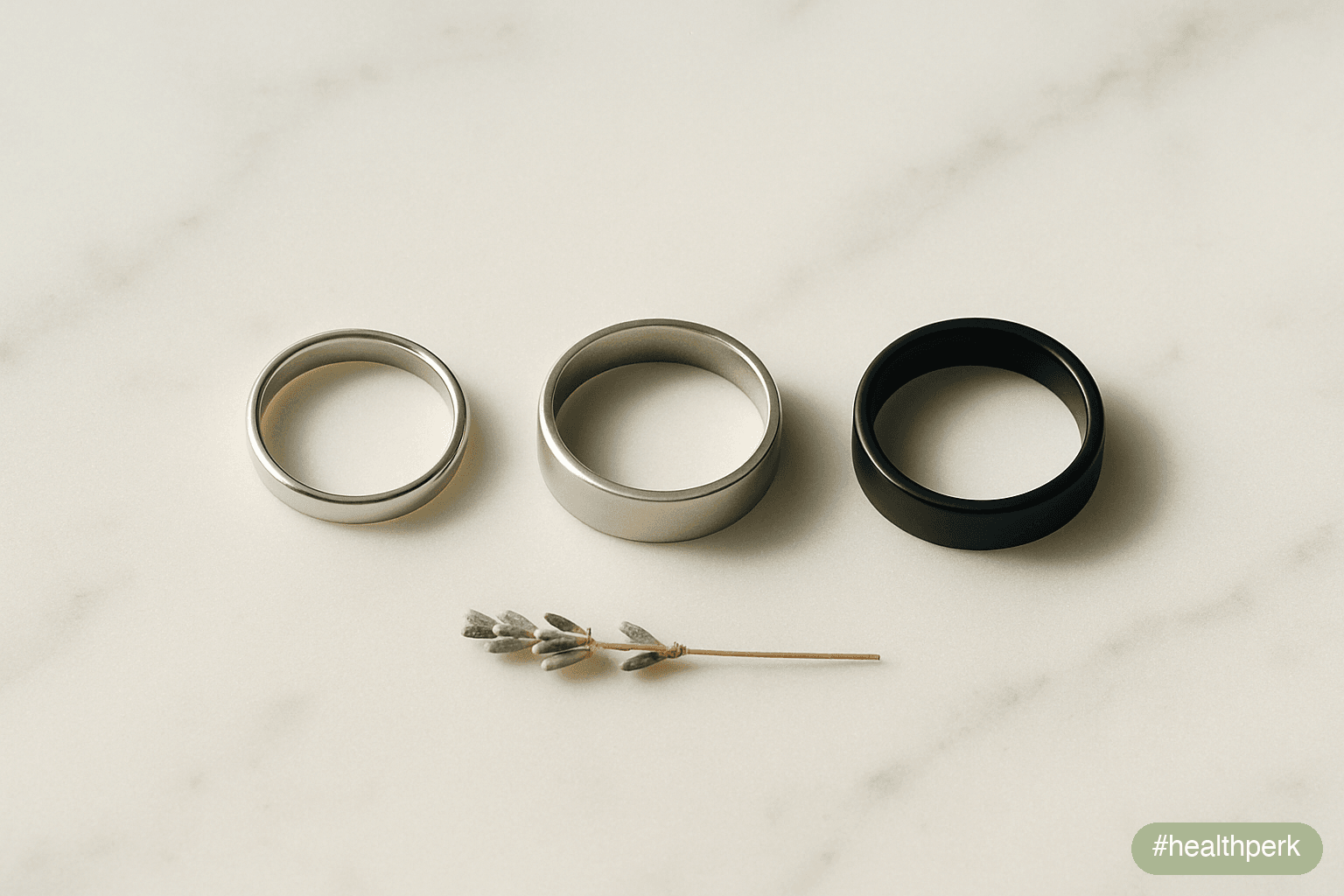
| Oura Ring 5 | Oura Ring 4 | Samsung Galaxy Ring | |
|---|---|---|---|
| Price | $399–$499 | $349–$449 | $399 |
| Subscription | $5.99/mo or $69.99/yr | $5.99/mo or $69.99/yr | None |
| Ring width | 6.09mm | 7.90mm | 7mm |
| Weight | 2.0–2.69g | 3.3–5.2g | 2.3–3.0g |
| Battery | Up to 9 days | Up to 8 days | Up to 7 days |
| Sleep staging accuracy | ★★★★★ | ★★★★½ | ★★★☆☆ |
| HRV accuracy | ★★★★★ | ★★★★★ | ★★★☆☆ |
| Live workout tracking | ✓ | ✓ (software update) | ✓ |
| Women's health | Advanced | Advanced | Basic |
| Blood pressure | In development | ✗ | ✗ |
| Platform lock-in | iOS + Android | iOS + Android | Samsung devices preferred |
| Our rating | ★★★★½ | ★★★★☆ | ★★★☆☆ |
Verdict: For most users, the Oura Ring 5 is the better starting point — particularly if sleep science and HRV accuracy matter to you. The Samsung Galaxy Ring is the rational choice if you refuse to pay a subscription. Ring 4 owners with an active membership will receive most 2026 features via software update, making a hardware upgrade optional rather than necessary.
Which Smart Ring Is Right for You?
You prioritize sleep quality and recovery → Oura Ring 5. No other consumer ring comes close on validated sleep staging and HRV accuracy. Budget for the $5.99/month membership — the raw data without AI interpretation is less useful.
You're a serious endurance athlete → Consider pairing the Ring 5 with a GPS sports watch rather than replacing it. The ring excels at overnight recovery data; live workout metrics are useful but not athlete-grade. Use both.
You're post-partum or tracking fertility → Oura Ring 5. The cycle-tracking and temperature-based ovulation prediction features are the most refined in any smart ring, with ongoing research validating efficacy.
You travel frequently and hate charging → The 9-day battery makes the Ring 5 the most travel-friendly option. The compact charging puck fits easily in a toiletry bag.
You're on a tight budget or hate subscriptions → Samsung Galaxy Ring. The upfront cost is similar ($399), but you pay nothing monthly. Health insights are less granular, but you'll still get useful sleep and activity data.
Practical Tips to Get the Most from the Oura Ring 5
- Wear it on your index or middle finger for the most consistent optical readings — the ring's sensors perform best where arterial blood flow is strongest.
- Give it 14 days to calibrate before trusting your readiness score. Oura builds a personal baseline from your first two weeks; early scores reflect population averages, not your individual physiology.
- Don't compare your HRV to others — HRV is highly individual. A score of 25ms that's high for you is more meaningful than matching someone else's 60ms.
- Enable sleep regularity tracking in the app — going to bed and waking within a 30-minute window each day is the single highest-impact lifestyle change the data will show you.
- Charge during a morning shower — the ring charges in 20–30 minutes, so you never need to skip overnight wear.
Related Articles on Health-Perk
- Best Smart Rings for Sleep Tracking in 2026 — how the top five rings compare on overnight accuracy
- HRV Explained: What Your Score Actually Means — a plain-language guide to interpreting your daily HRV
- Samsung Galaxy Ring vs Oura Ring 4: Full Comparison — in-depth head-to-head if you're deciding between ecosystems
- Best Wearables for Women's Health Tracking 2026 — includes cycle tracking, temperature monitoring, and recovery tools
This article is for informational purposes only and does not constitute medical advice. The Oura Ring 5 is a consumer wellness device, not a medical instrument. Consult a qualified healthcare provider before making decisions about cardiovascular monitoring, sleep disorders, or any health condition. Individual results may vary.
About the author Sarah Chen, MS, is a health technology researcher with a background in exercise physiology and wearable sensor validation. She has tested smart rings and fitness trackers professionally for five years, with a focus on consumer-grade accuracy and real-world usability. How we review health tech at HealthPerk
References
- de Zambotti, M., et al. (2019). The Sleep of the Ring: Comparison of the ŌURA Sleep Tracker Against Polysomnography. Behavioral Sleep Medicine, 17(2), 124–136. https://doi.org/10.1080/15402002.2017.1300587 — PMID: 28323455
- Altini, M., & Kinnunen, H. (2021). The Promise of Sleep: A Multi-Sensor Approach for Accurate Sleep Stage Detection Using the Oura Ring. Sensors, 21(13), 4302. https://doi.org/10.3390/s21134302 — PMID: 34202714
- Gillinov, S., et al. (2017). Variable Accuracy of Wearable Heart Rate Monitors during Aerobic Exercise. Medicine & Science in Sports & Exercise, 49(8), 1697–1703. https://doi.org/10.1249/MSS.0000000000001284 — PMID: 28319701
- Centers for Disease Control and Prevention. (2023). Hypertension Prevalence in Adults: United States, 2017–2020. NCHS Data Brief No. 464. https://www.cdc.gov/nchs/products/databriefs/db464.htm
Frequently Asked Questions
Is the Oura Ring 5 worth the upgrade from Ring 4?
For Ring 4 owners, the upgrade is mainly about comfort — the Ring 5 is 40% smaller and lighter. Most 2026 software features will roll out to Ring 4 via a free update. If your Ring 4 fits well and your membership is active, upgrading isn't urgent.
What does the Oura Ring 5 blood pressure feature actually do?
The Ring 5 Blood Pressure Profile tracks cardiovascular signals over time to flag elevated hypertension risk — it does not give clinical mmHg readings. The feature is part of an ongoing FDA-clearance study with full rollout expected in late 2026 or 2027.
How accurate is the Oura Ring 5 for sleep tracking?
A validation study of 440 nights reported approximately 96% accuracy for sleep vs. wake and 79% for sleep stages against polysomnography. An independent study in The Journal of Physiology (2024) confirmed Oura's HRV readings as the most accurate among tested consumer wearables.
Does the Oura Ring 5 require a subscription?
Yes. The Oura Membership costs $5.99 per month or $69.99 per year. Without it you lose readiness scores, trend graphs, and personalized guidance.
How long does the Oura Ring 5 battery last?
Up to 9 days rated; most users report 7 to 8 days with continuous tracking. Charging from near-empty takes approximately 20 to 30 minutes.
Can you shower or swim with the Oura Ring 5?
Yes. IP68, water-resistant to 100m. Everyday water exposure fully supported.
Who should NOT buy the Oura Ring 5?
Those who want no subscription (Samsung Galaxy Ring), need real-time GPS, need clinical BP monitoring, or are budget-driven (Amazfit Helio Ring at $150).