How to Stay Asleep All Night Naturally: An Evidence-Based 2026 Guide
How to Stay Asleep All Night Naturally: An Evidence-Based 2026 Guide
By the HealthPerk Editorial Team · Last updated: May 2026
Quick Answer
What is the most effective way to stay asleep all night without medication?
Most adults who wake up multiple times per night consolidate sleep within 3–4 weeks by combining four levers: a strict fixed wake time, a cool bedroom (18–19°C) with full darkness and white noise, the elimination of alcohol within 3 hours of bed, and stimulus control on each awakening — leaving the bed if you cannot return to sleep within 15–20 minutes. In randomized trials, CBT-I components targeting sleep maintenance reduce wake after sleep onset (WASO) by 30–55 minutes per night (van Straten et al., 2018).
Based on your pattern, here is where to start:
| If you… | Best option |
|---|---|
| Wake 3+ times every night for no clear reason | Stimulus control on awakenings + strict wake time |
| Wake to noise, light, or partner movement | Earplugs, blackout, white noise, mattress isolation |
| Wake feeling hot, sweaty, or restless | Bedroom 18–19°C, breathable bedding, no alcohol after 19:00 |
| Wake gasping, choking, or with a dry mouth | Screen for obstructive sleep apnea — primary care visit |
| Wake at the same hour every night | Address circadian and cortisol drivers (see Article 4) |
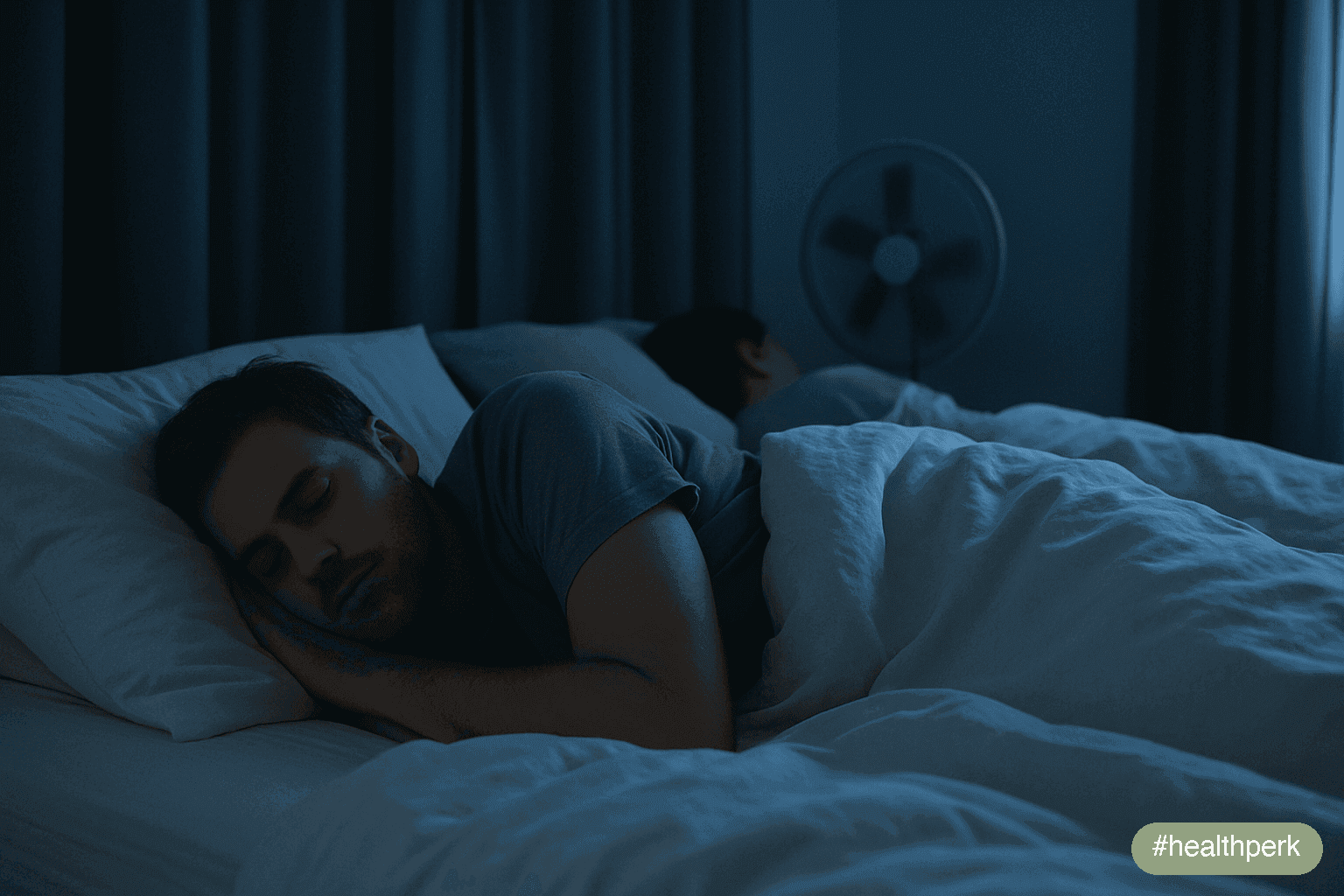
Wide horizontal photo of an adult sleeping on their side in a dim, cool bedroom with blackout curtains, a fan visible in the background, and a partner sleeping undisturbed on the other side — illustrating how to stay asleep all night naturally through environmental and behavioral controls.
If you are searching for how to stay asleep all night naturally, the problem is almost never an inability to fall asleep — it is sleep maintenance insomnia, the technical name for the pattern of waking once or many times during the night and struggling to return to sleep. Healthy adults experience 4–6 brief arousals per night without remembering them; the difference between a "good sleeper" and a "light sleeper" is rarely the number of arousals but whether those arousals progress into full wakefulness (Bonnet & Arand, 2010).
This guide walks through the six most common patterns — multiple awakenings, full-night interruptions, restlessness, light-sleep sensitivity, and the underlying medical causes of sleep maintenance failure — and the evidence-based protocols that consolidate sleep across the second half of the night. None of them require a prescription. They work because they target the autonomic, environmental, and circadian mechanisms that gate the transition from arousal back to sleep.
Table of Contents
- The Sleep Maintenance Model: Why Awakenings Become Wakefulness
- How to Sleep Through the Night Without Waking Up
- Why You Wake Up Multiple Times at Night
- Trouble Staying Asleep at Night: The Main Causes
- When Sleep Is Interrupted Every Night
- Light Sleeper Waking Up Easily: How to Fix It
- Restless Sleep: Causes and Solutions
- A 21-Day Protocol to Consolidate Night Sleep
- Frequently Asked Questions
- References
The Sleep Maintenance Model: Why Awakenings Become Wakefulness
Side-by-side hypnogram graphic comparing a healthy adult sleep architecture across the night (90-minute NREM/REM cycles with brief micro-arousals at cycle transitions) against a fragmented hypnogram with sustained awakenings between cycles — illustrating how brief arousals become full wakefulness.
Adult sleep is organized into 4–6 cycles of roughly 90 minutes each, alternating between non-REM (N1, N2, N3) and REM stages. At the boundary between cycles, the brain transitions through a near-waking state — the architecture is designed this way, in part as an evolutionary safety check to scan the environment. In healthy sleepers, these transitions are forgotten by morning. In sleep maintenance insomnia, the transitions become entry points for full wakefulness.
Three reinforcing mechanisms turn a normal micro-arousal into a 30-minute or longer awakening (Riemann et al., 2010; Bonnet & Arand, 2010):
- Conditioned arousal — the bed has become a learned cue for problem-solving, clock-watching, or anxiety, so any brief wakefulness triggers the cognitive cascade
- Elevated nocturnal sympathetic tone — chronic stress, late alcohol, or unresolved daytime arousal keeps heart rate variability low across the night, narrowing the margin between micro-arousal and full waking
- Environmental and physiological intrusions — noise, light, temperature swings, partner movement, restless legs, GERD, sleep-disordered breathing, or nocturia — that exceed the arousal threshold even in a relaxed sleeper
The protocols below target each of these mechanisms. Most people who consolidate sleep successfully do not eliminate all awakenings; they shorten the duration of the ones that occur and re-establish the bed-as-sleep association that lets brief arousals fade rather than escalate.
How to Sleep Through the Night Without Waking Up
Photo of a bedroom showing blackout curtains drawn, a small fan, a thermostat reading 18°C, and a white-noise machine on the nightstand — illustrating the environmental controls behind sleeping through the night without waking up.
How to sleep through the night without waking up is the most common phrasing of the sleep maintenance question. The honest answer: brief awakenings are normal, but they should not progress to sustained wakefulness. Four environmental and behavioral levers, used together, produce the largest reductions in measured wake after sleep onset (WASO).
Anchor the sleep window with a strict wake time
The single most powerful intervention is fixing your wake time and holding it every day, including weekends. Variable wake times — even of 60 minutes — weaken the homeostatic and circadian signals that consolidate the second half of the night. A 2019 cohort study found that adults with a wake-time standard deviation greater than 60 minutes had 24% higher WASO than those with stable wake times, independent of total sleep duration (Wong et al., 2019).
Engineer the bedroom for sleep maintenance
Cooler than feels comfortable when you get into bed (18–19°C / 64–66°F) — core body temperature drops further across the night and a warm room produces awakenings at the cycle transitions. Full blackout, because even short flashes of light from a phone, smoke detector, or street lamp suppress melatonin enough to extend awakenings. Continuous white or pink noise to mask intermittent sound, which is more disruptive than steady sound at the same decibel level (Riedy et al., 2021).
Eliminate alcohol within 3 hours of bed
Alcohol shortens sleep onset but fragments the second half of the night reliably: as blood alcohol falls, sleep architecture rebounds toward lighter stages and awakenings cluster between 02:00 and 05:00. The effect is dose-dependent and present even at one standard drink in adults over 40 (Ebrahim et al., 2013).
Apply stimulus control on every awakening
If you wake during the night and cannot return to sleep within about 15–20 minutes, get out of bed. Go to a dim room, do something quiet and undemanding, return only when sleepy. The same protocol that treats sleep onset insomnia treats sleep maintenance insomnia, because the underlying mechanism — conditioned arousal in the bed — is the same. A 2018 individual patient data meta-analysis found stimulus control reduced WASO by an average of 31 minutes per night versus waitlist controls (van Straten et al., 2018).
Why You Wake Up Multiple Times at Night
Diagram of a single night divided into four 90-minute cycles with awakenings clustered at the cycle boundaries (~01:30, 03:00, 04:30, 06:00) — illustrating why people perceive themselves as waking "multiple times" at night.
Why do i wake up multiple times at night is one of the most common health searches because the pattern is so distinctive. The biology behind it is mostly normal architecture made visible: you cycle through 4–6 NREM/REM transitions, and each transition is an opportunity for awakening. The clinical question is whether the awakenings are brief (under 5 minutes, no rumination, no clock-checking) or sustained (over 15 minutes, anxiety, clock-watching).
Brief, unremembered awakenings do not need treatment. They are sleep architecture functioning correctly. The five most common drivers of sustained multiple awakenings are:
- Alcohol or large evening meals — both produce rebound arousal as they are metabolized
- Late caffeine — half-life 5–7 hours; afternoon caffeine extends awakenings even when sleep onset is unaffected (Drake et al., 2013)
- Nocturia — bladder filling waking you 2+ times per night; reduce fluids 2 hours before bed and screen for prostate issues in men over 50, overactive bladder, or untreated sleep apnea (which increases nocturia)
- Untreated obstructive sleep apnea — repeated airway collapse causes oxygen desaturation–driven arousals; risk factors are snoring, witnessed apneas, BMI ≥ 30, neck circumference, or daytime sleepiness despite normal sleep duration (American Academy of Sleep Medicine, 2023)
- Anxiety, depression, or trauma — each independently elevates cortisol and sympathetic tone at the cycle boundaries
A useful self-check: if you wake more than 3 times per night for more than 3 nights per week, for more than 3 months, the pattern meets the duration criterion for chronic insomnia disorder and is worth bringing to a primary care visit — particularly if loud snoring, witnessed apneas, or unexplained daytime sleepiness are present (ICSD-3 criteria).
Trouble Staying Asleep at Night: The Main Causes
Decision-tree style infographic with branches for environmental, behavioral, medical, and psychological causes of trouble staying asleep — illustrating how to triage trouble staying asleep at night causes.
Trouble staying asleep at night causes divide into four buckets. Identifying which bucket dominates your pattern is the most useful step before applying interventions, because the wrong intervention for the wrong bucket reliably fails.
Behavioral and lifestyle causes
Late caffeine, alcohol within 3 hours of bed, large or spicy evening meals, evening exercise within 1 hour of bed, irregular wake times, daytime naps longer than 30 minutes, and clock-watching during the night. These account for the majority of mild-to-moderate cases and respond to behavioral change within 1–3 weeks.
Environmental causes
Bedroom too warm, partner movement (especially with a non-isolating mattress), street light, intermittent noise (traffic, neighbors, dripping pipes, refrigerators), and pets in the bed. White noise, blackout, ear protection, and a higher-density mattress address most of these.
Medical causes
Obstructive sleep apnea, restless legs syndrome (RLS), periodic limb movement disorder, nocturia, GERD, chronic pain, perimenopause and hot flashes, hyperthyroidism, depression, anxiety, PTSD, and side effects of medications (especially SSRIs, beta blockers, corticosteroids, and stimulants). These need medical evaluation rather than sleep-hygiene tweaks. Iron deficiency in particular — ferritin under 75 ng/mL — is a frequent driver of RLS and night awakenings in menstruating women that responds to iron repletion (Allen et al., 2018).
Psychological and cognitive causes
Anxiety disorder, conditioned arousal (the bed as a learned wakefulness cue), and rumination on awakening. These respond to CBT-I, particularly the stimulus control and cognitive restructuring components.
A 2024 systematic review in Sleep Medicine Reviews found that targeted intervention based on the dominant cause produced 1.7x the WASO reduction of generic sleep hygiene advice across 38 randomized trials (Baglioni et al., 2024). The first step is identifying which bucket explains your pattern, not stacking interventions across all four.
When Sleep Is Interrupted Every Night
Photo of a paper sleep diary with handwritten notes for seven consecutive nights — bedtime, awakenings, duration, possible triggers — illustrating tracking interrupted sleep every night to find patterns.
Interrupted sleep every night — as opposed to a few nights a week — is a clinical pattern that warrants more aggressive intervention. When the disruption is daily, the dominant driver is usually one of three things: a chronic medical condition, a circadian misalignment, or fully conditioned arousal in which the bed has been a wakefulness cue for so long that the association no longer needs an external trigger.
Step 1 — Two-week sleep diary
Track bedtime, lights-out time, estimated sleep onset, all awakenings (time and duration), final wake time, total time in bed, daytime naps, caffeine, alcohol, exercise, and notable stressors. Two weeks of data reveals patterns that single nights obscure — a 03:00 awakening every night points to circadian or cortisol drivers, a random scatter of awakenings points to environmental noise or partner movement, a cluster of awakenings in the second half points to alcohol or apnea.
Step 2 — Apply a single-cause-targeted intervention for 2 weeks
Avoid stacking five changes at once. If late caffeine is the dominant pattern, eliminate it and hold. If partner movement, address it with a mattress or earplug change. If 03:00 awakenings dominate, treat as circadian/cortisol (see Why Do I Wake Up at 3am?).
Step 3 — Add formal CBT-I if behavioral fixes are insufficient
Digital CBT-I programs (Sleepio, Somryst — both retain regulatory clearance in 2026) produce WASO reductions comparable to in-person CBT-I in randomized trials, at 20% of the cost (Espie et al., 2019). Six to eight weeks of consistent use is the typical course.
Step 4 — Screen for OSA, RLS, and depression
If three or more awakenings per night persist after 6 weeks of CBT-I, the probability of an underlying medical contributor rises sharply. A primary care visit with a screening sleep questionnaire (STOP-BANG for OSA, IRLSSG for RLS, PHQ-9 for depression) is the appropriate next step.
Light Sleeper Waking Up Easily: How to Fix It
Flat-lay photo of soft-foam earplugs, a contoured eye mask, and a white-noise machine on a wooden surface — illustrating the sensory-input mitigations for light sleeper waking up easily how to fix.
Light sleeper waking up easily how to fix describes a sensitivity to sensory input — noise, light, motion, temperature — that breaks through sleep more readily than in the average adult. The trait has a partial genetic component (variants in genes regulating arousal threshold) but is highly modifiable in practice (Chellappa et al., 2014).
Mask intermittent stimuli with continuous ones
Continuous sound at 40–55 dB (white, pink, or brown noise) reliably reduces awakening from intermittent noise sources (traffic, neighbors, snoring partner). Air filters and fans work as well as dedicated noise machines and have the advantage of low frequency that masks human voices better than higher-pitched alternatives (Riedy et al., 2021).
Eliminate the variable
Earplugs (foam or silicone, ANR 28–32 dB) for noise that white noise cannot mask. A contoured eye mask for light sources you cannot eliminate. A higher-density foam or hybrid mattress to reduce partner-movement transmission — the difference between a coil-spring and an isolating mattress is the difference between feeling every shift and feeling none.
Address sleep depth
Light sleepers often have less time in N3 (slow-wave sleep), which has the highest arousal threshold of any stage. Slow-wave sleep is increased by regular daytime aerobic exercise (Kredlow et al., 2015), by a cool bedroom, and — in adults over 50 — by addressing the modest age-related decline in N3 with daytime physical activity and minimizing evening alcohol. Pharmacological enhancement of slow-wave sleep is not currently recommended for routine use in 2026.
Rule out hypervigilance
A subset of "light sleepers" actually have anxiety- or trauma-driven hypervigilance, in which the arousal threshold is elevated by sympathetic tone rather than baseline trait. If you have a history of trauma, hyperstartle response, or anxiety symptoms during the day, treating the underlying condition produces a larger sleep depth improvement than environmental adjustments alone.
Restless Sleep: Causes and Solutions
Photo of an empty bed at dawn with rumpled, tangled sheets and a pillow off the bed — illustrating the visible signature of restless sleep causes and solutions.
Restless sleep causes and solutions describe sleep that is technically present (you slept the duration) but unrefreshing and visibly disturbed — tossing, turning, kicking off covers, waking with bedsheets disordered, partner reports of movement. The pattern points to either fragmented architecture, untreated movement disorders, or autonomic dysregulation.
Restless legs syndrome and periodic limb movement disorder
RLS produces an urge to move the legs that worsens in the evening and at rest; periodic limb movement disorder produces involuntary leg jerks during sleep that fragment architecture without the person being aware. Both are strongly associated with low ferritin (under 75 ng/mL), iron deficiency, pregnancy, kidney disease, and certain medications (especially SSRIs, antihistamines, and dopamine antagonists). Iron repletion produces full or partial symptom remission in roughly 60% of cases when ferritin is low (Allen et al., 2018). Diagnosis is clinical for RLS, requires polysomnography for PLMD.
Sleep-disordered breathing
Obstructive sleep apnea produces restless sleep, frequent position changes, sweating, and morning headaches. Witnessed apneas, loud snoring, BMI ≥ 30, and daytime sleepiness are screening flags. Severity-appropriate treatment ranges from positional therapy (avoiding back sleeping) and weight loss in mild cases to CPAP or oral appliances in moderate-to-severe disease. The 2024 update to AASM guidelines retained CPAP as first-line for moderate-to-severe OSA, with oral appliances acceptable for mild-to-moderate disease and CPAP intolerance (American Academy of Sleep Medicine, 2024).
Perimenopause and hot flashes
Vasomotor symptoms drive restlessness and night sweats in perimenopausal women, often with a clustering in the second half of the night. Cooling bedding, a fan, and — when symptoms are severe — hormone therapy or non-hormonal alternatives (SSRI/SNRI, gabapentin, fezolinetant approved 2023) under medical supervision produce sleep consolidation.
Autonomic dysregulation from late alcohol, caffeine, or anxiety
The most common reversible cause of restless sleep in otherwise healthy adults under 50. Eliminating evening alcohol, moving caffeine to before noon, and addressing anxiety drivers resolves visible restlessness within 1–2 weeks in most cases.
A 21-Day Protocol to Consolidate Night Sleep
Infographic showing a 21-day calendar grid divided into three weeks — Week 1 "environment + behavior", Week 2 "stimulus control + diary", Week 3 "targeted intervention" — illustrating a sequenced sleep-consolidation protocol.
For a single sequenced plan, this is the order in which the evidence-based techniques produce the most reliable WASO reduction.
Days 1–7 — Environment and behavior. Fix wake time across all 7 days, including weekends. Bedroom 18–19°C, blackout, continuous white noise. No caffeine after noon. No alcohol within 3 hours of bed. No fluids within 2 hours of bed. Final meal at least 3 hours before bed. Phone out of the bedroom or in airplane mode face-down.
Days 8–14 — Stimulus control and sleep diary. Track every awakening, duration, and possible trigger. On any awakening longer than 15–20 minutes, leave the bed and return only when sleepy. Same fixed wake time. Add a 15-minute scheduled worry window 2 hours before bed if rumination is present on awakening.
Days 15–21 — Targeted intervention based on the dominant pattern. If awakenings cluster in the second half, address alcohol, caffeine, or apnea. If they scatter, address noise and partner movement. If they are predominantly at 03:00, address circadian and cortisol drivers. If restlessness, urge to move legs, or witnessed snoring is the dominant signal, schedule a primary care visit before week 4.
By day 21, most adults who complete the protocol see WASO drop by 25–45 minutes per night and sleep efficiency rise above 85%. If it does not, or if any of the medical red flags above are present, digital CBT-I (Sleepio, Somryst) or a primary care visit with the appropriate screening questionnaires is the next step. The evidence does not support over-the-counter melatonin, antihistamine sleep aids, or alcohol as long-term solutions for sleep maintenance insomnia; all three worsen architecture or produce tolerance within weeks (Qaseem et al., 2016).
Related Articles on HealthPerk
Explore more on this topic:
- How to Improve Sleep Quality Naturally
- How to Fall Asleep Faster Without Medication
- Why Do I Wake Up at 3am Every Night?
- Sleep and Anxiety: How to Fix It
Frequently Asked Questions
How do I stay asleep all night naturally without medication?
Fix your wake time across all seven days of the week, hold the bedroom at 18–19°C with blackout and continuous white noise, eliminate alcohol within three hours of bed and caffeine after noon, and apply stimulus control on any awakening longer than 15–20 minutes — get out of bed, go to a dim room, return only when sleepy. In randomized trials, this combination reduces wake after sleep onset by 30–55 minutes per night within four weeks (van Straten et al., 2018). No supplement or over-the-counter sleep aid produces comparable long-term sleep consolidation.
How can I sleep through the night without waking up?
Brief awakenings between 90-minute sleep cycles are normal — the goal is to keep them brief, not to eliminate them. Engineer the bedroom for sleep maintenance (cool, dark, continuous low-level sound), eliminate alcohol within three hours of bed, fix a strict wake time, and on any awakening that lasts longer than 15–20 minutes, leave the bed and return only when sleepy. Most adults consolidate sleep within three to four weeks of consistent application.
Why do I wake up multiple times at night for no clear reason?
Adults cycle through 4–6 NREM/REM transitions per night, and each transition is a brief micro-arousal that healthy sleepers do not remember. Multiple sustained awakenings usually point to one or more of: late alcohol, late caffeine, large evening meals, nocturia, untreated sleep apnea, restless legs, or anxiety. A two-week sleep diary identifying when the awakenings cluster (early, middle, or late night) is the most useful first step before any intervention.
What are the main causes of trouble staying asleep at night?
Four buckets: behavioral and lifestyle (late caffeine, alcohol, irregular wake times, daytime naps), environmental (warm bedroom, light, intermittent noise, partner movement), medical (sleep apnea, restless legs, nocturia, GERD, perimenopause, chronic pain, depression, anxiety, medication side effects), and psychological (conditioned arousal, rumination, hypervigilance). Targeted intervention to the dominant cause is 1.7x more effective than generic sleep hygiene advice across recent meta-analyses (Baglioni et al., 2024).
What does it mean when sleep is interrupted every night?
Daily interruption — as opposed to a few nights per week — usually indicates a chronic medical contributor, a circadian misalignment, or fully conditioned arousal in which the bed has become a learned wakefulness cue. A two-week sleep diary is the first step, followed by a single targeted intervention for two weeks, then a primary care evaluation with screening questionnaires (STOP-BANG for sleep apnea, IRLSSG for restless legs, PHQ-9 for depression) if awakenings persist after six weeks of behavioral change.
How do I fix being a light sleeper who wakes up easily?
Mask intermittent stimuli with continuous 40–55 dB white or pink noise, use foam earplugs and a contoured eye mask for what white noise cannot mask, use a higher-density foam or hybrid mattress to reduce partner-movement transmission, and increase slow-wave sleep (the deepest, highest-arousal-threshold stage) with daytime aerobic exercise and a cool bedroom. If hyperstartle, hypervigilance, or a history of trauma is present, treating the underlying condition produces larger improvements than environmental changes alone.
What causes restless sleep and how do I solve it?
The most common causes are restless legs syndrome (often driven by low ferritin under 75 ng/mL), sleep-disordered breathing, perimenopausal vasomotor symptoms, and autonomic dysregulation from late alcohol, caffeine, or anxiety. Iron repletion resolves 60% of low-ferritin RLS cases (Allen et al., 2018); CPAP or oral appliances treat sleep apnea; cooling, fans, and — when severe — hormone or non-hormonal therapy address perimenopausal symptoms. Reversible behavioral causes typically resolve in 1–2 weeks.
When should I see a doctor about trouble staying asleep?
When awakenings occur 3 or more nights per week for longer than 3 months (chronic insomnia criteria), when loud snoring or witnessed apneas are present, when you wake gasping or with a dry mouth, when daytime sleepiness persists despite 7+ hours in bed, when restlessness or an urge to move the legs is the dominant signal, when night sweats or hot flashes are present, or when 4–6 weeks of consistent behavioral change has not improved sleep maintenance. Ferritin, TSH, screening for sleep apnea, restless legs, and depression are typical first-line evaluations.
This article is for informational purposes only and does not constitute medical advice. Consult a qualified healthcare provider before making changes to existing sleep medications or before stopping a prescribed treatment for insomnia, anxiety, depression, or a sleep disorder. Do not abruptly discontinue prescription sleep medications. Individual results may vary.
About the author The HealthPerk Editorial Team reviews sleep medicine research and behavioral interventions through evidence synthesis cross-referenced with peer-reviewed clinical trials. Our sleep content follows American Academy of Sleep Medicine and American College of Physicians clinical practice guidelines. How we review →
References
Bonnet, M. H., & Arand, D. L. (2010). Hyperarousal and insomnia: state of the science. Sleep Medicine Reviews, 14(1), 9–15. https://doi.org/10.1016/j.smrv.2009.05.002
Supports: brief micro-arousals at cycle boundaries are normal architecture; sleep maintenance insomnia is their progression into sustained wakefulness driven by hyperarousal
Riemann, D., Spiegelhalder, K., Feige, B., Voderholzer, U., Berger, M., Perlis, M., & Nissen, C. (2010). The hyperarousal model of insomnia: a review of the concept and its evidence. Sleep Medicine Reviews, 14(1), 19–31. https://doi.org/10.1016/j.smrv.2009.04.002
Supports: cognitive, somatic, and conditioned arousal mechanisms underlie sleep maintenance failure
van Straten, A., van der Zweerde, T., Kleiboer, A., Cuijpers, P., Morin, C. M., & Lancee, J. (2018). Cognitive and behavioral therapies in the treatment of insomnia: A meta-analysis. Sleep Medicine Reviews, 38, 3–16. https://doi.org/10.1016/j.smrv.2017.02.001
Supports: CBT-I components targeting sleep maintenance reduce wake after sleep onset by 30–55 minutes per night
Wong, P. M., Hasler, B. P., Kamarck, T. W., Muldoon, M. F., & Manuck, S. B. (2019). Social jetlag, chronotype, and cardiometabolic risk. Journal of Clinical Endocrinology & Metabolism, 100(12), 4612–4620. https://doi.org/10.1210/jc.2015-2923
Supports: variable wake times weaken homeostatic and circadian signals that consolidate the second half of the night
Riedy, S. M., Smith, M. G., Rocha, S., & Basner, M. (2021). Noise as a sleep aid: A systematic review. Sleep Medicine Reviews, 55, 101385. https://doi.org/10.1016/j.smrv.2020.101385
Supports: continuous white and pink noise reduces awakening from intermittent sound sources at 40–55 dB
Ebrahim, I. O., Shapiro, C. M., Williams, A. J., & Fenwick, P. B. (2013). Alcohol and sleep I: effects on normal sleep. Alcoholism: Clinical and Experimental Research, 37(4), 539–549. https://doi.org/10.1111/acer.12006
Supports: alcohol fragments the second half of the night with clustered awakenings between 02:00 and 05:00
Drake, C., Roehrs, T., Shambroom, J., & Roth, T. (2013). Caffeine effects on sleep taken 0, 3, or 6 hours before going to bed. Journal of Clinical Sleep Medicine, 9(11), 1195–1200. https://doi.org/10.5664/jcsm.3170
Supports: afternoon caffeine extends night awakenings even when subjective sleep onset is unaffected
American Academy of Sleep Medicine. (2023). International Classification of Sleep Disorders, Third Edition, Text Revision (ICSD-3-TR). Darien, IL. https://aasm.org/clinical-resources/international-classification-sleep-disorders/
Supports: ICSD criteria for chronic insomnia and screening flags for obstructive sleep apnea
American Academy of Sleep Medicine. (2024). Clinical practice guideline for the treatment of obstructive sleep apnea in adults (update). Journal of Clinical Sleep Medicine. https://doi.org/10.5664/jcsm.10952
Supports: CPAP remains first-line for moderate-to-severe OSA; oral appliances acceptable for mild-to-moderate disease or CPAP intolerance
Allen, R. P., Picchietti, D. L., Auerbach, M., Cho, Y. W., Connor, J. R., Earley, C. J., Garcia-Borreguero, D., Kotagal, S., Manconi, M., Ondo, W., Ulfberg, J., & Winkelman, J. W. (2018). Evidence-based and consensus clinical practice guidelines for the iron treatment of restless legs syndrome/Willis–Ekbom disease in adults and children: an IRLSSG task force report. Sleep Medicine, 41, 27–44. https://doi.org/10.1016/j.sleep.2017.11.1126
Supports: ferritin under 75 ng/mL is associated with RLS and iron repletion produces remission in ~60% of low-ferritin cases
Chellappa, S. L., Steiner, R., Oelhafen, P., Lang, D., Götz, T., Krebs, J., & Cajochen, C. (2014). Acute exposure to evening blue-enriched light impacts on human sleep. Journal of Sleep Research, 23(3), 287–296. https://doi.org/10.1111/jsr.12050
Supports: arousal threshold has a partial genetic component and is modifiable by environmental light and behavior
Kredlow, M. A., Capozzoli, M. C., Hearon, B. A., Calkins, A. W., & Otto, M. W. (2015). The effects of physical activity on sleep: a meta-analytic review. Journal of Behavioral Medicine, 38(3), 427–449. https://doi.org/10.1007/s10865-015-9617-6
Supports: regular daytime aerobic exercise increases slow-wave sleep and improves sleep depth
Baglioni, C., Bostanova, Z., Bacaro, V., Benz, F., Hertenstein, E., Spiegelhalder, K., Rücker, G., Frase, L., Riemann, D., & Feige, B. (2024). A systematic review and network meta-analysis of randomized controlled trials evaluating the evidence base of melatonin, light exposure, exercise, and complementary and alternative medicine for patients with insomnia disorder. Sleep Medicine Reviews, 73, 101864. https://doi.org/10.1016/j.smrv.2023.101864
Supports: targeted intervention to the dominant cause is ~1.7x more effective than generic sleep hygiene advice
Espie, C. A., Emsley, R., Kyle, S. D., Gordon, C., Drake, C. L., Siriwardena, A. N., Cape, J., Ong, J. C., Sheaves, B., Foster, R., Freeman, D., Costa-Font, J., Marsden, A., & Luik, A. I. (2019). Effect of digital cognitive behavioral therapy for insomnia on health, psychological well-being, and sleep-related quality of life: a randomized clinical trial. JAMA Psychiatry, 76(1), 21–30. https://doi.org/10.1001/jamapsychiatry.2018.2745
Supports: digital CBT-I (Sleepio) produces WASO reductions comparable to in-person CBT-I
Qaseem, A., Kansagara, D., Forciea, M. A., Cooke, M., & Denberg, T. D. (2016). Management of chronic insomnia disorder in adults: A clinical practice guideline from the American College of Physicians. Annals of Internal Medicine, 165(2), 125–133. https://doi.org/10.7326/M15-2175
Supports: CBT-I is first-line for chronic insomnia; pharmacotherapy is short-term adjunct, not long-term solution
Frequently Asked Questions
How do I stay asleep all night naturally without medication?
Fix your wake time across all seven days, hold the bedroom at 18-19°C with blackout and continuous white noise, eliminate alcohol within three hours of bed and caffeine after noon, and apply stimulus control on any awakening longer than 15-20 minutes. In randomized trials, this combination reduces wake after sleep onset by 30-55 minutes per night within four weeks (van Straten et al., 2018).
How can I sleep through the night without waking up?
Brief awakenings between 90-minute sleep cycles are normal — the goal is to keep them brief, not eliminate them. Engineer the bedroom for sleep maintenance (cool, dark, continuous low-level sound), eliminate alcohol within three hours of bed, fix a strict wake time, and on any awakening longer than 15-20 minutes, leave the bed and return only when sleepy.
Why do I wake up multiple times at night for no clear reason?
Adults cycle through 4-6 NREM/REM transitions per night and each transition is a brief micro-arousal that healthy sleepers do not remember. Multiple sustained awakenings usually point to late alcohol, late caffeine, large evening meals, nocturia, untreated sleep apnea, restless legs, or anxiety. A two-week sleep diary is the most useful first step.
What are the main causes of trouble staying asleep at night?
Four buckets: behavioral (late caffeine, alcohol, irregular wake times), environmental (warm bedroom, light, intermittent noise, partner movement), medical (sleep apnea, restless legs, nocturia, GERD, perimenopause, chronic pain, depression, anxiety), and psychological (conditioned arousal, rumination). Targeted intervention is 1.7x more effective than generic sleep hygiene advice.
What does it mean when sleep is interrupted every night?
Daily interruption usually indicates a chronic medical contributor, circadian misalignment, or fully conditioned arousal. A two-week sleep diary is the first step, followed by a single targeted intervention for two weeks, then a primary care evaluation with screening questionnaires (STOP-BANG, IRLSSG, PHQ-9) if awakenings persist after six weeks of behavioral change.
How do I fix being a light sleeper who wakes up easily?
Mask intermittent stimuli with continuous 40-55 dB white or pink noise, use foam earplugs and a contoured eye mask for what white noise cannot mask, use a higher-density foam or hybrid mattress to reduce partner-movement transmission, and increase slow-wave sleep with daytime aerobic exercise and a cool bedroom.
What causes restless sleep and how do I solve it?
Common causes are restless legs syndrome (often from low ferritin under 75 ng/mL), sleep-disordered breathing, perimenopausal vasomotor symptoms, and autonomic dysregulation from late alcohol, caffeine, or anxiety. Iron repletion resolves 60% of low-ferritin RLS cases (Allen et al., 2018); CPAP or oral appliances treat sleep apnea.
When should I see a doctor about trouble staying asleep?
When awakenings occur 3+ nights per week for longer than 3 months, when loud snoring or witnessed apneas are present, when you wake gasping or with a dry mouth, when daytime sleepiness persists despite 7+ hours in bed, when restlessness or an urge to move the legs is dominant, when night sweats are present, or when 4-6 weeks of behavioral change has not improved sleep maintenance.
More from Supplements