How to Optimize Your Health Naturally: A 2026 Evidence-Based Guide
How to Optimize Your Health Naturally: A 2026 Evidence-Based Guide
By the HealthPerk Editorial Team · Last updated: May 2026
Quick Answer
What is the most defensible way to optimize your health naturally in 2026?
The honest answer is that the largest, most replicable gains come from a small, boring set of behavioral inputs maintained over months — not from stacks, devices, or off-label compounds. For a healthy adult, the reasonable starting sequence is: protect a 7-9 hour sleep window with consistent timing, secure 10-30 minutes of outdoor daylight in the first hour of waking, accumulate 7,000-10,000 steps daily, complete two to three resistance-training sessions per week, eat 1.2-1.6 g of protein per kg of body weight from mostly whole foods, and design recovery as deliberately as training. In 2026 meta-analyses across The Lancet, British Journal of Sports Medicine, JAMA Internal Medicine, and Sleep, this combination explains far more variance in energy, performance, and long-term mortality than any supplement or wearable on the market.
A practical 2026 health optimization map:
| Layer | Inputs | Time horizon | Effect size |
|---|---|---|---|
| Foundation | Sleep window, daylight, hydration, walking | 4-8 weeks | Large |
| Performance | Strength training, zone-2 cardio, protein intake | 8-16 weeks | Large |
| Recovery | Sleep regularity, deload weeks, breathwork, social time | 8-16 weeks | Moderate to large |
| Optional | Single-supplement trials, light/temperature exposure | 12+ weeks | Small to moderate |
How to optimize your health naturally is one of the most searched 2026 wellness queries, and one where the gap between marketing and evidence is widest. The promised picture is a 25-supplement stack, a $400 wearable, a continuous glucose monitor, an infrared sauna, and an hour of biometric review every morning. The 2026 evidence picture is far less photogenic: most measurable improvements in healthspan, performance, and energy come from sleep, daylight, movement, food composition, and recovery — applied for months, not days. The interventions that produce the smallest signal in trials are usually the ones with the loudest marketing.
This guide is structured as a layered framework rather than a ranked list, because optimization is not a single decision. A reader sleeping six hours and sitting twelve hours a day will gain almost nothing from any pill or device. A reader whose sleep, light, and movement are already in place will see a clearer effect from one carefully chosen tool. The job of an honest optimization plan is to sequence the layers correctly so the reader can tell what is working. Everything below is built around that sequencing.
Table of Contents
- Health Optimization Strategies That Actually Hold Up in 2026
- Optimal Sleep Routine: How to Optimize Sleep for Performance
- Optimal Nutrition Habits and How to Improve Body Performance
- Performance Optimization Techniques: How to Improve Mental and Physical Performance
- Recovery Optimization Habits: How to Improve Recovery Naturally
- Peak Performance Daily Routine: How to Optimize Daily Routine Health
- Longevity Tips for a Healthy Life: How to Increase Lifespan Naturally
- Frequently Asked Questions
- References
Health Optimization Strategies That Actually Hold Up in 2026

Health optimization strategies in 2026 fall into four layers, and the order matters as much as the content. Foundation comes first because nothing higher in the pyramid produces a clean signal until sleep, daylight, hydration, and walking volume are stable. Performance comes second because strength and protein intake compound the foundation. Recovery comes third because adaptation requires it. The optional layer — single-supplement trials, light or temperature exposure, wearables — sits last because its marginal effect is small relative to the layers below.
The strategies that consistently produce measurable change in 2026 evidence:
- A consistent sleep window of 7-9 hours. The 2024 Sleep analyses consistently show sleep regularity is independently associated with cardiometabolic outcomes, beyond duration alone.
- Daily outdoor daylight in the first hour of waking. Outdoor light at 10,000-100,000 lux entrains circadian timing in a way no indoor lamp matches.
- A walking baseline of 7,000-10,000 steps. The 2022 Lancet Public Health meta-analysis associates this range with substantial all-cause mortality reductions in adults.
- Two to three resistance-training sessions per week. The 2022 British Journal of Sports Medicine meta-analysis associates this dose with reduced all-cause and cause-specific mortality independent of cardio volume.
- Protein at 1.2-1.6 g/kg body weight per day from mostly whole foods. Supported by the 2018 British Journal of Sports Medicine protein meta-analysis and consistent through 2026 reviews.
- Stress and recovery management as a deliberate practice. Slow nasal breathing, social contact, and outdoor time produce small but real effects on autonomic balance and mood.
What does not belong in a serious 2026 optimization plan
A short non-list helps: 14-ingredient "longevity stacks" with undisclosed per-ingredient doses; off-label peptides without medical supervision; prolonged unsupervised fasting in adults with average BMI; expensive wearables purchased before sleep is fixed; continuous glucose monitors used as a status object rather than a diagnostic tool. None of these belong in a beginner or intermediate optimization plan, and none of them produce a signal large enough to overcome the layers below them when those are neglected.
How to know a strategy is working
A workable evaluation rule: any new strategy gets 8-12 weeks at a defined dose with a single weekly metric. If the metric does not move and subjective energy or performance is unchanged, the strategy is dropped. This is the closest a non-clinical reader can get to a personal trial design, and it prevents the most common optimization failure — running 6 interventions at once and being unable to attribute any effect to any one of them.
Optimal Sleep Routine: How to Optimize Sleep for Performance

Optimal sleep routine content online frequently focuses on bedtime supplements, gadgets, and breathing apps. The 2026 evidence prioritizes something more boring and more effective: a consistent schedule, a cool dim bedroom, an evening light environment that does not suppress melatonin, and a wake time that varies by less than 30-60 minutes across the week, including weekends. How to optimize sleep for performance is, in practice, mostly about removing barriers rather than adding inputs.
Components of a defensible 2026 sleep routine:
- A consistent sleep window of 7-9 hours. Bed and wake times within a 30-60 minute band each day. The 2023 Sleep analysis links sleep regularity to mortality independently of duration.
- A bedroom set to 17-19°C with light minimized. Cooler bedrooms support sleep onset and reduce nocturnal awakenings in temperature-controlled trials.
- A consistent wind-down of 30-60 minutes. Dim warm lighting, no high-intensity work, no aggressive social media. The wind-down is structural, not performative.
- Caffeine cutoff 8-10 hours before bed. Caffeine has a measurable effect on sleep architecture for far longer than most users intuit.
- Alcohol limited or avoided in the 3-4 hours before bed. Even modest amounts disrupt REM sleep architecture in 2026 reviews.
- Morning daylight exposure within the first hour of waking. This anchors the next night's sleep onset more reliably than any bedtime intervention.
Why the sleep layer is non-negotiable for performance
Studies of sleep restriction consistently show that one week at 6 hours per night produces measurable declines in glucose tolerance, attention, mood, and resistance-training performance — declines no supplement reverses. Athletes and high-performing professionals who optimize everything except sleep typically see flat or declining performance over months. Conversely, simply moving from 6 hours to 7.5 hours, with consistent timing, often produces the largest perceived energy and cognition improvement of any single change in an optimization plan.
The sleep mistakes that look like optimization
Tracking sleep with a wearable but ignoring its output. Adding melatonin without addressing light exposure or schedule. Going to bed at irregular times but expecting consistent recovery. Treating weekend sleep-ins as catch-up; large weekday-weekend shifts (social jetlag) are independently associated with worse cardiometabolic markers. The optimization isn't the device — it is the schedule.
Optimal Nutrition Habits and How to Improve Body Performance
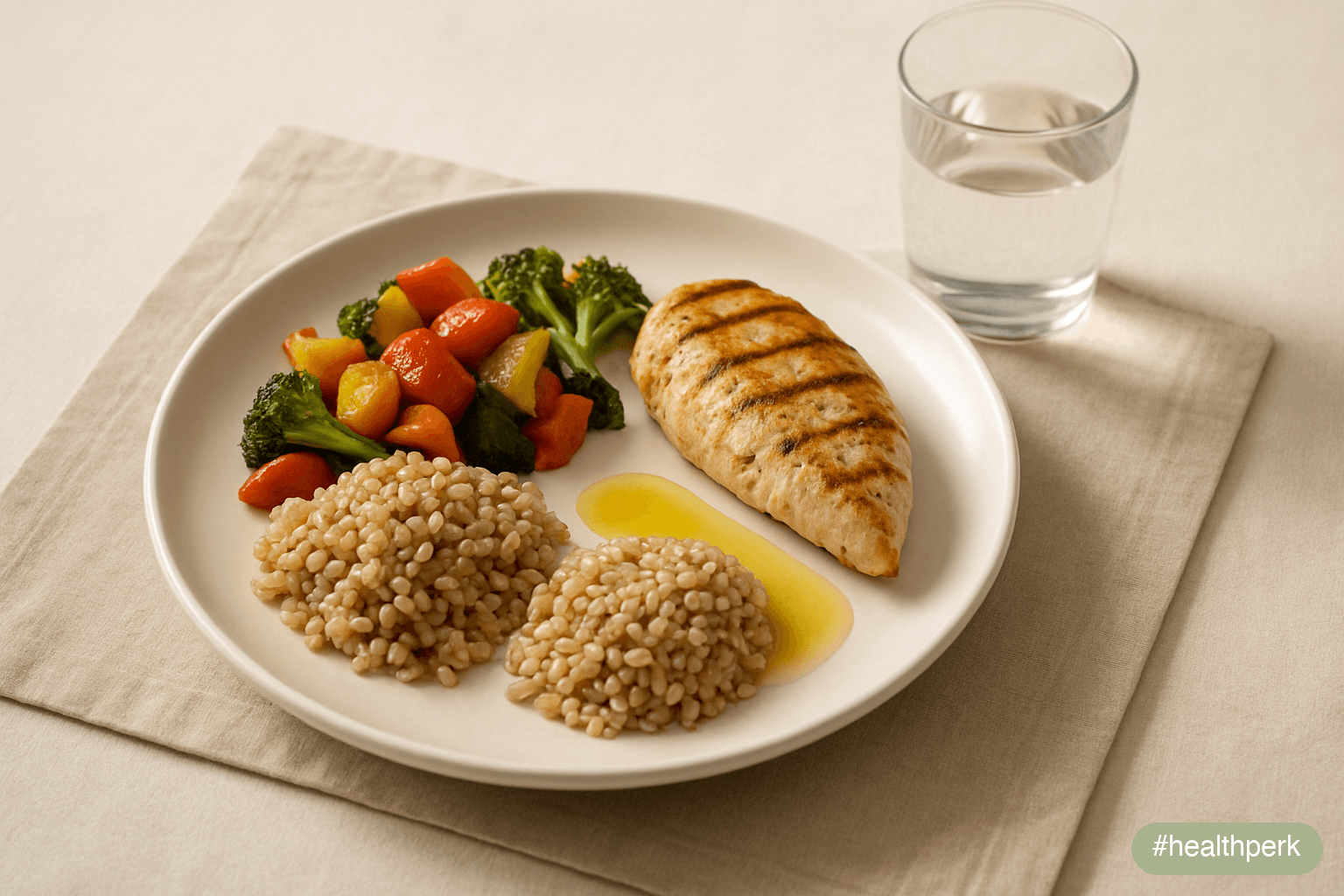
Optimal nutrition habits in 2026 evidence are remarkably similar across cardiology, sports medicine, and longevity research: a mostly whole-food pattern, adequate protein, plenty of plants, modest amounts of refined carbohydrates and ultra-processed food, and adequate hydration. How to improve body performance through diet is mostly about consistency at this baseline, not exotic protocols.
A practical 2026 nutrition framework:
- Protein at 1.2-1.6 g per kg of body weight per day, distributed across 2-4 meals. Higher within this range supports older adults and those engaged in regular resistance training.
- A plate template of roughly: half plant matter (vegetables, fruit, legumes), one quarter protein source, one quarter whole-grain or starchy carbohydrate, with a small portion of olive oil or nuts.
- Minimally processed carbohydrates as the default. Whole grains, legumes, fruit, and starchy vegetables in place of refined flour and sugar-sweetened beverages.
- Hydration of 30-35 ml per kg of body weight daily from all sources, adjusted for activity and climate.
- Caffeine within an individual tolerance window, typically 200-400 mg/day, with the last dose 8-10 hours before bed.
- Limited alcohol — the 2024 Lancet analyses do not support a protective dose at any level, and alcohol's interaction with sleep and recovery is the most underappreciated barrier in optimization plans.
Why protein gets emphasized in 2026 plans
Protein is the macronutrient most adults underconsume, particularly older adults and those eating predominantly plant-based diets without deliberate protein planning. The 2018 British Journal of Sports Medicine meta-analysis remains the cleanest support for the 1.2-1.6 g/kg range, and 2026 reviews of sarcopenia prevention reinforce it. Distribution matters: 25-40 g of protein per meal is more useful than the same daily total in two meals.
Where most nutrition optimization plans fail
Adopting a complex pattern (carnivore, strict keto, very low-fat, prolonged daily fasting) before establishing the basics described above. Treating supplements as substitutes for food. Counting macronutrients with great precision while skipping vegetables. Adding $200/month in supplements to a diet that is fundamentally low in protein, plants, or fiber. The first 90% of nutrition optimization is the plate template; the last 10% is everything else.
Performance Optimization Techniques: How to Improve Mental and Physical Performance
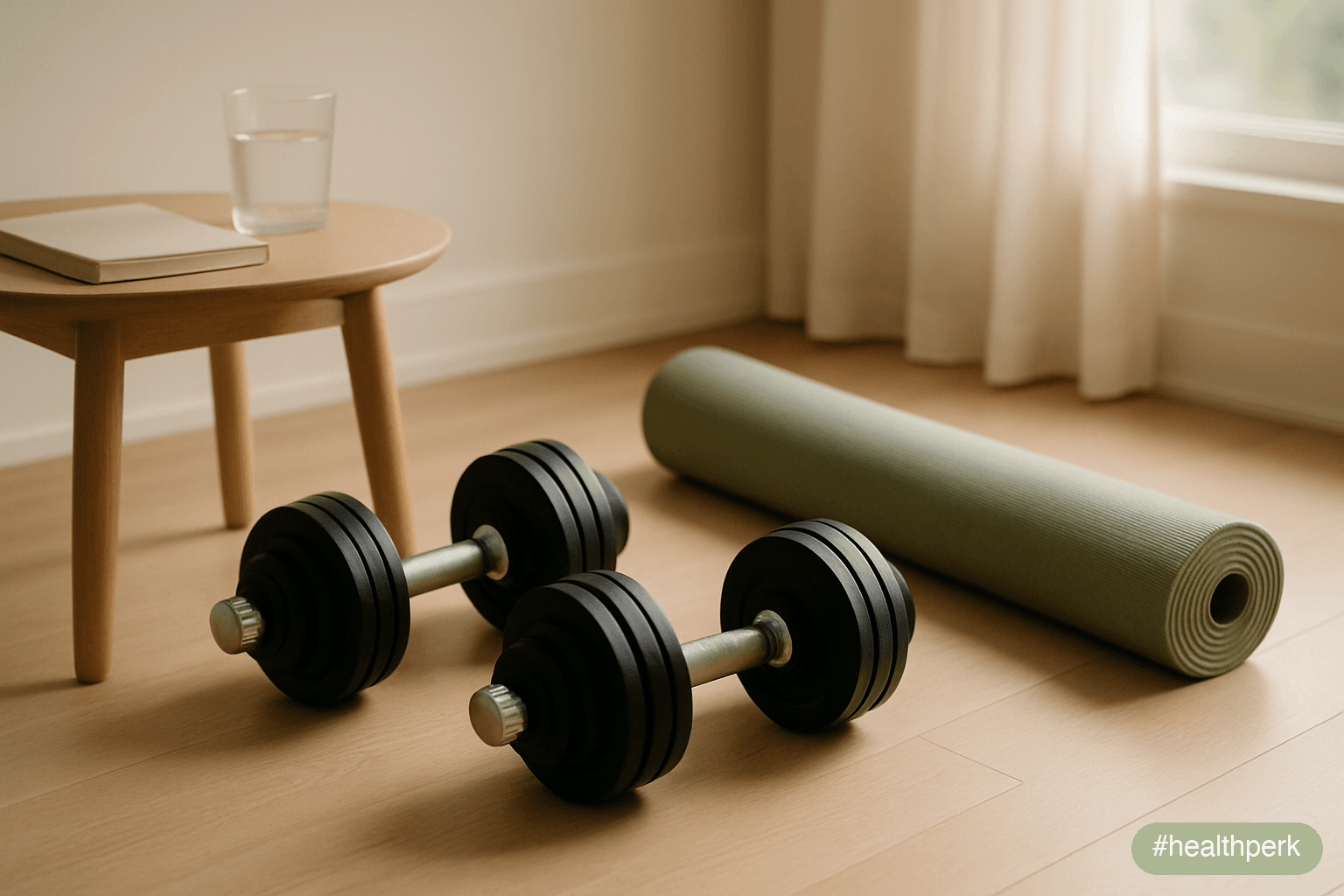
Performance optimization techniques in 2026 — for energy, focus, productivity, and physical capacity — sit on top of the foundation and nutrition layers. Without those layers, performance techniques produce small or noisy effects. With them in place, a small number of well-chosen techniques produce durable improvement. How to improve mental performance and how to increase physical performance share most of the same upstream inputs and a few specific tools.
Defensible performance techniques in 2026:
- Progressive resistance training, two to three sessions per week. Compound movements (squat, hinge, press, pull) loaded progressively over months, not weeks. This is the single most actionable lever for body composition, strength, and many measures of cognitive aging.
- Zone-2 cardio, one to three sessions per week of 30-60 minutes at a conversational pace. Useful for cardiovascular base and recovery; less critical than strength for beginners.
- Vigorous intermittent lifestyle activity (VILPA). The 2022 Nature Medicine analysis associates short daily bouts (3-5 minutes total) of vigorous lifestyle activity with reduced mortality, accessible without a gym.
- Deliberate practice of cognitive work in 60-90 minute focused blocks with full attention and notification suppression. The compounding effect on how to improve productivity naturally comes from the structure, not from a nootropic.
- Caffeine timing matched to circadian biology. Delaying the first dose 60-90 minutes after waking, capping intake by mid-afternoon, and treating caffeine as a tool rather than a constant.
- Single-supplement trials at a known dose for 8-12 weeks, limited to compounds with strong meta-analytic support (omega-3 EPA + DHA at 1-2 g/day, creatine monohydrate at 3-5 g/day, vitamin D3 at 1000-2000 IU/day for documented insufficiency, magnesium glycinate at 200-400 mg/day for low intake).
Mental performance is mostly downstream of physical performance
A widespread 2026 finding across cognitive science: aerobic fitness, strength, and sleep quality predict cognitive performance more reliably than any combination of nootropics. The 2023 Nutrition Reviews meta-analysis on creatine in healthy individuals offers the cleanest exception — small but real cognitive benefits at 3-5 g/day, especially under sleep deprivation. Beyond that, the mental performance stack is largely the physical performance stack with attention to sleep and stress.
Where performance plans usually break
Adding too many techniques at once, then being unable to attribute effects. Skipping deload weeks. Underestimating the cost of high training volume on sleep. Treating productivity techniques as substitutes for protected sleep windows. The performance layer is high-leverage but unforgiving — its returns require the foundation layer to remain intact.
Recovery Optimization Habits: How to Improve Recovery Naturally

Recovery optimization habits are where most ambitious optimization plans quietly break. The performance layer is fun to plan; the recovery layer is fun to skip. In 2026 evidence, recovery is not what happens after training — it is what makes training adaptive. How to improve recovery naturally is mostly about giving the body the inputs it needs to rebuild, and removing the inputs that interfere.
Practical recovery habits supported by 2026 evidence:
- Sleep regularity above sleep duration. Identical 7-hour windows beat oscillating 5-9 hour windows for almost every recovery marker.
- Planned deload weeks every 4-8 weeks of training. Reducing training volume by 30-50% for one week supports adaptation and reduces injury risk.
- Active recovery on lighter days — walking, easy mobility work, zone-1 cardio. More productive than full inactivity for most adults.
- Slow nasal breathing for 5-10 minutes per day at 5-6 breaths per minute, with measurable effects on heart-rate variability and subjective stress.
- Outdoor and social time as scheduled inputs. Both produce small, replicable improvements in mood and recovery in observational and trial data.
- Caffeine and alcohol moderation in heavy-training blocks. Both interfere with sleep architecture and recovery; optimizing one and ignoring the other is a common mistake.
- A simple weekly review. Sleep hours, training sessions, daily energy score (1-10), one note on what is working and what is not. Self-measurement only matters when reviewed.
Recovery is the lever most often confused with weakness
In high-performing populations, the willingness to schedule rest is one of the strongest predictors of long-term progress. Athletes and professionals who treat deload weeks and protected sleep as luxuries usually plateau or regress. The 2026 sports medicine literature is clear: training stimulus without recovery is just stress.
What "recovery technology" really adds
Saunas, cold tubs, percussion massagers, compression boots, and similar tools produce small to moderate additional benefits, primarily through subjective relaxation and adherence rather than direct physiological recovery. They are reasonable additions for those who already protect sleep and schedule deloads. They are not substitutes for either.
Peak Performance Daily Routine: How to Optimize Daily Routine Health

Peak performance daily routine content tends to romanticize 5 a.m. wake-ups, 2-hour morning blocks, and 14-step protocols. The 2026 evidence supports something simpler and more sustainable: a small number of fixed anchors that survive busy weeks, travel, and varying workloads. How to optimize daily routine health is mostly about anchor design and adherence rather than micromanagement.
A workable peak performance daily routine:
- Morning anchor. Waking within a 30-60 minute window, 10-20 minutes of outdoor daylight, hydration before caffeine, brief movement (5-10 minutes), protein-anchored breakfast or deliberate skip.
- Mid-morning focused work block. 60-90 minutes of deep cognitive work with notifications off, before meetings. The single highest-leverage productivity choice for most knowledge workers.
- Midday movement. A 10-20 minute walk after lunch supports glucose response and afternoon alertness in small RCTs.
- Afternoon training window or active break depending on the day. Strength sessions of 30-45 minutes are sufficient for most adults; zone-2 cardio fits well in this slot on alternating days.
- Dinner window 3+ hours before bed when practical, with protein and vegetables as defaults.
- Wind-down 30-60 minutes before bed with dim warm lighting, no aggressive screens, and a consistent sleep window.
- A weekly review of 10-15 minutes on Sunday: sleep, training, nutrition, energy, and one adjustment for the week ahead.
How to optimize energy levels long term
The most common request behind "peak performance" content is simply more sustained daytime energy. How to optimize energy levels long term maps almost exactly onto the foundation and recovery layers: sleep regularity at 7-9 hours, morning daylight, walking volume, protein-anchored meals, caffeine timing, and limited alcohol. Most chronic fatigue in healthy adults is downstream of one or more of these — usually sleep regularity or under-eating protein.
Why the routine should be small and stable
Routines with 14 sequential steps fail in week three. Routines with 4-6 anchors survive years. The optimization goal is not to fill every hour but to make the high-leverage inputs automatic, so cognitive bandwidth remains for deep work and recovery. A peak performance routine that requires constant willpower to maintain is not, in any meaningful sense, optimized.
Longevity Tips for a Healthy Life: How to Increase Lifespan Naturally

Longevity tips for healthy life in 2026 are not exotic. The interventions with the largest documented effect on lifespan in adults are the same as those that drive day-to-day energy and performance: sleep, movement, strength, protein-anchored nutrition, social connection, and stress management. How to increase lifespan naturally is mostly a question of sustaining these for decades rather than discovering anything novel.
The 2026 longevity consensus points to a small number of high-leverage inputs:
- Cardiorespiratory fitness in the upper half of age-adjusted norms. Higher VO2 max categories are independently associated with substantial mortality reductions across major 2018-2024 cohorts.
- Muscle strength and mass maintained into older age. Grip strength and lower-body strength independently predict all-cause mortality in adults over 50.
- A walking baseline of 7,000-10,000 steps for adults under 60, with mortality benefit plateauing in this range.
- Adequate protein intake to prevent sarcopenia, particularly in adults over 60, where 1.2-1.6 g/kg may shift toward the higher end of the range.
- Sleep regularity within a 7-9 hour window. Independently associated with cardiometabolic outcomes.
- A predominantly whole-food dietary pattern — Mediterranean-style and similar patterns consistently associate with lower cardiovascular and all-cause mortality in 2026 reviews.
- Strong social ties and regular outdoor time. Both associate with lower all-cause mortality in observational data; not optional inputs.
- Avoidance of smoking, moderation of alcohol, and management of cardiometabolic risk factors (blood pressure, LDL cholesterol, glucose) under medical care.
What about supplements and pharmaceuticals targeted at aging?
The 2026 evidence base for healthspan-extending supplements (NAD+ precursors, resveratrol, senolytics, rapamycin protocols) in healthy humans is preliminary, contested, or absent. None of these justify replacing or distracting from the inputs above. Treat them as research interest, not as plan components.
The discipline of doing the boring things for decades
Longevity is the layer where the gap between marketing and evidence is widest. The interventions with the strongest evidence are also the cheapest and least photogenic. Sustaining them for decades is the actual challenge. The 2026 honest summary: protect sleep, train strength, walk daily, eat protein and plants, stay socially connected, and manage cardiometabolic risk under medical care. Almost everything else is optional or speculative.
Related Articles on HealthPerk
Explore more on this topic:
- Biohacking for Beginners
- Best Supplements for Longevity
- Anti Aging Supplements That Work
- Red Light Therapy Benefits
- Best Supplements for Focus and Concentration
- How to Improve Focus Naturally
Frequently Asked Questions
How can a healthy adult realistically optimize health naturally in 2026?
By sequencing four layers and giving each enough time. Foundation first — a consistent 7-9 hour sleep window, 10-30 minutes of morning outdoor daylight, 7,000-10,000 daily steps, and adequate hydration. Performance next — two to three resistance-training sessions per week, zone-2 cardio, and protein at 1.2-1.6 g per kg of body weight per day. Recovery third — sleep regularity, planned deload weeks, breathwork, social and outdoor time. Optional inputs last — single-supplement trials at known doses, light or temperature exposure, wearables. Most measurable health variance is captured by the first three layers.
What health optimization strategies hold up in 2026 evidence?
A consistent sleep window of 7-9 hours, morning outdoor daylight, a walking baseline of 7,000-10,000 steps, two to three resistance-training sessions per week, protein at 1.2-1.6 g per kg of body weight from mostly whole foods, deliberate stress and recovery management, and modest single-supplement trials only after the foundation is in place. Strategies that do not hold up: 14-ingredient longevity stacks, off-label peptides without medical supervision, and expensive wearables purchased before sleep is fixed.
What does an optimal sleep routine look like for performance?
A consistent 7-9 hour window with bed and wake times within a 30-60 minute band, a bedroom at 17-19 degrees Celsius with light minimized, a 30-60 minute wind-down with dim warm lighting, caffeine cutoff 8-10 hours before bed, alcohol limited in the 3-4 hours before bed, and morning outdoor daylight in the first hour of waking to anchor the next night's sleep. Sleep regularity is independently associated with cardiometabolic outcomes beyond duration alone.
What optimal nutrition habits actually improve body performance?
A plate template of roughly half plants, one quarter protein, one quarter whole-grain or starchy carbohydrate, and a small portion of olive oil or nuts. Protein at 1.2-1.6 g per kg of body weight per day across 2-4 meals. Minimally processed carbohydrates as the default. Hydration of 30-35 ml per kg per day. Caffeine within personal tolerance and timed away from sleep. Limited alcohol. Most performance gains from nutrition come from consistency at this baseline, not from exotic protocols.
What performance optimization techniques are worth using?
Progressive resistance training two to three times per week, zone-2 cardio one to three times per week, short bouts of vigorous lifestyle activity across the day, deliberate cognitive work in 60-90 minute focused blocks, caffeine timing matched to circadian biology, and single-supplement trials at known doses limited to compounds with strong meta-analytic support — omega-3 EPA + DHA at 1-2 g/day, creatine monohydrate at 3-5 g/day, vitamin D3 at 1000-2000 IU/day for documented insufficiency, magnesium glycinate at 200-400 mg/day for low intake.
What recovery optimization habits matter most?
Sleep regularity above sleep duration, planned deload weeks every 4-8 weeks of training, active recovery on lighter days, slow nasal breathing for 5-10 minutes per day, scheduled outdoor and social time, caffeine and alcohol moderation in heavy-training blocks, and a brief weekly review of sleep, training, and energy. Recovery technology — saunas, cold tubs, massage tools — produces small to moderate additional benefits but is not a substitute for these.
What does a peak performance daily routine actually contain?
A small number of fixed anchors that survive busy weeks: a morning anchor with daylight, hydration, brief movement, and a protein breakfast; a mid-morning focused work block of 60-90 minutes; a midday walk; an afternoon training window or active break; dinner 3+ hours before bed; a wind-down with dim lighting; and a consistent sleep window. A 10-15 minute weekly review keeps the routine adaptive without overcomplicating it.
What are the most defensible longevity tips for a healthy life?
Cardiorespiratory fitness in the upper half of age-adjusted norms; muscle strength and mass maintained into older age; a walking baseline of 7,000-10,000 steps for adults under 60; adequate protein, particularly past age 60; sleep regularity within a 7-9 hour window; a predominantly whole-food dietary pattern such as Mediterranean-style; strong social ties and regular outdoor time; and avoidance of smoking, moderation of alcohol, and management of cardiometabolic risk factors under medical care. Supplements and pharmaceuticals targeted at aging in healthy adults remain preliminary or contested in 2026 evidence.
This article is for informational purposes only and does not constitute medical advice. Health optimization practices — including supplements, fasting, cold and heat exposure, breathing protocols, and significant changes to exercise or sleep schedules — may be inappropriate during pregnancy or breastfeeding, in adolescents, and in people with cardiovascular disease, diabetes, thyroid disease, eating disorders, or psychiatric conditions. Supplements can interact with prescription medications. Consult a qualified healthcare provider before starting any new supplement, fasting protocol, or significant exercise change, particularly if you take medications or have a medical condition. Individual results vary.
About the author The HealthPerk Editorial Team reviews lifestyle, nutritional, and longevity research through evidence synthesis cross-referenced with peer-reviewed clinical trials, Cochrane reviews, and clinical practice guidelines. Our biohacking content is reviewed for medical accuracy against current internal medicine, sports medicine, sleep medicine, and nutritional science standards. How we review →
References
Paluch, A. E., Bajpai, S., Bassett, D. R., Carnethon, M. R., Ekelund, U., Evenson, K. R., ... & Steps for Health Collaborative. (2022). Daily steps and all-cause mortality: A meta-analysis of 15 international cohorts. The Lancet Public Health, 7(3), e219-e228. https://doi.org/10.1016/S2468-2667(21)00302-9
Supports: 7,000-10,000 daily steps are associated with substantial all-cause mortality reductions in adults
Momma, H., Kawakami, R., Honda, T., & Sawada, S. S. (2022). Muscle-strengthening activities are associated with lower risk and mortality in major non-communicable diseases: A systematic review and meta-analysis of cohort studies. British Journal of Sports Medicine, 56(13), 755-763. https://doi.org/10.1136/bjsports-2021-105061
Supports: two to three resistance-training sessions per week are independently associated with reduced all-cause mortality
Morton, R. W., Murphy, K. T., McKellar, S. R., Schoenfeld, B. J., Henselmans, M., Helms, E., ... & Phillips, S. M. (2018). A systematic review, meta-analysis and meta-regression of the effect of protein supplementation on resistance training-induced gains in muscle mass and strength in healthy adults. British Journal of Sports Medicine, 52(6), 376-384. https://doi.org/10.1136/bjsports-2017-097608
Supports: protein intake of 1.2-1.6 g/kg/day supports strength and body composition outcomes in adults
Windred, D. P., Burns, A. C., Lane, J. M., Saxena, R., Rutter, M. K., Cain, S. W., & Phillips, A. J. K. (2024). Sleep regularity is a stronger predictor of mortality risk than sleep duration: A prospective cohort study. Sleep, 47(1), zsad253. https://doi.org/10.1093/sleep/zsad253
Supports: sleep regularity is independently associated with mortality and cardiometabolic outcomes beyond sleep duration alone
Wright, K. P., McHill, A. W., Birks, B. R., Griffin, B. R., Rusterholz, T., & Chinoy, E. D. (2013). Entrainment of the human circadian clock to the natural light-dark cycle. Current Biology, 23(16), 1554-1558. https://doi.org/10.1016/j.cub.2013.06.039
Supports: morning outdoor daylight exposure entrains circadian phase and supports earlier sleep onset
Stamatakis, E., Ahmadi, M. N., Gill, J. M. R., Thøgersen-Ntoumani, C., Gibala, M. J., Doherty, A., & Hamer, M. (2022). Association of wearable device-measured vigorous intermittent lifestyle physical activity with mortality. Nature Medicine, 28(12), 2521-2529. https://doi.org/10.1038/s41591-022-02100-x
Supports: short bouts of vigorous lifestyle activity are independently associated with reduced all-cause mortality
Prokopidis, K., Giannos, P., Triantafyllidis, K. K., Kechagias, K. S., Forbes, S. C., & Candow, D. G. (2023). Effects of creatine supplementation on memory in healthy individuals: A systematic review and meta-analysis of randomized controlled trials. Nutrition Reviews, 81(4), 416-427. https://doi.org/10.1093/nutrit/nuac064
Supports: creatine monohydrate at 3-5 g/day produces measurable cognitive and physical performance improvements in healthy adults
Bernardi, L., Sleight, P., Bandinelli, G., Cencetti, S., Fattorini, L., Wdowczyc-Szulc, J., & Lagi, A. (2001). Effect of rosary prayer and yoga mantras on autonomic cardiovascular rhythms: Comparative study. BMJ, 323(7327), 1446-1449. https://doi.org/10.1136/bmj.323.7327.1446
Supports: slow nasal breathing at 5-6 breaths per minute produces measurable autonomic and heart-rate variability effects
Estruch, R., Ros, E., Salas-Salvadó, J., Covas, M. I., Corella, D., Arós, F., ... & Martínez-González, M. A. (2018). Primary prevention of cardiovascular disease with a Mediterranean diet supplemented with extra-virgin olive oil or nuts. New England Journal of Medicine, 378(25), e34. https://doi.org/10.1056/NEJMoa1800389
Supports: a predominantly whole-food, Mediterranean-style dietary pattern is associated with lower cardiovascular event risk
Kodama, S., Saito, K., Tanaka, S., Maki, M., Yachi, Y., Asumi, M., ... & Sone, H. (2009). Cardiorespiratory fitness as a quantitative predictor of all-cause mortality and cardiovascular events in healthy men and women: A meta-analysis. JAMA, 301(19), 2024-2035. https://doi.org/10.1001/jama.2009.681
Supports: cardiorespiratory fitness is independently associated with all-cause mortality and cardiovascular outcomes in adults
Frequently Asked Questions
How can a healthy adult realistically optimize health naturally in 2026?
By sequencing four layers and giving each enough time. Foundation first — a consistent 7-9 hour sleep window, 10-30 minutes of morning outdoor daylight, 7,000-10,000 daily steps, and adequate hydration. Performance next — two to three resistance-training sessions per week, zone-2 cardio, and protein at 1.2-1.6 g per kg of body weight per day. Recovery third — sleep regularity, planned deload weeks, breathwork, social and outdoor time. Optional inputs last.
What health optimization strategies hold up in 2026 evidence?
A consistent sleep window of 7-9 hours, morning outdoor daylight, a walking baseline of 7,000-10,000 steps, two to three resistance-training sessions per week, protein at 1.2-1.6 g per kg of body weight from mostly whole foods, deliberate stress and recovery management, and modest single-supplement trials only after the foundation is in place. Strategies that do not hold up: 14-ingredient longevity stacks, off-label peptides without medical supervision, and expensive wearables purchased before sleep is fixed.
What does an optimal sleep routine look like for performance?
A consistent 7-9 hour window with bed and wake times within a 30-60 minute band, a bedroom at 17-19 degrees Celsius with light minimized, a 30-60 minute wind-down with dim warm lighting, caffeine cutoff 8-10 hours before bed, alcohol limited in the 3-4 hours before bed, and morning outdoor daylight in the first hour of waking. Sleep regularity is independently associated with cardiometabolic outcomes beyond duration alone.
What optimal nutrition habits actually improve body performance?
A plate template of roughly half plants, one quarter protein, one quarter whole-grain or starchy carbohydrate, and a small portion of olive oil or nuts. Protein at 1.2-1.6 g per kg of body weight per day across 2-4 meals. Minimally processed carbohydrates as the default. Hydration of 30-35 ml per kg per day. Caffeine within personal tolerance and timed away from sleep. Limited alcohol.
What performance optimization techniques are worth using?
Progressive resistance training two to three times per week, zone-2 cardio one to three times per week, short bouts of vigorous lifestyle activity across the day, deliberate cognitive work in 60-90 minute focused blocks, caffeine timing matched to circadian biology, and single-supplement trials at known doses limited to compounds with strong meta-analytic support — omega-3, creatine, vitamin D3 for documented insufficiency, magnesium glycinate for low intake.
What recovery optimization habits matter most?
Sleep regularity above sleep duration, planned deload weeks every 4-8 weeks of training, active recovery on lighter days, slow nasal breathing for 5-10 minutes per day, scheduled outdoor and social time, caffeine and alcohol moderation in heavy-training blocks, and a brief weekly review. Recovery technology — saunas, cold tubs, massage tools — produces small to moderate additional benefits but is not a substitute for these.
What does a peak performance daily routine actually contain?
A small number of fixed anchors that survive busy weeks: a morning anchor with daylight, hydration, brief movement, and a protein breakfast; a mid-morning focused work block of 60-90 minutes; a midday walk; an afternoon training window or active break; dinner 3+ hours before bed; a wind-down with dim lighting; and a consistent sleep window. A 10-15 minute weekly review keeps the routine adaptive.
What are the most defensible longevity tips for a healthy life?
Cardiorespiratory fitness in the upper half of age-adjusted norms; muscle strength and mass maintained into older age; a walking baseline of 7,000-10,000 steps for adults under 60; adequate protein, particularly past age 60; sleep regularity within a 7-9 hour window; a predominantly whole-food dietary pattern such as Mediterranean-style; strong social ties and regular outdoor time; and avoidance of smoking, moderation of alcohol, and management of cardiometabolic risk factors under medical care.
More from Supplements