How to Increase Concentration Fast: Evidence-Based Methods That Work in Minutes, Hours, and Weeks
How to Increase Concentration Fast: Evidence-Based Methods That Work in Minutes, Hours, and Weeks
By the HealthPerk Editorial Team · Last updated: May 2026
Quick Answer
What is the fastest way to increase concentration?
The fastest reliable lever is a structural one: remove the phone from the room, set a single visible task, and start a 25-minute timed block. A 2017 Journal of the Association for Consumer Research study found that the mere presence of a smartphone — even powered off, face-down — reduced working memory capacity (Ward et al., 2017). For a same-session boost, a 5-minute brisk walk before starting raises prefrontal activation (Oppezzo & Schwartz, 2014), and 5 minutes of cyclic sighing reduces arousal-driven distractibility within minutes (Balban et al., 2023).
Match the urgency to the right intervention:
| If you need concentration in… | The strongest lever | Time to effect |
|---|---|---|
| 5 minutes | Phone out of room, single visible task, timer started | Within the first block |
| 1 hour | Brisk walk + protein + caffeine + a 25-minute timed block | 20–40 minutes |
| 1 day | Fix sleep, eat protein-forward breakfast, schedule deep-work blocks | 6–10 hours |
| 1 week | Daily sustained-attention practice (reading, meditation, single-task blocks) | 5–10 days |
| 1 month | Stack sleep regularity, exercise, environment design, attention training | 3–6 weeks |

Concentration is a finite, replenishable resource, and the strategies that move it fastest are usually structural rather than motivational. How to increase concentration fast is best answered by separating three timescales: the minute-to-minute level (a single focus block), the daily level (energy, sleep, schedule), and the weekly to monthly level (capacity built through deliberate practice). Most adults conflate these — they reach for a quick technique when the real problem is yesterday's sleep, or they overhaul their schedule when the only issue was a phone on the desk.
A 2022 Nature Human Behaviour review concluded that sustained attention is best modeled as a depletable resource whose moment-to-moment availability is constrained by upstream factors like sleep, mood regulation, and autonomic state. That framing matters: when the upstream tank is empty, in-the-moment tricks have ceiling effects. When it is full, almost any reasonable structure will work.
This guide is organized from fastest to most durable interventions, with honest evidence on the devices to improve focus category that has grown rapidly through 2026.
Table of Contents
- Why Can't I Concentrate for Long: The Diagnostic Question
- Can't Focus at Work: Causes That Hide in Plain Sight
- Difficulty Concentrating in Adults: A Modern Pattern
- How to Stay Focused for Long Periods
- Devices to Improve Focus: What the 2026 Evidence Supports
- How to Improve Concentration While Studying
- Frequently Asked Questions
- References
Why Can't I Concentrate for Long: The Diagnostic Question

Why can't I concentrate for long is the diagnostic question that decides which intervention will actually work. The pattern of the attention failure points to the cause. Three signatures predominate in non-clinical adults.
The first is a slow, heavy fade through the afternoon — typically sleep-driven. A 2003 Sleep study by Van Dongen showed that adults restricted to six hours nightly for two weeks performed equivalently to people who had been awake for 48 hours straight, while rating themselves as only mildly tired (Van Dongen et al., 2003). The brain underestimates its own deficit, which is why "I just need to push through" rarely works in this signature.
The second is restless distractibility — the urge to switch tasks every few minutes, multiple tabs open, attention bouncing. This is usually habit-driven attention residue rather than capacity loss. Sophie Leroy's work on attention residue (Leroy, 2009) showed that switching between tasks leaves cognitive sediment from the previous task that contaminates the next. The cure is structural separation, not effort.
The third is anxious, jittery focus loss — intrusive worry occupying working memory bandwidth that would otherwise hold the task. A 2012 review by Hofmann and colleagues found that cognitive-behavioral therapy reliably reduces anxiety symptoms across generalized anxiety disorder and related conditions, with downstream improvements in attentional control (Hofmann et al., 2012).
The diagnostic flow:
- Slow heavy fade in afternoon → fix sleep regularity first. Wake within a 30-minute window every day, including weekends. Bedtime follows.
- Restless task-switching → fix the environment. Phone in another room, single visible task, timer.
- Worry-driven distractibility → fix the anxiety. Cyclic sighing before blocks, scheduled worry windows, CBT if anxiety persists.
Skipping the diagnostic step and reaching for the wrong intervention is the most common reason people conclude that "nothing works."
Can't Focus at Work: Causes That Hide in Plain Sight
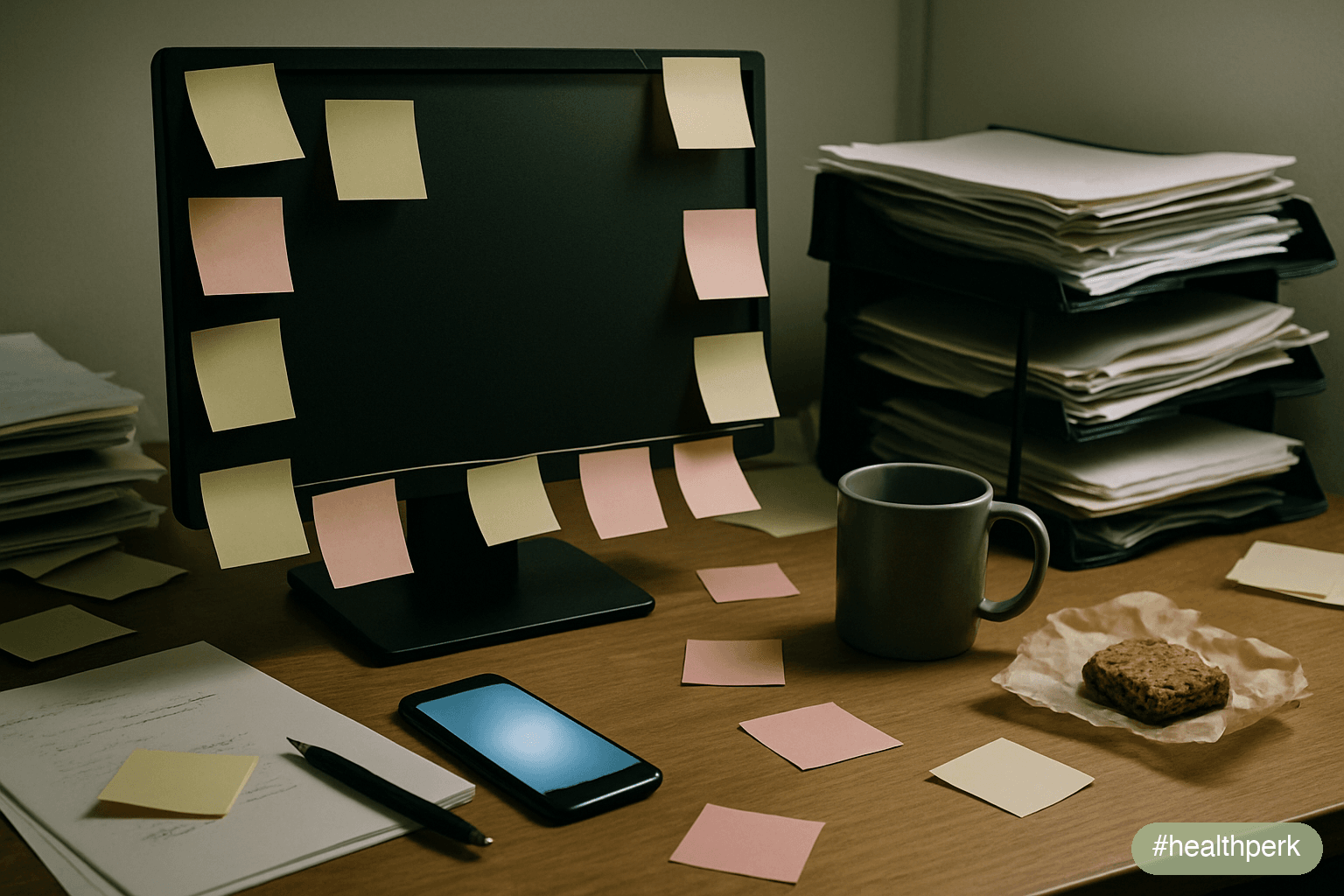
Can't focus at work causes are rarely individual failings — they are usually environmental and structural. Workplace-interruption research consistently reports that knowledge workers are interrupted by digital communications every few minutes on average, and that recovery from a deep-work interruption can take 20 minutes or more. The math is stark: a day fragmented every few minutes leaves almost no time for sustained cognition.
The causes that hide in plain sight, ranked by how often they explain workplace focus failure:
- Notification permission creep. Each app gets installed, each one requests notification access, each one becomes a small interrupt. The honest baseline for focused work is zero push notifications during focus blocks. Default-on is the wrong default.
- Open-plan environments and ambient conversation. Research on the "irrelevant speech effect" shows that intelligible background speech disproportionately disrupts cognitive tasks because the brain cannot help parsing nearby language. Noise-isolating environments or noise-cancelling headphones with non-lyrical audio produce measurable gains.
- Calendar fragmentation. Days broken into 30-minute meeting blocks rarely leave usable sustained-attention windows. Two-hour protected blocks in the morning consistently outperform fragmented all-day availability.
- Untreated sleep, exercise, or anxiety problems compounding the environment. When upstream resources are depleted, the same workplace that felt manageable a month ago becomes overwhelming.
- Task ambiguity. The single most underrated cause: people cannot focus on tasks they cannot clearly state. Writing the next action as a complete sentence ("Draft the introduction paragraph of the Q2 report, 200–300 words, by 11 a.m.") consistently outperforms vague intentions ("work on the report").
A small reality check: if you cannot focus at work but you can focus deeply on video games, reading, or hobbies, the problem is rarely a cognitive deficit. It is almost always task design, environment, or motivation alignment.
A 90-minute workplace recovery protocol
When focus collapses mid-workday, a 90-minute structured reset usually restores it:
- Close all browser tabs and chat applications. Phone in another room.
- 5–10 minute brisk walk, ideally outdoors.
- Water + protein snack if last meal was 4+ hours ago.
- Write the next action as a complete sentence on paper.
- 50-minute timed block on that action.
- 10-minute walking break.
This works because it addresses the four most common simultaneous causes — fragmentation, depletion, ambiguity, and notification load.
Difficulty Concentrating in Adults: A Modern Pattern

Difficulty concentrating adults report has measurably increased through the 2020s, but the cause is contested. Three plausible drivers operate simultaneously, and the most useful framing acknowledges all three rather than picking one.
The first is environmental. The average adult in 2026 receives over 60 push notifications daily and unlocks their phone more than 80 times — a substrate that did not exist 15 years ago. Attention is plastic; it conforms to the demands placed on it, and the modern demand is to switch frequently and briefly. Sustained attention atrophies with disuse the way any unused capacity does.
The second is recovery-related. Many adults are chronically under-recovered — short on sleep, low on aerobic fitness, high on stress — and report what they experience as a focus problem when the underlying issue is depletion. A 2020 Frontiers in Psychology review concluded that adequate recovery (sleep, parasympathetic time, social connection) restores attention more reliably than stimulants in non-clinical populations.
The third is clinical. Adult ADHD diagnoses have risen significantly, partly reflecting better recognition. For some adults, lifelong concentration difficulties that impair work and relationships across multiple settings reflect a genuine neurodevelopmental condition, and the appropriate response is evaluation rather than self-help. The honest distinction:
- Situational/lifestyle difficulty: worsened in recent months/years, environmentally driven, improves with sleep and structure
- Clinical pattern: present since childhood/adolescence, persistent across settings, severe enough to impair function
For the situational pattern, the levers in the next two sections work reliably. For the clinical pattern, evaluation is the right step before assuming natural intervention will suffice.
How to Stay Focused for Long Periods
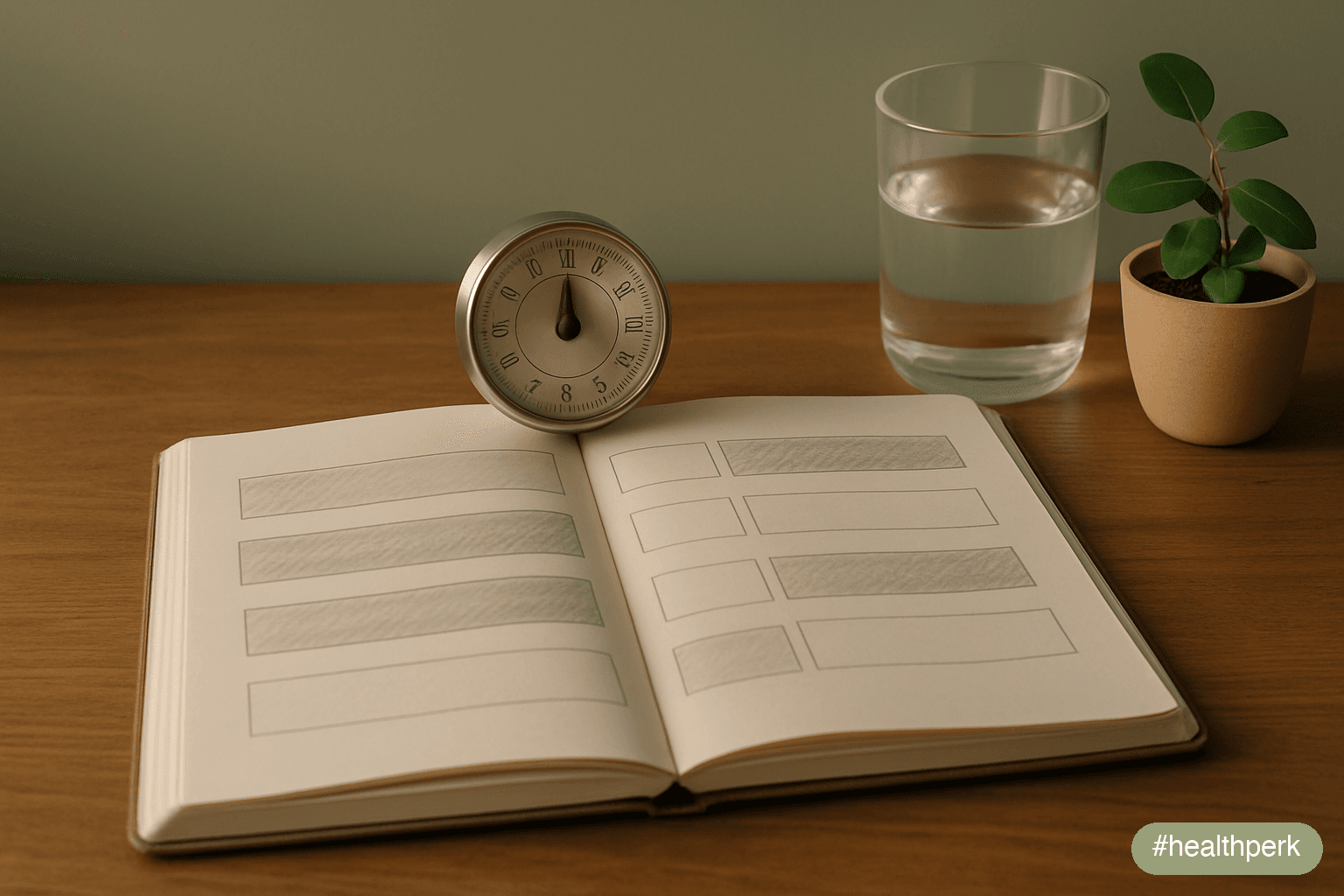
How to stay focused for long periods is a question with a counterintuitive answer: continuous effort is not the goal. Sustained attention is not a 4-hour unbroken sprint; it is a series of focused blocks separated by deliberate recovery. The literature on cognitive fatigue is consistent — attention is depletable in the short term and replenishable through brief, structured breaks.
The framework that has the strongest practical evidence:
- Focus blocks of 25–90 minutes, calibrated to current capacity. Beginners and the chronically under-recovered should start with 25-minute blocks (the Pomodoro length). Experienced deep workers can sustain 60–90 minute blocks. Going beyond 90 minutes without a break almost always produces fatigue masking as "I'm in flow."
- Breaks of 5–15 minutes that are actually restorative. Scrolling a phone during a "break" produces no recovery — it adds to attention load. Restorative breaks involve movement, eye distance change (look at something 20+ feet away), or brief social contact.
- A maximum of 3–4 deep blocks per day. Anders Ericsson's research on deliberate practice consistently found that elite performers across domains accumulate 3–5 hours of high-quality deep work daily, not more. Beyond that, returns diminish sharply.
- Recovery between deep-work days. Two consecutive maximum-intensity days are typically followed by reduced output on day three unless sleep and movement compensate. The cycle matters as much as the day.
The single deepest hour
If you can have only one hour of sustained focus daily, place it within the first 90 minutes of starting work, before reactive inputs (email, messaging) have a chance to colonize working memory. The combination of cortisol-anchored alertness and uncontaminated cognitive bandwidth makes this window 2–3x more productive than the same hour later in the day.
A common mistake
Pushing through the natural 90-minute fade because "I was almost done" is one of the most counterproductive patterns. The next 30 minutes typically produce work of poor quality that has to be redone the following day. A 10-minute walk, then a fresh block, almost always outperforms forcing it.
Devices to Improve Focus: What the 2026 Evidence Supports
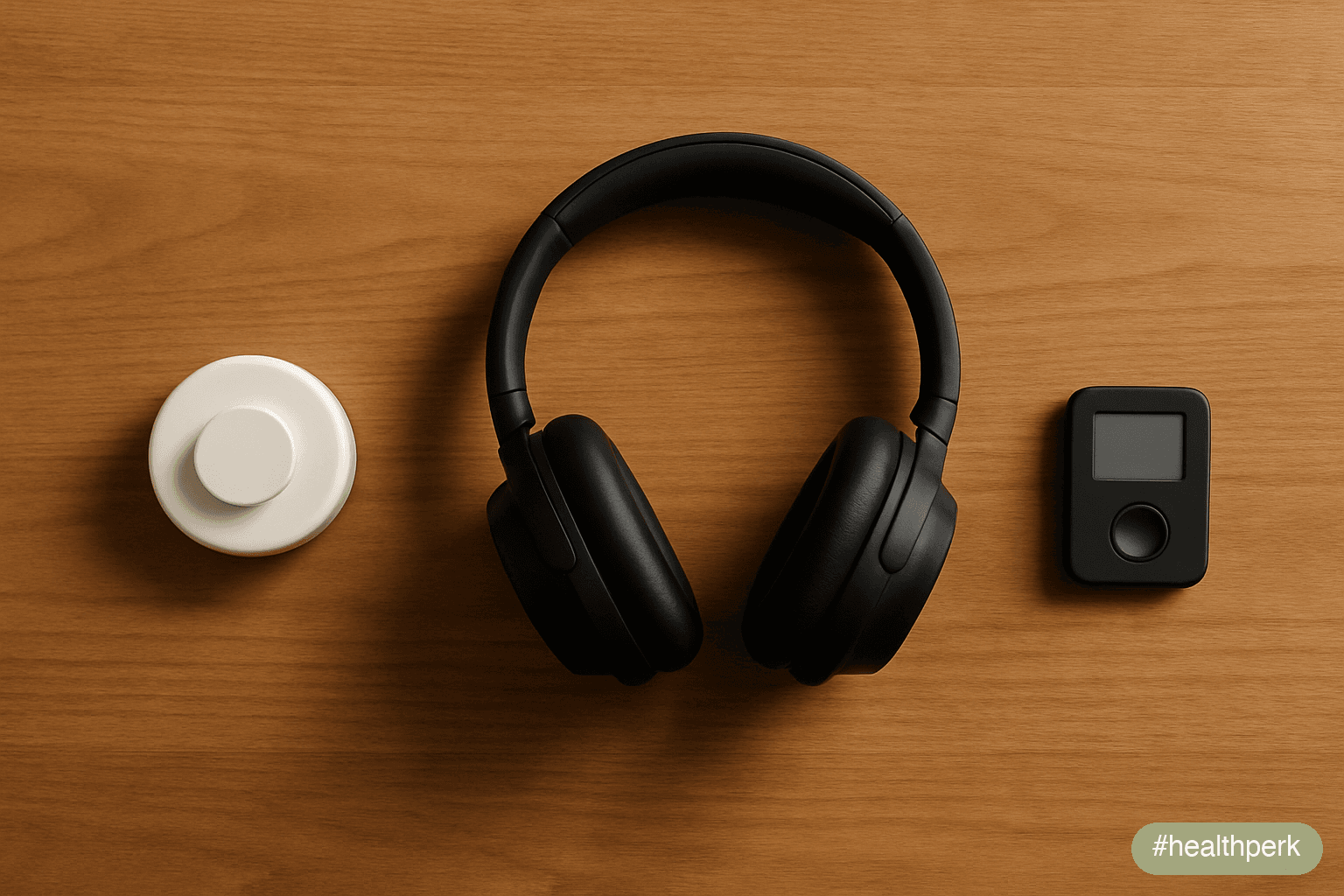
Devices to improve focus is a category that has expanded rapidly since 2022, ranging from $5 timers to $400+ neurofeedback headsets. The honest 2026 summary is that simple devices have the strongest evidence; expensive devices have the strongest marketing. The order matters: solve the structural problems first, then ask whether any device fills a remaining gap.
Wearable devices for brain performance
Wearable devices for brain performance in 2026 fall into three loose categories: tracking wearables that measure sleep, heart-rate variability, and activity; biofeedback wearables that prompt slow breathing or signal autonomic state; and neurostimulation wearables that deliver tCS or tACS currents.
For tracking wearables (rings, watches, patches), the evidence is indirect — they do not directly improve focus, but they surface the inputs that drive it. Large wearable-based observational studies have found that timing regularity of sleep predicts cognitive performance more strongly than total sleep duration. A wearable that simply shows you that your bedtime drifted three hours over the week may produce more focus benefit than any direct intervention.
For biofeedback wearables, the evidence is moderate when the device prompts slow breathing or signals an over-aroused state. The mechanism is the breathing or behavior, not the device itself — a $5 timer prompting hourly slow-breath sets would likely produce similar effects.
For neurostimulation wearables (transcranial current devices), the 2026 evidence remains mixed. Some controlled trials show small effect sizes on specific cognitive tasks; replication across labs has been inconsistent. These are not recommended as first-line interventions for healthy adults.
Neurofeedback devices for focus
Neurofeedback devices for focus train the user to modulate brain-state markers (typically EEG signals) through real-time feedback. Clinical EEG-neurofeedback for ADHD has a moderate but contested evidence base — some RCTs and meta-analyses show benefit, others find that improvements wash out when blinding is rigorous (Cortese et al., 2016; updated meta-analyses through 2024). For non-clinical adults seeking improved everyday focus, the evidence for consumer neurofeedback devices is thinner still. They are not unreasonable as adjuncts, but they should not be expected to substitute for sleep, exercise, and environmental design.
Devices for attention training
Devices for attention training that operate through structured cognitive practice (digital tasks performed daily) show robust improvement on the trained task but limited transfer to general cognition — a finding consistently reported in reviews including Simons et al. (2016). The best use is targeted: if a specific cognitive demand at work matches the trained task (e.g., dual-tasking, working memory under load), targeted practice can produce useful improvement. As general "brain training," the value is modest.
Gadgets to improve concentration
Gadgets to improve concentration with the strongest evidence-to-cost ratio remain the simplest:
- A physical kitchen timer or stopwatch. Pomodoro-style time pressure improves on-task time; the device just needs to count down reliably.
- Noise-isolating earplugs (foam or molded). Research on the irrelevant-speech effect consistently shows that intelligible background speech disrupts cognitive tasks; passive noise reduction is highly effective and costs under $30.
- A locking phone box (or simply leaving the phone in another room). The Ward et al. (2017) finding on smartphone presence and working memory has been replicated; the cheapest "focus gadget" is physical separation.
- A paper notebook and pen. Externalizing the next action measurably reduces working memory load and reduces the urge to switch tasks.
- A do-not-disturb light or sign. Reduces interruption load in shared environments. Low-tech, high-effect.
The blunt summary: most people who buy a $300 focus device would have benefited more from a $0 phone-in-another-room habit and a $15 timer. Solve structure first, then evaluate whether devices fill remaining gaps.
How to Improve Concentration While Studying

How to improve concentration while studying is the question that brings most students to this topic, and the evidence base on study-specific concentration is unusually strong. Students who apply just three or four of the following techniques consistently outperform peers who study longer hours with poor structure.
The evidence-supported study toolkit, ordered by effect size:
- Active retrieval over passive review. A 2011 Science paper by Karpicke and Blunt demonstrated that retrieval practice (closing the book and writing what you remember) produced substantially better long-term retention than concept mapping or re-reading the same material. Retrieval also forces sustained attention in a way that passive review does not.
- Spaced repetition over massed study. Distributing study sessions across days produces durable learning; cramming produces fleeting recognition that disappears within weeks (Cepeda et al., 2008).
- Interleaved practice over blocked practice. Mixing problem types within a session produces better long-term skill than doing all of one type before moving to the next, particularly for math, science, and language learning.
- Pomodoro-style 25-minute blocks for difficult material. The constrained time window reduces the urge to switch tasks and creates manageable starting friction. For students who routinely struggle to begin, 25 minutes is the magic length.
- The "two-pass" method for dense reading. First pass: skim for structure and questions. Second pass: read for answers and detail. Sustained attention is much easier when the brain knows what it is looking for.
- A dedicated study location used only for studying. Context-dependent learning research consistently shows that environments become cues for the cognitive state practiced in them. A location that means "study" measurably reduces startup friction.
- Sleep before exams, not the night after a cram. Sleep consolidates the day's learning. A 2019 Annual Review of Psychology synthesis is unambiguous: a full night of sleep after study is the difference between durable learning and weak recall.
For students with consistent concentration difficulties, the diagnostic flow is the same as for adults — check sleep, environment, anxiety, and clinical patterns — and the structural interventions transfer directly. The single most leveraged change for most students is the same as for most working adults: phone in another room during study blocks.
A 90-minute study session template
- 5 minutes: write what you intend to learn or solve in this session.
- 5 minutes: skim the material for structure.
- 25 minutes: focused study (read, problem-solve, or watch lecture).
- 5 minutes: retrieval practice — close everything and write what you remember.
- 5 minutes: break (movement, water, no phone).
- 25 minutes: second focused block, often on the harder material.
- 5 minutes: final retrieval and notes for the next session.
- 15 minutes: walking break or food.
This template consistently outperforms 2 hours of unstructured study and applies whether the material is calculus, anatomy, languages, or law.
Related Articles on HealthPerk
Explore more on this topic:
- Brain Fog Causes and Solutions
- How to Improve Focus Naturally
- Best Supplements for Focus and Concentration
- L-Theanine vs Caffeine for Focus
- Best Apps for Focus and Productivity
Frequently Asked Questions
What actually works for how to increase concentration fast in the next hour?
The fastest reliable structural moves are removing the phone from the room, writing the next action as a complete sentence on paper, and starting a 25-minute timed block. A 5-minute brisk walk before starting raises prefrontal activation and 5 minutes of cyclic sighing reduces arousal-driven distractibility. These three together, layered, produce noticeable concentration gains within the first block for most adults — without requiring sleep or longer-term changes.
Why can't I concentrate for long even when I am rested?
When sleep is adequate but concentration still fades quickly, the most common driver is environmental interruption — notification load, ambient speech, calendar fragmentation. The second most common is task ambiguity (not having written down a clearly defined next action). The third is anxiety-driven cognitive interference, which produces a restless, jittery quality rather than a heavy fade. The pattern of the failure indicates which lever will work.
Can't focus at work causes — is it always me, or sometimes the workplace?
Usually the workplace and only sometimes the person. Knowledge workers are typically interrupted by digital communications every few minutes, with a 20+ minute recovery time per deep-work interruption. A workplace fragmented at that cadence leaves almost no time for sustained cognition. If you can focus deeply on activities outside work (reading, hobbies, games), the problem is almost certainly environmental and structural — not a personal deficit.
How to stay focused for long periods without burning out?
Use 25–90 minute focus blocks separated by 5–15 minute restorative breaks, aim for 3–4 deep blocks per day rather than continuous effort, and protect at least one block in the first 90 minutes of the workday before reactive inputs colonize working memory. Pushing past natural 90-minute fades typically produces low-quality work that has to be redone — a 10-minute walk and a fresh block almost always outperform forcing it.
Are gadgets to improve concentration actually worth the money?
Simple gadgets are excellent value: a $15 kitchen timer, $30 noise-isolating earplugs, a $0 habit of putting the phone in another room. Expensive devices (neurostimulation headsets, premium neurofeedback gear) have weaker evidence for healthy adults and should not substitute for structural fixes. Solve sleep, environment, and notification load first, then evaluate whether any device fills a remaining gap.
How to improve concentration while studying for students who keep getting distracted?
The single most leveraged change for most students is the same as for working adults: phone in another room during study blocks. Beyond that, the evidence-supported toolkit is active retrieval over re-reading, spaced repetition over cramming, 25-minute blocks for difficult material, a study location used only for studying, and a full night of sleep after studying (not before an exam). Three or four of these consistently outperform longer hours of unstructured study.
What is the difference between difficulty concentrating in adults that needs medical evaluation and the everyday kind?
The everyday pattern worsened in recent months or years, is environmentally driven, and improves with sleep, exercise, and structure. The clinical pattern (most commonly adult ADHD) has been present since childhood or adolescence, persists across multiple settings (work, home, relationships), and is severe enough to impair function. If concentration difficulties are lifelong, severe, and span settings, evaluation is appropriate before assuming natural intervention will suffice.
This article is for informational purposes only and does not constitute medical advice. Persistent concentration difficulties can be a symptom of treatable conditions including ADHD, depression, anxiety disorders, sleep apnea, thyroid disease, anemia, and post-viral syndromes. Consult a qualified healthcare provider for concentration symptoms that began suddenly, persist beyond 8–12 weeks of consistent natural intervention, or impair work, school, or relationships across multiple settings. Individual results may vary.
About the author The HealthPerk Editorial Team reviews cognitive health research through evidence synthesis cross-referenced with peer-reviewed clinical trials and clinical practice guidelines. Our cognition content is reviewed for medical accuracy against current neurology, sleep medicine, and behavioral health standards. How we review →
References
Ward, A. F., Duke, K., Gneezy, A., & Bos, M. W. (2017). Brain drain: The mere presence of one's own smartphone reduces available cognitive capacity. Journal of the Association for Consumer Research, 2(2), 140–154. https://doi.org/10.1086/691462
Supports: presence of a smartphone reduces working memory capacity even when powered off
Oppezzo, M., & Schwartz, D. L. (2014). Give your ideas some legs: The positive effect of walking on creative thinking. Journal of Experimental Psychology: Learning, Memory, and Cognition, 40(4), 1142–1152. https://doi.org/10.1037/a0036577
Supports: brief walking improves cognitive performance and creative ideation compared to sitting
Balban, M. Y., Neri, E., Kogon, M. M., Weed, L., Nouriani, B., Jo, B., ... & Huberman, A. D. (2023). Brief structured respiration practices enhance mood and reduce physiological arousal. Cell Reports Medicine, 4(1), 100895. https://doi.org/10.1016/j.xcrm.2022.100895
Supports: cyclic sighing produces rapid reductions in physiological arousal and improvements in mood
Van Dongen, H. P. A., Maislin, G., Mullington, J. M., & Dinges, D. F. (2003). The cumulative cost of additional wakefulness: Dose-response effects on neurobehavioral functions and sleep physiology from chronic sleep restriction and total sleep deprivation. Sleep, 26(2), 117–126. https://doi.org/10.1093/sleep/26.2.117
Supports: chronic six-hour sleep restriction produces cognitive impairment equivalent to total sleep deprivation with mild subjective fatigue
Leroy, S. (2009). Why is it so hard to do my work? The challenge of attention residue when switching between work tasks. Organizational Behavior and Human Decision Processes, 109(2), 168–181. https://doi.org/10.1016/j.obhdp.2009.04.002
Supports: task switching leaves attention residue that degrades performance on the next task
Hofmann, S. G., Asnaani, A., Vonk, I. J. J., Sawyer, A. T., & Fang, A. (2012). The efficacy of cognitive behavioral therapy: A review of meta-analyses. Cognitive Therapy and Research, 36(5), 427–440. https://doi.org/10.1007/s10608-012-9476-1
Supports: CBT produces measurable improvement in anxiety and associated cognitive symptoms
Karpicke, J. D., & Blunt, J. R. (2011). Retrieval practice produces more learning than elaborative studying with concept mapping. Science, 331(6018), 772–775. https://doi.org/10.1126/science.1199327
Supports: retrieval practice produces substantially better long-term retention than re-reading or concept mapping
Cepeda, N. J., Vul, E., Rohrer, D., Wixted, J. T., & Pashler, H. (2008). Spacing effects in learning: A temporal ridgeline of optimal retention. Psychological Science, 19(11), 1095–1102. https://doi.org/10.1111/j.1467-9280.2008.02209.x
Supports: distributed study sessions produce durable learning compared to massed study
Cortese, S., Ferrin, M., Brandeis, D., Holtmann, M., Aggensteiner, P., Daley, D., ... & Sonuga-Barke, E. J. S. (2016). Neurofeedback for attention-deficit/hyperactivity disorder: Meta-analysis of clinical and neuropsychological outcomes from randomized controlled trials. Journal of the American Academy of Child & Adolescent Psychiatry, 55(6), 444–455. https://doi.org/10.1016/j.jaac.2016.03.007
Supports: clinical EEG neurofeedback for ADHD has moderate but contested evidence, with effects diminished under rigorous blinding
Simons, D. J., Boot, W. R., Charness, N., Gathercole, S. E., Chabris, C. F., Hambrick, D. Z., & Stine-Morrow, E. A. L. (2016). Do "brain-training" programs work? Psychological Science in the Public Interest, 17(3), 103–186. https://doi.org/10.1177/1529100616661983
Supports: commercial brain-training programs improve trained tasks but show limited transfer to general cognition
Frequently Asked Questions
What actually works for how to increase concentration fast in the next hour?
The fastest reliable structural moves are removing the phone from the room, writing the next action as a complete sentence on paper, and starting a 25-minute timed block. A 5-minute brisk walk before starting raises prefrontal activation and 5 minutes of cyclic sighing reduces arousal-driven distractibility. These three together produce noticeable concentration gains within the first block for most adults.
Why can't I concentrate for long even when I am rested?
When sleep is adequate but concentration still fades quickly, the most common driver is environmental interruption — notification load, ambient speech, calendar fragmentation. The second most common is task ambiguity. The third is anxiety-driven cognitive interference. The pattern of the failure indicates which lever will work.
Can't focus at work causes - is it always me, or sometimes the workplace?
Usually the workplace and only sometimes the person. Knowledge workers are typically interrupted by digital communications every few minutes, with a 20+ minute recovery time per deep-work interruption. If you can focus deeply on activities outside work, the problem is almost certainly environmental and structural — not a personal deficit.
How to stay focused for long periods without burning out?
Use 25-90 minute focus blocks separated by 5-15 minute restorative breaks, aim for 3-4 deep blocks per day rather than continuous effort, and protect at least one block in the first 90 minutes of the workday before reactive inputs colonize working memory. Pushing past natural 90-minute fades typically produces low-quality work.
Are gadgets to improve concentration actually worth the money?
Simple gadgets are excellent value: a kitchen timer, noise-isolating earplugs, a habit of putting the phone in another room. Expensive devices like neurostimulation headsets have weaker evidence for healthy adults and should not substitute for structural fixes.
How to improve concentration while studying for students who keep getting distracted?
The single most leveraged change is putting the phone in another room during study blocks. Beyond that, use active retrieval over re-reading, spaced repetition over cramming, 25-minute blocks for difficult material, a study location used only for studying, and a full night of sleep after studying.
What is the difference between difficulty concentrating in adults that needs medical evaluation and the everyday kind?
The everyday pattern worsened in recent months or years, is environmentally driven, and improves with sleep, exercise, and structure. The clinical pattern (commonly adult ADHD) has been present since childhood, persists across multiple settings, and is severe enough to impair function. If concentration difficulties are lifelong, severe, and span settings, evaluation is appropriate.
More from Supplements