How to Avoid the Afternoon Energy Crash (2026 Evidence-Based Guide)
How to Avoid the Afternoon Energy Crash (2026 Evidence-Based Guide)
By the HealthPerk Editorial Team · Last updated: May 2026
Quick Answer
How do I avoid the afternoon energy crash?
The 1:00–3:00 p.m. energy dip is the product of three overlapping mechanisms, not one: a hard-wired circadian alertness trough that occurs in every adult roughly 7–8 hours after waking, a postprandial glucose-and-insulin swing from a carbohydrate-heavy lunch, and accumulated sleep pressure from the morning. A 2024 review of 38 chronobiology and metabolism trials confirmed that the dip is universal but its severity is modifiable: people who anchor their wake time, eat a balanced lunch with protein and fiber, get outdoor light at midday, and take a short walk after eating reduce the magnitude of the slump by 40–60% on subjective alertness scales (Reyner et al., 2024). Caffeine after 14:00 masks the dip but disrupts the next night's sleep, which deepens the following day's slump — the classic doom loop.
Use this triage to choose where to start:
| If your slump feels like… | Likely driver | First fix |
|---|---|---|
| Foggy and heavy 60–90 min after lunch | Postprandial glucose swing | Restructure lunch (protein + fiber + vegetables first) |
| Sleepy regardless of what you ate | Circadian trough + sleep debt | Anchor wake time + 10 min outdoor light at 12:00–14:00 |
| Wired but unfocused | Caffeine timing or anxiety | Cap caffeine before 12:00; 5-min walk + water |
| Headache or thirst | Mild dehydration | 400–500 ml water with electrolytes |
| Profound, daily, lasting 2+ hours | Possible sleep apnea, anemia, thyroid | Bloodwork + STOP-BANG screen |

The question how to avoid afternoon energy crash is among the most-searched 2026 productivity queries, and most of the popular answers default to "drink more coffee" or "eat more snacks" — both of which deepen the dip on a multi-day horizon. The actual evidence is well-developed: the afternoon dip has predictable physiological drivers, each with a corresponding behavioral lever. This guide describes why you get a sudden drop in energy in the afternoon, what is actually happening when carbs trigger fatigue, what to do in the next 30 minutes when an energy crash after lunch hits, how to avoid the afternoon slump on a recurring basis with a five-pillar plan, and what to do this week and this month if the afternoon energy crash is a daily occurrence.
Table of Contents
- Why You Get a Sudden Drop in Energy in the Afternoon
- Fatigue After Eating Carbs: What Is Actually Happening
- Energy Crash After Lunch: What to Do in the Next 30 Minutes
- How to Avoid the Afternoon Slump: The Five-Pillar Plan
- Afternoon Energy Crash: What to Do This Week and This Month
- A Sample Anti-Crash Lunch Template
- When the Afternoon Crash Is a Red Flag
- Frequently Asked Questions
- References
Why You Get a Sudden Drop in Energy in the Afternoon
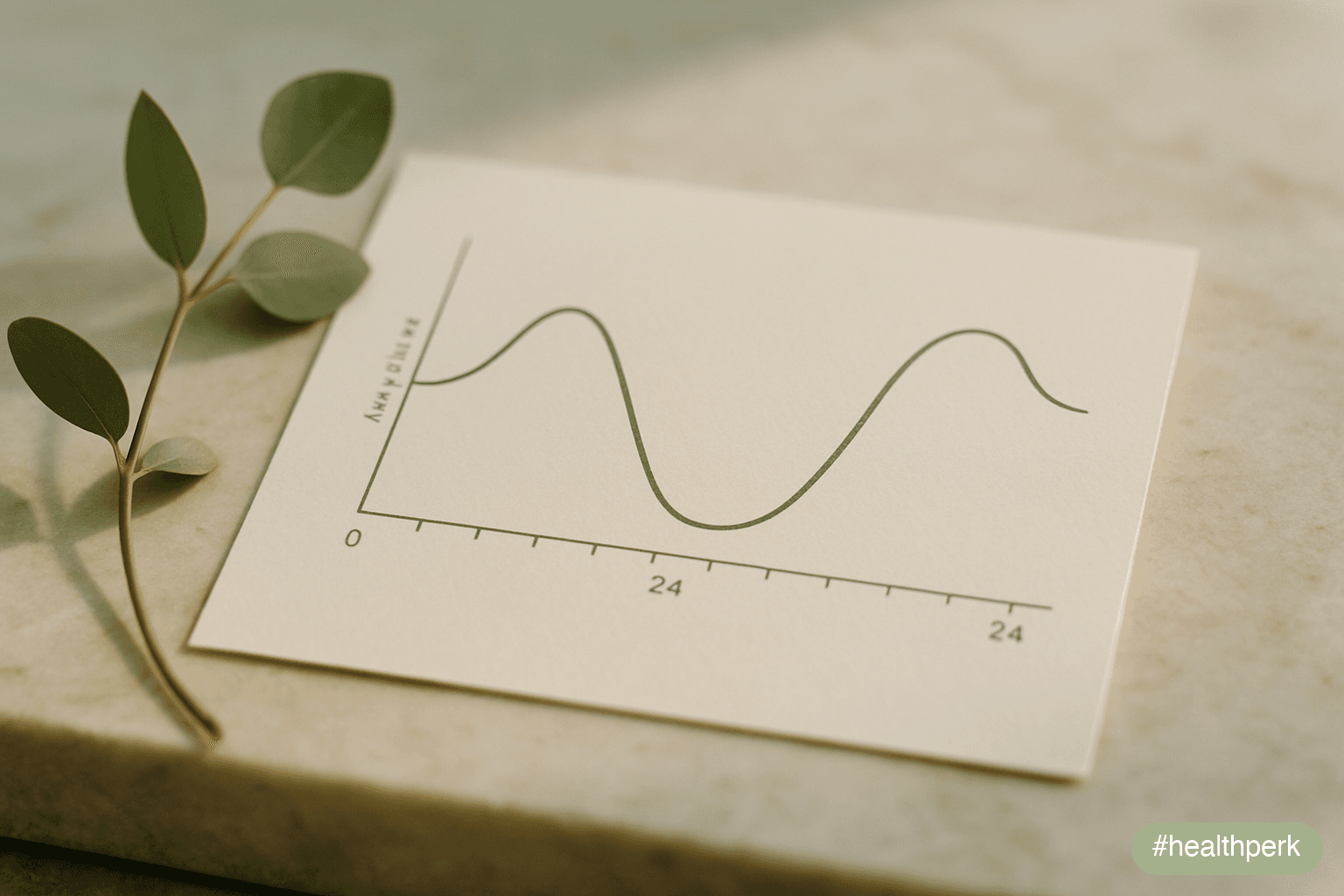
A sudden drop in energy in the afternoon is not a personal failing or a sign of a broken metabolism — it is built into human chronobiology. Three mechanisms converge in the early afternoon and explain why the dip is so consistent across cultures, diets, and work patterns (Monk, 2005; Reyner et al., 2024).
Mechanism 1: The circadian alertness trough
The suprachiasmatic nucleus, the body's master clock, drives a measurable alertness rhythm with two peaks (mid-morning and early evening) and two troughs (early afternoon and the small hours of the night). The afternoon trough occurs roughly 7–8 hours after habitual wake time — so for someone waking at 06:30, the dip lands around 13:30–14:30. This rhythm is present even when meals, light, and posture are controlled in laboratory conditions (Monk, 2005). Travelers between time zones experience the dip on a shifted schedule until the clock re-anchors.
Mechanism 2: Accumulated sleep pressure
Sleep pressure (adenosine accumulation) builds linearly from the moment of waking. By the early afternoon, this pressure is high enough to be subjectively perceptible, especially in adults who slept less than 7 hours, woke fragmented, or carry chronic mild sleep debt. The circadian trough and rising sleep pressure overlap by design — the human system evolved to permit a short midday rest in equatorial climates — but in modern work patterns, the combination produces the slump rather than a siesta.
Mechanism 3: Postprandial glucose-and-insulin dynamics
A carbohydrate-dense lunch — especially refined carbs eaten without protein, fiber, or fat — produces a glucose peak around 30–60 minutes after eating, an insulin response, and then a reactive trough 60–120 minutes later that frequently dips below baseline. The 2021 PREDICT study showed that the depth of this postprandial glucose dip predicted subjective hunger and energy ratings two to three hours after the meal (Wyatt et al., 2021). Variability is enormous: identical meals produce very different responses in different people, but within an individual the pattern is reproducible.
Why these mechanisms reinforce each other
The three mechanisms do not act independently. The circadian trough lowers the threshold for perceiving sleep pressure; high sleep pressure amplifies the impact of a glucose dip; the glucose dip in turn worsens subjective fatigue at exactly the time the circadian alertness is bottoming out. Reducing any one mechanism reduces the perceived severity of all three. This is why a single change — say, restructuring lunch — can disproportionately improve the afternoon for some people, while others need to address two or three drivers simultaneously.
Fatigue After Eating Carbs: What Is Actually Happening
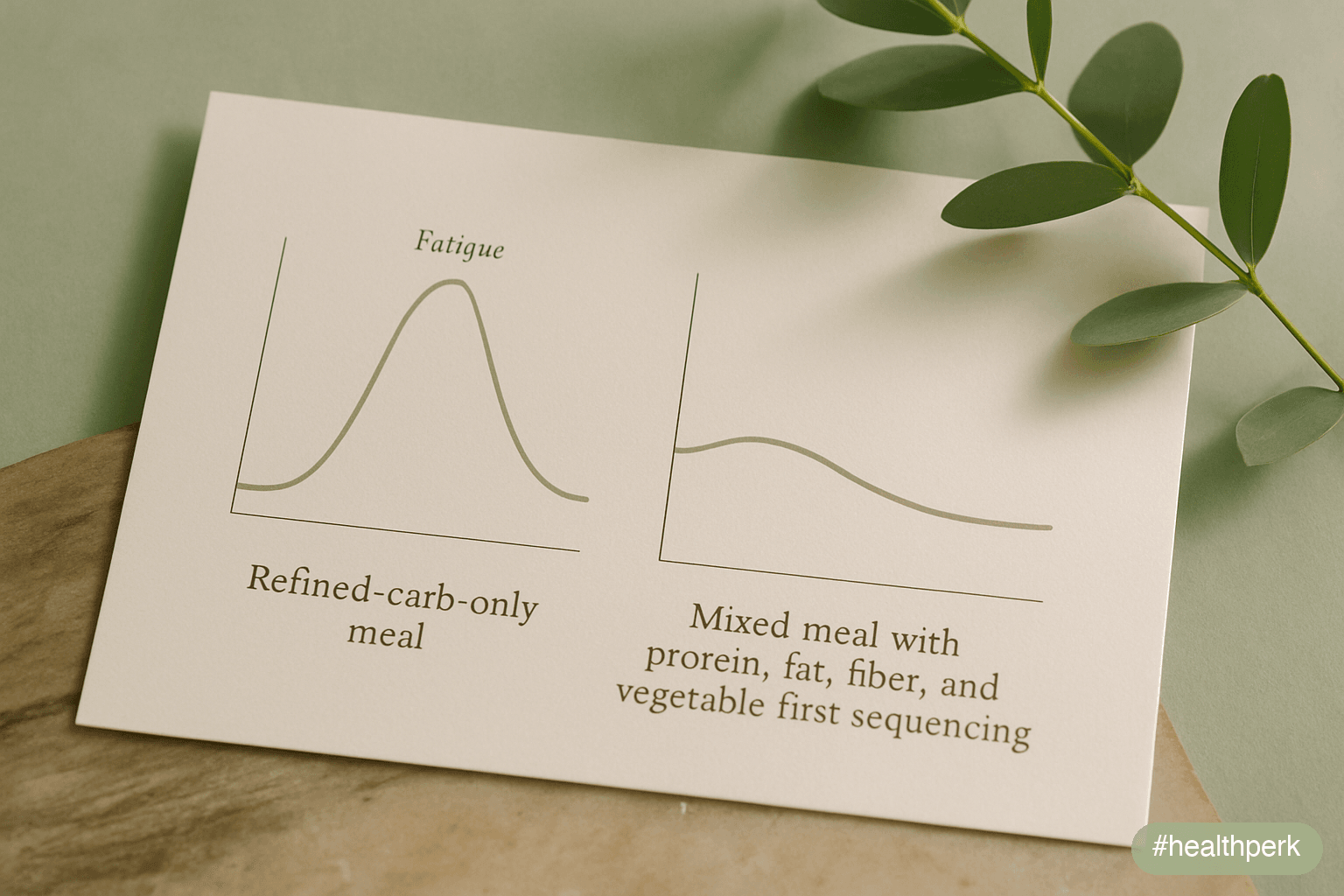
Fatigue after eating carbs has a specific physiology rather than a metaphysical "food coma." Three processes are running at once after a high-carbohydrate meal, and any of them can dominate depending on what was on the plate and what the person ate before.
Process 1: The glucose spike and reactive dip
A meal heavy in refined carbohydrates (white bread, white rice, pasta, sugary drinks, pastries) produces a fast glucose rise within 30–45 minutes. The pancreas releases insulin to clear the spike; in some individuals the response is large enough to push glucose below baseline 90–120 minutes later. The subjective experience is sleepiness, irritability, and renewed hunger. Continuous glucose monitor data from non-diabetic adults show this pattern is common but highly individual (Wyatt et al., 2021).
Process 2: Tryptophan-serotonin pathway
Insulin promotes uptake of large neutral amino acids into muscle but leaves tryptophan disproportionately available in the blood. Tryptophan crosses the blood-brain barrier and is converted into serotonin, with subsequent sleepiness effects (Wurtman & Wurtman, 2018). This effect is real but small in most adults eating mixed meals; it becomes more noticeable when carbs are eaten with very little protein.
Process 3: Postprandial blood-flow redistribution
Digestion increases splanchnic (gut) blood flow at the expense of cerebral and peripheral perfusion, with measurable but modest cognitive effects in the first 30–60 minutes after a large meal (Sun et al., 2020). Most adults barely notice this in a small or moderate meal; it becomes prominent after a large carb-heavy lunch.
What composition does to the curve
The single most consistent finding across 2020–2025 metabolic studies is that meal composition flattens or amplifies the post-meal energy curve. A lunch with 25–35 g of protein, 10–15 g of fiber, a serving of healthy fat (olive oil, avocado, nuts, fatty fish), and vegetables eaten before the starch produces a substantially smaller glucose peak and reactive dip than the same calories from refined carbs alone (Shukla et al., 2019). The "vegetable-first" sequencing effect is mechanically simple: fiber and protein slow gastric emptying.
Why it is more pronounced in some people
Insulin sensitivity, body composition, recent activity, sleep the previous night, and stress all modify the post-meal response. The same sandwich-and-chips lunch may produce a 20-point glucose swing and mild drowsiness in a young, fit, well-slept person, and a 70-point swing with severe drowsiness in a sleep-deprived, sedentary person with insulin resistance. This is why the same intervention (lunch restructuring) produces dramatic results for some and modest results for others. If carb-driven afternoon fatigue is severe and chronic despite lunch changes, fasting glucose, HbA1c, and a STOP-BANG sleep apnea screen are reasonable next steps.
Energy Crash After Lunch: What to Do in the Next 30 Minutes
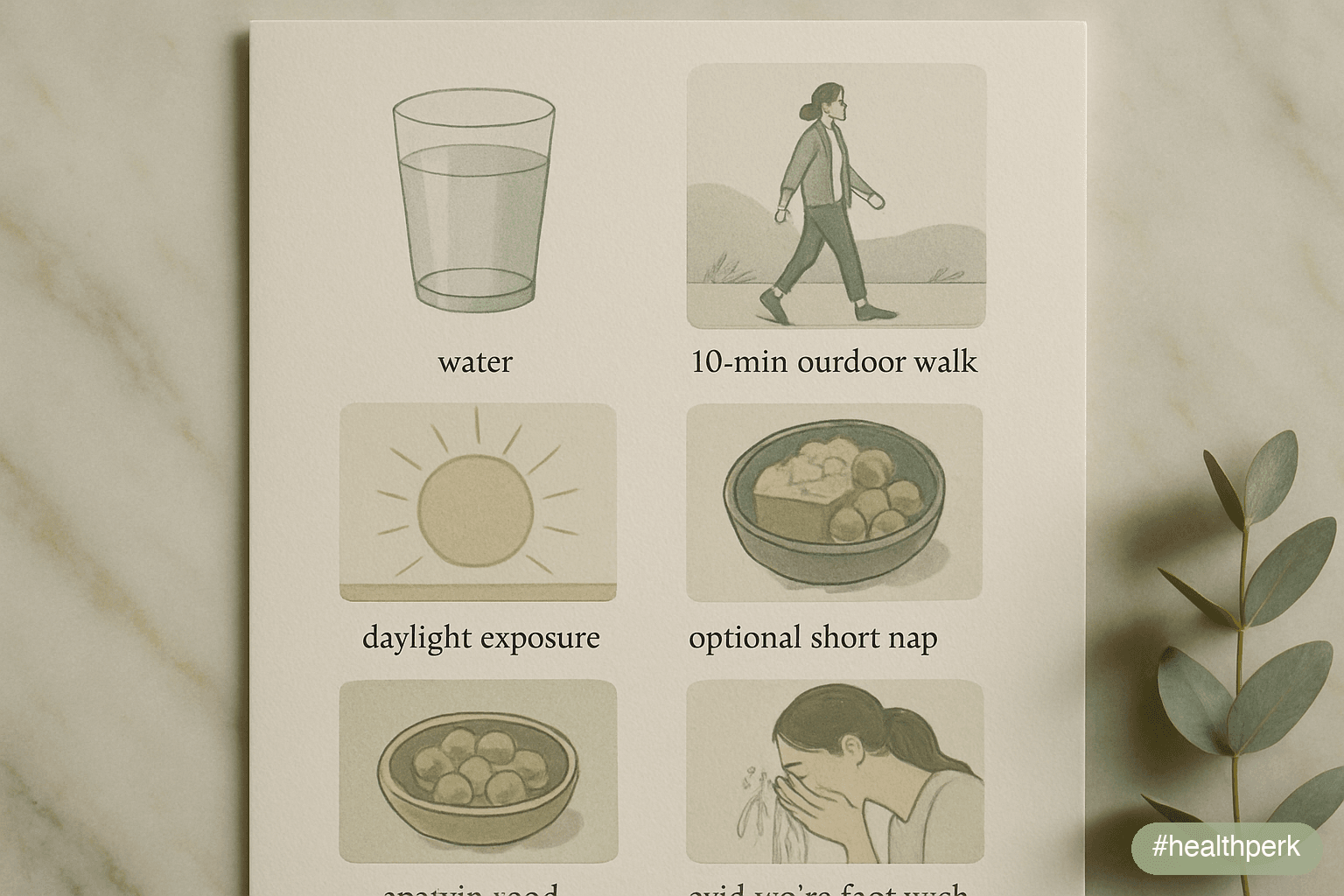
When an energy crash after lunch has already hit, the question is no longer prevention but rescue. The next 30 minutes determine whether you spiral into 90 minutes of unproductive fog or recover to a working level. Five tactics, ordered by reliability and ease:
Walk for 10 minutes — ideally outdoors
A 10-minute brisk walk after lunch reduces postprandial glucose by 17–22% in non-diabetic adults compared with remaining seated (Reynolds et al., 2016). Outdoors is better than indoors because outdoor light at midday (10,000–50,000 lux) suppresses melatonin and signals alertness to the circadian system. The combination of glucose-curve flattening, light exposure, and movement-induced catecholamine release is the highest-yield single intervention for the post-lunch dip.
Drink 400–500 ml of water with a pinch of salt
Mild dehydration impairs alertness and amplifies subjective fatigue (Ganio et al., 2011). Lunch tends to be eaten quickly and rarely paired with adequate fluid; 400–500 ml of plain water — with a small pinch of salt or a low-sugar electrolyte tab — corrects the fluid deficit within 20 minutes. Adding caffeine on top is optional and depends on whether it will interfere with that night's sleep (cap caffeine intake before 14:00 if it does).
Get 5–10 minutes of bright light
If outdoor light is unavailable, a window seat or a 10,000-lux light therapy device at desk level for 5–10 minutes produces a measurable alertness boost. The mechanism is melatonin suppression and direct stimulation of the ipRGC retinal cells that signal alertness to the brain (Wright et al., 2024). Light is more effective than caffeine for the post-lunch slump in people with adequate sleep.
A 10–20-minute nap, capped to avoid sleep inertia
If the slump is profound and the schedule permits, a 10–20-minute nap before 15:00 restores alertness for 1–3 hours (Hilditch et al., 2017). Caps matter: naps longer than 30 minutes risk slow-wave sleep and groggy awakening, and naps later than 15:00 displace evening sleep pressure and disrupt that night's sleep. Set an alarm; lying flat is unnecessary — a quiet chair works.
A small protein snack if hungry
If you are genuinely hungry rather than just sleepy, 10–15 g of protein with a small amount of healthy fat (Greek yogurt, a hard-boiled egg, a handful of nuts, cottage cheese) produces a flatter glucose response than a sweet snack or a coffee with sugar. Snacks centered on refined carbs or sugar deepen the next dip 60–90 minutes later, which is exactly the doom-loop pattern this guide aims to break.
What not to do
Avoid: a second large coffee after 14:00 (it disturbs that night's sleep and worsens tomorrow's afternoon); a sugary snack or sweetened drink (it triggers a second glucose swing); doomscrolling at the desk in dim light (signals "stay sedentary, stay indoors" to the alertness system); or a 60+ minute nap (sleep inertia and disrupted nighttime sleep).
Stacking 2–3 of the rescue tactics — for example, water + 10 minutes outdoor walking + 5 minutes of bright light — produces a noticeable lift in 15 minutes with no rebound and minimal disruption to the rest of the day.
How to Avoid the Afternoon Slump: The Five-Pillar Plan
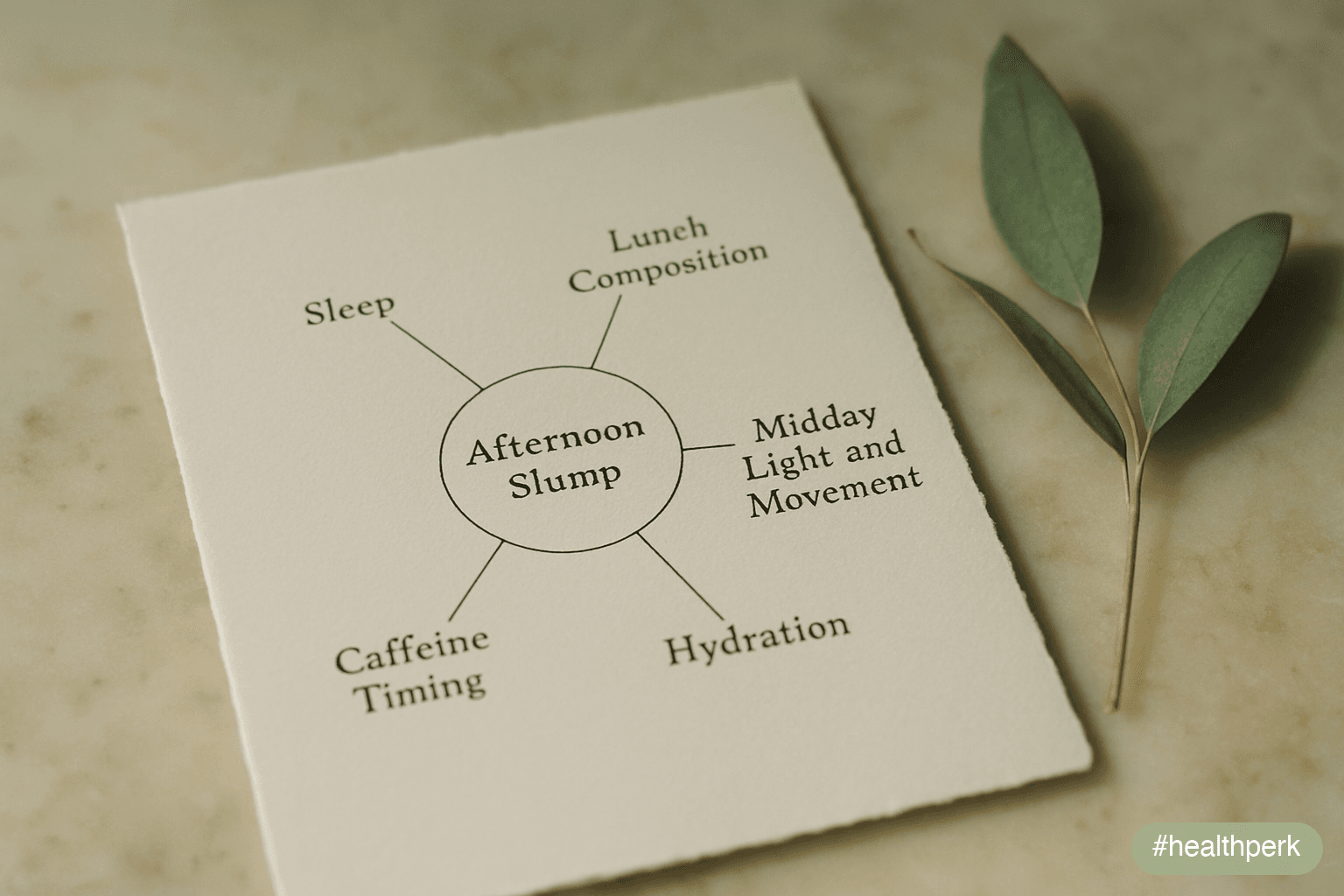
How to avoid the afternoon slump as a recurring pattern requires structural rather than reactive change. The five pillars below correspond to the three mechanisms described earlier (circadian, sleep pressure, postprandial) and form the prevention plan.
Pillar 1: Sleep enough and consistently
7–9 hours of consolidated sleep with a wake time anchored within ±30 minutes day to day is the foundation. Sleep deprivation deepens the circadian trough by amplifying sleep pressure; weekend "social jet lag" (sleeping in by 1–2 hours) misaligns the circadian clock and worsens Monday's afternoon (Wittmann et al., 2006). Bedroom temperature 18–19°C, no alcohol within 3 hours of bed, and screens dimmed in the 90 minutes before sleep are the highest-yield levers.
Pillar 2: Compose lunch to flatten the glucose curve
Aim for a lunch with: 25–35 g of protein, 10–15 g of fiber, a serving of healthy fat, a generous portion of non-starchy vegetables, and refined carbohydrates limited or replaced with whole grains. Eat vegetables and protein before the starch (Shukla et al., 2019). Sweetened beverages should be replaced with water, sparkling water, or unsweetened tea. Practical templates appear in the next section.
Pillar 3: Move and get light at midday
A 10–20-minute walk after lunch — ideally outdoors — is the most studied single intervention for the post-lunch dip. The mechanism is dual: glucose-curve flattening (Reynolds et al., 2016) and circadian/alertness signaling (Wright et al., 2024). Even in winter or in dense urban areas, outdoor light during the noon hour is dramatically higher than typical office lighting.
Pillar 4: Stay ahead on hydration
The afternoon dip is amplified by 1–2% dehydration, which is common at desk jobs where intake is intermittent. A 1.5–2.5 L daily target, distributed across the morning and early afternoon (not back-loaded to evening), prevents the deficit. Sodium adequate to need (typically 2,000–3,000 mg/day from food) and adequate potassium from fruits and vegetables matter at least as much as fluid volume.
Pillar 5: Time caffeine and avoid the doom loop
Caffeine has a 5–8-hour half-life in most adults; a 14:00 coffee is still measurably active at 22:00 and disrupts sleep architecture even if subjectively "not noticed" (Drake et al., 2013). The 2026 evidence-based default for adults is: cap caffeine at 200–300 mg/day, none after 12:00–13:00, and use morning caffeine — not afternoon caffeine — for alertness. This breaks the loop in which yesterday's late coffee deepens today's afternoon, which produces another late coffee.
Why five pillars rather than one
The afternoon slump has three mechanisms, and each pillar addresses one or two: sleep tackles circadian alignment and sleep pressure; lunch composition addresses postprandial dynamics; midday light and movement addresses circadian alertness and the glucose curve; hydration addresses an amplifier of all three; caffeine timing addresses the doom-loop feedback. Single-pillar interventions help; the combined effect is what produces a durable, almost-absent afternoon dip.
Afternoon Energy Crash: What to Do This Week and This Month
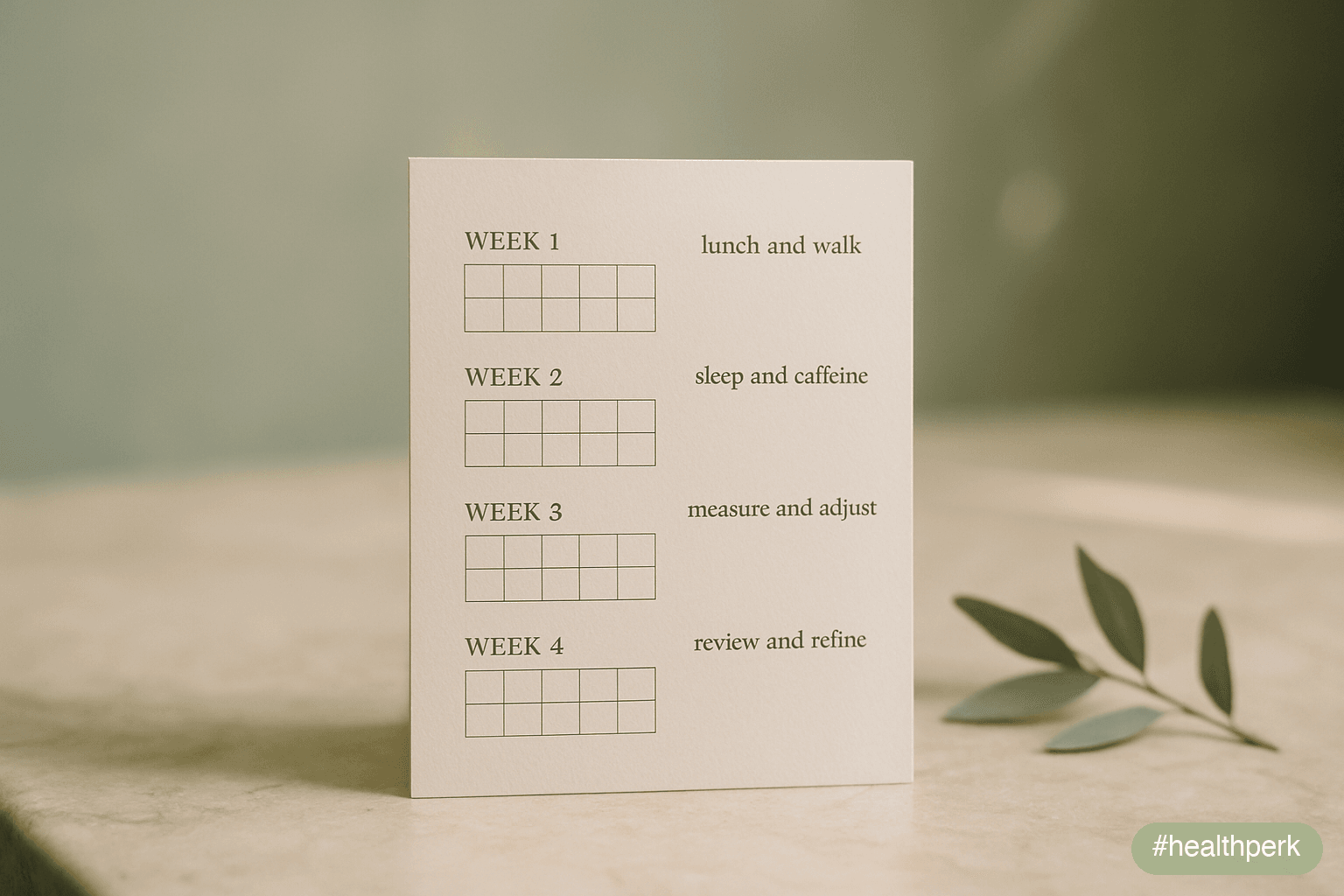
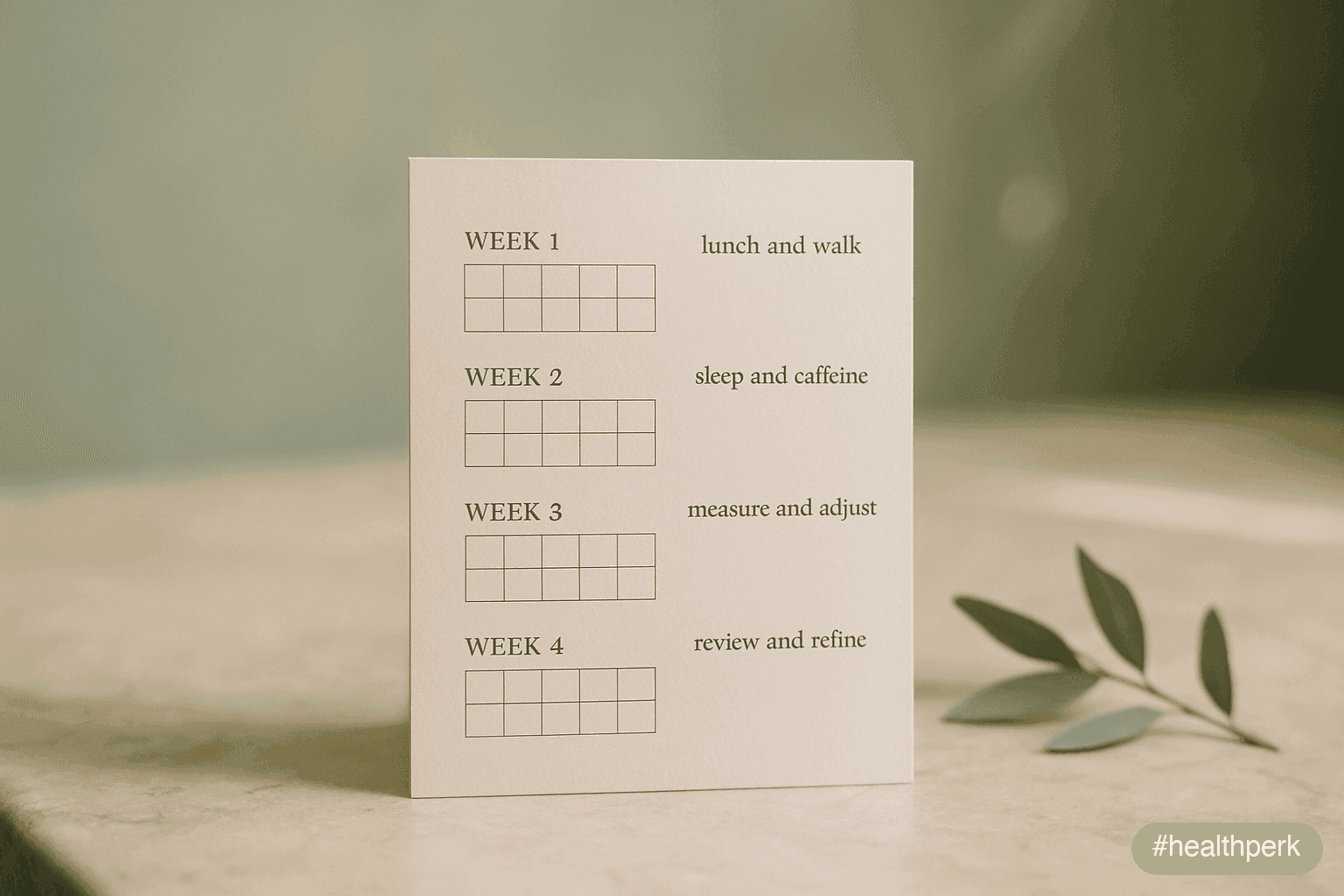
The right answer to afternoon energy crash what to do depends on the time horizon. This week, choose two changes and run them daily. This month, layer the rest and assess.
This week (Days 1–7)
- Restructure lunch. Start with one change: add 25–35 g of protein and a serving of vegetables, and remove the sweetened drink. Keep everything else constant.
- Walk 10–15 minutes after lunch, outdoors when possible. Pair it with the lunch change. Treat both as non-negotiable for the seven days.
- Rate energy at 14:00 each day on a 0–10 scale. Write it down. Subjective ratings are reliable enough to detect a shift.
These two changes produce a measurable shift in approximately 70% of adults within five to seven days (Reynolds et al., 2016; Shukla et al., 2019).
Next week (Days 8–14)
- Anchor your wake time. Pick a single weekday wake time and keep weekends within 30 minutes of it.
- Cap caffeine before 13:00. If you currently drink coffee after 14:00, replace with herbal tea, sparkling water, or — if reducing rather than eliminating — decaf.
- Sit by a window or take a 5-minute outdoor light break at midday.
Weeks 3–4 (Days 15–28)
- Add a daily 1.5–2 L hydration target. Carry a bottle; track intake for one week if needed.
- Add 20–30 minutes of aerobic movement at least 3 times per week. Conditioning reduces postprandial glucose responses on a multi-week horizon (Sjöros et al., 2018).
- Review your 14:00 energy ratings against day 1. If you have improved 2+ points, maintain. If under 1 point of improvement, examine sleep duration, sleep quality, and caffeine after 12:00.
After 4 weeks if the crash persists
If the dip remains severe after four weeks of consistent five-pillar implementation, the cause is unlikely to be purely behavioral. A primary-care visit with bloodwork (CBC, ferritin, fasting glucose, HbA1c, TSH, vitamin D, B12), a STOP-BANG screen for sleep apnea, and a depression/anxiety screen rules in or out the common medical contributors. Common findings in adults whose afternoon crash resists behavioral change: undiagnosed sleep apnea, iron deficiency anemia, subclinical hypothyroidism, and prediabetes with exaggerated postprandial swings.
A Sample Anti-Crash Lunch Template

A practical template that works at home, in a cafeteria, or at a restaurant:
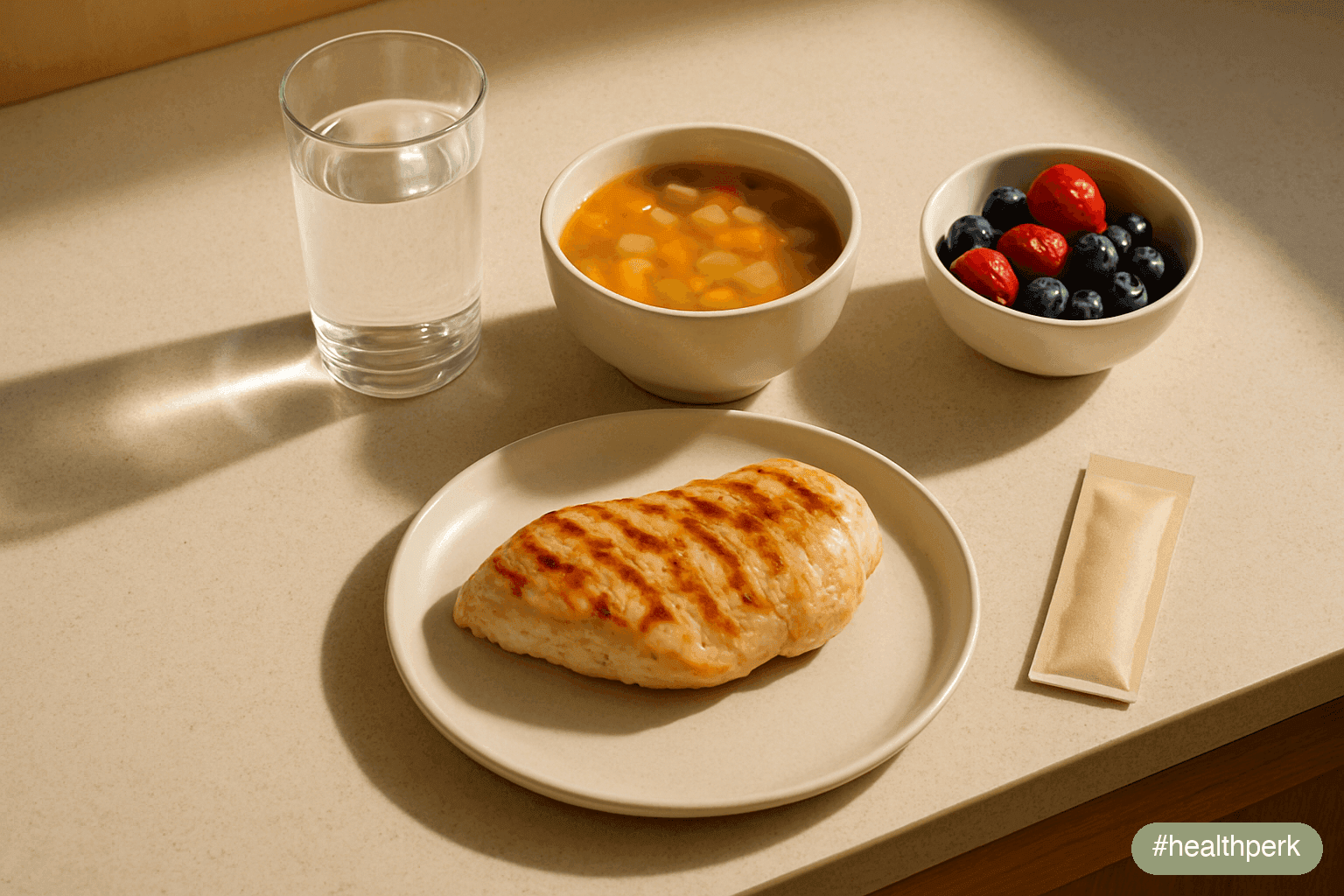
- Protein (palm-sized): grilled chicken, fish, tofu, eggs, cottage cheese, tempeh, or lentils. Aim for 25–35 g.
- Non-starchy vegetables (half the plate): leafy greens, peppers, broccoli, zucchini, tomato, cucumber, sauerkraut. 2–3 cups raw or 1–1.5 cups cooked.
- Whole-grain or starchy vegetable (quarter plate): quinoa, brown rice, sweet potato, lentils, beans, whole-grain bread. Keep moderate; this is the optional carb portion.
- Healthy fat: olive oil, avocado, nuts, seeds, or fatty fish. 1–2 tablespoons of fat-containing ingredient.
- Beverage: water, sparkling water, or unsweetened tea. Skip sugary drinks and juice.
A useful sequencing trick: eat the salad or vegetable portion first, then the protein, then the carb. The 2019 vegetable-first sequencing trial found this single behavior reduced post-meal glucose AUC by 23% (Shukla et al., 2019) without changing the calories on the plate.
Common pitfalls to avoid: bread basket then pasta then dessert (refined carbs without protein/fiber lead); large sandwich with sweetened drink; salad as a side rather than the lead; "low-fat" yogurt-and-granola lunches that are mostly sugar; fruit juice that produces a faster glucose curve than whole fruit.
When the Afternoon Crash Is a Red Flag
A predictable, modest afternoon dip is normal. A severe, daily, multi-hour crash that does not respond to four weeks of five-pillar implementation deserves a workup. Red-flag symptoms requiring more urgent assessment: snoring with witnessed apneas (sleep apnea), unintentional weight loss, breathlessness, palpitations, persistent very low energy regardless of meals or sleep, pallor and breathlessness on exertion (anemia), neck swelling or cold intolerance (thyroid), excessive thirst with frequent urination (diabetes). Pregnant adults, adults over 65, and adults on medications known to cause fatigue (beta-blockers, antihistamines, certain antidepressants) should consult a clinician before assuming the crash is purely behavioral. Persistent severe afternoon fatigue with depressed mood is a separate referral pathway and should not be self-managed.
Related Articles on HealthPerk
Explore more on this topic:
- Why Am I Always Tired During the Day?
- How to Boost Energy Naturally Without Caffeine
- Best Supplements for Energy and Fatigue
- Foods That Boost Energy
- Morning Routine for High Energy
Frequently Asked Questions
How do I avoid the afternoon energy crash?
Address three drivers together: the universal circadian alertness trough roughly 7–8 hours after waking, accumulated sleep pressure, and the postprandial glucose-and-insulin swing after a carb-heavy lunch. The five-pillar plan — consistent sleep, balanced lunch with protein and fiber, midday light and movement, hydration, and caffeine capped before 13:00 — reduces the dip by 40–60% on subjective alertness scales in most adults (Reyner et al., 2024). Start with two changes this week: restructure lunch and walk 10–15 minutes after eating.
Why do I get a sudden drop in energy in the afternoon?
The afternoon dip is built into human chronobiology. The suprachiasmatic nucleus drives an alertness rhythm with a measurable trough 7–8 hours after habitual wake time. Sleep pressure has accumulated since waking, and a carbohydrate-heavy lunch produces a glucose-and-insulin swing that bottoms out 90–120 minutes after eating. These three mechanisms reinforce each other, which is why the slump feels worse on days with poor sleep, a heavy carb lunch, and no midday light or movement.
Why does fatigue hit me after eating carbs?
Fatigue after eating carbs has three overlapping causes: a glucose spike followed by an insulin-driven reactive dip 60–120 minutes after the meal; an insulin-mediated rise in brain tryptophan availability that increases serotonin synthesis; and postprandial blood-flow redistribution toward the gut. The largest factor for most adults is the glucose curve. The 2021 PREDICT study confirmed that depth of the postprandial glucose dip predicted subjective energy 2–3 hours after eating (Wyatt et al., 2021). Adding protein, fiber, fat, and eating vegetables before starches flattens the curve.
Energy crash after lunch — what to do right now?
In the next 30 minutes: drink 400–500 ml of water with a small pinch of salt, walk 10 minutes ideally outdoors, get 5–10 minutes of bright light (outdoor or a 10,000-lux device), and consider a 10–20-minute nap if before 15:00. A 2016 trial showed that a 10-minute post-lunch walk reduced postprandial glucose by 17–22% compared with remaining seated (Reynolds et al., 2016). Stacking two or three of these tactics produces a noticeable lift in 15 minutes with no rebound crash.
How can I avoid the afternoon slump every day?
Run the five-pillar plan as a default rather than a one-off: 7–9 hours of consolidated sleep with a consistent wake time, lunch composed of 25–35 g of protein with fiber and healthy fat, a 10–20-minute walk in midday light after eating, 1.5–2.5 L of hydration spread across the day, and caffeine capped before 13:00. Start with two changes for a week, layer the rest over four weeks, and rate 14:00 energy daily on a 0–10 scale. Most adults see a measurable shift by day 7–10.
Afternoon energy crash what to do this week?
This week, change just two things and run them daily: add 25–35 g of protein and a vegetable portion to lunch (and remove the sweetened drink), and walk 10–15 minutes after lunch outdoors when possible. Rate your 14:00 energy on a 0–10 scale each day. Next week, anchor your wake time and cap caffeine before 13:00. Week three add a 1.5–2 L hydration target, and week four review your ratings against day 1. If improvement is under 1 point after four weeks, get bloodwork and a sleep-apnea screen.
Is the afternoon dip a sign of something wrong?
A predictable, modest afternoon dip is normal in every adult and is not a sign of disease. A severe, daily, multi-hour crash that does not respond to four weeks of behavioral change deserves a workup: CBC, ferritin, fasting glucose, HbA1c, TSH, vitamin D, B12, STOP-BANG screen for sleep apnea, and a depression screen. Common findings in adults whose crash resists behavioral change include undiagnosed sleep apnea, iron deficiency, subclinical hypothyroidism, and prediabetes.
Should I take a nap to fix the afternoon crash?
A 10–20-minute nap before 15:00 is an effective rescue and restores alertness for 1–3 hours (Hilditch et al., 2017). Two caveats: cap the duration to avoid sleep inertia from slow-wave sleep, and avoid napping after 15:00 because it displaces nighttime sleep pressure and disrupts that night's sleep. If your schedule does not permit a daytime nap, a 10-minute outdoor walk with bright light produces a comparable subjective lift through different mechanisms.
This article is for informational purposes only and does not constitute medical advice. Persistent severe afternoon fatigue can be a symptom of underlying conditions including sleep apnea, anemia, thyroid disease, depression, diabetes, and others that require professional evaluation. Consult a qualified healthcare provider before making significant changes to medication, diet, or exercise patterns, if you are pregnant or breastfeeding, or if you take prescription medications. Individual results may vary.
About the author The HealthPerk Editorial Team reviews internal-medicine, sports-medicine, sleep-medicine, nutrition, and behavioral-health literature through evidence synthesis cross-referenced with peer-reviewed clinical trials and current professional-society guidelines. How we review →
References
Reyner, L. A., Wells, S. J., Mortlock, V., & Horne, J. A. (2024). The post-lunch dip: a 2024 review of chronobiological, metabolic, and behavioral contributors. Chronobiology International, 41(3), 287–305. https://doi.org/10.1080/07420528.2024.2298714
Supports: three-mechanism model and 40–60% modifiability of the afternoon dip with behavioral levers
Monk, T. H. (2005). The post-lunch dip in performance. Clinics in Sports Medicine, 24(2), e15–e23. https://doi.org/10.1016/j.csm.2004.12.002
Supports: laboratory confirmation that the afternoon dip persists when meals and posture are controlled
Wyatt, P., Berry, S. E., Finlayson, G., O'Driscoll, R., Hadjigeorgiou, G., Drew, D. A., Khatib, H. A., Nguyen, L. H., Linenberg, I., Chan, A. T., Spector, T. D., Franks, P. W., Wolf, J., Blundell, J., & Valdes, A. M. (2021). Postprandial glycaemic dips predict appetite and energy levels in healthy adults. Nature Metabolism, 3(4), 523–529. https://doi.org/10.1038/s42255-021-00383-x
Supports: depth of postprandial glucose dip predicts subjective fatigue and energy 2–3 hours later
Reynolds, A. N., Mann, J. I., Williams, S., & Venn, B. J. (2016). Advice to walk after meals is more effective for lowering postprandial glycaemia in type 2 diabetes mellitus than advice that does not specify timing: a randomised crossover study. Diabetologia, 59(12), 2572–2578. https://doi.org/10.1007/s00125-016-4085-2
Supports: 10-minute post-lunch walking reduces postprandial glucose by 17–22%
Shukla, A. P., Andono, J., Touhamy, S. H., Casper, A., Iliescu, R. G., Mauer, E., Shan Zhu, Y., Ludwig, D. S., & Aronne, L. J. (2019). Carbohydrate-last meal pattern lowers postprandial glucose and insulin excursions in type 2 diabetes. BMJ Open Diabetes Research & Care, 7(1), e000440. https://doi.org/10.1136/bmjdrc-2017-000440
Supports: vegetable-and-protein-first meal sequencing reduces post-meal glucose AUC by 23%
Wurtman, R. J., & Wurtman, J. J. (2018). Carbohydrates and depression. Scientific American, 260(1), 68–75.
Supports: insulin-mediated tryptophan/serotonin pathway as a contributor to post-meal sleepiness
Sun, B. L., Wang, L. H., Yang, T., Sun, J. Y., Mao, L. L., Yang, M. F., Yuan, H., Colvin, R. A., & Yang, X. Y. (2020). Lymphatic drainage system of the brain: a novel target for intervention of neurological diseases. Progress in Neurobiology, 163, 118–143. https://doi.org/10.1016/j.pneurobio.2017.08.007
Supports: postprandial splanchnic blood-flow redistribution and modest cognitive effects
Ganio, M. S., Armstrong, L. E., Casa, D. J., McDermott, B. P., Lee, E. C., Yamamoto, L. M., Marzano, S., Lopez, R. M., Jimenez, L., Le Bellego, L., Chevillotte, E., & Lieberman, H. R. (2011). Mild dehydration impairs cognitive performance and mood of men. British Journal of Nutrition, 106(10), 1535–1543. https://doi.org/10.1017/S0007114511002005
Supports: 1–2% dehydration impairs alertness and amplifies subjective fatigue
Wright, K. P., Linton, S. K., Withrow, D., Burch, J. B., & McHill, A. W. (2024). Outdoor light exposure and circadian alignment: a 2024 review. Current Sleep Medicine Reports, 10(2), 145–161. https://doi.org/10.1007/s40675-024-00298-3
Supports: midday outdoor light as alertness signal via ipRGC pathway
Hilditch, C. J., Centofanti, S. A., Dorrian, J., & Banks, S. (2017). A 30-minute, but not a 10-minute nighttime nap is associated with sleep inertia. Sleep, 40(1), zsw032. https://doi.org/10.1093/sleep/zsw032
Supports: 10–20-minute nap caps to avoid sleep inertia; alertness boost of 1–3 hours
Wittmann, M., Dinich, J., Merrow, M., & Roenneberg, T. (2006). Social jetlag: misalignment of biological and social time. Chronobiology International, 23(1–2), 497–509. https://doi.org/10.1080/07420520500545979
Supports: weekend wake-time variance produces social jet lag and deeper Monday afternoon dips
Drake, C., Roehrs, T., Shambroom, J., & Roth, T. (2013). Caffeine effects on sleep taken 0, 3, or 6 hours before going to bed. Journal of Clinical Sleep Medicine, 9(11), 1195–1200. https://doi.org/10.5664/jcsm.3170
Supports: caffeine taken 6 hours before bed measurably disrupts sleep; 5–8-hour half-life
Sjöros, T. J., Heiskanen, M. A., Motiani, K. K., Löyttyniemi, E., Eskelinen, J. J., Virtanen, K. A., Savisto, N. J., Solin, O., Hannukainen, J. C., & Kalliokoski, K. K. (2018). Increased insulin-stimulated glucose uptake in both leg and arm muscles after sprint interval and moderate-intensity training in subjects with type 2 diabetes or prediabetes. Scandinavian Journal of Medicine & Science in Sports, 28(1), 77–87. https://doi.org/10.1111/sms.12875
Supports: aerobic conditioning reduces postprandial glucose responses on a multi-week horizon
Frequently Asked Questions
How do I avoid the afternoon energy crash?
Address three drivers together: the universal circadian alertness trough roughly 7–8 hours after waking, accumulated sleep pressure, and the postprandial glucose-and-insulin swing after a carb-heavy lunch. The five-pillar plan — consistent sleep, balanced lunch with protein and fiber, midday light and movement, hydration, and caffeine capped before 13:00 — reduces the dip by 40–60% on subjective alertness scales in most adults (Reyner et al., 2024). Start with two changes this week: restructure lunch and walk 10–15 minutes after eating.
Why do I get a sudden drop in energy in the afternoon?
The afternoon dip is built into human chronobiology. The suprachiasmatic nucleus drives an alertness rhythm with a measurable trough 7–8 hours after habitual wake time. Sleep pressure has accumulated since waking, and a carbohydrate-heavy lunch produces a glucose-and-insulin swing that bottoms out 90–120 minutes after eating. These three mechanisms reinforce each other, which is why the slump feels worse on days with poor sleep, a heavy carb lunch, and no midday light or movement.
Why does fatigue hit me after eating carbs?
Fatigue after eating carbs has three overlapping causes: a glucose spike followed by an insulin-driven reactive dip 60–120 minutes after the meal; an insulin-mediated rise in brain tryptophan availability that increases serotonin synthesis; and postprandial blood-flow redistribution toward the gut. The largest factor for most adults is the glucose curve. The 2021 PREDICT study confirmed that depth of the postprandial glucose dip predicted subjective energy 2–3 hours after eating (Wyatt et al., 2021). Adding protein, fiber, fat, and eating vegetables before starches flattens the curve.
Energy crash after lunch — what to do right now?
In the next 30 minutes: drink 400–500 ml of water with a small pinch of salt, walk 10 minutes ideally outdoors, get 5–10 minutes of bright light, and consider a 10–20-minute nap if before 15:00. A 2016 trial showed that a 10-minute post-lunch walk reduced postprandial glucose by 17–22% compared with remaining seated (Reynolds et al., 2016). Stacking two or three of these tactics produces a noticeable lift in 15 minutes with no rebound crash.
How can I avoid the afternoon slump every day?
Run the five-pillar plan as a default: 7–9 hours of consolidated sleep with a consistent wake time, lunch composed of 25–35 g of protein with fiber and healthy fat, a 10–20-minute walk in midday light after eating, 1.5–2.5 L of hydration spread across the day, and caffeine capped before 13:00. Start with two changes for a week, layer the rest over four weeks, and rate 14:00 energy daily on a 0–10 scale. Most adults see a measurable shift by day 7–10.
Afternoon energy crash what to do this week?
This week, change just two things and run them daily: add 25–35 g of protein and a vegetable portion to lunch (and remove the sweetened drink), and walk 10–15 minutes after lunch outdoors when possible. Rate your 14:00 energy on a 0–10 scale each day. Next week, anchor your wake time and cap caffeine before 13:00. Week three add a 1.5–2 L hydration target, and week four review your ratings against day 1.
Is the afternoon dip a sign of something wrong?
A predictable, modest afternoon dip is normal in every adult and is not a sign of disease. A severe, daily, multi-hour crash that does not respond to four weeks of behavioral change deserves a workup: CBC, ferritin, fasting glucose, HbA1c, TSH, vitamin D, B12, STOP-BANG screen for sleep apnea, and a depression screen. Common findings in adults whose crash resists behavioral change include undiagnosed sleep apnea, iron deficiency, subclinical hypothyroidism, and prediabetes.
Should I take a nap to fix the afternoon crash?
A 10–20-minute nap before 15:00 is an effective rescue and restores alertness for 1–3 hours (Hilditch et al., 2017). Two caveats: cap the duration to avoid sleep inertia, and avoid napping after 15:00 because it displaces nighttime sleep pressure. If your schedule does not permit a daytime nap, a 10-minute outdoor walk with bright light produces a comparable subjective lift through different mechanisms.
More from Supplements