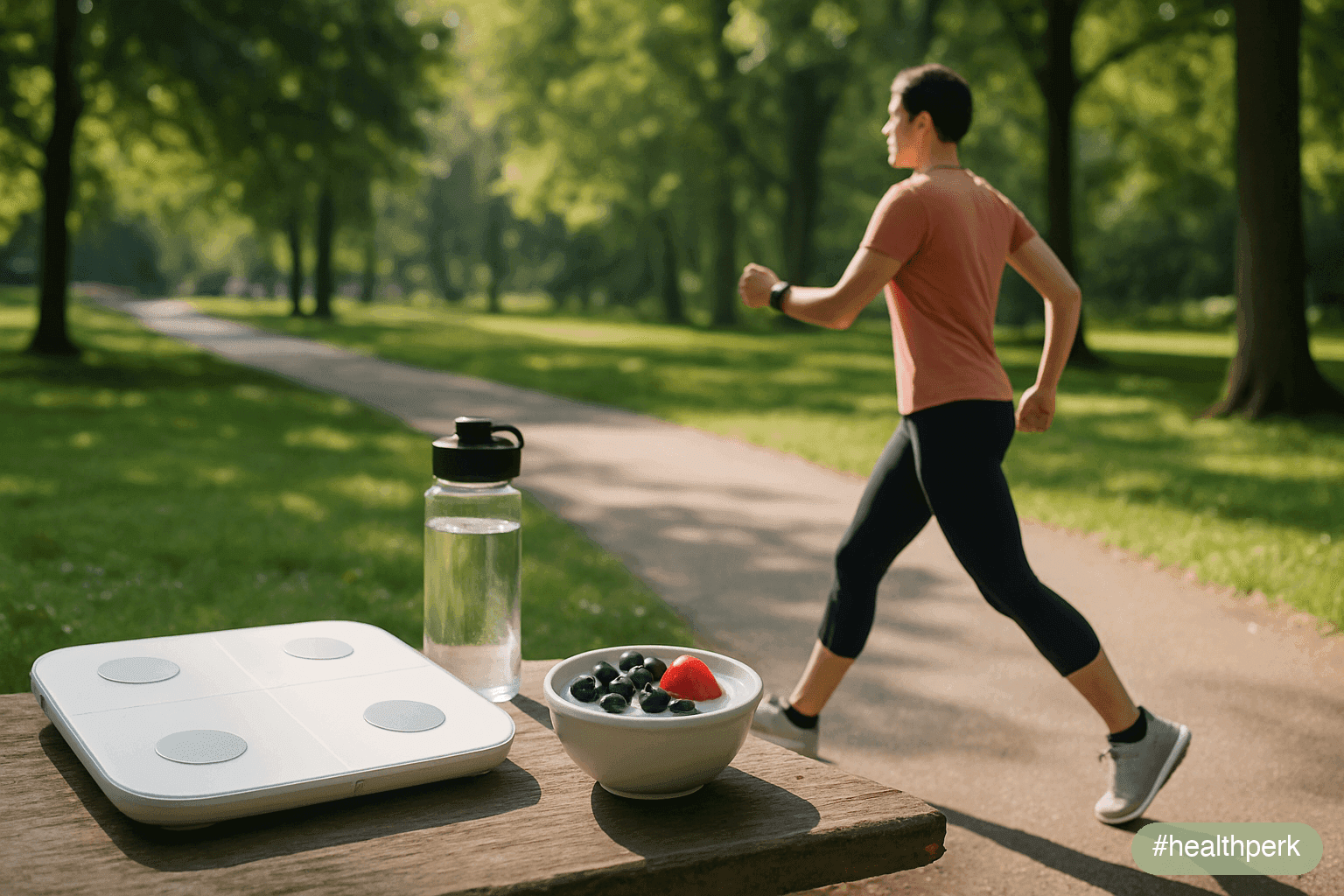
Biohacking for Beginners: A 2026 Evidence-Based Starter Guide
Biohacking for Beginners: A 2026 Evidence-Based Starter Guide
By the HealthPerk Editorial Team · Last updated: May 2026
Quick Answer
Where should a beginner actually start with biohacking in 2026?
For most adults, the honest starting point is not a device, a stack, or a continuous glucose monitor — it is a small set of free, well-evidenced inputs applied consistently for four to eight weeks. The reasonable beginner sequence is: stabilize sleep at 7-9 hours with a consistent schedule, get 10-20 minutes of outdoor daylight within the first hour of waking, walk 7,000-10,000 steps spread across the day, add two to three resistance-training sessions per week, drink water before caffeine, and finish the last meal at least three hours before bed. Almost every "advanced" biohacking intervention (cold plunges, red light panels, supplement stacks, wearables) produces a smaller perceptible effect than these foundations, and most measurable benefits attributed to advanced tools in beginner trials disappear once foundational habits are controlled for.
A practical starter framework for 2026:
| Stage | What to trial | Time horizon | Expected magnitude |
|---|---|---|---|
| Stage 1 — Foundations | Sleep, daylight, walking, hydration, meal timing | 2-4 weeks | Largest effect |
| Stage 2 — Movement load | Resistance training 2-3x/week, zone-2 cardio | 4-12 weeks | Large, durable |
| Stage 3 — Single supplement trial | Omega-3, creatine, or magnesium (one at a time) | 8-12 weeks | Modest, individual |
| Stage 4 — Optional tools | Wearable, light timer, cold/heat exposure | Open-ended | Small to moderate |

Biohacking for beginners is one of the most searched 2026 wellness queries and one of the most heavily marketed. New entrants are sold a picture of biohacking dominated by $400 continuous glucose monitors, red light panels, NAD+ infusions, cryotherapy chambers, and 14-ingredient capsules promising to "optimize" every system at once. The reality is the opposite: the interventions with the largest documented effect on energy, cognition, body composition, and long-term healthspan in 2026 evidence are inexpensive, low-tech, and behavioral.
This guide is structured as a starter path rather than a ranked product list, because the question "what should I biohack first" depends almost entirely on whether foundational habits are already in place. A beginner who is sleeping six hours, sitting twelve hours a day, and skipping meals will gain very little from any wearable or supplement. A beginner whose sleep, light exposure, movement, and nutrition are already reasonable will see a clearer signal from one well-chosen tool. Meta-analyses through 2025, summarized in journals such as The Lancet Public Health and the British Journal of Sports Medicine, consistently support this sequential approach over the all-at-once stack model promoted online.
Table of Contents
- What Is Biohacking Health, Really?
- Biohacking Morning Routine: What Actually Moves the Needle
- Biohacking Daily Routine: Anchors Across the Day
- Biohacking at Home: Easy Tips Without Special Equipment
- Natural Biohacking Methods: Free, Low-Risk Inputs First
- Natural vs Supplements Biohacking: A Practical Framework
- Honest Expectations for Biohacking for Beginners
- Frequently Asked Questions
- References
What Is Biohacking Health, Really?

What is biohacking health at its most defensible? It is the practice of making small, measurable changes to inputs that influence physiology — sleep timing, light exposure, movement load, nutrition composition, breathing patterns, and selected supplementation — and then observing the personal response with enough discipline to keep what works and discard what does not. Stripped of marketing, biohacking is closer to applied behavioral physiology than to anything futuristic.
The 2026 mainstream of biohacking has converged on a relatively boring consensus that overlaps heavily with primary-care lifestyle medicine:
- Sleep is the single highest-leverage input. Reviews such as Morselli et al. (2010) in Best Practice & Research Clinical Endocrinology & Metabolism and follow-up work through 2024 show that restricting sleep to six hours produces measurable declines in glucose tolerance, attention, and mood. No supplement or device reverses this.
- Daylight exposure entrains circadian timing. Morning outdoor light within the first hour of waking advances circadian phase, supports earlier sleep onset, and improves subjective alertness in randomized trials.
- Movement is dose-responsive. Meta-analyses associate every additional 1,000 daily steps with measurable mortality reductions up to around 8,000-10,000 steps in adults under 60, with diminishing returns above that range.
- Strength matters more than commonly assumed. Two to three resistance-training sessions per week are associated with reduced all-cause mortality independent of cardio volume in the 2022 British Journal of Sports Medicine meta-analysis.
- Self-measurement is useful only when it changes behavior. A wearable that produces a dashboard nobody acts on is a placebo with a subscription fee.
What biohacking health is not
It is not an exotic protocol restricted to people with disposable income and a basement of equipment. It is not a permanent state of "optimization" requiring constant supplementation. It is not the same as anti-aging medicine, performance-enhancing drug use, or the more speculative practices marketed under the biohacking umbrella (DIY genetic editing, off-label peptides without medical supervision, prolonged unsupervised fasting). A beginner does well to keep "biohacking health" defined narrowly: deliberate inputs, honest measurement, modest expectations.
A useful sanity check before any new intervention
Before adopting any biohacking practice, three questions are worth answering: (1) what specific outcome am I trying to change, (2) how will I know in 4-12 weeks whether it worked, and (3) what foundational habit am I avoiding by adopting this instead. Interventions that cannot pass this filter are usually distractions, not biohacks. This is the core of any sound biohacking for beginners guide.
Biohacking Morning Routine: What Actually Moves the Needle

Biohacking morning routine content online frequently runs 30-60 minutes and includes 10-15 sequential steps: tongue scraping, oil pulling, cold plunges, breathwork sets, journaling, supplements, red light therapy, and so on. The 2026 evidence base supports a much shorter list of high-leverage morning behaviors. Everything else is optional and probably belongs in Stage 4 of the framework above.
A minimal morning sequence that holds up to evidence:
- Outdoor daylight within the first hour of waking, for 10-20 minutes. Even on overcast days, outdoor light is 10-100x brighter than typical indoor lighting. Work in Current Biology by Wright et al. (2013) and related analyses associate this practice with improved daytime alertness, earlier sleep onset, and reduced depressive symptoms.
- Plain water before caffeine. Mild morning dehydration is common after 7-9 hours without intake. There is no need for "lemon water" or electrolyte packets in most healthy adults — plain water is sufficient.
- Delay caffeine 60-90 minutes after waking, if practical. Allowing cortisol awakening response to peak before introducing caffeine appears to reduce afternoon crashes in self-reported logs and small trials, though large RCTs are sparse.
- Brief movement: a 5-10 minute walk, mobility flow, or short bodyweight set. This is not a workout; it is a circadian and metabolic anchor.
- A protein-anchored breakfast or a deliberate skip. A breakfast containing 25-40 g of protein supports satiety and morning blood glucose stability in many adults; intermittent fasting is a defensible alternative for those who do not feel hungry in the morning and tolerate it socially.
What to leave out of a beginner morning routine
Cold plunges, contrast showers, red light panels, and supplement stacks are not bad practices, but they belong later in the sequence. A beginner who adds them on day one cannot distinguish their effect from the four behaviors above, and is more likely to abandon the entire routine within three weeks because of perceived complexity. A biohacking for beginners simple guide should keep the morning under 30 minutes and under five steps.
How long to evaluate
Two to four weeks of consistent application is the minimum to evaluate a morning routine honestly. Subjective improvements in the first 48 hours are usually novelty effects; durable effects emerge in week 3-4 as sleep onset, mood, and energy stabilize.
Biohacking Daily Routine: Anchors Across the Day

Biohacking daily routine structures the day around a small set of fixed anchors rather than dozens of micro-optimizations. The advantage of the anchor approach is that it survives travel, busy weeks, and varying workloads better than a rigid 14-step schedule. The five anchors below are supported by 2026 lifestyle medicine consensus and are independently dose-responsive.
A defensible daily biohacking routine for a beginner:
- Anchor 1 — Morning daylight and hydration (covered above).
- Anchor 2 — Movement spread across the day. Targeting 7,000-10,000 daily steps, ideally with two or three short walks rather than one long block. The Paluch et al. (2022) Lancet Public Health meta-analysis associates step counts in this range with substantial all-cause mortality reductions, independent of cadence.
- Anchor 3 — Two to three resistance-training sessions per week. Sessions can be brief (30-45 minutes) and centered on compound movements. Strength is the single most actionable lever for healthspan in 2026 meta-analyses.
- Anchor 4 — Protein-anchored meals. Aim for 1.2-1.6 g of protein per kg of body weight daily for most adults, distributed across 2-4 meals. This range is supported by the 2018 British Journal of Sports Medicine meta-analysis of protein and resistance training, and remains the 2026 consensus.
- Anchor 5 — A consistent sleep window. Bed and wake times within a 30-60 minute band, including weekends. Social jetlag (large weekday-weekend shifts) is independently associated with worse cardiometabolic markers in cohort studies.
What ordinary days look like under the anchor approach
A typical day might be: 7:00 wake → 10 minutes outdoor daylight + 500 ml water → 7:30 walk to commute or work block → 9:00 first coffee + protein breakfast → 12:30 short walk after lunch → 17:30 short strength session (3x/week) or zone-2 cardio → 19:00 dinner with protein and vegetables → 22:30 lights dim, screens off → 23:00 bed. No exotic supplements, no cold plunge, no morning fast — just the anchors. The boring routine is the high-leverage one.
The 80/20 of biohacking days
If only two anchors can be maintained, choose sleep window and movement load. Together they account for the majority of measurable health and energy variance in observational and randomized data. Adding the other three improves the picture, but the marginal gain decreases.
Biohacking at Home: Easy Tips Without Special Equipment
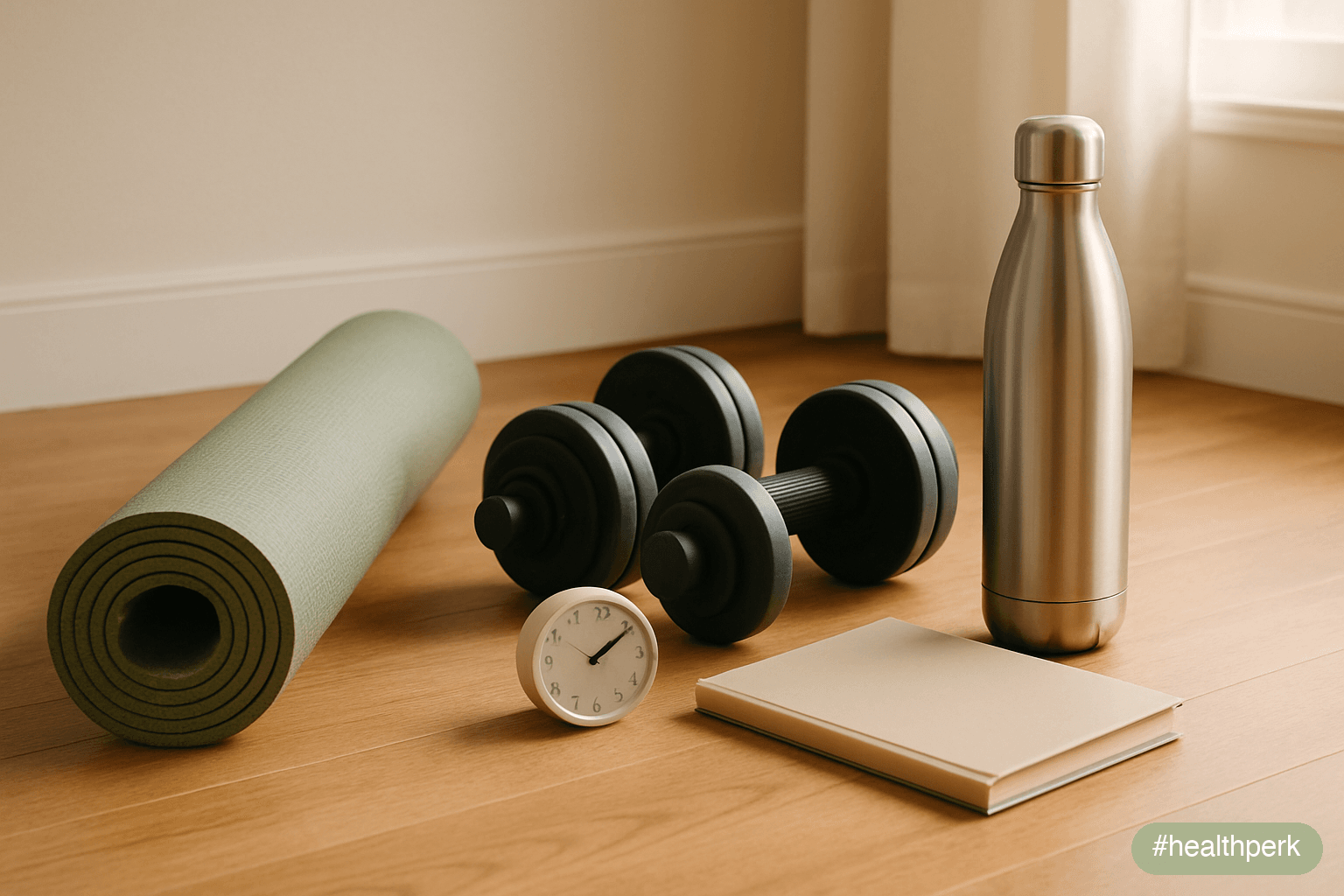
Biohacking at home does not require a sauna, a cold plunge, or a Peloton. The most effective at-home biohacks in 2026 evidence are the ones that lower friction for behaviors that already work: sleep, movement, nutrition, breathing, and recovery. Below is a list of easy biohacking tips that cost under $100 in total and can be set up in a weekend.
Practical at-home setup:
- Light environment. Bright daylight bulbs (4000-5000K) in the kitchen and workspace for morning use; warm dim bulbs (2700K or lower) in the bedroom and evening living areas. Blackout curtains in the bedroom — or even a $15 sleep mask — meaningfully improve subjective sleep quality in surveys.
- Movement friction reducers. Two adjustable dumbbells, a pull-up bar that fits a door frame, a yoga mat, and a resistance band. This kit supports a credible home strength routine without a gym.
- Walking inputs. A cheap pedometer or the step counter built into a phone; a treadmill desk is optional but not necessary. Most step-count gains come from walking meetings, parking further away, and short walking breaks every 60-90 minutes.
- Kitchen defaults. Keep eggs, plain Greek yogurt, lentils, frozen vegetables, oats, olive oil, and fruit visible and at eye level. Hide refined snacks. Environmental design beats willpower in 2026 behavioral nutrition research.
- Sleep environment. A bedroom set to 17-19°C, with light and noise minimized; a $20 white-noise machine helps in noisy apartments. A consistent wake alarm matters more than a sunrise simulator, although a sunrise lamp helps in northern winters.
- A simple log. A paper notebook or a notes app to record sleep hours, training sessions, and one daily energy score (1-10). Self-measurement only works when reviewed weekly; without review, the log is noise.
What expensive home tools add at the margin
Saunas, cold tubs, red light panels, continuous glucose monitors, and high-end wearables can produce small to moderate additional benefits at significant cost. For beginners, they are reasonable Stage 4 additions only after the cheap biohacking at home setup above has been used consistently for at least eight weeks. Buying a $5,000 sauna while still averaging six hours of sleep is a misallocation of resources.
The "good enough" principle
The optimal home setup is the one that gets used. A perfect home gym that intimidates the user produces fewer training sessions than a yoga mat and two dumbbells in the living room. Choose the lowest-friction option for each anchor.
Natural Biohacking Methods: Free, Low-Risk Inputs First
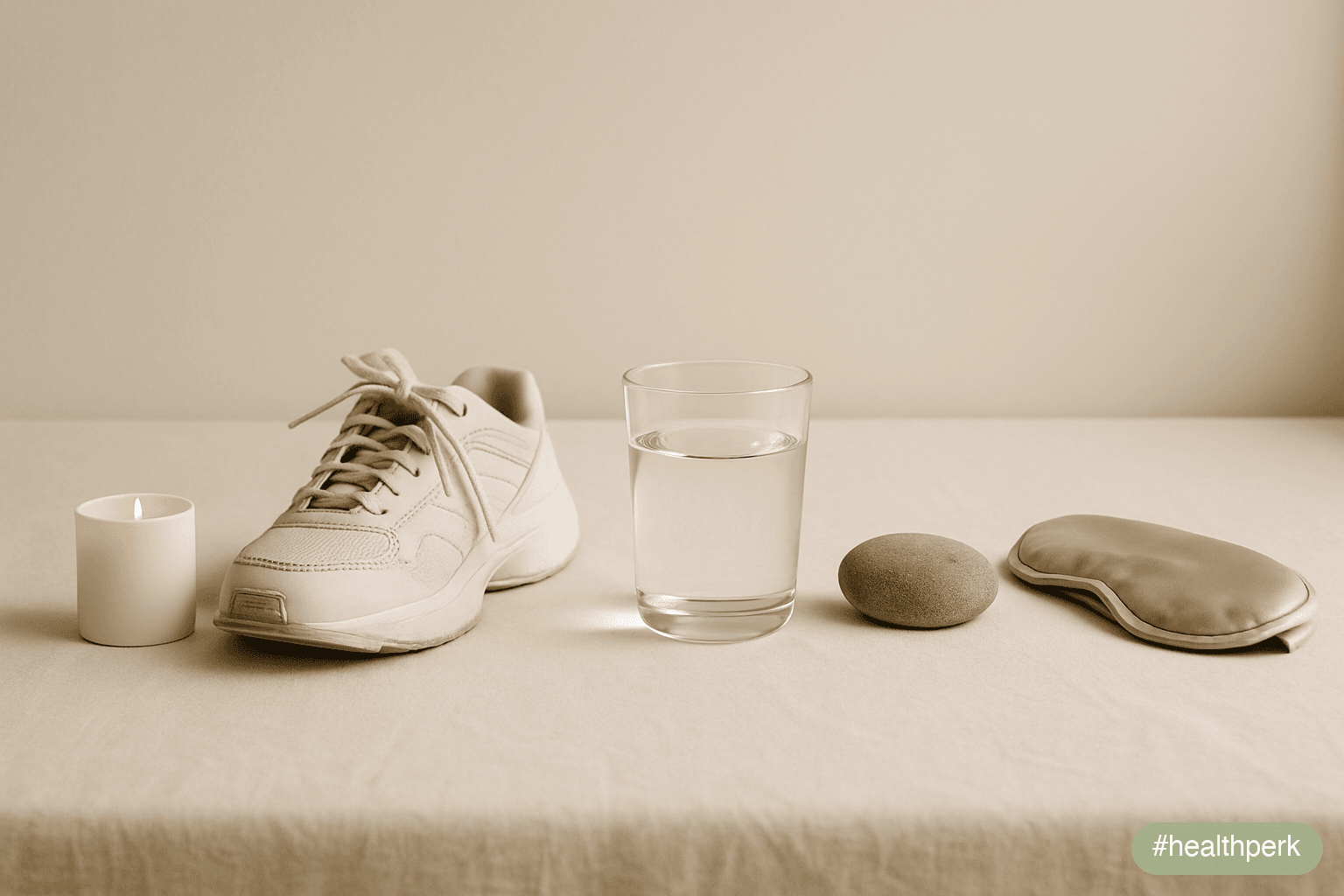
Natural biohacking methods are the inputs that do not require purchasing anything: light, movement, breath, food, water, sleep, and social contact. In 2026 evidence, these are also the inputs with the largest effect sizes for almost every outcome a beginner cares about — energy, focus, body composition, mood, and long-term mortality risk. The supplement and device layer should sit on top of, not in place of, these.
A reasonable list of natural inputs supported by current evidence:
- Sleep regularity and duration. Seven to nine hours nightly, with bed and wake times within a 30-60 minute band. Sleep regularity is independently associated with cardiometabolic outcomes in recent cohort analyses, beyond sleep duration alone.
- Outdoor daylight exposure. 10-30 minutes of outdoor light in the first hour of waking; additional midday outdoor time when feasible.
- Walking volume. 7,000-10,000 steps for most adults under 60, with mortality benefit plateauing in this range in the Paluch et al. (2022) Lancet Public Health meta-analysis.
- Strength training. Two to three sessions per week of progressive resistance work targeting major movement patterns.
- Zone-2 cardio. One to three sessions per week of 30-60 minutes at conversational pace; useful but less critical for beginners than strength.
- Whole-food, protein-anchored nutrition. Protein at 1.2-1.6 g/kg daily, minimally processed carbohydrates and fats, fiber from vegetables, legumes, and whole grains.
- Hydration. 30-35 ml per kg of body weight per day from all sources, adjusted for activity and climate.
- Breathwork. Slow nasal breathing at 5-6 breaths per minute for 5-10 minutes has measurable effects on heart-rate variability and subjective stress in small RCTs.
- Social and outdoor time. Regular face-to-face social contact and time in green or blue space are associated with better mental health outcomes in observational data.
How to improve overall wellbeing with the natural list alone
For most beginners who consistently apply six or more of the natural inputs above for eight weeks, the resulting changes in energy, sleep quality, and body composition exceed what almost any supplement or device adds on top. This is the unromantic but accurate answer to the question of how to improve overall wellbeing as a beginner: spend the first two to three months on natural inputs only, and reserve the supplement and device budget until that baseline is established.
Why natural is not automatically equivalent to safe
A common assumption is that natural inputs cannot be overdone. The 2026 evidence does not support this in all cases. Sleep extension beyond 9-10 hours is associated with worse outcomes in some cohort studies. Excessive cardio volume without adequate recovery can suppress strength gains and mood. Extreme caloric restriction without medical supervision affects thyroid function, menstrual cycles, and bone density. Even natural inputs require dose awareness.
Natural vs Supplements Biohacking: A Practical Framework

Natural vs supplements biohacking is a framing many beginners encounter early and that often produces more confusion than clarity. The honest 2026 answer is that supplements occupy a defensible but narrow role on top of natural inputs, and the category does not deserve the dominant share of attention it receives in marketing. Most measurable healthspan and performance variance is upstream of any pill.
A reasonable decision framework:
- Default to natural inputs first until they are in place at least four out of seven days per week, on average, for eight weeks. If they are not, the marginal value of any supplement is small.
- Add supplements one at a time, with a known dose, for 8-12 weeks, then re-evaluate. This is the only way to learn what an individual responds to.
- Limit the supplement set to compounds with strong meta-analytic support, including omega-3 EPA + DHA at 1-2 g/day for cardiovascular and cognitive outcomes; creatine monohydrate at 3-5 g/day for strength, body composition, and cognitive support; vitamin D3 at 1000-2000 IU/day for individuals with documented insufficiency; and magnesium glycinate at 200-400 mg/day for sleep and muscle relaxation in those with low dietary intake.
- Be skeptical of proprietary blends, "longevity stacks," and "metabolic optimizers" that combine 10-20 ingredients at undisclosed per-ingredient doses. The cost-to-evidence ratio is consistently poor in 2026 reviews.
- Treat newer compounds (NAD+ precursors, senolytics, peptides) as Stage 4 or beyond. Their evidence in healthy humans is preliminary or contested, and they are not appropriate starting points for a beginner.
When supplements meaningfully outperform natural inputs alone
Documented deficiencies (vitamin D insufficiency, iron-deficiency anemia, B12 deficiency in vegetarians and older adults) are the clearest case where a supplement closes a gap that no amount of behavior change does, given dietary or absorption constraints. Otherwise, supplements are additive on top of inputs, not replacements for them.
When the natural-only path is the most reasonable
For most adult beginners under 50 without documented deficiencies, without specific performance goals, and without medical conditions that change the calculus, a natural-only approach for the first 8-12 weeks produces a clearer signal about what is working than a multi-supplement approach. Add one supplement at a time only after that baseline is set.
The honest summary
The natural vs supplement question is less a binary and more a sequence: natural inputs first, single-supplement trials second, devices third, advanced or contested compounds last if at all. Most beginner mistakes consist of inverting this order.
Honest Expectations for Biohacking for Beginners

Biohacking for beginners in 2026 produces durable, perceptible changes when approached as a sequential 8-12 week process focused on a handful of inputs at a time. It does not produce transformation in 7 days, and it does not require a basement of equipment. The most common reason new entrants conclude "biohacking doesn't work for me" is starting with Stage 3 or Stage 4 interventions before Stage 1 is in place.
A few honest expectations worth setting before any further investment:
- The first 2-4 weeks of foundation work usually feels boring. The novelty of buying a wearable or starting a stack is absent. The signal — better sleep, steadier energy, lighter mood — appears mid-cycle, not on day one.
- Subjective improvements in week 1 are usually placebo. Wait until at least week 3 to evaluate.
- Most "amazing morning routine" content is performative. Treat YouTube and Instagram morning routines as entertainment, not as a benchmark.
- Self-measurement is only as good as the action it triggers. A dashboard nobody reviews is decorative.
- Costs add up quickly if Stage 4 is reached before Stage 1. Buying a $300 wearable before fixing a 6-hour-sleep habit is a misallocation.
A reasonable 90-day plan for a beginner
- Days 1-14: implement the morning routine (daylight + water + delayed caffeine + brief movement). Pick a consistent sleep window. Track sleep hours and one daily energy score.
- Days 15-30: add walking volume (target 7,000-10,000 steps) and two strength sessions per week.
- Days 31-60: stabilize protein intake at 1.2-1.6 g/kg/day. Add one supplement at a known dose if foundations are in place (commonly omega-3 or creatine).
- Days 61-90: review the log honestly. Keep what worked, discard what did not. Decide whether any Stage 4 tool (wearable, sauna, cold exposure) is worth adding next.
This is unromantic, and it is what the 2026 evidence supports.
Related Articles on HealthPerk
Explore more on this topic:
- How to Optimize Your Health Naturally
- Best Supplements for Longevity
- Anti Aging Supplements That Work
- Red Light Therapy Benefits
- Best Supplements for Focus and Concentration
- How to Improve Focus Naturally
Frequently Asked Questions
What is biohacking health in plain language?
Biohacking health is the practice of making small, measurable changes to inputs that influence physiology — sleep timing, daylight exposure, movement, nutrition, breathing, and selected supplementation — and then observing the personal response with enough discipline to keep what works and discard what does not. Stripped of marketing, biohacking is closer to applied behavioral physiology than to anything futuristic. The 2026 mainstream of the practice overlaps heavily with primary-care lifestyle medicine.
What is the simplest biohacking morning routine that actually works?
A defensible minimal sequence: 10-20 minutes of outdoor daylight within the first hour of waking, plain water before caffeine, caffeine delayed 60-90 minutes after waking when practical, 5-10 minutes of light movement, and a protein-anchored breakfast or a deliberate skip. The whole routine fits under 30 minutes and contains under five steps. Cold plunges, red light panels, and supplement stacks are optional Stage 4 additions, not Stage 1 essentials.
What anchors should a biohacking daily routine include for a beginner?
Five anchors that survive busy weeks and travel: morning daylight and hydration; 7,000-10,000 daily steps spread across short walks; two to three resistance-training sessions per week; protein-anchored meals at 1.2-1.6 g/kg of body weight per day; and a consistent sleep window with bed and wake times within a 30-60 minute band, including weekends. If only two anchors can be maintained, choose the sleep window and the movement load.
What are realistic easy biohacking tips for biohacking at home?
Realistic at-home biohacks cost under $100 total and are mostly environmental design. Bright daylight bulbs in the kitchen and workspace; warm dim bulbs in the bedroom; blackout curtains or a sleep mask; two adjustable dumbbells, a yoga mat, a resistance band, and a doorway pull-up bar; eggs, Greek yogurt, lentils, and vegetables placed at eye level in the kitchen; a bedroom at 17-19°C; and a paper or app log reviewed weekly. The optimal home setup is the one that gets used.
What are the most effective natural biohacking methods to start with?
The free natural inputs with the largest evidence base are: 7-9 hours of nightly sleep with a consistent schedule; 10-30 minutes of morning outdoor daylight; 7,000-10,000 daily steps; two to three strength sessions per week; protein-anchored whole-food nutrition; adequate hydration; slow nasal breathing for 5-10 minutes per day; and regular outdoor and social time. Most beginners who apply six or more of these consistently for eight weeks experience changes that exceed what any supplement or device adds on top.
How should a beginner think about natural vs supplements biohacking?
Treat the split as a sequence, not a binary. Natural inputs first, until they are in place four to seven days a week for eight weeks; single-supplement trials second, with a known dose for 8-12 weeks; devices and wearables third, only after the first two stages produce clear signal; and newer compounds (NAD+, senolytics, peptides) last if at all. Inverting this order is the most common beginner mistake and the most common reason people conclude biohacking does not work.
How long should a beginner give a biohacking daily routine before evaluating it?
Eight to twelve weeks is the honest minimum for evaluating any new anchor or supplement. Subjective changes in the first one to two weeks are usually novelty effects, and weekend-only or partial adherence makes attribution impossible. A reasonable 90-day plan: days 1-14 install the morning routine and sleep window, days 15-30 add walking and two strength sessions, days 31-60 stabilize protein intake and trial one supplement, days 61-90 review the log and decide what to keep.
This article is for informational purposes only and does not constitute medical advice. Biohacking practices — including supplements, fasting, cold and heat exposure, breathing protocols, and significant changes to exercise or sleep schedules — may be inappropriate during pregnancy or breastfeeding, in adolescents, and in people with cardiovascular disease, diabetes, thyroid disease, eating disorders, or psychiatric conditions. Supplements can interact with prescription medications. Consult a qualified healthcare provider before starting any new supplement, fasting protocol, or significant exercise change, particularly if you take medications or have a medical condition. Individual results vary.
About the author The HealthPerk Editorial Team reviews lifestyle, nutritional, and longevity research through evidence synthesis cross-referenced with peer-reviewed clinical trials, Cochrane reviews, and clinical practice guidelines. Our biohacking content is reviewed for medical accuracy against current internal medicine, sports medicine, sleep medicine, and nutritional science standards. How we review →
References
Paruthi, S., Brooks, L. J., D'Ambrosio, C., Hall, W. A., Kotagal, S., Lloyd, R. M., ... & Wise, M. S. (2016). Recommended amount of sleep for pediatric populations: A consensus statement of the American Academy of Sleep Medicine. Journal of Clinical Sleep Medicine, 12(6), 785-786. https://doi.org/10.5664/jcsm.5866
Supports: 7-9 hour sleep targets for adults and consistent sleep schedules are foundational health inputs
Paluch, A. E., Bajpai, S., Bassett, D. R., Carnethon, M. R., Ekelund, U., Evenson, K. R., ... & Steps for Health Collaborative. (2022). Daily steps and all-cause mortality: A meta-analysis of 15 international cohorts. The Lancet Public Health, 7(3), e219-e228. https://doi.org/10.1016/S2468-2667(21)00302-9
Supports: 7,000-10,000 daily steps are associated with substantial all-cause mortality reductions in adults
Momma, H., Kawakami, R., Honda, T., & Sawada, S. S. (2022). Muscle-strengthening activities are associated with lower risk and mortality in major non-communicable diseases: A systematic review and meta-analysis of cohort studies. British Journal of Sports Medicine, 56(13), 755-763. https://doi.org/10.1136/bjsports-2021-105061
Supports: two to three resistance-training sessions per week are independently associated with reduced all-cause mortality
Wright, K. P., McHill, A. W., Birks, B. R., Griffin, B. R., Rusterholz, T., & Chinoy, E. D. (2013). Entrainment of the human circadian clock to the natural light-dark cycle. Current Biology, 23(16), 1554-1558. https://doi.org/10.1016/j.cub.2013.06.039
Supports: morning outdoor daylight exposure advances circadian phase and supports earlier sleep onset
Morselli, L., Leproult, R., Balbo, M., & Spiegel, K. (2010). Role of sleep duration in the regulation of glucose metabolism and appetite. Best Practice & Research Clinical Endocrinology & Metabolism, 24(5), 687-702. https://doi.org/10.1016/j.beem.2010.07.005
Supports: short sleep duration produces measurable declines in glucose tolerance and impacts appetite regulation
Morton, R. W., Murphy, K. T., McKellar, S. R., Schoenfeld, B. J., Henselmans, M., Helms, E., ... & Phillips, S. M. (2018). A systematic review, meta-analysis and meta-regression of the effect of protein supplementation on resistance training-induced gains in muscle mass and strength in healthy adults. British Journal of Sports Medicine, 52(6), 376-384. https://doi.org/10.1136/bjsports-2017-097608
Supports: protein intake of 1.2-1.6 g/kg/day supports strength and muscle outcomes in adults engaging in resistance training
Prokopidis, K., Giannos, P., Triantafyllidis, K. K., Kechagias, K. S., Forbes, S. C., & Candow, D. G. (2023). Effects of creatine supplementation on memory in healthy individuals: A systematic review and meta-analysis of randomized controlled trials. Nutrition Reviews, 81(4), 416-427. https://doi.org/10.1093/nutrit/nuac064
Supports: creatine monohydrate at 3-5 g/day produces measurable cognitive and physical performance improvements in healthy adults
Bernardi, L., Sleight, P., Bandinelli, G., Cencetti, S., Fattorini, L., Wdowczyc-Szulc, J., & Lagi, A. (2001). Effect of rosary prayer and yoga mantras on autonomic cardiovascular rhythms: Comparative study. BMJ, 323(7327), 1446-1449. https://doi.org/10.1136/bmj.323.7327.1446
Supports: slow nasal breathing at 5-6 breaths per minute produces measurable autonomic and heart-rate variability effects
Wittmann, M., Dinich, J., Merrow, M., & Roenneberg, T. (2006). Social jetlag: Misalignment of biological and social time. Chronobiology International, 23(1-2), 497-509. https://doi.org/10.1080/07420520500545979
Supports: large weekday-weekend shifts in sleep timing (social jetlag) are independently associated with worse cardiometabolic markers
Stamatakis, E., Ahmadi, M. N., Gill, J. M. R., Thøgersen-Ntoumani, C., Gibala, M. J., Doherty, A., & Hamer, M. (2022). Association of wearable device-measured vigorous intermittent lifestyle physical activity with mortality. Nature Medicine, 28(12), 2521-2529. https://doi.org/10.1038/s41591-022-02100-x
Supports: short bouts of vigorous lifestyle activity, accessible without a gym, are independently associated with reduced all-cause mortality
Frequently Asked Questions
What is biohacking health in plain language?
Biohacking health is the practice of making small, measurable changes to inputs that influence physiology — sleep timing, daylight exposure, movement, nutrition, breathing, and selected supplementation — and then observing the personal response with enough discipline to keep what works and discard what does not. The 2026 mainstream of the practice overlaps heavily with primary-care lifestyle medicine.
What is the simplest biohacking morning routine that actually works?
A defensible minimal sequence: 10-20 minutes of outdoor daylight within the first hour of waking, plain water before caffeine, caffeine delayed 60-90 minutes when practical, 5-10 minutes of light movement, and a protein-anchored breakfast or deliberate skip. The whole routine fits under 30 minutes and contains under five steps. Cold plunges and supplement stacks are optional Stage 4 additions, not Stage 1 essentials.
What anchors should a biohacking daily routine include for a beginner?
Five anchors: morning daylight and hydration; 7,000-10,000 daily steps; two to three resistance-training sessions per week; protein-anchored meals at 1.2-1.6 g/kg of body weight per day; and a consistent sleep window with bed and wake times within a 30-60 minute band. If only two anchors can be maintained, choose the sleep window and the movement load.
What are realistic easy biohacking tips for biohacking at home?
Realistic at-home biohacks cost under $100 total and are mostly environmental design. Daylight bulbs in workspaces, warm dim bulbs in the bedroom, blackout curtains, two dumbbells, a yoga mat, a resistance band, a pull-up bar, eggs and yogurt at eye level in the kitchen, a bedroom at 17-19°C, and a weekly-reviewed log. The optimal home setup is the one that gets used.
What are the most effective natural biohacking methods to start with?
The free natural inputs with the largest evidence base are 7-9 hours of nightly sleep with a consistent schedule, 10-30 minutes of morning outdoor daylight, 7,000-10,000 daily steps, two to three strength sessions per week, protein-anchored whole-food nutrition, adequate hydration, slow nasal breathing, and regular outdoor and social time. Most beginners who apply six or more consistently for eight weeks experience changes that exceed what any supplement adds on top.
How should a beginner think about natural vs supplements biohacking?
Treat the split as a sequence, not a binary. Natural inputs first, until they are in place four to seven days a week for eight weeks; single-supplement trials second, with a known dose for 8-12 weeks; devices third; newer compounds (NAD+, senolytics, peptides) last if at all. Inverting this order is the most common beginner mistake.
How long should a beginner give a biohacking daily routine before evaluating it?
Eight to twelve weeks. Subjective changes in the first one to two weeks are usually novelty effects. A reasonable 90-day plan: days 1-14 install the morning routine and sleep window, days 15-30 add walking and two strength sessions, days 31-60 stabilize protein intake and trial one supplement, days 61-90 review the log and decide what to keep.
More from Supplements