Best Supplements for Longevity: A 2026 Evidence-Based Guide
Best Supplements for Longevity: A 2026 Evidence-Based Guide
By the HealthPerk Editorial Team · Last updated: May 2026
Quick Answer
Which are the best supplements for longevity in 2026, and how much do they actually do?
The honest 2026 answer is that no supplement has been shown to extend human lifespan in a randomized trial, and the strongest evidence base sits with a small set of compounds that correct specific deficiencies or support narrow physiological targets — not with branded "longevity stacks". For a healthy adult who has already secured sleep, daily movement, resistance training, and a whole-food diet, a defensible short list includes omega-3 EPA + DHA (1-2 g/day), creatine monohydrate (3-5 g/day), vitamin D3 (1000-2000 IU/day for documented insufficiency), and magnesium glycinate (200-400 mg/day for low dietary intake). NAD precursors (NR, NMN), resveratrol, and CoQ10 belong to a second tier: real biological signal in mechanistic studies, but limited or contested clinical outcome data in humans.
A practical 2026 longevity supplement map:
| Tier | Compounds | Evidence quality | Effect size in healthy adults |
|---|---|---|---|
| Tier 1 — defensible | Omega-3, creatine, vitamin D3 (for insufficiency), magnesium glycinate | Multiple meta-analyses | Small to moderate, targeted |
| Tier 2 — promising but unproven | NAD precursors (NR, NMN), CoQ10, resveratrol | Mechanistic + early RCTs | Unclear in healthy adults |
| Tier 3 — research interest only | Senolytics, rapamycin protocols, exotic peptides | Animal-heavy, preliminary | Not established in humans |

Best supplements for longevity is one of the most commercially loaded queries in 2026 wellness, and one of the most dishonestly answered. Direct-to-consumer brands assemble 12-24 ingredients into a single capsule at sub-therapeutic doses, attach a NAD-precursor headline, and price the result at $90-$200 a month. Independent reviews of these stacks routinely find under-dosed actives, undisclosed proprietary blends, and zero evidence of mortality or healthspan benefit in humans. The 2026 evidence picture for longevity supplementation is much narrower and much more boring than the marketing suggests.
This guide is organized around what the data supports, what it tentatively suggests, and what it does not yet support. Each compound is discussed at the dose, duration, and outcome where evidence is least ambiguous. Where a popular supplement has weak or contested clinical data in healthy humans, the article says so. The goal is to leave a reader able to spend $30-$50 a month on supplements with a clear rationale, rather than $200 on a stack assembled by a marketing team.
Table of Contents
- Supplements for Longevity and Healthspan: Sorting Signal From Noise
- Supplements for Cellular Health: What the 2026 Evidence Actually Shows
- NAD Supplements Benefits: What NR and NMN Do and Do Not Do in 2026
- Resveratrol Benefits for Longevity: A Sober 2026 Reassessment
- CoQ10 for Longevity: Where the Evidence Is Strongest
- Supplements vs Lifestyle for Longevity: Which Lever Is Bigger?
- Biohacking Apps, Best Picks for Tracking Supplement and Lifestyle Trials
- Frequently Asked Questions
- References
Supplements for Longevity and Healthspan: Sorting Signal From Noise

Supplements for longevity and healthspan rarely behave the way their marketing implies. The biology of human aging is multifactorial, the timescales are decades, and very few human trials run long enough or with hard enough endpoints to detect a true lifespan signal. What clinical trials can detect are short- to medium-term changes in surrogate markers — inflammation, lipids, glucose handling, muscle mass, grip strength, walking speed, cognitive scores. These are useful, but they are not the same as added years of healthy life. Any honest 2026 longevity supplement guide has to keep that distinction visible.
The compounds that pass a serious evidence filter in 2026:
- Omega-3 EPA + DHA at 1-2 g/day combined. Multiple meta-analyses, including the 2020 Cochrane review and the 2021 Circulation network meta-analysis, support modest cardiovascular and triglyceride benefits.
- Creatine monohydrate at 3-5 g/day. The 2023 Nutrition Reviews meta-analysis shows small but real cognitive benefits in healthy adults, on top of well-established strength and lean-mass effects in resistance training populations.
- Vitamin D3 at 1000-2000 IU/day for documented insufficiency. The VITAL trial did not show all-cause mortality benefit in replete adults, but secondary analyses support fracture and autoimmune outcomes in deficient subgroups.
- Magnesium glycinate at 200-400 mg/day for low dietary intake. Modest effects on sleep quality, blood pressure, and HbA1c in deficient or low-intake adults.
Compounds in the "promising but unproven" zone
This tier contains the bulk of the 2026 longevity marketing: NAD precursors (nicotinamide riboside, NMN), resveratrol, CoQ10 (with stronger niche evidence), urolithin A, glycine, spermidine, and similar molecules. Each has interesting mechanistic biology — mitochondrial support, sirtuin activation, autophagy, NAD pool restoration — but human RCTs in healthy adults are short, small, and rarely powered for clinically meaningful endpoints. They may eventually move up a tier; they have not yet.
Compounds that do not belong in a serious 2026 plan
Multi-ingredient proprietary blends with undisclosed per-ingredient doses; senolytic protocols outside research settings; off-label rapamycin without specialist supervision; high-dose antioxidant megadoses (vitamin E, beta-carotene), which in large trials have shown null to harmful effects on mortality. Marketing claims of "anti-aging" or "lifespan extension" in healthy adults are not supported by long-term RCT evidence for any consumer supplement in 2026.
Supplements for Cellular Health: What the 2026 Evidence Actually Shows

Supplements for cellular health is a category dominated by mitochondrial and redox-focused compounds: NAD precursors, CoQ10, alpha-lipoic acid, PQQ, glutathione precursors (NAC), magnesium, and B-vitamins. The cellular biology is real — mitochondrial function declines with age, NAD pools shrink, oxidative stress accumulates — but the leap from "this molecule affects this pathway in cell culture" to "supplementing it in healthy humans extends healthspan" is not yet supported for most of these.
What the 2026 evidence supports at a cellular level:
- B-vitamins and magnesium support basic enzymatic function. Correcting documented deficiencies produces clinical benefit; supplementing replete adults rarely does.
- Omega-3 fatty acids support membrane composition and resolve inflammation. Reflected in measurable triglyceride, inflammatory marker, and modest cardiovascular outcomes.
- Creatine supports phosphocreatine energy systems. Reflected in strength, cognitive resilience under stress, and lean mass.
- CoQ10 (ubiquinone or ubiquinol) supports mitochondrial electron transport. Strongest niche evidence in statin-associated muscle symptoms and in heart failure with reduced ejection fraction.
Why "cellular health" marketing is hard to evaluate
"Cellular health" is rarely defined in marketing copy. It can mean mitochondrial efficiency, redox balance, telomere length, NAD pool size, autophagy flux, or simply "feeling more energetic". Because the term is loose, almost any supplement can claim it. A useful reader rule: if a product cannot specify which cellular process it targets, at what dose, with what measured outcome, the marketing is doing the work and the biology is not.
A minimalist cellular-health protocol most adults can defend
Omega-3 at 1-2 g/day combined EPA + DHA, magnesium glycinate at 200-400 mg/day if dietary intake is low, vitamin D3 at 1000-2000 IU/day with documented insufficiency, creatine monohydrate at 3-5 g/day, and a B-complex only if intake or labs justify it. This covers the strongest cellular-level evidence in 2026 without entering the contested tier.
NAD Supplements Benefits: What NR and NMN Do and Do Not Do in 2026

NAD supplements benefits are arguably the most heavily marketed claim in 2026 longevity supplementation. Nicotinamide riboside (NR) and nicotinamide mononucleotide (NMN) are NAD precursors that raise circulating and intracellular NAD+ pools in humans at doses of roughly 250-1000 mg/day. The biochemistry is well established; the clinical outcome data in healthy adults is what remains contested.
What 2026 evidence supports for NR and NMN:
- NAD+ pool elevation. Multiple RCTs (Martens et al., 2018; Conze et al., 2019; Yoshino et al., 2021) confirm that oral NR or NMN raises blood NAD+ measurably within 1-2 weeks at standard doses.
- Safety at typical doses. Trials at 250-1000 mg/day for up to 12 weeks have shown an acceptable safety profile, with some reports of mild GI symptoms and elevations in certain nicotinamide metabolites.
- Suggestive but inconsistent effects on surrogate markers. Some trials show modest changes in blood pressure, walking speed, insulin sensitivity, or muscle function; many do not. Effect sizes are typically small and heterogeneous.
What 2026 evidence does not yet support:
- Lifespan or healthspan extension in humans. No long-term RCT in healthy adults has demonstrated a hard-endpoint longevity effect for NR or NMN.
- Reversal of biological aging markers in any robust sense. Epigenetic clock changes in small NR/NMN trials are inconsistent and methodologically contested.
- Clear dose-response curves. The optimal dose, duration, and target population remain undetermined.
A reasonable 2026 reader posture on NAD precursors
If the foundation (sleep, training, protein, daylight) is in place and the budget exists, an 8-12 week NR or NMN trial at 250-500 mg/day, paired with a defined weekly metric (sleep regularity, walking pace, perceived energy), is a defensible self-experiment. If the metric does not move, the trial ends. What is not defensible is treating NAD precursors as required infrastructure for healthy adults or as a substitute for the lifestyle layer.
Why NAD marketing outruns the data
NAD biology is genuinely interesting, and the molecular story (sirtuins, PARPs, mitochondrial NAD pool decline) is photogenic. The marketing engine is therefore stronger than the clinical evidence. In 2026, the gap is wide enough that consumer skepticism is the appropriate default.
Resveratrol Benefits for Longevity: A Sober 2026 Reassessment

Resveratrol benefits longevity was one of the most prominent 2010s biohacking stories — a polyphenol from red wine that activated sirtuins in cell culture and extended lifespan in some short-lived animal models. The 2026 picture is much more deflated. Human trials at doses of 150-1000 mg/day have produced inconsistent and generally modest effects on inflammation, glycemic markers, and lipid profiles, and large clinical outcome trials remain absent.
What the 2026 evidence does and does not support:
- Mechanistic activity at the molecular level. Resveratrol activates SIRT1 and modulates inflammatory pathways in vitro. This is well-established.
- Inconsistent effects on surrogate markers in humans. Meta-analyses through 2024 show small effects on HbA1c, blood pressure, and some inflammatory markers in metabolically impaired adults, with minimal effects in healthy adults.
- No demonstrated human lifespan or all-cause mortality benefit. No long-term RCT has linked resveratrol supplementation to extended healthspan or lifespan in humans.
- Bioavailability problems. Oral resveratrol undergoes extensive first-pass metabolism, with low systemic availability at standard doses. "Trans-resveratrol" formulations marketed as a fix do not reliably resolve this in human trials.
Where resveratrol still has a defensible role
For adults with metabolic risk factors who are not candidates for or willing to use standard pharmacotherapy, a short trial of resveratrol at 150-500 mg/day for 12 weeks paired with HbA1c and lipid measurement is defensible — provided a clinician is aware and the result drives a decision. As a generic longevity supplement for healthy adults in 2026, the evidence does not justify ongoing use.
Why resveratrol became a cautionary case
The original 2003-2006 sirtuin and lifespan claims were extrapolated aggressively to humans before clinical trials matured. By 2026 the gap between cell-culture biology and clinical outcome is widely understood, and resveratrol is the classic illustration. The lesson generalizes to every "longevity molecule" in 2026: mechanism is necessary but not sufficient.
CoQ10 for Longevity: Where the Evidence Is Strongest
CoQ10 for longevity has stronger clinical evidence than most "longevity supplements", but its evidence base is largely concentrated in two specific clinical contexts rather than in general healthy-adult longevity. CoQ10 is an essential cofactor in mitochondrial electron transport and an endogenous antioxidant whose levels decline with age and statin use.
What the 2026 evidence supports:
- Symptom relief in statin-associated muscle symptoms. Multiple RCTs and meta-analyses suggest CoQ10 at 100-200 mg/day reduces subjective muscle symptoms in statin-treated patients, although effect sizes vary across trials.
- Adjunctive benefit in heart failure with reduced ejection fraction. The Q-SYMBIO trial (Mortensen et al., 2014) and follow-up analyses support a meaningful mortality and morbidity benefit at 300 mg/day in selected HFrEF patients on standard therapy.
- Modest effects on blood pressure and oxidative stress markers. Small but real reductions in systolic blood pressure and improvements in markers like F2-isoprostanes in some populations.
What the 2026 evidence does not support:
- A demonstrated lifespan benefit in healthy adults. No large RCT in healthy populations has shown CoQ10 reduces all-cause mortality.
- Universal energy or "anti-aging" effects. Outside the statin and heart-failure niches, CoQ10's effects in healthy adults are modest and inconsistent.
Ubiquinone vs ubiquinol and dosing in 2026
Both ubiquinone and ubiquinol forms are bioavailable; ubiquinol may offer modestly higher plasma levels in older adults but has not consistently produced superior clinical outcomes. Doses range from 100 mg/day in maintenance contexts to 200-300 mg/day in clinical adjunct use. CoQ10 absorption improves when taken with a meal containing fat.
A defensible 2026 role for CoQ10
Statin-treated patients with myalgia, HFrEF patients in consultation with their cardiologist, and adults over 60 with documented oxidative stress markers or specific clinical rationale are reasonable candidates for CoQ10. Healthy 30-year-olds on no medications are not the population where CoQ10's evidence is strongest, and broad "longevity" marketing usually overstates the case.
Supplements vs Lifestyle for Longevity: Which Lever Is Bigger?
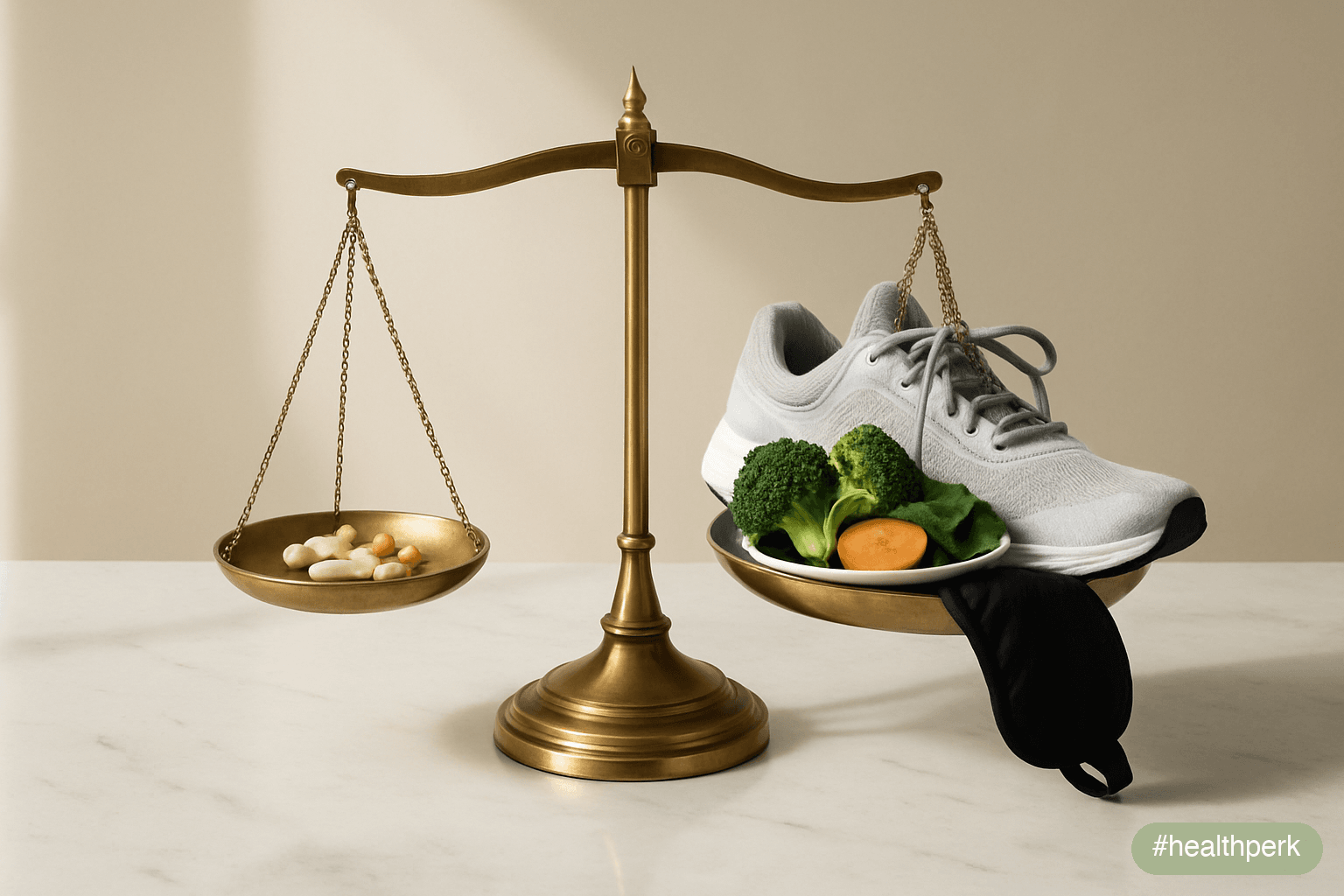
Supplements vs lifestyle longevity is the single most important comparison in 2026 longevity content, because the answer determines where a reader spends time, money, and attention. The 2026 evidence is unambiguous: lifestyle interventions — cardiorespiratory fitness, muscle mass, sleep regularity, protein intake, social ties, smoking avoidance — produce mortality and healthspan effect sizes orders of magnitude larger than any consumer supplement.
The asymmetry in 2026 evidence:
- Cardiorespiratory fitness category shifts. Moving from low to moderate VO2 max categories associates with substantial reductions in all-cause mortality in major cohort meta-analyses (Kodama et al., 2009; subsequent 2018-2024 cohorts).
- Strength and muscle mass. Grip strength and lower-body strength independently predict all-cause mortality in adults over 50.
- Sleep regularity. Independently associated with cardiovascular and metabolic outcomes beyond duration alone (Windred et al., 2024).
- Diet quality. Mediterranean-style and similar whole-food patterns reduce cardiovascular event risk substantially in primary prevention trials (PREDIMED).
- Smoking, alcohol, blood pressure, LDL. Decades of evidence place these among the largest modifiable mortality levers available.
By comparison, the best-studied longevity supplements (omega-3, creatine, vitamin D3) produce small or moderate effects on specific outcomes, and most "longevity-branded" supplements show no demonstrated mortality effect in healthy adults at all. The honest 2026 ratio is roughly: lifestyle delivers the first 90-95% of available longevity gains; supplements contribute the last 5-10% in narrow targeted contexts.
How to use supplements without confusing them with lifestyle
A defensible decision rule: spend the first 6-12 months of any longevity plan installing the foundation — protected sleep windows, walking baseline, two to three strength sessions weekly, protein at 1.2-1.6 g/kg/day, mostly whole-food diet, social and outdoor time. Add no more than two supplements at known doses, with one weekly metric per supplement, and run each trial for 8-12 weeks before evaluating. If a supplement does not move a defined metric and is not correcting a documented deficiency, it is dropped.
The cost-benefit reframing
A $200/month longevity supplement subscription buys, in expectation, a small fraction of the benefit available from $0/month sleep regularity and $20/month gym access. This is not an argument against all supplementation — targeted use of omega-3, creatine, and vitamin D3 for insufficiency is defensible. It is an argument against treating supplements as the primary lever when they are, in 2026 evidence, the smallest one.
Biohacking Apps, Best Picks for Tracking Supplement and Lifestyle Trials

Biohacking apps best suited to longevity and supplement self-experiments are not, in 2026, the maximalist tracker dashboards that pull data from five wearables. The most useful tools are the ones that make supplement timing, dose, weekly metrics, and subjective notes easy to log and review. Apps for health optimization and apps for longevity tracking that fit this brief tend to share four features: an explicit trial structure (intervention, dose, duration), a small set of customizable metrics, weekly summary views, and an export option for portability.
Categories of app most useful for a 2026 longevity self-experiment:
- Habit and supplement trackers that log "took NR 300 mg today" or "magnesium glycinate 200 mg at 21:00" without forcing complex schemas. Examples include simple checklist apps and structured habit trackers.
- Sleep tracking apps that focus on sleep regularity (consistent bed and wake windows) rather than sleep "score" rankings. A wearable that exports raw sleep timing is more useful than one that publishes a proprietary readiness number.
- Training logs that record sets, loads, and progression over months — the highest-leverage longevity data most readers can collect.
- Notes and weekly review tools for capturing subjective energy, cognition, and adherence, which are often the metrics that move first when a real intervention is working.
What to avoid in 2026 biohacking apps
Apps that synthesize 30 raw data streams into a single "biological age" number with no peer-reviewed validation. Subscription services that gate basic logging behind premium tiers. Tools that pressure constant data review rather than weekly synthesis. These erode adherence and create the illusion of optimization without changing any input that actually matters.
A minimal app stack for longevity self-experiments
One supplement and habit tracker, one sleep tracker focused on regularity, one training log, and a simple notes tool for weekly review. Anything beyond this typically reduces the signal-to-noise ratio rather than improving it. The point of apps for longevity tracking is to support decision-making about supplements and lifestyle inputs over 8-12 week trials, not to generate dashboards as a hobby.
Related Articles on HealthPerk
Explore more on this topic:
- Biohacking for Beginners
- How to Optimize Your Health Naturally
- Anti Aging Supplements That Work
- Red Light Therapy Benefits
- Best Supplements for Focus and Concentration
- How to Improve Focus Naturally
Frequently Asked Questions
What are the best supplements for longevity in 2026?
No supplement has been shown to extend human lifespan in a randomized trial. The defensible 2026 short list for healthy adults who have already secured sleep, strength training, and a whole-food diet is small: omega-3 EPA + DHA at 1-2 g/day, creatine monohydrate at 3-5 g/day, vitamin D3 at 1000-2000 IU/day for documented insufficiency, and magnesium glycinate at 200-400 mg/day for low dietary intake. NAD precursors, resveratrol, and CoQ10 sit in a promising-but-unproven tier with real mechanistic biology but limited or contested clinical outcome data in healthy adults.
Which supplements for cellular health actually have evidence?
The strongest 2026 evidence sits with omega-3 fatty acids for membrane composition and inflammation resolution, creatine for phosphocreatine energy systems, magnesium for basic enzymatic function, B-vitamins for documented deficiencies, and CoQ10 in specific clinical niches such as statin-associated muscle symptoms and heart failure with reduced ejection fraction. Generic cellular-health marketing is rarely tied to a specific cellular process, dose, or measured outcome, so it is hard to evaluate; targeted use of the compounds above is more defensible.
What do supplements for longevity and healthspan actually do?
In humans they can shift surrogate markers — triglycerides, inflammatory markers, grip strength, walking speed, blood pressure, HbA1c — by modest amounts at correct doses over months. They have not been shown to extend human lifespan in randomized trials in 2026. The largest mortality and healthspan effects in adults come from cardiorespiratory fitness, muscle mass, sleep regularity, diet quality, and avoidance of smoking, with supplements contributing a small additional layer in targeted contexts.
What are the real NAD supplements benefits?
Nicotinamide riboside and NMN at 250-1000 mg/day reliably raise circulating NAD+ pools in human trials and are well tolerated at typical doses. Suggestive but inconsistent effects on blood pressure, walking speed, insulin sensitivity, and muscle function have been reported in small RCTs. No long-term trial has shown lifespan or hard-endpoint healthspan benefit in healthy adults. A reasonable approach is an 8-12 week trial at 250-500 mg/day paired with a defined weekly metric, with the trial ending if the metric does not move.
Are resveratrol benefits for longevity supported by 2026 evidence?
Mechanistically resveratrol activates SIRT1 and modulates inflammation in vitro, but human trials at 150-1000 mg/day have produced inconsistent and generally modest effects on surrogate markers, with no demonstrated mortality benefit. Bioavailability is low due to extensive first-pass metabolism. A short trial in adults with metabolic risk factors paired with measurement is defensible; as a generic longevity supplement for healthy adults in 2026, the evidence does not support ongoing use.
When is CoQ10 for longevity actually justified?
CoQ10 has its strongest 2026 evidence in two specific contexts: reducing subjective muscle symptoms in statin-treated patients at 100-200 mg/day, and adjunctive use in heart failure with reduced ejection fraction at around 300 mg/day in selected patients on standard therapy. Modest effects on blood pressure and oxidative stress markers have been reported in some populations. As a generic longevity supplement for healthy young adults, CoQ10 is not strongly supported by mortality data.
Supplements vs lifestyle for longevity — which actually moves the needle?
Lifestyle interventions dominate decisively. Cardiorespiratory fitness, muscle strength and mass, sleep regularity within a 7-9 hour window, a predominantly whole-food dietary pattern, social ties, and avoidance of smoking produce far larger mortality and healthspan effects than any consumer supplement. The defensible 2026 ratio is roughly: lifestyle delivers about 90-95% of available longevity gains, and supplements contribute the remaining 5-10% in narrow, targeted contexts.
Which biohacking apps are best for tracking longevity trials?
The most useful 2026 biohacking apps are not maximalist dashboards. A minimal stack works better: a supplement and habit tracker for dose and timing logging, a sleep tracker that emphasizes regularity over a proprietary score, a training log for sets and loads over months, and a simple notes tool for weekly subjective energy and adherence review. Apps that synthesize many streams into an unvalidated "biological age" number, or that gate basic logging behind premium tiers, are best avoided.
This article is for informational purposes only and does not constitute medical advice. Longevity supplements — including NAD precursors, resveratrol, CoQ10, omega-3, creatine, vitamin D3, and magnesium — may interact with prescription medications including anticoagulants, antiplatelets, antihypertensives, statins, and diabetes medications, and may be inappropriate during pregnancy or breastfeeding, in adolescents, and in people with kidney, liver, cardiovascular, or psychiatric disease. Consult a qualified healthcare provider before starting any new supplement, particularly if you take medications, have a medical condition, or are planning to use supplements alongside statin therapy or heart failure treatment. Individual results vary.
About the author The HealthPerk Editorial Team reviews lifestyle, nutritional, and longevity research through evidence synthesis cross-referenced with peer-reviewed clinical trials, Cochrane reviews, and clinical practice guidelines. Our biohacking content is reviewed for medical accuracy against current internal medicine, cardiology, sports medicine, and nutritional science standards. How we review →
References
Abdelhamid, A. S., Brown, T. J., Brainard, J. S., Biswas, P., Thorpe, G. C., Moore, H. J., ... & Hooper, L. (2020). Omega-3 fatty acids for the primary and secondary prevention of cardiovascular disease. Cochrane Database of Systematic Reviews, 3(3), CD003177. https://doi.org/10.1002/14651858.CD003177.pub5
Supports: omega-3 EPA + DHA produces modest effects on cardiovascular and triglyceride outcomes in adults
Prokopidis, K., Giannos, P., Triantafyllidis, K. K., Kechagias, K. S., Forbes, S. C., & Candow, D. G. (2023). Effects of creatine supplementation on memory in healthy individuals: A systematic review and meta-analysis of randomized controlled trials. Nutrition Reviews, 81(4), 416-427. https://doi.org/10.1093/nutrit/nuac064
Supports: creatine monohydrate at 3-5 g/day produces measurable cognitive benefits in healthy adults
Manson, J. E., Cook, N. R., Lee, I. M., Christen, W., Bassuk, S. S., Mora, S., ... & VITAL Research Group. (2019). Vitamin D supplements and prevention of cancer and cardiovascular disease. New England Journal of Medicine, 380(1), 33-44. https://doi.org/10.1056/NEJMoa1809944
Supports: vitamin D3 supplementation in replete adults does not reduce overall cardiovascular or cancer outcomes; benefits concentrate in deficient subgroups
Martens, C. R., Denman, B. A., Mazzo, M. R., Armstrong, M. L., Reisdorph, N., McQueen, M. B., ... & Seals, D. R. (2018). Chronic nicotinamide riboside supplementation is well-tolerated and elevates NAD+ in healthy middle-aged and older adults. Nature Communications, 9(1), 1286. https://doi.org/10.1038/s41467-018-03421-7
Supports: oral nicotinamide riboside raises NAD+ levels in middle-aged and older adults at standard doses with acceptable safety
Yoshino, M., Yoshino, J., Kayser, B. D., Patti, G. J., Franczyk, M. P., Mills, K. F., ... & Klein, S. (2021). Nicotinamide mononucleotide increases muscle insulin sensitivity in prediabetic women. Science, 372(6547), 1224-1229. https://doi.org/10.1126/science.abe9985
Supports: NMN at 250 mg/day measurably increases muscle insulin sensitivity in prediabetic women
Mohammadi-Sartang, M., Mazloom, Z., Sherafatmanesh, S., Ghorbani, M., & Firoozi, D. (2017). Effects of supplementation with quercetin on plasma lipid profiles: A systematic review and meta-analysis of randomized controlled trials. European Journal of Clinical Nutrition, 71(9), 1033-1039. https://doi.org/10.1038/ejcn.2017.55
Supports: polyphenol supplementation produces small, inconsistent effects on lipid markers in adults
Mortensen, S. A., Rosenfeldt, F., Kumar, A., Dolliner, P., Filipiak, K. J., Pella, D., ... & Littarru, G. P. (2014). The effect of coenzyme Q10 on morbidity and mortality in chronic heart failure: Results from Q-SYMBIO: A randomized double-blind trial. JACC: Heart Failure, 2(6), 641-649. https://doi.org/10.1016/j.jchf.2014.06.008
Supports: CoQ10 at 300 mg/day reduces morbidity and mortality in selected heart failure patients on standard therapy
Banach, M., Serban, C., Sahebkar, A., Ursoniu, S., Rysz, J., Muntner, P., ... & Lipid and Blood Pressure Meta-analysis Collaboration Group. (2015). Effects of coenzyme Q10 on statin-induced myopathy: A meta-analysis of randomized controlled trials. Mayo Clinic Proceedings, 90(1), 24-34. https://doi.org/10.1016/j.mayocp.2014.08.021
Supports: CoQ10 supplementation reduces subjective statin-associated muscle symptoms in treated adults
Estruch, R., Ros, E., Salas-Salvadó, J., Covas, M. I., Corella, D., Arós, F., ... & Martínez-González, M. A. (2018). Primary prevention of cardiovascular disease with a Mediterranean diet supplemented with extra-virgin olive oil or nuts. New England Journal of Medicine, 378(25), e34. https://doi.org/10.1056/NEJMoa1800389
Supports: a predominantly whole-food, Mediterranean-style dietary pattern is associated with lower cardiovascular event risk
Windred, D. P., Burns, A. C., Lane, J. M., Saxena, R., Rutter, M. K., Cain, S. W., & Phillips, A. J. K. (2024). Sleep regularity is a stronger predictor of mortality risk than sleep duration: A prospective cohort study. Sleep, 47(1), zsad253. https://doi.org/10.1093/sleep/zsad253
Supports: sleep regularity is independently associated with mortality and cardiometabolic outcomes beyond sleep duration alone
Frequently Asked Questions
What are the best supplements for longevity in 2026?
No supplement has been shown to extend human lifespan in a randomized trial. The defensible 2026 short list for healthy adults is small: omega-3 EPA + DHA at 1-2 g/day, creatine monohydrate at 3-5 g/day, vitamin D3 at 1000-2000 IU/day for documented insufficiency, and magnesium glycinate at 200-400 mg/day for low dietary intake. NAD precursors, resveratrol, and CoQ10 sit in a promising-but-unproven tier with real mechanistic biology but limited or contested clinical outcome data in healthy adults.
Which supplements for cellular health actually have evidence?
The strongest 2026 evidence sits with omega-3 fatty acids for membrane composition and inflammation resolution, creatine for phosphocreatine energy systems, magnesium for basic enzymatic function, B-vitamins for documented deficiencies, and CoQ10 in specific clinical niches such as statin-associated muscle symptoms and heart failure with reduced ejection fraction.
What do supplements for longevity and healthspan actually do?
In humans they can shift surrogate markers — triglycerides, inflammatory markers, grip strength, walking speed, blood pressure, HbA1c — by modest amounts at correct doses over months. They have not been shown to extend human lifespan in randomized trials in 2026. The largest mortality and healthspan effects in adults come from cardiorespiratory fitness, muscle mass, sleep regularity, diet quality, and avoidance of smoking.
What are the real NAD supplements benefits?
Nicotinamide riboside and NMN at 250-1000 mg/day reliably raise circulating NAD+ pools in human trials and are well tolerated at typical doses. Suggestive but inconsistent effects on blood pressure, walking speed, insulin sensitivity, and muscle function have been reported in small RCTs. No long-term trial has shown lifespan or hard-endpoint healthspan benefit in healthy adults.
Are resveratrol benefits for longevity supported by 2026 evidence?
Mechanistically resveratrol activates SIRT1 and modulates inflammation in vitro, but human trials at 150-1000 mg/day have produced inconsistent and generally modest effects on surrogate markers, with no demonstrated mortality benefit. Bioavailability is low due to extensive first-pass metabolism. As a generic longevity supplement for healthy adults in 2026, the evidence does not support ongoing use.
When is CoQ10 for longevity actually justified?
CoQ10 has its strongest 2026 evidence in two contexts: reducing subjective muscle symptoms in statin-treated patients at 100-200 mg/day, and adjunctive use in heart failure with reduced ejection fraction at around 300 mg/day in selected patients on standard therapy. As a generic longevity supplement for healthy young adults, CoQ10 is not strongly supported by mortality data.
Supplements vs lifestyle for longevity — which actually moves the needle?
Lifestyle interventions dominate decisively. Cardiorespiratory fitness, muscle strength and mass, sleep regularity within a 7-9 hour window, a predominantly whole-food dietary pattern, social ties, and avoidance of smoking produce far larger mortality and healthspan effects than any consumer supplement. Lifestyle delivers about 90-95% of available longevity gains; supplements contribute the remaining 5-10% in targeted contexts.
Which biohacking apps are best for tracking longevity trials?
A minimal stack works better than a maximalist dashboard: a supplement and habit tracker for dose and timing, a sleep tracker that emphasizes regularity over proprietary scores, a training log for sets and loads over months, and a simple notes tool for weekly subjective energy and adherence review. Apps that synthesize many streams into an unvalidated biological age number are best avoided.
More from Supplements