Is Apple Watch Calories Burned Accurate? Probably Not, but It Beat the Rest
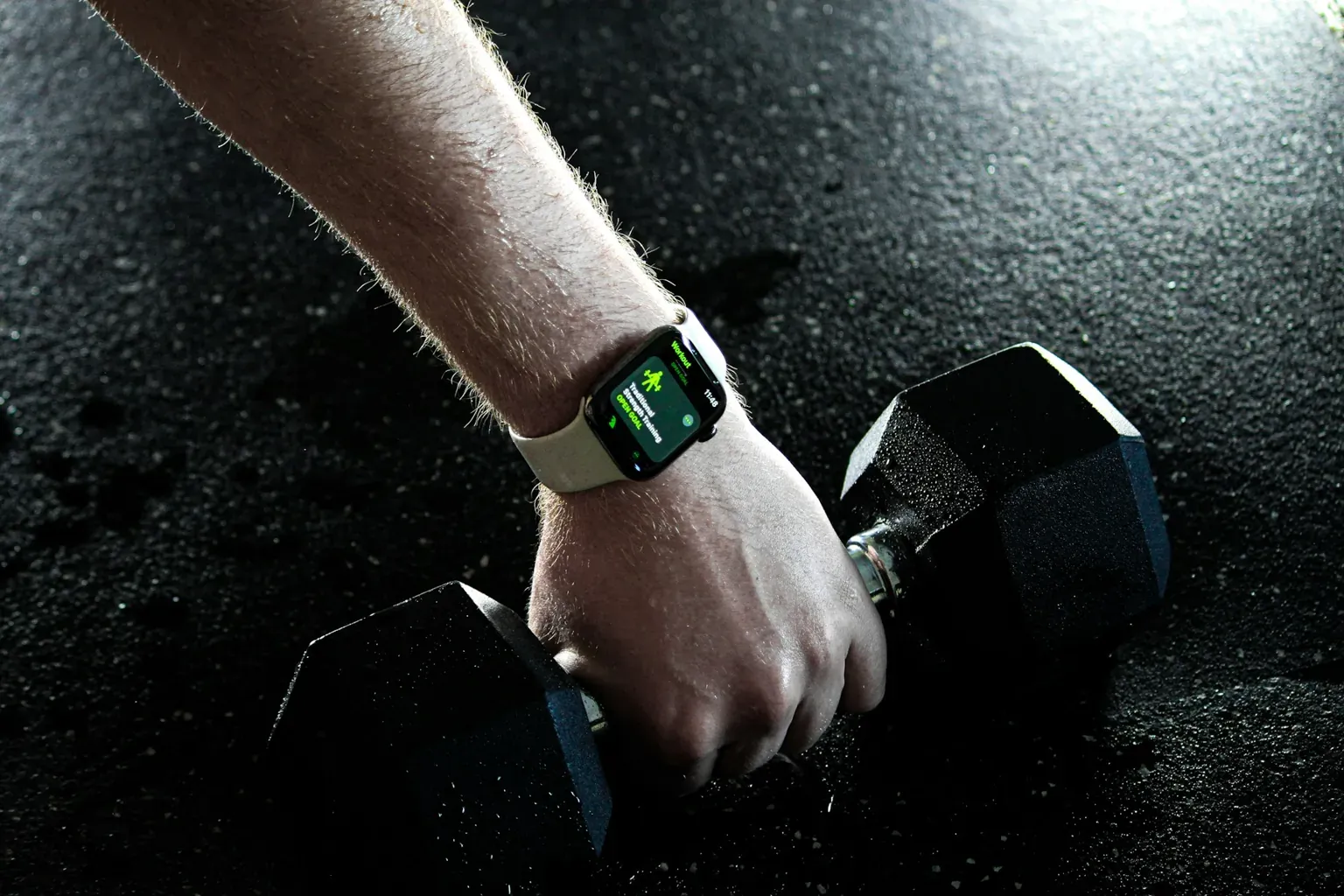
Not exactly, but it's the best of the watches tested. In a 2026 PLOS One study, the Apple Watch Series 8 overestimated by about 22 kcal per 20-minute session, against about 57 for Samsung and 69 for Garmin. Typical errors were 15–25%, and they grew with body fat. Use the number as a trend, not a measurement.
Is Apple Watch calories burned accurate?
Close, but not exact. In a 2026 lab test of four smartwatches, the Apple Watch had the smallest average error and still read high. Use it to compare your own workouts, and round down if you use the number for food.
Raise your Move goal. The ring is a motivator, not a measurement.
Round the number down, as the researchers suggest.
Don't. Brands differed by about 50 kcal on the same ride.
The study tested cycling: Apple was closest.
Evidence is thin. Choose the closest workout type.
Update your height and weight, then calibrate outdoors.
Is Apple Watch Calories Burned Accurate? What a 2026 Study Found
A 2026 lab test found the Apple Watch was the closest of four smartwatches on workout calories, but it still read high on average. Treat the number as an estimate.
Is Apple Watch calories burned accurate? A study published in PLOS One in July 2026 gives the most useful recent answer. Researchers at Florida International University had 58 adults ride a recumbent bike while wearing four watches at once, and compared each watch with a COSMED K5, a lab system that measures the oxygen you breathe in and the carbon dioxide you breathe out.
The Apple Watch Series 8 had the smallest average error. Garmin and Samsung read higher, and Fitbit produced some readings so far off that the researchers had to filter them out. The lead author, kinesiologist Jason Kostrna, told FIU you can't treat the calorie number as an accurate number.
No one at Health Perk has tested these watches. This article explains what the study and Apple's own guidance say, so you can decide how much weight to give your Move ring.
How Far Off Is the Apple Watch?
Apple read about 22 kcal high on average in a session of about 20 minutes. Garmin read about 69 kcal high, around three times as much.
The study reports bias, which is the watch's reading minus the lab reading. A positive number means the watch said you burned more than you did. Each session lasted about 20 minutes: 5 minutes of rest, 10 minutes of cycling at alternating moderate and hard effort, and 5 minutes of recovery.
Two other figures matter more for everyday use. Across the devices, the typical size of the error was about 15–25% of the lab value, measured as the median absolute percentage error. And the error grew as body fat percentage rose, for every brand, though it rose less steeply for Apple than for Garmin.
A note on the headlines. Several reports said watches overestimate by 15–25%. In the paper, that range is the typical size of the error in either direction, not a fixed overestimate. The direction was clearly high for Apple, Garmin and Samsung, though.
What Your Workout Calories Might Really Be
If your watch reads 15–25% high, a 500 kcal workout was really about 400–435 kcal.
A short session. The difference is small, and it doesn't matter much on a single day.
A long workout. The gap is 65–100 kcal, which adds up if you track every session.
A very long session, such as a long ride. Here the gap is 104–160 kcal.
This is a range for thinking with, not a correction. The study tested one kind of workout on a 2022 watch, and your own error depends on fit, activity and body composition. The researchers' advice, quoted by FIU, is to treat the figure as a rough guide and round down.
Why Watch Calories Are Harder Than Steps or Heart Rate
A watch measures heart rate and movement directly. Calories are calculated from those, plus your height, weight, age and sex, so errors can add up.
Your wrist can't measure the energy your body uses. The watch estimates it from heart rate, motion and, outdoors, GPS, combined with the personal details you entered. Apple's support page says the watch uses your height, weight, gender and age to calculate how many calories you burn.
That's why calories have always lagged behind heart rate in accuracy studies. A 2017 Stanford study of seven wrist devices found six had a median heart rate error below 5% during cycling, but none estimated energy expenditure with an error below 20%. The Apple Watch had the lowest overall error on both.
The 2026 study suggests why the error grows with body fat: the algorithms may be built mostly on data from leaner people, and the companies don't publish how they were trained. It found no clear effect of skin tone in its sample, but the authors say that result is limited by the small number of people with the darkest skin type they tested.
Your Move Ring vs Your Workout Total
The Move ring counts active calories. Workout summaries also show a total. Neither is a lab measurement.
Apple's guide says the red Move ring shows the active calories you've burned, which is the energy from movement on top of what your body uses at rest. Workout summaries also show a total figure for the session, which includes the energy you'd have used anyway.
This matters when you compare devices or apps. If one shows active calories and another shows total calories, they can differ by a lot for the same workout, and neither is wrong. Compare like with like, and compare your own days with each other rather than with someone else's watch.
The same caution applies to the other side of the equation. If you log food with a photo app, those estimates have errors of their own, so small gaps on both sides can add up.
Is Apple Watch or Garmin More Accurate for Calories?
Apple, in this study. Garmin read about three times as high on average. Both are estimates.
| Watch tested | Average bias | What the authors said |
|---|---|---|
| Apple Watch Series 8 | +21.6 kcal | Smallest bias |
| Samsung Galaxy Watch 5 | +56.8 kcal | Systematic overestimate |
| Garmin Forerunner 955 | +68.6 kcal | Systematic overestimate |
| Fitbit Sense 2 | +3.1 kcal after filtering | Largest variability and some missing readings |
If you're choosing a watch, calories shouldn't decide it. Our Apple Watch vs Garmin comparison covers heart rate, battery and running, where the differences are more useful. For the wider choice of device type, see fitness tracker vs smartwatch.
How to Use the Number in Your Situation
Your Move goal seems too easy to close.
Your ring may be flattering you a little, and it's built on an estimate. If the goal no longer feels like effort, raise it. The ring is a motivation tool, so set it to whatever keeps you moving.
You add workout calories to what you eat that day.
Be cautious. The researchers warn that small daily gaps can add up over a week, and they suggest rounding the number down. They also caution against cutting food aggressively to make up for it.
You wear or switch between two devices.
Expect different numbers. In the 2026 study, the same 20-minute ride produced average gaps of almost 50 kcal between brands. Pick one device and follow its trend.
Cycling is your main workout.
This is the activity the study tested, so its findings fit you best. Apple read closest, but still high on average.
You mostly do strength training.
There's less evidence here. The FIU team is now studying strength workouts, because short, intense bursts are harder for the algorithms. Choose the closest workout type in the Workout app.
You use an older Apple Watch.
The study used a Series 8, from 2022, so its results are closer to your watch than to the newest models. Keep your personal details up to date either way.
6 Ways to Get a More Useful Calorie Number
Update your personal details.
On your iPhone, open the Watch app, go to My Watch, Health, Health Details, and check your height, weight, sex and age.
Calibrate outdoors.
Apple says to walk or run outdoors at your normal pace for about 20 minutes with the Workout app, and to repeat it at each speed you use.
Choose the closest workout type.
Apple recommends the option that best matches what you're doing, such as Indoor Run on a treadmill.
Wear it snugly for workouts.
Apple suggests tightening the band during exercise, on the top of your wrist, and loosening it afterwards.
Keep Wrist Detection on.
Without it, your watch doesn't take background heart rate readings.
Watch the trend, not the total.
Compare this week with last week on the same watch. The study's authors say trends are where these devices can still help.
True or Not? 4 Myths About Apple Watch Calories
A higher calorie number means a better workout.
True or not? Tap to find outHere's what the sources say
Not necessarily. Watches read differently, and in the 2026 study the brands that read highest were the least accurate, not the hardest workouts.
The newest Apple Watch must be accurate.
True or not? Tap to find outHere's what the sources say
Unknown. The 2026 study tested a Series 8. Newer models haven't been tested the same way in a published study, so we can't say whether they read closer. Our Series 12 vs Series 11 comparison covers what Apple did change.
Calories are as accurate as steps or heart rate.
True or not? Tap to find outHere's what the sources say
No. Studies consistently find calories are the weakest measure. In a Stanford study, six of seven devices measured heart rate within 5% during cycling, while none estimated energy within 20%.
A chest strap fixes calorie accuracy.
True or not? Tap to find outHere's what the sources say
Not on its own. A chest strap improves the heart rate reading, which can help, but calories still come from an estimate based on your personal details and the algorithm.
What This Data Can't Tell You
A watch estimates the energy you use from wrist sensors and the details you enter. It doesn't measure your metabolism. The 2026 study tested one type of workout, on 2022 watches, in 58 young Hispanic adults, so results for you, your activity and newer models may differ. Use the number to follow your own trends. If you're making decisions about weight or eating because of a health condition, talk to a clinician or registered dietitian rather than relying on a watch.