Apple Watch vs Garmin: Which Is More Accurate, and Which Should You Actually Wear?
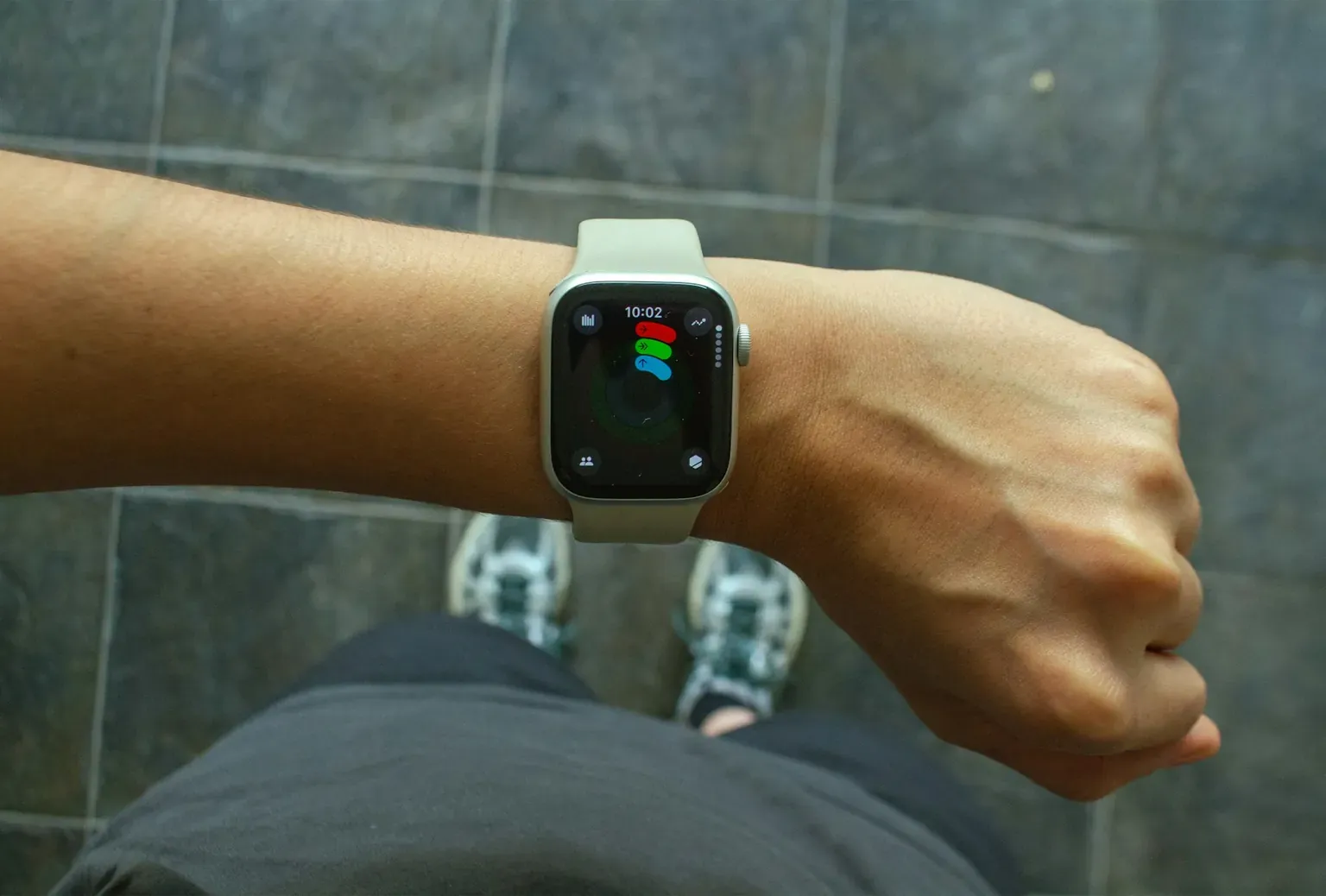
Accuracy is close enough that it shouldn't decide this. A review of up to 39 studies found Apple and Garmin effectively tied on heart rate, though mostly on older models. Choose the Apple Watch for an iPhone-first smartwatch you charge daily. Choose a Garmin if you use Android, run seriously, or want several days between charges.
Apple Watch vs Garmin: which should you buy?
Buy an Apple Watch if you have an iPhone and want the best everyday smartwatch. Buy a Garmin if you have Android, train seriously, or don't want to charge every day. Accuracy is close, so it shouldn't decide this.
Garmin Forerunner: battery and training tools suit you best.
Garmin: the Apple Watch only works with an iPhone.
Apple Watch Series 12, if you have an iPhone.
Garmin: reviewers get several days between charges.
Garmin, or an Apple Watch Ultra if you prefer Apple.
Apple Watch SE 3 or Series 12, or a Forerunner 170 on Android.
Apple Watch vs Garmin: What's New in 2026
A review of up to 39 studies found the two brands effectively tied on workout heart rate, so accuracy shouldn't decide this. Your phone and how often you'll charge should.
The Apple Watch vs Garmin question has a useful new answer. A 2026 analysis by Sicbaldi and colleagues, summarised by the5krunner, pooled up to 39 studies on smartwatch accuracy. It found the two brands effectively level on heart rate, the most heavily studied measure.
The watches themselves have moved on too. Apple's Series 12 launched in September 2026 at $399, with faster charging and more frequent heart rate tracking, according to MacRumors. If you're upgrading from a Series 11, our Apple Watch Series 12 vs Series 11 comparison covers what changed. When we checked Garmin's US store on November 15, 2026, Garmin listed the Venu 4 at $549.99 in both sizes, on sale for $449.99. Garmin lists the Forerunner 570 at $549.99, also on sale for $449.99, and the cheaper Forerunner 170 at $299.99 (checked Nov 15).
New for this update: the head-to-head results for the Series 12 and Venu 4 below, from Tom's Guide's side-by-side walk and Wareable's long-term Venu 4 review, plus Garmin's own battery ratings.
No one at Health Perk has tested these watches. This guide brings together published studies and what named reviewers found.
Is Apple Watch or Garmin More Accurate?
Close on heart rate. Garmin has stronger step data, and Apple did better on calories. The studies mostly used older models.
Heart rate is effectively a tie. The pooled bias was −0.62 bpm for Apple and −0.91 bpm for Garmin, a gap the5krunner calls negligible.
Steps. Garmin had a bias of just −4.76 steps, across 6 comparisons. The analysis had no pooled Apple figure, so this shows Garmin is well supported, not that Apple is worse.
Calories. Apple had the lowest bias across the most comparisons, while Garmin tended to overestimate, from a small number of datasets. The5krunner says to treat calorie figures from any brand as directional rather than precise. Our Apple Watch calorie accuracy guide looks at a 2026 lab test of four watches.
The catch. The Apple data covers Watch 5 to 9, and the Garmin data covers older models such as the Forerunner 245 and Fenix 6. None of it tests today's watches.
Side-by-side tests of current watches are more up to date, though each one is a single person on a single day. The next section covers the Series 12 vs Venu 4 results. An earlier Tom's Guide walk went Garmin's way on steps: the Venu 4 logged 7,534 and the Apple Watch Ultra 3 logged 7,411, against a count of 7,500.
Apple Watch Series 12 vs Garmin Venu 4: What Independent Reviewers Found
In Tom's Guide's 5,520-step walk, both watches were within 11 steps of a hand count and matched on heart rate. The reviewer called Garmin the narrow winner. Wareable found the Venu 4's heart rate and sleep tracking reliable against a chest strap and an Oura Ring.
Tom's Guide's Dan Bracaglia wore the Series 12 on one wrist and the Venu 4 on the other for a roughly 50-minute hilly walk in Seattle. He counted his steps by hand with a tally counter and logged the walk in Strava as a control.
| 5,520-step walk | Apple Watch Series 12 | Garmin Venu 4 | Control |
|---|---|---|---|
| Steps | 5,531 | 5,518 | 5,520 (hand count) |
| Distance | 2.91 mi | 2.89 mi | 2.95 mi (Strava) |
| Climb | 448 ft | 417 ft | 410 ft (Strava) |
| Average heart rate | 131 bpm | 131 bpm | n/a |
| Max heart rate | 160 bpm | 160 bpm | n/a |
| Calories | 417 | 355 | n/a |
| Battery used | 1% | 4% | n/a |
Apple overcounted by 11 steps and Garmin undercounted by 2. Apple was slightly closer on distance, while Garmin was closer on climb and pace, which is why Bracaglia gave the Venu 4 the win while calling both watches excellent. The 62 kcal calorie gap is a good reason not to compare calorie totals across brands. The Venu 4 also used four times as much battery during the walk.
Wareable's long-term test. Wareable compared the Venu 4's sleep data with an Oura Ring 4 and found sleep duration about 10 minutes apart on most nights, with similar sleep and wake times. Sleep stages differed more, and Garmin's sleep scores tended to be lenient. Workout heart rate was generally reliable against Garmin's HRM 600 chest strap.
Wareable's verdict is that the Venu 4 is Garmin's most polished smartwatch-style tracker, with far better battery life than its rivals, but that its price makes an Apple Watch a strong alternative for casual users. It found the smart features still limited, and missed the third button the Venu 3 had.
Battery: The Biggest Real Difference
Apple rates the Series 12 at up to 24 hours. Garmin rates the 45 mm Venu 4 at up to 12 days, or 4 with the display always on, and reviewers got four to six days with heavy settings.
Apple's rating is up to 24 hours, or 38 in Low Power Mode. Fifteen minutes on the charger gives up to 12 hours of use.
Apple's Ultra is rated at up to 50 hours, or 84 in Low Power Mode, but it costs from $799.
Tom's Guide got four to six days from the larger models, with an always-on display and multi-band GPS, and Wareable's always-on Venu 4 typically lasted into a fifth day. Garmin rates the 45 mm Venu 4 at up to 12 days with the display off, and the 41 mm at up to 10.
| Garmin's rating | Venu 4, 45 mm | Venu 4, 41 mm |
|---|---|---|
| Smartwatch mode | Up to 12 days | Up to 10 days |
| Display always on | Up to 4 days | Up to 3 days |
| GPS only | Up to 20 hours | Up to 15 hours |
| Multi-band GPS | Up to 17 hours | Up to 12 hours |
Garmin's figures, from its product pages checked November 15, 2026. Apple rates the Series 12 at up to 24 hours, or 38 in Low Power Mode. Wareable measured about 4% of battery for an hour of the Venu 4's most accurate GPS mode.
This changes how you use the watch. With a Series 12 you need a daily charging habit, and quick top-ups make that easier. With a Garmin you can usually pack for a long weekend without the charger.
Apple Watch vs Garmin: Side by Side
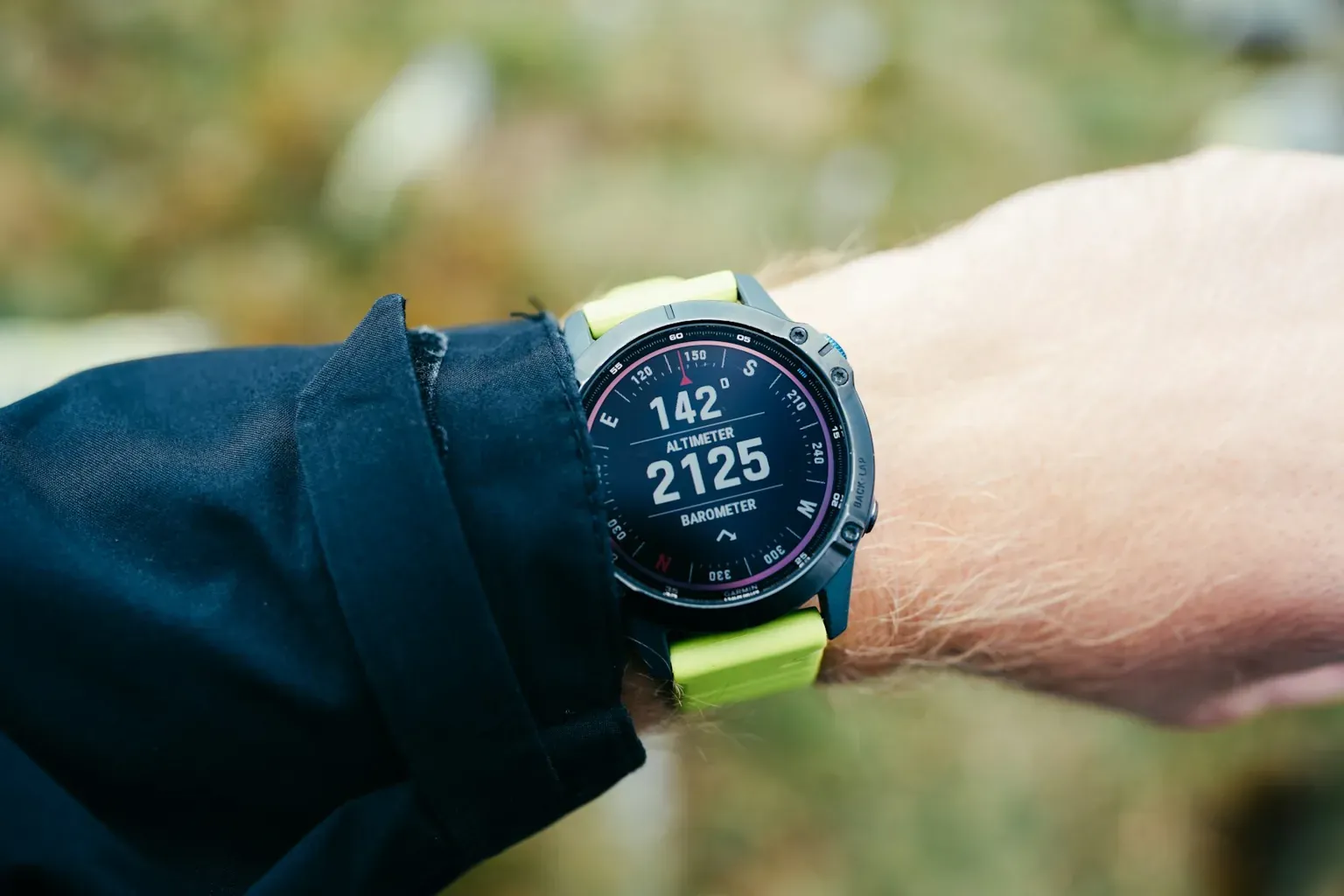
Apple is the better smartwatch and only works with iPhone. Garmin lasts far longer and works with Android too.
| Feature | Apple Watch Series 12 | Garmin Venu 4 | Garmin Forerunner 570 | Garmin Forerunner 170 |
|---|---|---|---|---|
| Starting price | $399 | $549.99 ($449.99 on sale, Nov 15) | $549.99 ($449.99 on sale, Nov 15) | $299.99 (Nov 15) |
| Phones | iPhone only | iPhone and Android | iPhone and Android | iPhone and Android |
| Battery | Up to 24 hours (rated) | Up to 12 days rated; 4–6 days in heavy use | 4–6 days (Tom's Guide, heavy settings) | Up to 10 days (rated) |
| Best for | Daily smartwatch use | All-round fitness and battery | Serious running | Lower-cost running |
| Biggest weakness | Daily charging | Price | Price | Fewer premium features |
Apple and Venu 4 prices are from the makers' stores, checked November 14–15, 2026. Other prices are as reported in Sept–Nov 2026, and Black Friday deals may change them. Both brands also offer regulated heart features, which we don't assess here.
Apple Watch vs Garmin for Running
Choose Garmin if running is the main reason you're buying. Both have accurate GPS, but Garmin's battery and training tools suit it better.
In a Garmin vs Apple Watch choice for running, GPS doesn't separate them much. The5krunner's long-running testing puts Apple, Coros and Garmin among the most accurate, and Tom's Guide found both the Venu 4 and Forerunner 570 accurate on its runs.
Garmin's advantage is in everything around the GPS: longer battery for long runs, and training tools built for runners. If you're choosing between Garmin models, our fitness tracker vs smartwatch guide explains how much watch you actually need.
If you don't want a screen at all, a band can do the everyday tracking for less. Our Whoop alternatives guide and Fitbit Air vs Garmin Cirqa comparison cover those options.
Apple Watch vs Garmin for Sleep, Swimming and Smart Features
Both brands give you a sleep score, and Garmin's battery makes it easier to wear all night. Apple is the stronger smartwatch: every current model offers cellular and offline maps, while the Venu 4 has neither.
Sleep tracking. Apple lists sleep tracking, a sleep score and sleep apnea notifications on the Series 12, SE 3 and Ultra. Garmin also scores your sleep. Reviewing the Venu 4 for Live Science, Andrew Williams found it sometimes missed wakeful moments, but its sleep data largely matched his expectations. Overnight HRV feeds into the score. TechRadar adds that the Venu 4's Health Status feature checks five overnight measures, including heart rate, HRV and skin temperature.
The bigger difference is practical. A Series 12 needs charging most days, so you have to find time outside bedtime to charge it. A Garmin that lasts several days can stay on overnight without that planning. Our guide to the best sleep tracking devices compares more options.
Smart features. Apple lists cellular options and offline maps on all three current models. TechRadar's Venu 4 review names the lack of LTE and full-color maps as its only real drawbacks. You can follow a course with a direction arrow and take calls on the watch, but only while your phone is nearby. Wareable notes that Android owners get more from its notifications, including text replies, than iPhone owners. Garmin does sell LTE, but on premium outdoor watches: DC Rainmaker reports that the Fenix 8 Pro launched at $1,199 and needs a separate monthly plan.
Swimming. Apple rates the Series 12 water resistant to 50 meters, for swimming and snorkeling, and the Ultra to 100 meters, including recreational scuba diving to 40 meters. The Venu 4 and Forerunner 570 are both rated 5 ATM. Tom's Guide notes that the Forerunner 570's extra buttons make it easier to use while swimming.
Subscriptions. Neither brand needs one for tracking. Garmin's optional Connect+ plan launched at $6.99 a month or $69.99 a year, according to Tom's Guide's launch report, and adds AI insights, a performance dashboard and extra LiveTrack options. Garmin said existing Connect features stay free. Apple's Fitness+ is a separate service of guided workouts, at $9.99 a month or $79.99 a year, and Apple says you only need an iPhone to use it.
| Feature | Apple Watch Series 12 | Garmin Venu 4 |
|---|---|---|
| Sleep score | Yes | Yes |
| Cellular option | Yes | No |
| Offline maps | Yes | No full maps; course arrow |
| Water rating | 50 m, swim and snorkel | 5 ATM, swim |
| Optional subscription | Fitness+ workouts, $9.99/month | Connect+, $6.99/month at launch |
Which Should You Choose?
You run most days or train for races.
Choose a Garmin. A Forerunner 570 suits serious training, and a Forerunner 170 costs less if you don't need everything: Garmin lists them at $549.99 and $299.99 (checked Nov 15). Battery and training tools matter more here than small accuracy differences.
You have an Android phone.
Choose a Garmin. The Apple Watch only works with an iPhone, so this decision is already made. If you want a full smartwatch rather than a Garmin, see our Galaxy Watch 9 vs Galaxy Watch 8 comparison.
You want apps, payments and messages.
Choose the Apple Watch Series 12, if you have an iPhone. It's the stronger everyday smartwatch, and you'll need to be happy charging it daily.
You don't want to charge every day.
Choose a Garmin. Reviewers get several days between charges, while the Series 12 is rated at up to 24 hours.
You hike or travel off-grid.
Choose a Garmin, or an Apple Watch Ultra if you're set on Apple. The Ultra is rated at up to 50 hours and costs from $799.
You want general activity tracking.
If you have an iPhone, start with the Apple Watch SE 3 or Series 12. A Forerunner 170 is the cheaper Garmin option. Everyday accuracy is close enough that price and comfort can decide.
How to Choose in 5 Steps
Start with your phone.
Android rules out the Apple Watch straight away.
Decide how often you'll charge.
If daily charging sounds annoying, it probably will be. That points to Garmin.
List what you'd use daily.
Apps and payments favor Apple. Long workouts and training analysis favor Garmin.
Don't compare calorie totals across brands.
They use different estimates, so pick one watch and follow its trend.
Check Black Friday prices against the normal price.
Black Friday is November 27. Check the starting prices here before you treat a deal as a real saving.
True or Not? 4 Myths About Apple Watch and Garmin
Garmin is far more accurate than Apple Watch.
True or not? Tap to find outHere's what the sources say
Not on the best evidence. A review of up to 39 studies found the two effectively tied on heart rate, though most of those studies used older models.
You need a Garmin for accurate GPS.
True or not? Tap to find outHere's what the sources say
Not true. The5krunner's testing puts Apple, Coros and Garmin among the most accurate for GPS.
An Apple Watch can't last a whole day.
True or not? Tap to find outHere's what the sources say
Partly outdated. The Series 12 is rated for up to 24 hours, and 15 minutes of charging gives up to 12 hours of use. It still needs charging far more often than a Garmin.
The higher calorie number is the right one.
True or not? Tap to find outHere's what the sources say
Not necessarily. In one Tom's Guide walk, the watches differed by 62 kcal. Researchers rate calories as the weakest measure across all brands.
What This Data Can't Tell You
Smartwatches estimate activity and wellness trends from wrist sensors. They work best for comparing your own days, not as exact measurements. Studies often test older models, and your results can differ with fit, skin and activity. If something about your health worries you, talk to a clinician instead of relying on a watch.