Is the Garmin Index Sleep Monitor Worth It? Yes, If You Hate Sleeping in Your Watch
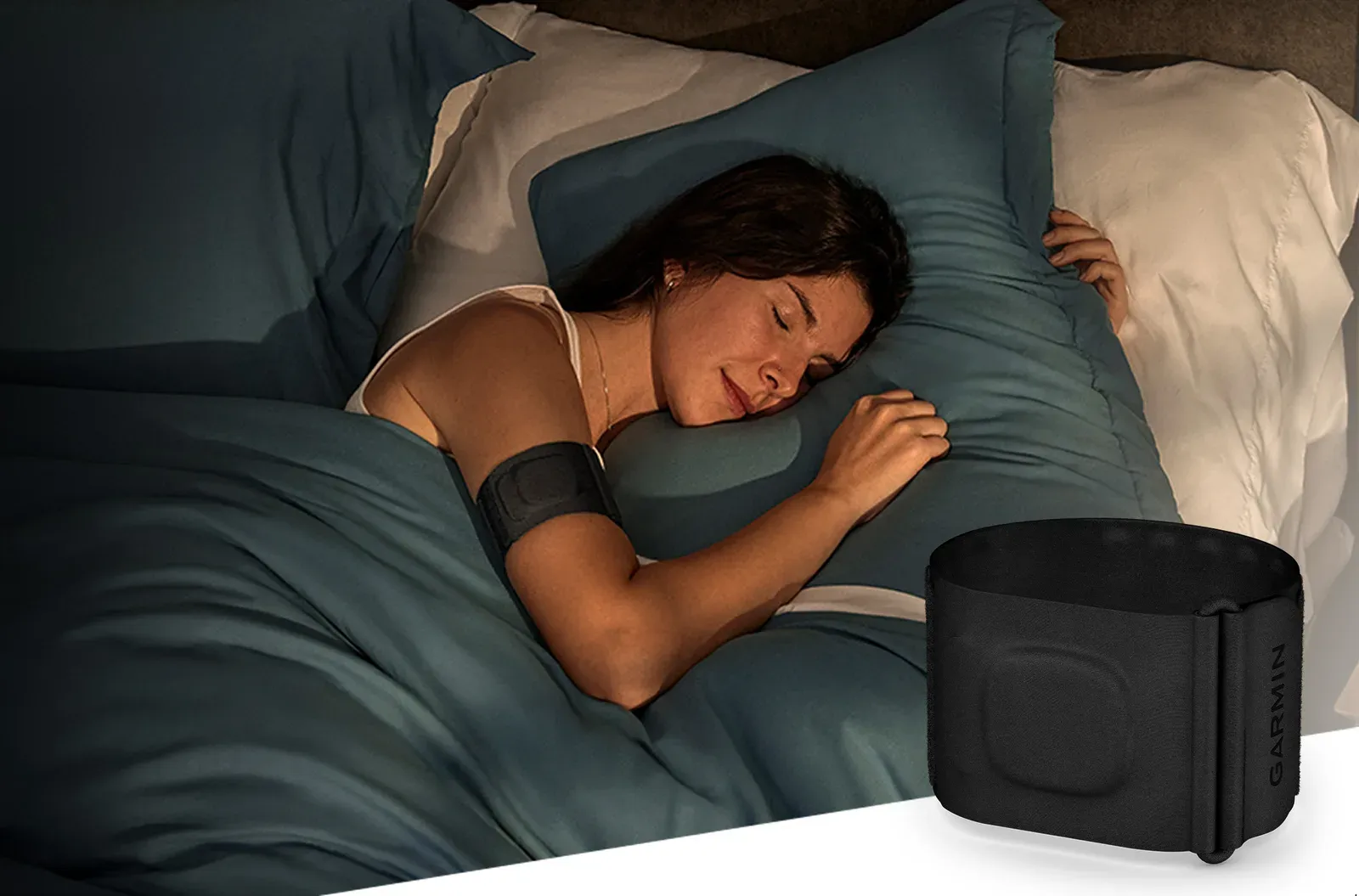
The Garmin Index Sleep Monitor is worth it for one group: people who use a Garmin watch but don't want to sleep in it. It's a $169.99 upper-arm band that only tracks sleep and sends it to Garmin Connect, with no subscription needed. Reviewers found it comfortable and about as accurate as a Garmin watch, but battery results ranged from 4 to 10 nights. Without a Garmin watch, a 24/7 band such as the $199.99 Garmin Cirqa is better value.
Is the Garmin Index Sleep Monitor worth it?
Yes, if you already wear a Garmin watch during the day and find it uncomfortable at night. The $169.99 band records your sleep for Garmin's recovery scores while your watch charges. If you sleep in your Garmin watch happily, or don't own one, skip it: a 24/7 band like the Cirqa costs $30 more and tracks your day too.
Buy it if your watch bothers you at night.
Skip it.
A 24/7 band is better value.
Probably skip it.
The arm alarm is a plus.
Is the Garmin Index Sleep Monitor Worth It? The Short Answer
Yes, if you already use a Garmin watch and don't like sleeping in it. At $169.99 it's an upper-arm band that only tracks sleep, and its data flows into Garmin Connect next to your watch's. If you don't own a Garmin watch, a 24/7 band is better value.
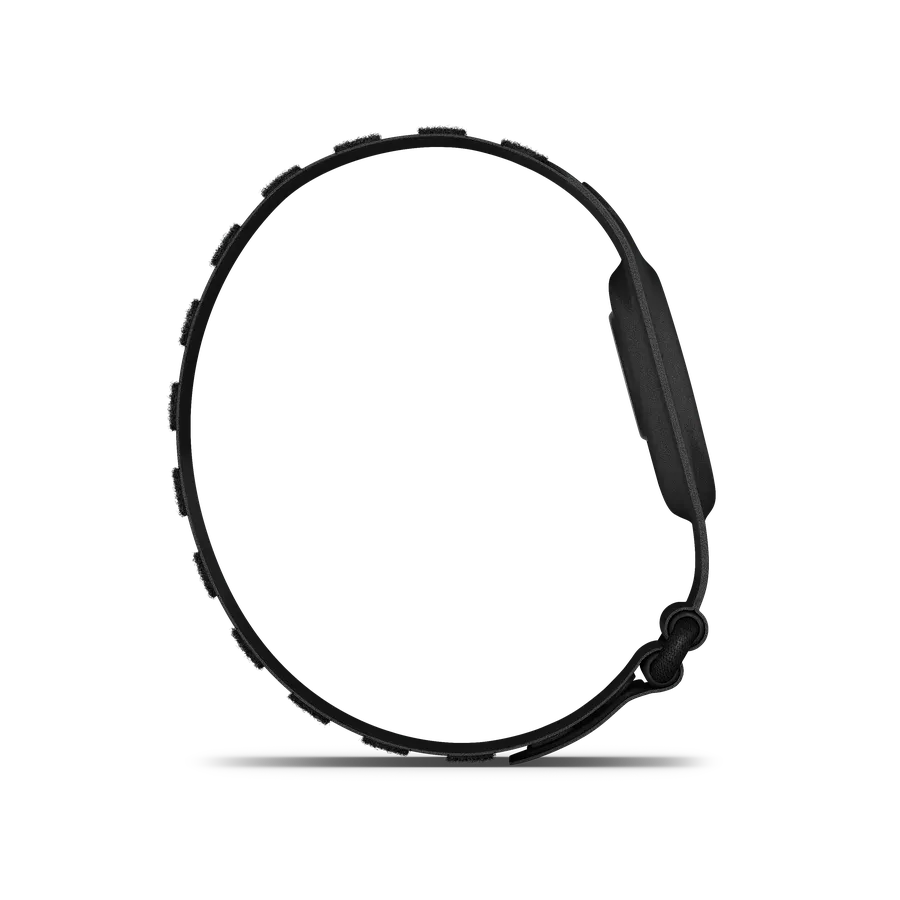
The Index Sleep Monitor is a soft fabric band worn on the upper arm, with a small sensor module and no screen. Garmin launched it in June 2025, and on November 15, 2026 Garmin's US store listed it at $169.99, in S–M or L–XL. It tracks sleep only: you put it on at night and take it off in the morning.
So is the Garmin Index Sleep Monitor worth it? The three reviews we read agree on who it's for. DC Rainmaker, Tom's Guide and Wareable all describe it as a comfortable, well-made tracker for people who already live in Garmin Connect but find a watch uncomfortable in bed. They disagree on battery life, and Tom's Guide lists the lack of daytime tracking as its main weakness.
Health Perk hasn't tested the Index Sleep Monitor. This page uses Garmin's own product and spec pages, checked on November 15, 2026, and the hands-on reviews by DC Rainmaker, Tom's Guide and Wareable.
Garmin Index Sleep Monitor vs Cirqa vs Fitbit Air
The Index Sleep Monitor is the only one of the three made just for sleep. The Garmin Cirqa costs $30 more and tracks around the clock. Google's Fitbit Air costs $70 less.
| Feature | Index Sleep Monitor | Garmin Cirqa | Google Fitbit Air |
|---|---|---|---|
| Price (maker's US store) | $169.99 | $199.99 | From $99.99 |
| Worn | Upper arm, at night | Wrist, day and night | Wrist, day and night |
| What it tracks | Sleep only | 24/7 activity and sleep | 24/7 activity and sleep |
| Rated battery | 7 nights (8 h a night, Pulse Ox on) | Up to 10 days | See Google's page |
| App | Garmin Connect | Garmin Connect | Google Health |
| Smart wake alarm | Yes, vibrates | Not checked | Not checked |
| Water rating | 5 ATM | Not checked | Not checked |
| Machine-washable band | Yes, module removed | No | No |
Index Sleep Monitor specs and price are from Garmin's product page. Cirqa is from Garmin's Cirqa page, and Fitbit Air from Google's store, all checked November 15, 2026. Our Fitbit Air vs Garmin Cirqa comparison covers those two bands in detail.
What the Index Sleep Monitor Tracks
Sleep score and stages, heart rate sampled every second, resting heart rate, HRV status, respiration, Pulse Ox, skin temperature, Body Battery, sleep stress and a vibrating smart alarm. Health Status is in beta.
Garmin's spec page lists heart rate sampled "constant, every second", resting heart rate, respiration rate, Body Battery, Pulse Ox blood oxygen during sleep, skin temperature and past ovulation estimates, with an accelerometer used for sleep. In the app you get a sleep score, sleep stages, HRV status, sleep stress and a feature Garmin calls breathing variations, which uses Pulse Ox "to help you better understand shifts in your breathing patterns as you sleep". Health Status, which flags when your numbers move outside your usual range, is labelled beta.
Garmin's footnotes say this is "not a medical device and is not intended for use in the diagnosis or monitoring of any medical condition". The menstrual cycle feature "should not be used in support of conception, contraception or birth control".
If you also wear a Garmin watch during the day, the band's sleep data feeds the watch's Training Readiness, recovery time and Body Battery, which is the main reason to buy it. Garmin says it pairs with the Garmin Connect app on iPhone or Android, so a watch isn't required.
Battery Life: Rated 7 Nights, Reviewers Got 4 to 10
Garmin rates 7 nights. Tom's Guide got 10 nights and DC Rainmaker 8 to 9, but Wareable got only about 4. Plan on charging it every few days to every week and a half.
Garmin's spec page rates the battery at "7 nights with SPO2 during typical usage (8 hours of sleep)". Tom's Guide's reviewer says the band first ran out after 10 nights of seven- to eight-hour sleeps. DC Rainmaker saw "roughly 8-9 days of sleep data per charge" with 6 to 8 hours of wear a night.
Wareable had the opposite result. It lost about 25% of its charge a night, so it lasted around four nights, and its reviewer called the battery life "bafflingly poor" for a device with no screen. A second Wareable tester who sleeps about six hours got one more night. Nobody has explained the gap, so treat 7 nights as a fair middle estimate.
Charging uses Garmin's own plug charger, the same style as its watches. Tom's Guide's reviewer says a full charge took about two hours.
How Accurate Is the Garmin Index Sleep Monitor?
In the reviews, it tracked sleep about as well as a Garmin watch, and on one night DC Rainmaker found it closer to the truth than Whoop and Oura. Nobody has published a lab validation of this band.
DC Rainmaker compared the band with a Garmin Venu 3, Whoop MG, Oura Ring and Apple Watch Ultra 2 on the same nights. On one night he logged going to sleep at about 12:20 a.m. and waking at 8:00 a.m.; the band recorded 12:21 to 7:56. He found most metrics "nearly identical" to the Venu 3. On a disturbed morning when he lay awake in bed, he says only Garmin and Apple got it right, while Whoop and Oura added 30 to 40 minutes of sleep.
Wareable compared six weeks with the band against two weeks of data from a Forerunner 970 and described the accuracy gain as incremental. Tom's Guide's verdict calls its data accurate. These are single reviewers' nights, not a study, and no peer-reviewed validation of the Index Sleep Monitor has been published that we could find. Our best sleep tracking devices guide explains what any consumer sleep tracker can and can't measure.
The Real Cost: $169.99, No Subscription Needed
$169.99 once. Garmin sells spare bands for $49.99. DC Rainmaker notes that no Connect+ feature meaningfully uses the band on its own, so you can skip the $6.99-a-month plan.
This is who it's for. Your watch can charge overnight while the band records sleep for its recovery scores.
Possible, but your sleep and day data end up in two different apps. Most people would be better off with their watch's own sleep tracking.
A 24/7 band gives you sleep plus daytime activity. The Cirqa is only $30 more and uses the same Garmin app.
Garmin sells spare bands in both sizes, and the band itself is machine-washable with the module removed.
Garmin's product page doesn't list any subscription for the band. DC Rainmaker says "there's no subscription cost here" and that no feature of Garmin Connect+ ($6.99 a month on Garmin's plan page) would meaningfully use it as a standalone device. Our Garmin Connect+ review covers what the plan adds for watch owners.
Spare bands cost $49.99 on Garmin's store, sold by size. S–M fits upper arms of 20 to 29 cm and L–XL 26 to 42 cm, so measure before you order.
Who Should Buy the Index Sleep Monitor? 5 Buyer Profiles
You hate sleeping in your watch.
Buy it. This is exactly the problem DC Rainmaker, Tom's Guide and Wareable say it solves, and your watch's recovery scores still get your sleep.
Your watch doesn't bother you at night.
Skip it. You already get the same Garmin sleep metrics. Wareable found the accuracy gain incremental.
You want sleep and step data.
Look at the Garmin Cirqa at $199.99 or the Fitbit Air from $99.99 instead. Both track around the clock.
You want better sleep data.
Probably skip it. Its data lives in Garmin Connect, apart from your watch's app.
A wrist buzz or phone alarm wakes you badly.
Worth a look. The band has a vibrating smart wake alarm on the arm.
5 Things to Know Before You Buy
Measure your upper arm.
S–M fits 20 to 29 cm and L–XL fits 26 to 42 cm, per Garmin's store.
Use the Garmin charger you already have.
Tom's Guide notes it charges with a standard Garmin charging lead, so watch owners don't need another cable by the bed.
Take it off in the morning.
DC Rainmaker notes that taking the band off prompts it to sync. Leaving it on all day drains the battery faster.
Wash the band, not the module.
Garmin says to remove the module before putting the band in the washing machine.
Charge it once a week to start.
Reviewers got between 4 and 10 nights, so watch the battery level in the app until you know your own number.
True or Not? 4 Myths About the Garmin Index Sleep Monitor
You need a Garmin watch to use it.
True or not? Tap to find outHere's what the sources say
No. Garmin says it pairs with the Garmin Connect app on iPhone or Android. A watch adds daytime data, but isn't required.
It needs a Connect+ subscription.
True or not? Tap to find outHere's what the sources say
No. Garmin lists no subscription for it, and DC Rainmaker says Connect+ adds nothing meaningful for the band on its own.
It tracks your steps during the day.
True or not? Tap to find outHere's what the sources say
It's designed for sleep. Tom's Guide lists no daytime activity tracking as a reason to avoid it.
It can diagnose sleep problems.
True or not? Tap to find outHere's what the sources say
No. Garmin's footnotes say it is not a medical device and isn't intended to diagnose or monitor any medical condition.
What This Data Can't Tell You
The Index Sleep Monitor estimates sleep stages, HRV, breathing and skin temperature from an arm sensor and motion. These are estimates that are most useful as trends for one person, not exact measurements, and Garmin states that the band is not a medical device. If you're worried about how you sleep or breathe at night, talk to a clinician rather than relying on a tracker.