Do Vagus Nerve Stimulators Work? What the Trials Say About Calm on Demand
Partly, and mostly for headaches. A prescription neck device, gammaCore, is FDA-cleared for migraine and cluster headache, though its trials were mixed. For stress, anxiety and sleep, ear-stimulation trials are small and inconsistent. A meta-analysis of 16 studies found a single session didn't change heart rate variability versus sham. Most consumer wearables have no published sham-controlled trials; the one trial of a consumer ear clip was mixed. Start with five minutes of slow breathing a day. Treat a device as an optional, unproven extra.
Do vagus nerve stimulation devices work?
For migraine and cluster headache, a prescription neck device has trial support. For everyday stress and sleep, the evidence is early: a few small trials found benefits, others found none. Most consumer wearables haven't been tested against sham. Slow breathing is free and well studied.
Try 5 minutes of slow breathing a day for 4 weeks before you buy a device
Keep a fixed wake time, and see a doctor if poor sleep is wearing you down
Ask your neurologist whether prescription neck stimulation fits your plan
Breathe slowly instead: a session of ear stimulation didn't change HRV versus sham
Don't use a stimulator until your doctor says it's safe for you
Pair it with slow breathing and judge it after 4 weeks, not one night
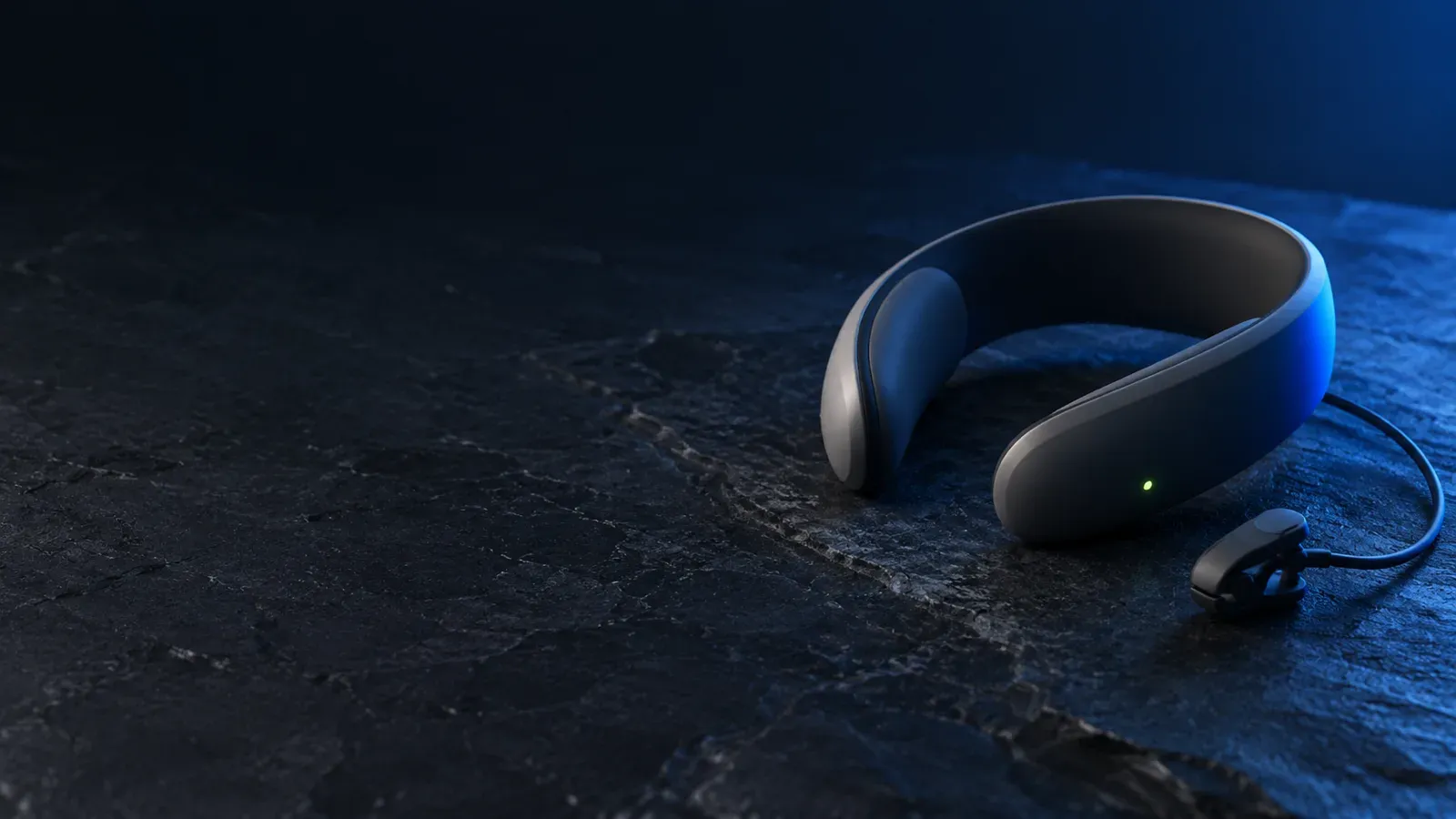
In April 2026, the Global Wellness Summit named “neurowellness” one of the year's defining trends. It noted that many of the new gadgets target one nerve: the vagus nerve, the main nerve of the body's “rest and digest” system. In September 2026, TrendHunter featured “bilateral vagus nerve wearables”: neck bands that target both sides of the neck at once. The pitch is calm on demand: clip it on, press a button, feel your stress drop.
The science behind that pitch is real but thin. Vagus nerve stimulation started as a surgical implant. Skin devices are newer, and their clearest results are for headaches, not stress. This guide explains what's new, how the devices work, what the trials show for each goal, why heart rate variability is a weak test, how the main options compare, who might reasonably try one, a free alternative, common myths, and when to see a doctor.
What's New: Vagus Nerve Wearables Go Mainstream
The newest sham-controlled trial, analyzing 70 adults, found less anxiety and stress with an ear-clip stimulator in one of two groups, and no effect on depression. The authors called the results tentative.
The trend. A Global Wellness Summit post from April 21, 2026, called neurowellness one of the biggest wellness trends of the year and named two vagus nerve products, the Pulsetto neck band and the yōjō earpiece. It frames them as tools for an anxious public. Product launches have followed. Neck bands now target both sides of the neck, and earpieces pair stimulation with breathing guidance.
The newest trial. The most recent sham-controlled study we found on everyday stress was published in Biological Psychology in November 2025. Marta Jackowska, Julian Koenig, Veronika Cibulcova, and Vera Jandackova ran a single-blinded randomized trial in community adults; 78 took part and 70, aged 18 to 75, were analyzed. People wore a Parasym ear-clip stimulator for 4 hours a day for 14 days. The active group was stimulated on the tragus, the small flap in front of the ear canal. The sham group was stimulated on the earlobe, which has few or no vagus fibers.
The finding. The trial started some participants right away and others two weeks later. In the early groups, active stimulation beat sham for anxiety symptoms and perceived stress. In the late groups, it didn't. Neither timing beat sham for depressive symptoms. The authors describe the results as tentative.
What it doesn't show. These were community adults with generally low symptom scores, not people diagnosed with an anxiety disorder. The dose was 4 hours a day, which is a lot of stimulation. The device, a Parasym PK01 ear clip from the company behind Nurosym, was a consumer-type stimulator, but that doesn't make today's models proven. A result that appears in one group and not the other is a reason for more research, not a reason to buy.
How the evidence stacked up
- 2017 · FDA clearance
gammaCore, a handheld neck stimulator, cleared for acute episodic cluster headache.
- 2018 · Trial, 243 people
Acute migraine: more pain-free at 30 and 60 minutes, not at 120.
- 2019 · Trial, 332 people
Migraine prevention: no better than sham in the main analysis.
- 2021 · Meta-analysis, 16 studies
Ear stimulation did not change heart rate variability versus sham.
- 2024 · Trial, 72 people
Chronic insomnia: sleep scores improved more than with sham.
- 2025 · Trial, 70 adults
Stress and anxiety: better than sham in one timing group only.
How Vagus Nerve Stimulation Devices Work
Skin devices send a mild current toward the vagus nerve in the ear or neck. The aim is a signal to the brainstem; whether it changes stress or sleep is the open question.
The vagus nerve runs from the brainstem to the heart, lungs, and gut. It carries signals both ways, and most of its fibers report from the body to the brain. Implanted stimulators wrap an electrode around the nerve in the neck. Skin devices try to reach it from outside, in one of two places:
A mild electrical current, usually set just below the point of discomfort, is meant to excite sensory fibers of the vagus nerve. Other skin nerves tingle too.
The signal reaches the nucleus tractus solitarius, a relay that links to areas for pain, arousal, and mood. What happens next is the open question.
Why the ear. The ear is the one place where a branch of the vagus nerve, the auricular branch, supplies the skin. A 2002 study of 14 ears from 7 cadavers, published in Clinical Anatomy, reported that the cymba conchae, the upper hollow above the ear canal, was supplied by the vagus in every case. Its table gave 45% for the tragus, but the paper's text and figures don't add up cleanly, so the exact map is still debated.
Why the sham matters. A device that tingles feels like it's doing something. Trials therefore compare it with a sham: usually the same current on the earlobe, or a lower current that people can still feel. Shams are imperfect. In one large migraine trial the sham device turned out to give some active stimulation itself. Still, without a sham group, you can't tell a nerve effect from the calm of sitting still for 10 minutes.
What the wearables add. Consumer devices use the same two routes. Neck bands place electrodes on both sides of the neck. Ear clips stimulate the tragus. Some “vagus” products don't use current at all: the Sensate pebble sits on the chest and pairs vibration with sound through headphones. The physiology for each is different, and so is the evidence.
Do Vagus Nerve Stimulators Work? The Trials, Goal by Goal
Headache disorders have the clearest trials. Insomnia has one promising 72-person trial. Stress, anxiety and depression have small, low-quality studies. A single session didn't change heart rate variability.
“Does it work?” depends on the goal. The research is uneven: a few medical uses have proper sham-controlled trials, while the uses that wearables are sold for have the least. Pick a goal to see our grade, the best study, and what it does and doesn't show.
Not shown: any benefit from short consumer sessions, or in people with a diagnosed anxiety disorder.
Not shown: results outside one clinic in Beijing, or with a consumer wearable. The Pulsetto sleep data we found is a company-linked conference abstract without a control group.
Not shown: that a device can replace therapy or medication. The 2025 stress trial found no effect on depressive symptoms.
Not tested: long courses or patients. Slow breathing, by contrast, raised HRV in a 223-study meta-analysis. See section 05.
Applies to the prescription neck device only. The trial missed its 120-minute primary endpoint, and a prevention trial failed in its main analysis.
Grades are our editorial reading of the trials listed in the references, not an official rating.
Sleep, in more detail. The insomnia trial was run in Beijing and published in JAMA Network Open in December 2024. It randomized 72 adults with chronic insomnia; 68 finished. The active group got ear stimulation at 0.8 to 1.5 mA, the sham group 0.1 mA, both for 30 minutes twice a day, 5 days a week. On the Pittsburgh Sleep Quality Index, a 0 to 21 scale where lower is better, the gap at 8 weeks was 4.2 points (95% CI 2.6 to 5.9). That beat the 2.5-point change the authors had set as clinically meaningful, and it held at 20 weeks. It is one single-center trial, so it needs repeating.
Depression, in more detail. A 2023 meta-analysis in the Journal of Affective Disorders pooled 12 randomized trials with 838 people. Ear stimulation lowered depression scores and had higher response rates than sham. The authors rated the certainty of that evidence low to very low, mostly because the trials were small. Ear stimulation for depression remains a research treatment.
The evidence has limits. Most trials use research-grade stimulators with set frequencies and long sessions. Wearables vary in where they stimulate, how strongly, and for how long. Results from one device and dose don't transfer automatically to another.
Vagus Nerve Stimulation for Migraine and Cluster Headache
gammaCore is FDA-cleared for migraine and some cluster headache uses. In its main migraine trial, 21.0% were pain-free at 60 minutes versus 10.0% with sham, though the 2-hour primary endpoint was missed.
The leading medical skin device is gammaCore, a handheld stimulator held against the side of the neck. The FDA cleared it for acute episodic cluster headache in adults in April 2017, acute migraine in January 2018, add-on prevention of cluster headache in adults in November 2018, migraine prevention in March 2020, and migraine in adolescents aged 12 to 17 in February 2021. It is a prescription device, not a wellness gadget.
The acute trial. PRESTO, published in Neurology in 2018 by Cristina Tassorelli and colleagues, randomized 248 people with episodic migraine to gammaCore or a sham device, used within 20 minutes of pain starting. Here are the pain-free rates after the first treated attack:
So the device beat sham at 30 and 60 minutes. At two hours the gap was 10.7 percentage points, but it was not statistically significant. Because two hours was the trial's main test, PRESTO formally missed its primary endpoint, even though early pain freedom favored the device.
The prevention trial. PREMIUM, published in Cephalalgia in 2019 by Hans-Christoph Diener and colleagues, tested daily use to prevent episodic migraine. Over 12 weeks, monthly migraine days fell by about the same amount in both groups:
The authors noted that the sham device gave some active stimulation, and that adherence was poor. A post hoc look at people who used it as directed favored the device, but post hoc analyses are exploratory. If you have migraine, this is a conversation for your neurologist, alongside the treatments you already use.
Vagus Nerve Stimulation and Heart Rate Variability: The Problem
Across 16 sham-controlled studies, a session of ear stimulation didn't change heart rate variability. Slow breathing raised it across 223 studies.
Heart rate variability, or HRV, is the small beat-to-beat variation in your heart rate. Part of it reflects vagus nerve activity, called vagally mediated HRV. Many wearables report it, which makes it a tempting yardstick for vagus devices. Researchers tested it.
The study. In 2021, Vinzent Wolf, Nils Kroemer, and colleagues published a “living” Bayesian meta-analysis in Psychophysiology. It pooled 16 single-blind studies that compared ear stimulation with sham in healthy people, and it is built to update as new trials appear.
What it means. The pooled effect was g = 0.014, essentially zero. The authors concluded there is no support for HRV as a reliable marker of a single session of ear stimulation. That doesn't prove the devices do nothing else. It does mean an HRV bump in an app after a session is not evidence that the stimulation worked. The meta-analysis covered single sessions in healthy people, so longer courses and patients remain open questions.
The contrast. A 2022 meta-analysis in Neuroscience and Biobehavioral Reviews, led by Sylvain Laborde, pooled 223 studies of voluntary slow breathing. Vagally mediated HRV rose during the breathing, right after a single session, and after multi-week programs. If HRV is your goal, the free method has the far better evidence.
Vagus Nerve Stimulator Comparison Table
Brands are named as examples of each type, from public information. We did not test these devices.
| Criterion | Slow breathing | Neck, prescription (gammaCore) | Ear clip (e.g. Nurosym) | Neck band (e.g. Pulsetto) | Vibration pebble (e.g. Sensate) |
|---|---|---|---|---|---|
| How it works | Under 10 breaths a minute, with long exhales | Handheld; electrical pulses on the side of the neck | Mild current on the tragus of the ear | Electrodes targeting both sides of the neck | Chest vibration plus sound; no current |
| Regulatory status | None needed | FDA-cleared for migraine and some cluster headache uses | No FDA clearance for stress or sleep that we found | No FDA clearance for stress or sleep that we found | No FDA clearance for stress or sleep that we found |
| Sham-controlled trials of the product | Not applicable; many randomized trials of the technique | Yes: PRESTO and PREMIUM, with mixed results | One 2025 trial of a Parasym ear clip: mixed results | None published; two small conference abstracts without sham | None published; one registered observational study |
| Effect on HRV | Raises it (223-study meta-analysis) | Not what its trials measured | No change after one session vs sham (16 studies of ear stimulation) | Unproven | Unproven |
| Cost | Free | Prescription; coverage varies | Device purchase | Device purchase | Device purchase |
| Best for | Most people, as the first step | Migraine or cluster headache, through a doctor | Curious users who accept an unproven benefit | Curious users who accept an unproven benefit | Curious users who accept an unproven benefit |
For stress and sleep, start with slow breathing. A vagus nerve wearable is an optional extra, not a treatment.
In our reading, the clearest results for a skin stimulator are for a prescription device for headaches. Most consumer wearables borrow their science from research studies; the one sham-controlled trial of a consumer ear clip we found was mixed. Ear stimulation has looked low-risk in research for healthy adults, so if you enjoy using a device as a cue to slow down, that's fine. Just don't expect it to do what therapy, medication, or good sleep habits do, and don't pay extra for HRV claims.
Is a Vagus Nerve Stimulator Right for You?
Busy, stressed, generally healthy.
Start with 5 minutes of slow breathing a day. As our own rule of thumb, give it about 4 weeks and rate your stress each evening. If you still want a device, buy one with a return window and test it the same way. See a doctor if stress is affecting your sleep, work, or relationships for weeks at a time.
You've slept badly for months.
One 72-person trial of ear stimulation for chronic insomnia was promising, but it used 30-minute sessions twice a day, 5 days a week, for 8 weeks. Insomnia that keeps coming back or affects your days deserves a proper assessment. Talk to your doctor about tested treatments before spending money on a gadget.
Thinking about melatonin too? See how much to take.You have migraine or cluster headache.
This is where vagus nerve stimulation has real trial data. Ask your neurologist whether the prescription neck device fits your plan, for attacks or prevention. Keep taking your current treatment while you discuss it. Wellness wearables are not the same device, and we found no headache trials of them.
You're being treated for anxiety or depression.
Don't swap a wearable for therapy or medication, and don't stop a prescribed treatment on your own. Trials of ear stimulation for depression are small and low quality. If you want to try a device as an add-on, tell your prescriber first, and track your symptoms honestly.
You have a pacemaker, a heart rhythm problem, or you're pregnant.
Don't use gammaCore with a pacemaker or other implanted electronics: its instructions list them as contraindications. They also say it hasn't been evaluated in pregnancy, arrhythmia, slow or fast heart rates, or metal implants near the neck. For any other stimulator, follow its manual and ask your cardiologist or obstetric provider first.
You track HRV and want the number up.
A stimulator is the wrong tool: across 16 sham-controlled studies, a session didn't change HRV. Slow breathing has the clearest evidence for raising it. Judge changes on a trend over weeks, not one reading. Ask a doctor if your resting heart rate or HRV changes sharply without an obvious reason.
Practical Tips: Start With Your Breath
Slow breathing, under 10 breaths a minute, raises HRV. In a one-month trial, 5 minutes a day of cyclic sighing improved positive mood more than mindfulness meditation.
The vagus nerve is already wired to your breathing. Your heart speeds up slightly when you breathe in and slows when you breathe out. Slowing your breath, and lengthening the exhale, works that loop on purpose. A 2018 review of 15 studies in Frontiers in Human Neuroscience linked slow breathing, under 10 breaths a minute, to higher HRV, more relaxation, and less anxiety.
The trial. In 2023, Melis Yilmaz Balban, David Spiegel, Andrew Huberman, and colleagues at Stanford published a remote randomized trial in Cell Reports Medicine. 108 people did 5 minutes a day of one of three breathing patterns, or mindfulness meditation, for a month. Cyclic sighing, which stresses long exhales, improved positive mood more than meditation and lowered resting breathing rate more. It did not significantly change sleep or HRV. Pick a pattern to try:
Inhale through the nose, take a second short inhale to top up, then breathe out slowly through the mouth. The exhale is the longest part. This was the pattern that beat meditation on positive mood in the 2023 trial.
Breathe in for 4 seconds and out for 6. That is 6 breaths a minute, inside the under-10 range that reviews link to higher HRV and more relaxation. It's our example, not a trial protocol.
Breathe in, hold, breathe out, and hold, for equal counts. It was one of the three patterns in the 2023 trial, but unlike cyclic sighing it did not significantly beat meditation on positive mood.
Breathe slowly for five minutes a day.
It's the dose used in the 2023 trial, and it costs nothing. Attach it to something you already do, like your morning coffee or getting into bed.
Make the exhale longer.
Your heart slows slightly on the out-breath. Cyclic sighing and 4-in, 6-out breathing both stretch that part of the cycle.
Run a four-week test.
Our suggestion, not a validated protocol: pick one measure, such as an evening stress rating from 0 to 10 or how long it takes you to fall asleep. Note it for a week before and four weeks during. One good night proves nothing, and a personal test can't separate a device effect from placebo.
Ask for the sham-controlled trial.
Before you buy, look for a published randomized trial of that exact device against a sham. Studies of other stimulators, user surveys, and HRV screenshots are not the same thing.
Buy with a return window.
If you still want to try one, make sure you can return it after your four-week test. Expect tingling; stop if you get pain, dizziness, or chest discomfort.
Check the contraindications first.
Read the manual before the first session. Pacemakers and other implanted electronics, heart rhythm problems, pregnancy, and metal implants near the neck appear in gammaCore's warnings; each product has its own list.
Keep your treatment plan.
A wearable can sit alongside therapy, medication, or migraine treatment. It shouldn't replace any of them unless your clinician agrees.
Common Misconceptions About Vagus Nerve Stimulators
These devices are FDA-approved.
True or not? Tap to find outHere’s what the evidence says
Mostly not. The prescription neck device gammaCore is FDA-cleared for migraine and some cluster headache uses. In our November 2026 search, we found no FDA clearance for stress, anxiety, or sleep among the consumer wearables named here.
If my HRV goes up after a session, it's working.
True or not? Tap to find outHere’s what the evidence says
Not necessarily. In 16 sham-controlled studies in healthy people, a session of ear stimulation didn't change HRV more than sham. Slow breathing during a session raises HRV on its own.
It “tones” your vagus nerve.
True or not? Tap to find outHere’s what the evidence says
That's a marketing phrase, not a measurement. The studies we reviewed don't show a lasting improvement in vagus nerve function from the consumer products named here.
It works like the implant doctors use for epilepsy.
True or not? Tap to find outHere’s what the evidence says
It doesn't. Implants sit directly on the nerve after surgery. Skin devices pass current through the skin toward the nerve or its ear branch. Results from implants don't transfer to wearables.
The tingling means it's reaching the nerve.
True or not? Tap to find outHere’s what the evidence says
Not proven. Skin nerves tingle wherever current flows; that's why trials use earlobe shams that tingle too. Feeling it is not evidence of a vagus effect.
It's risky to try.
True or not? Tap to find outHere’s what the evidence says
For healthy adults using ear stimulation, risk looks low. A review of 177 studies found ear pain, headache, and tingling as the main side effects, no more often than in control groups. People with heart or implant issues are the exception.
When to See a Doctor
Ear stimulation looks low-risk in research settings. A 2022 meta-analysis in Scientific Reports covered 177 studies and 6,322 people. In the 35 studies that counted people with side effects, risk was no higher than in control groups. The most common were ear pain, headache, and tingling, at 12.84 events per 100,000 person-minutes-days of stimulation, and the authors found no causal link to serious events. But more than half the studies didn't report side effects at all, and these data don't cover neck bands or vibration devices.
Talk to a clinician before using a stimulator if you have any of the following, and promptly if symptoms appear:
- Heart and implants: a pacemaker, defibrillator, cochlear implant or other implanted electronics; an arrhythmia, prolonged QT, very slow or fast heart rate, uncontrolled blood pressure, or heart disease.
- Neck and nerve issues: metal implants near the neck, past surgery on the vagus nerve, or a history of brain injury, tumor, or aneurysm.
- Pregnancy, children, and other devices: pregnancy, a child under 12, or use alongside another stimulator such as a TENS unit.
- Symptoms during use: dizziness, chest discomfort, fainting, or skin irritation where the electrodes sit. Stop using the device and get checked.
- Mental health: anxiety, low mood, or insomnia that lasts more than a few weeks or gets in the way of daily life. A device is not a substitute for care.